Are You Your Own Worst Enemy?
"You can have the best strategy in the world. But if you panic on a red day or chase a hot tip on a green one, none of it matters."

We end this journey with two topics that most courses skip: the invisible costs that silently erode your returns, and the psychological battles that determine whether your carefully built strategy actually gets executed; or abandoned at the worst possible moment.
The Hidden Costs: What You're Paying Without Realising It
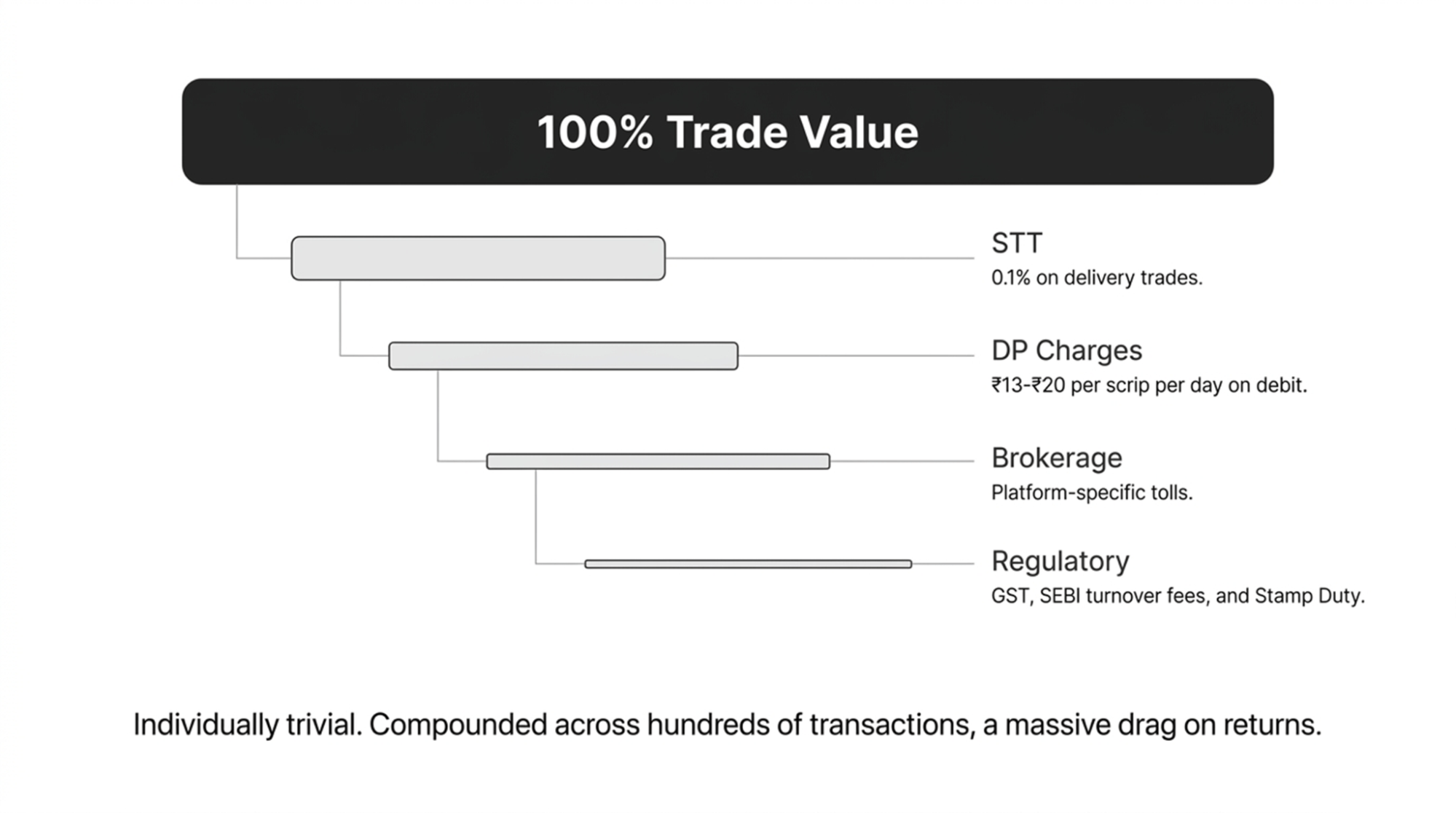
Every transaction in the Indian market comes with a set of charges that add up meaningfully over time, especially for frequent traders.
STT (Securities Transaction Tax) is levied by the government on every buy and sell of equity shares; currently 0.1% on delivery trades.
Brokerage fees vary by platform but exist on every order.
DP (Depository Participant) charges are levied every time shares are debited from your Demat account during a sale; typically ₹13-₹20 per scrip per day, regardless of how many shares you sell.
GST, SEBI turnover charges, and stamp duty layer on top of these.
Individually, these look trivial. Compounded across hundreds of transactions over years, they represent a real drag on returns.
The practical lesson is simple:
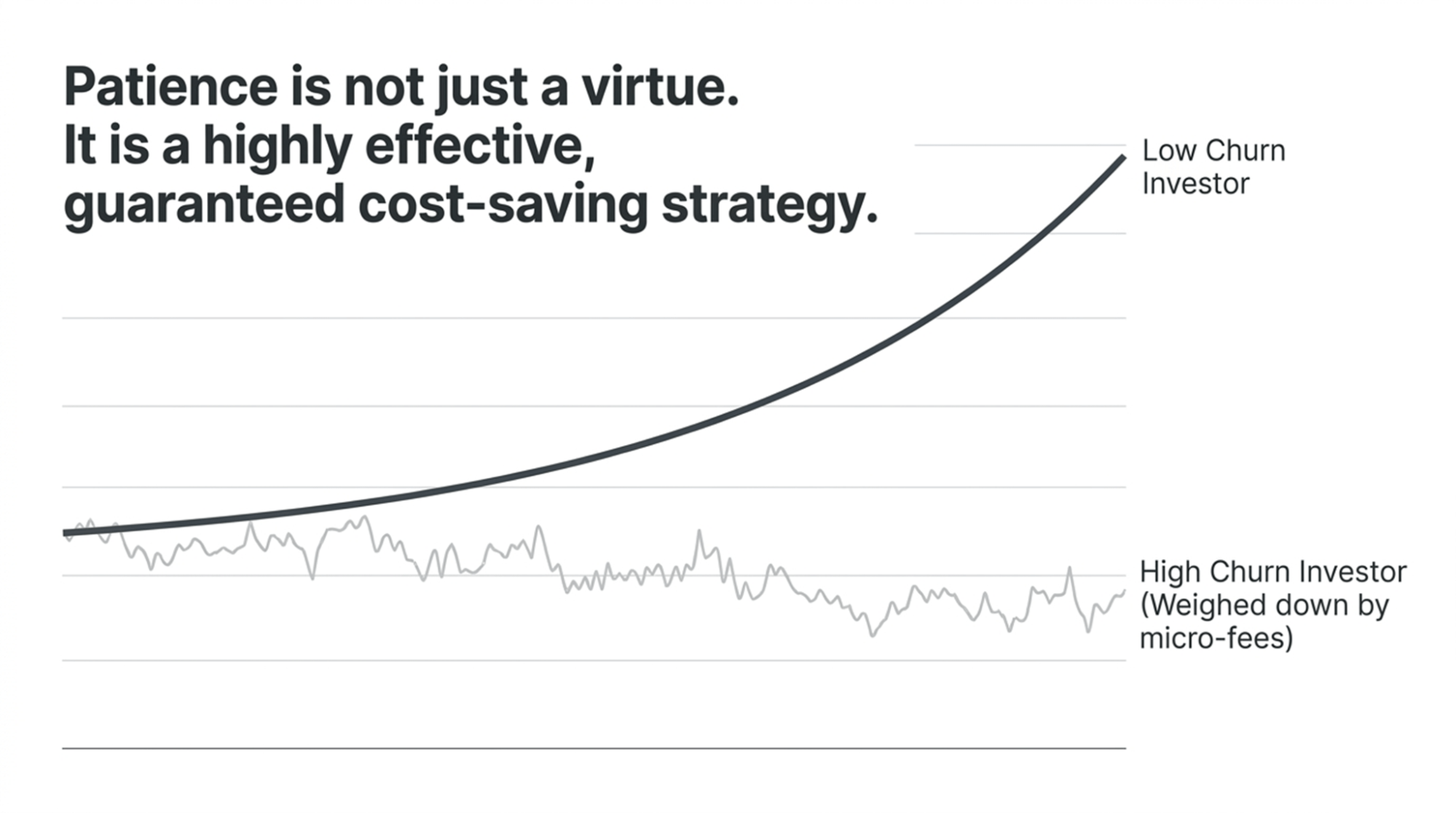
Every unnecessary trade has a cost, and long-term investors who churn their portfolio less tend to keep significantly more of their gains.
Patience, as it turns out, is not just a virtue; it's a cost-saving strategy.
The Psychological Battles: FOMO and Panic
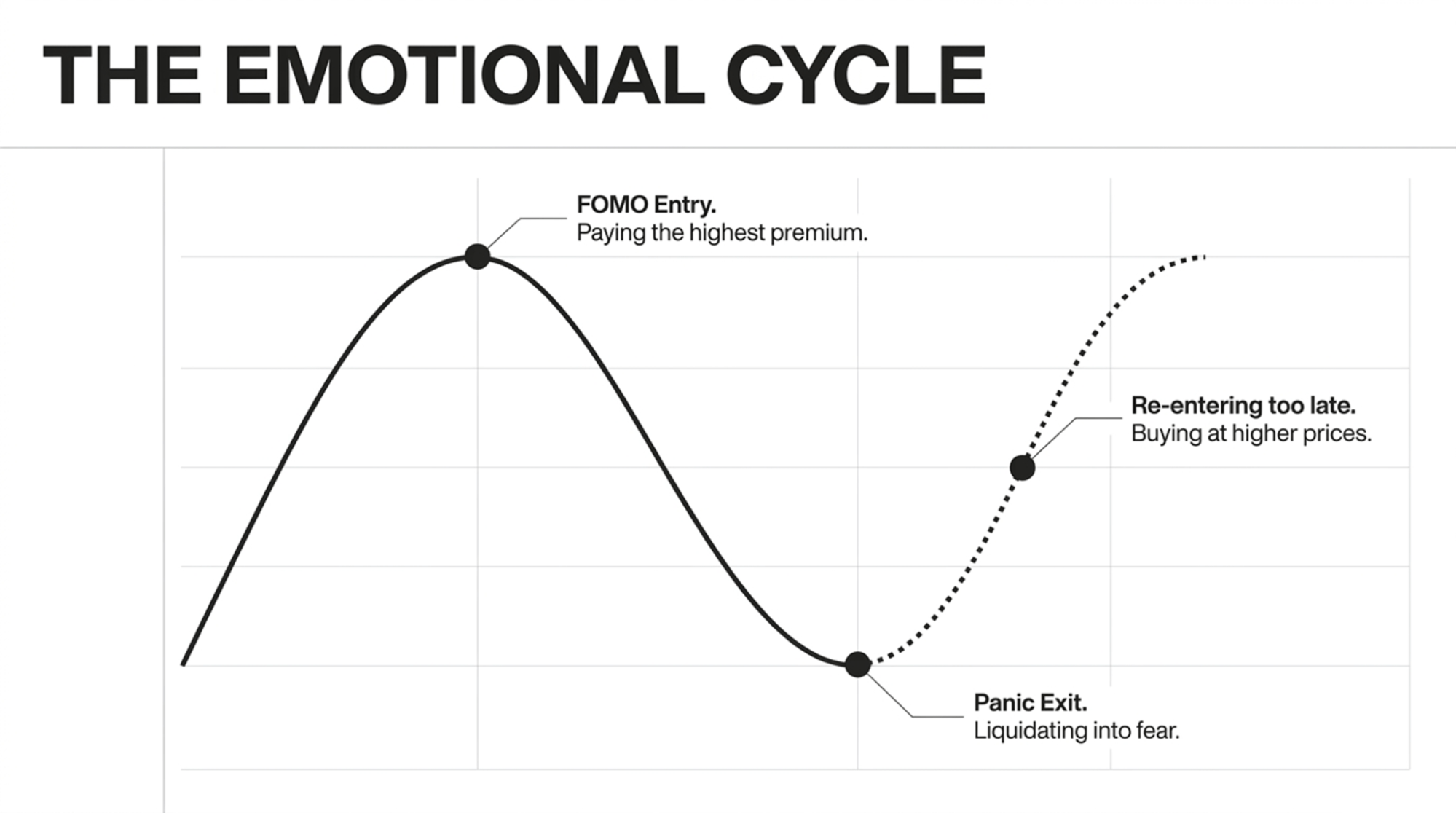
FOMO (Fear of Missing Out) is the emotion that makes you buy a stock after it's already risen 40%, because everyone in your office is talking about it and you feel left behind.
This is how most retail investors end up buying at peaks, paying the highest prices, and then holding the bag when the excitement fades and the stock corrects.
Panic selling is FOMO's equally destructive cousin.
It's the impulse that makes you sell everything on a brutal red day; when a global event sends markets crashing 8%; locking in real losses on what are often temporary price movements. The market's entire history is a series of crashes followed by recoveries. The investors who stayed invested through every correction built wealth. The ones who sold in panic and waited to "re-enter at the right time" almost universally re-entered too late, at higher prices, after missing the recovery.
The antidote to both is the same: a written investment thesis for every stock you own.
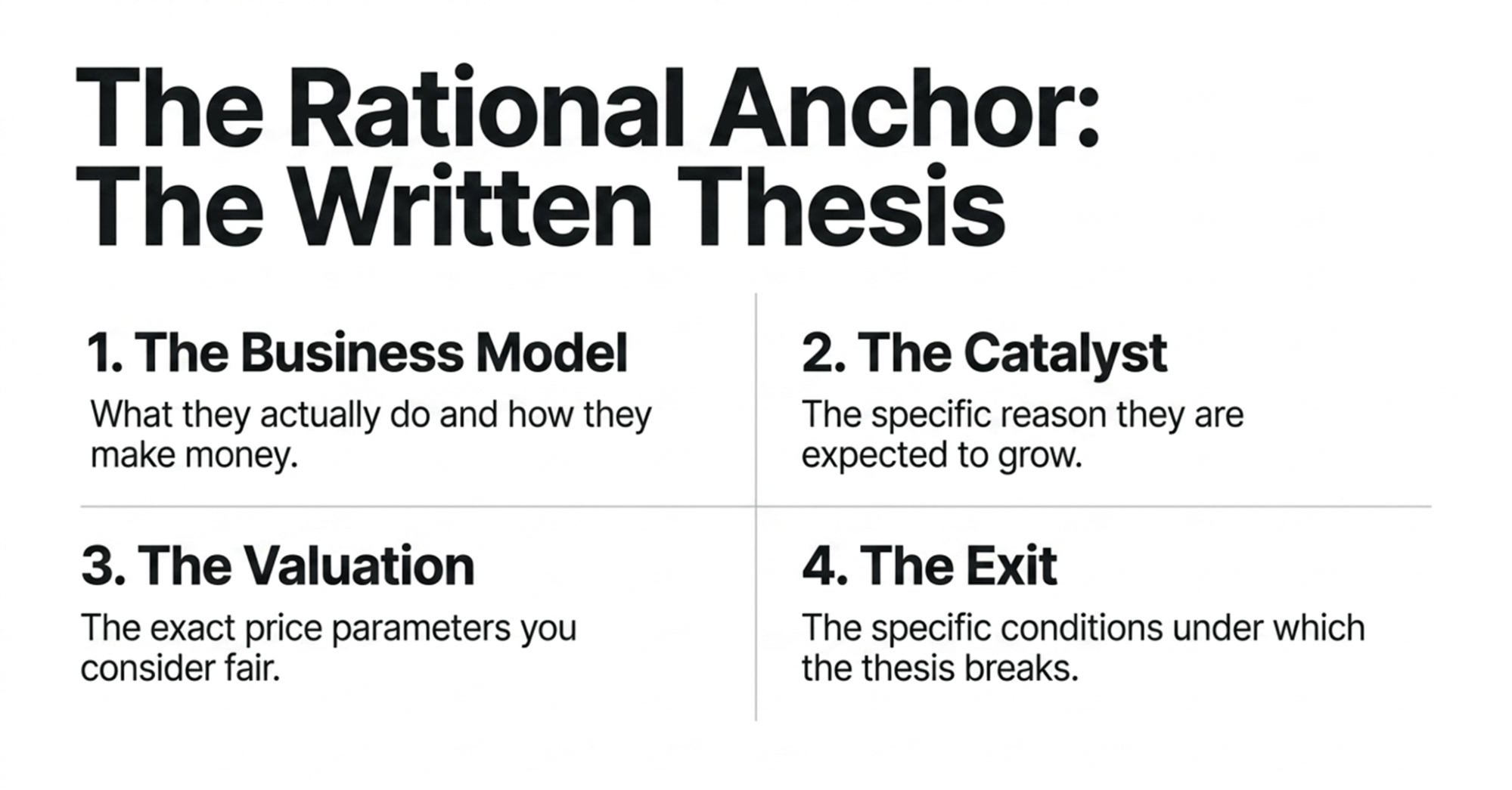
When you know why you bought something; what the business does, why it's expected to grow, what price you consider fair; you have a rational anchor during irrational market moments.
Emotion operates in the absence of reason. Give yourself the reason.
The Real Final Lesson
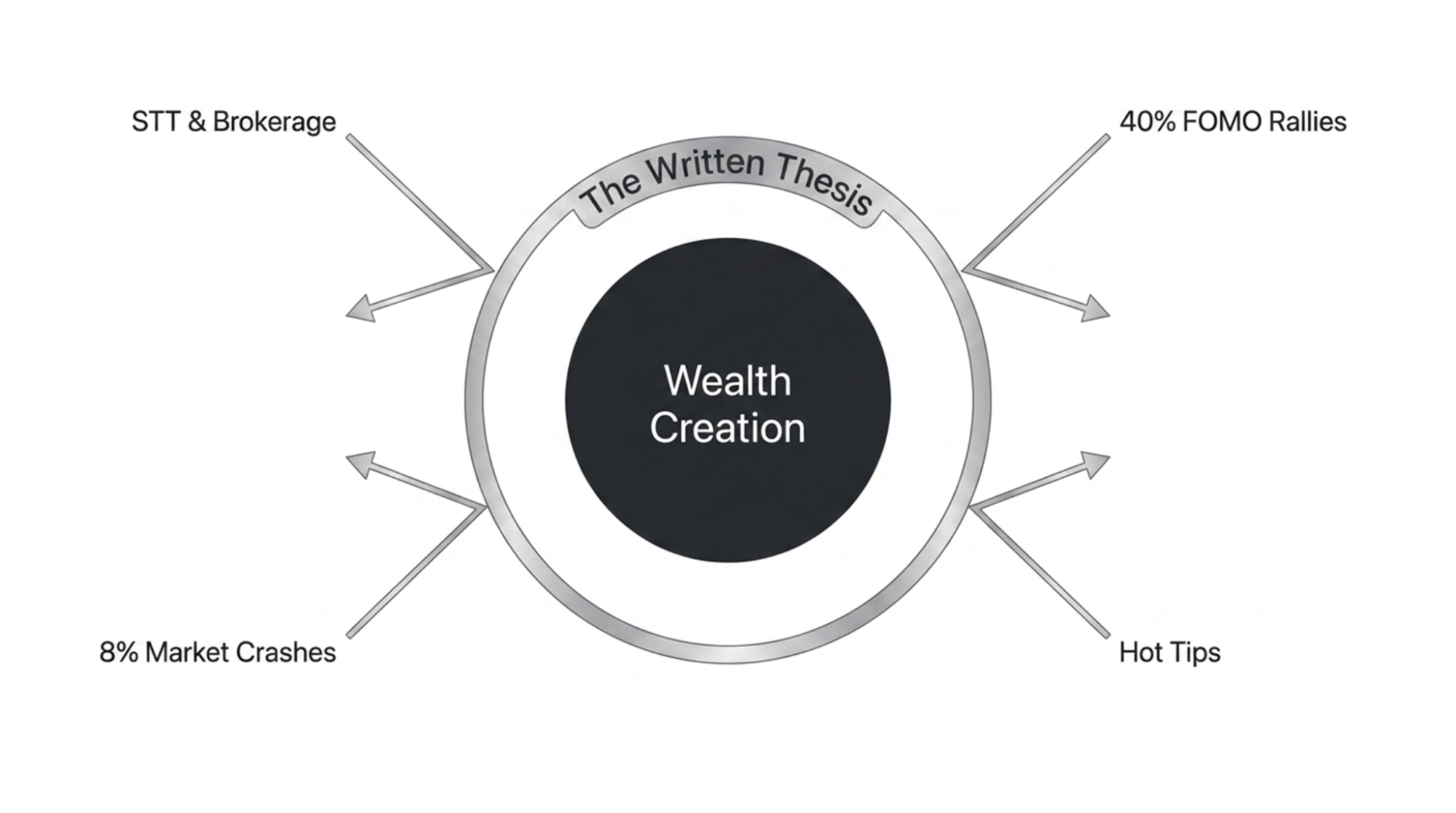
Every strategy discussed; the analysis, the diversification, the tax harvesting, the rebalancing; is ultimately only as effective as the discipline with which you execute it. The market will test you with crashes, tempt you with hot tips, and reward patience so slowly that it sometimes feels invisible.
Your job is to ignore the noise, trust your research, and stay the course.