Can You Really Pay Less Tax, Legally?
"It's not about how much your portfolio makes. It's about how much lands in your bank account after the taxman takes his cut."
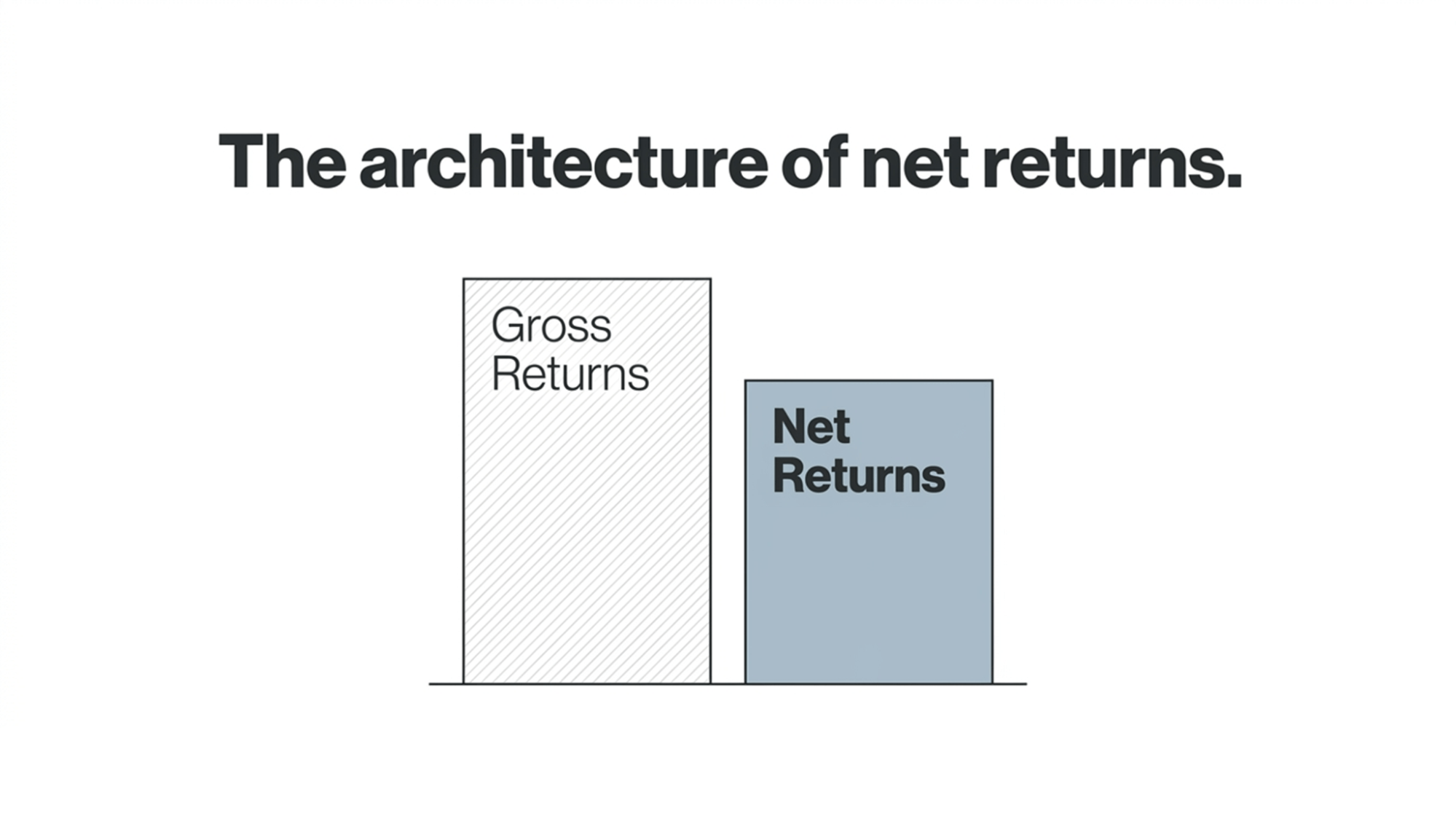
Most investors obsess over returns and ignore taxes entirely; until the financial year ends and they receive an unexpectedly large tax bill. The irony is that India's tax laws for equity investors actually contain some remarkably generous provisions that most people never use, simply because nobody explained them clearly.
Let's fix that.
Understanding How Equity Gains Are Taxed
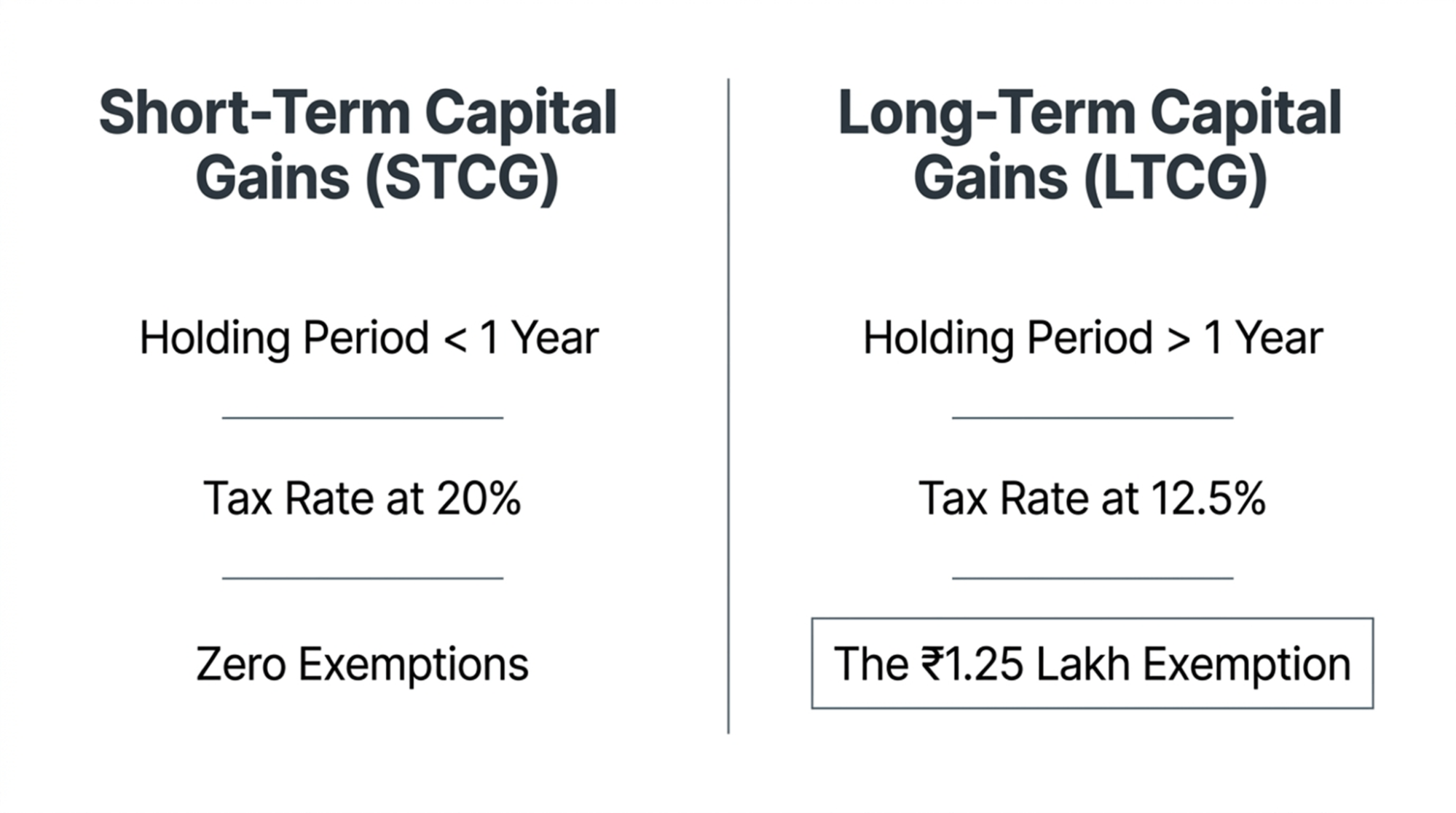
When you sell a stock at a profit, the gain is taxed based on how long you held it.
If you held for less than one year, it's a Short-Term Capital Gain (STCG), taxed at 20%.
If you held for more than one year, it's a Long-Term Capital Gain (LTCG), taxed at 12.5%; but only on gains above ₹1.25 lakh per financial year. That first ₹1.25 lakh of long-term profit every year is completely tax-free.
This exemption is not a loophole; it is a deliberate policy provision to encourage retail equity participation. And most investors leave it entirely on the table.
Tax-Gain Harvesting: Using Your Free ₹1.25 Lakh Every Year
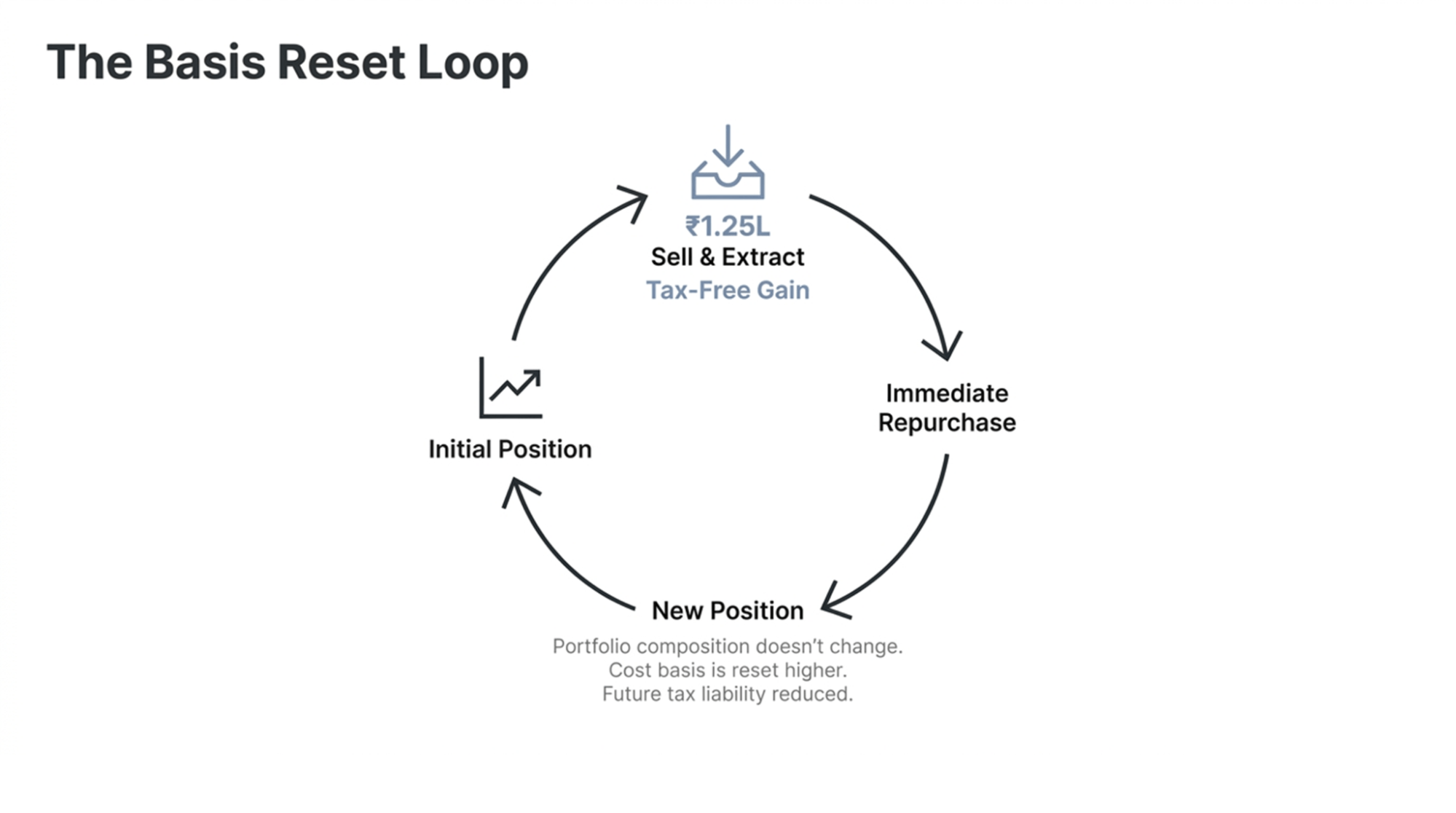
Here's the strategy.
If by February or early March your long-term portfolio is sitting on unrealised gains, and those gains are approaching but haven't yet crossed ₹1.25 lakh, you can sell those shares, book the tax-free profit, and immediately repurchase the same shares. Your portfolio composition doesn't change, but you've reset your cost basis at a higher level, effectively locking in a tax-free gain that would otherwise be taxed in a future year.
Done every year consistently, this small discipline can save meaningful amounts in tax over a decade.
Tax-Loss Harvesting: Turning Losers into Savings
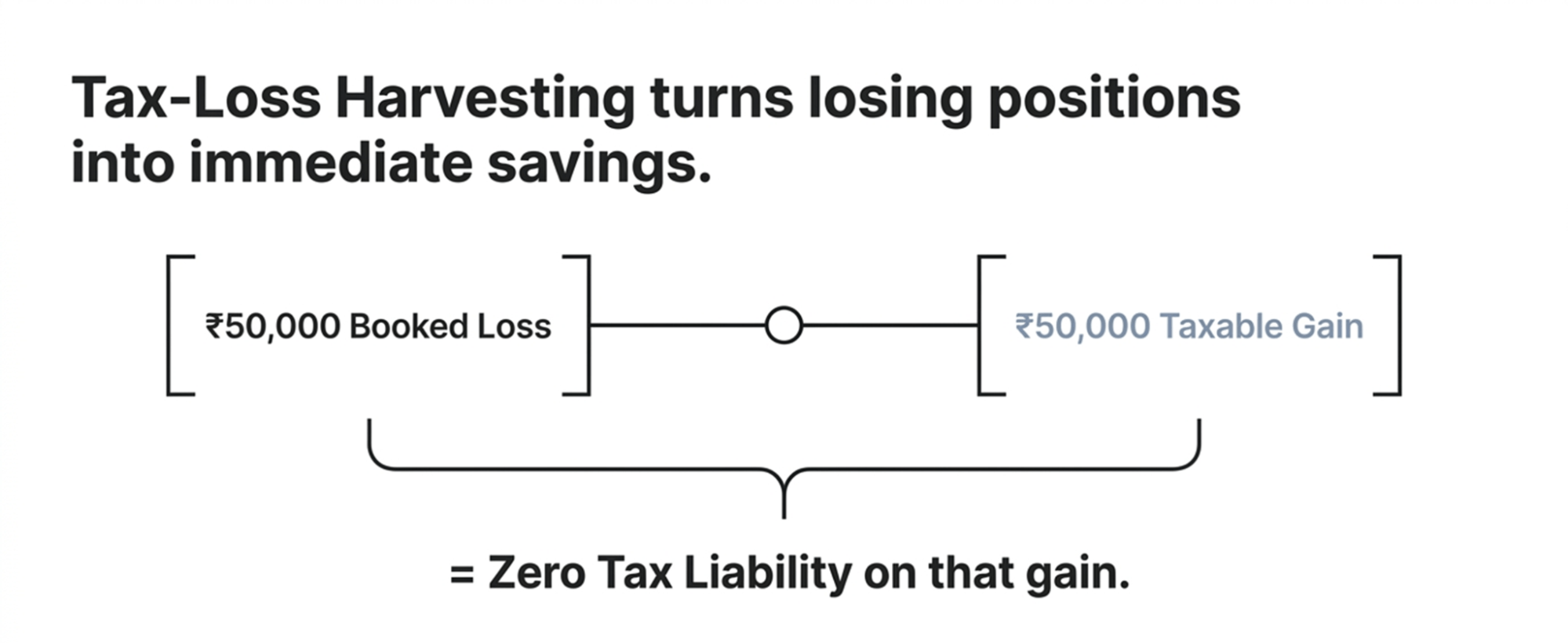
Every portfolio has positions that haven't worked out. Instead of simply sitting on them and hoping they recover, you can sell these losing positions before March 31st to book a capital loss. That loss can then be offset against your capital gains, reducing your taxable profit directly. A ₹50,000 capital loss booked before year-end can offset ₹50,000 worth of gains, saving you real tax rupees.
The only rule to remember:
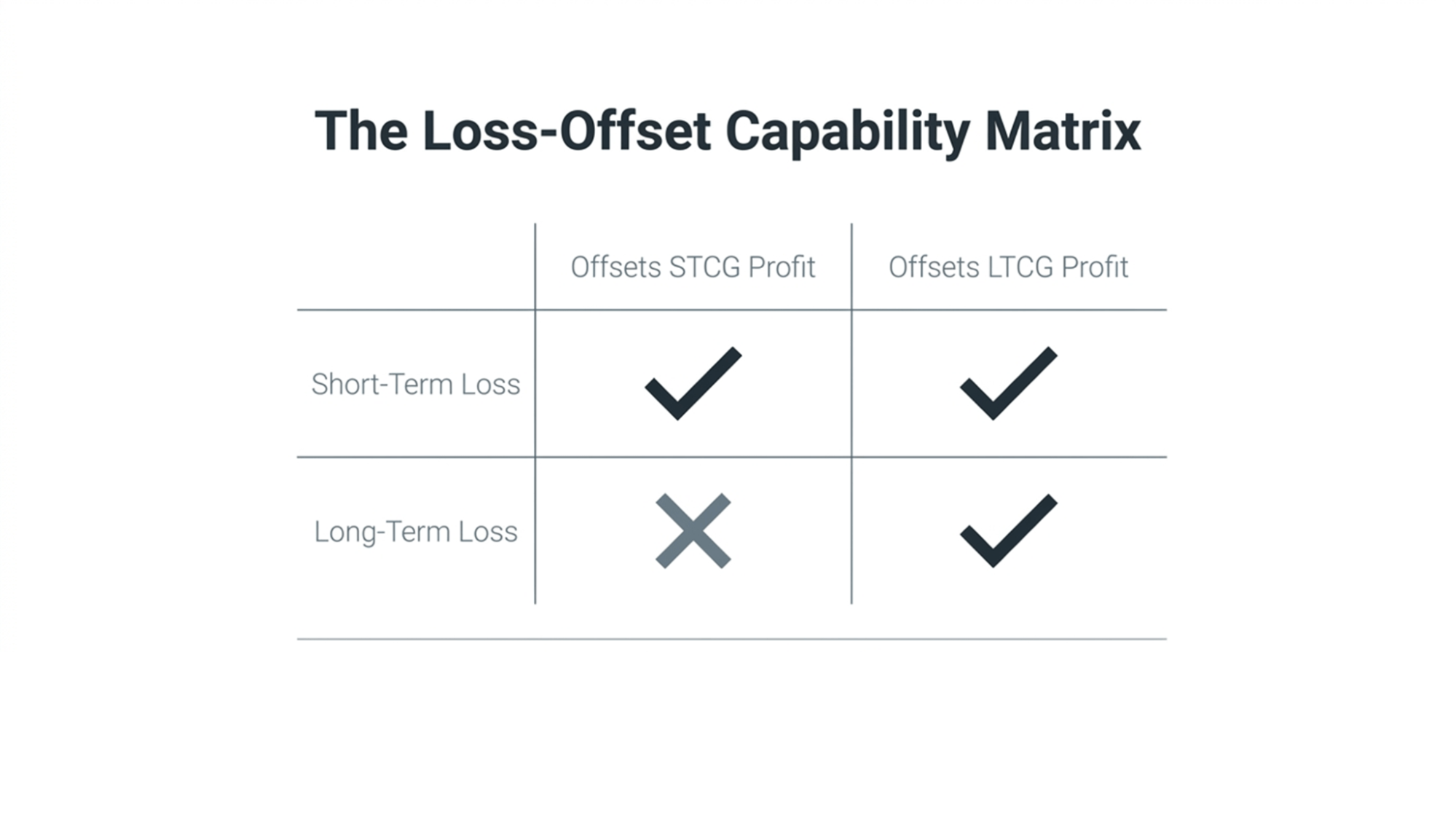
Why Timing and Tracking Matter
These strategies only work if you know your portfolio's exact gain and loss positions at any point in the year; which requires real-time tracking.
Ethica Invest integrates this kind of tax-efficiency monitoring into their advisory framework, flagging harvesting opportunities before year-end so you never accidentally miss your ₹1.25 lakh exemption or let a useful loss expire unused. In a world where every rupee saved is a rupee compounding, this attention to tax detail is a genuine competitive advantage.
Pro Tip: Set a reminder for the 15th of March every year; your annual "tax review date." Check your realised gains, your unrealised losses, and your ₹1.25 lakh LTCG position before the financial year closes. Twenty minutes of attention here can save thousands.
Next Up: Your equity portfolio is now built, balanced, maintained, and tax-optimised. But what happens when the entire stock market decides to take a long, painful nap? In the next Article, we build the safety boat; alternative assets.