Don't Put All Your Eggs in One Basket – The Power of Sectoral Investing
"You have to think like a portfolio architect, not just a stock picker."

Here's a scenario that plays out regularly in the Indian market. You've done your research, built what feels like a solid portfolio; and then one morning, the RBI announces an unexpected interest rate hike. By afternoon, every bank stock you own is deep in the red. Every single one. Because you'd accidentally put most of your money into one sector without realising it.
This is one of the most common; and most avoidable; mistakes beginners make. And the solution is a concept called "Sectoral Diversification", which simply means spreading your investments across different industries so that a storm in one neighbourhood doesn't flood your entire portfolio.
What is a Sector?
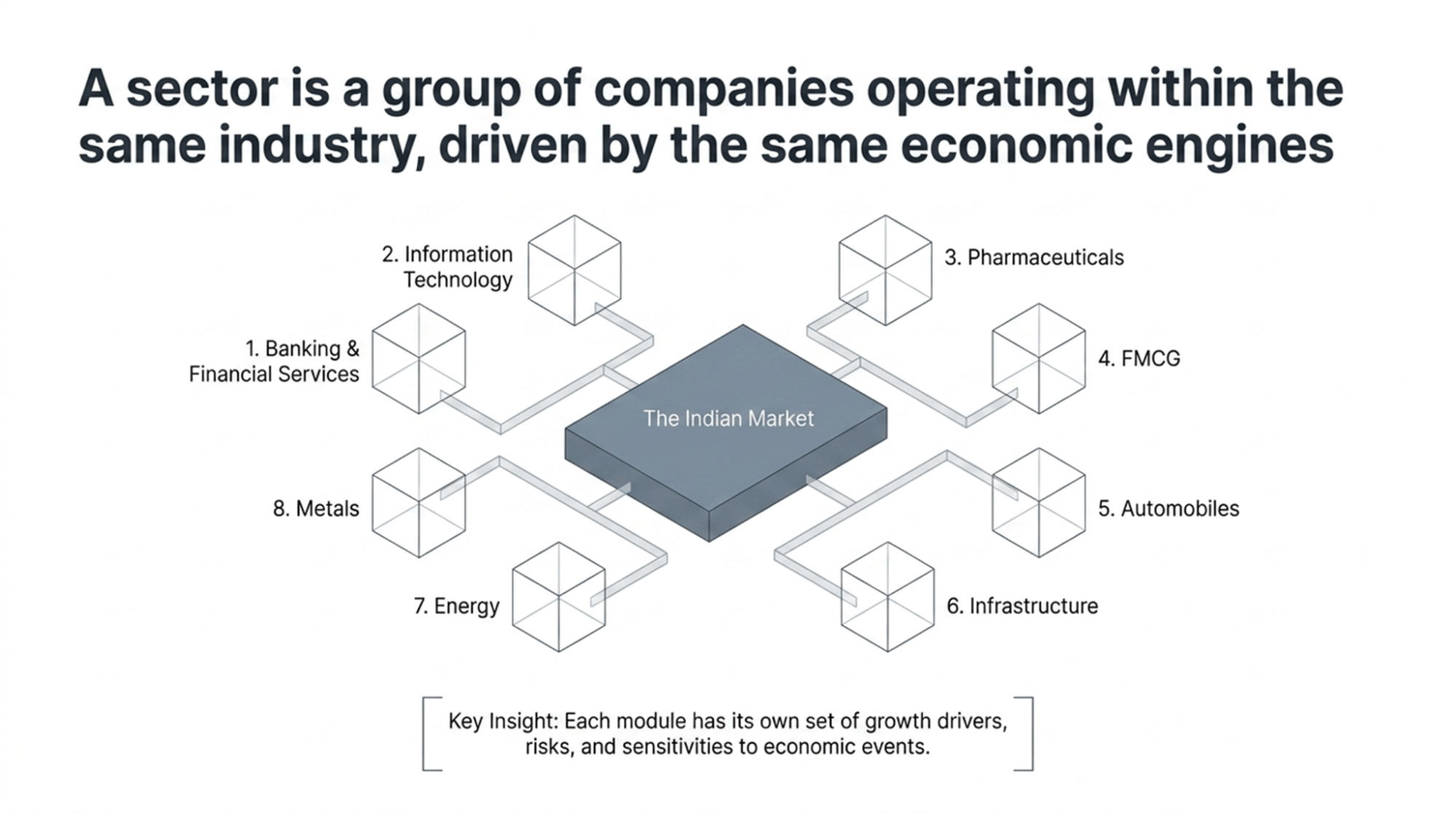
A sector is simply a group of companies that operate in the same industry. The Indian market is broadly divided into sectors like Banking and Financial Services, Information Technology, Pharmaceuticals, FMCG (Fast-Moving Consumer Goods), Automobiles, Infrastructure, Energy, and Metals, among others. Each sector has its own set of growth drivers, risks, and sensitivities to economic events.
The key insight is this: different sectors respond differently to the same news.
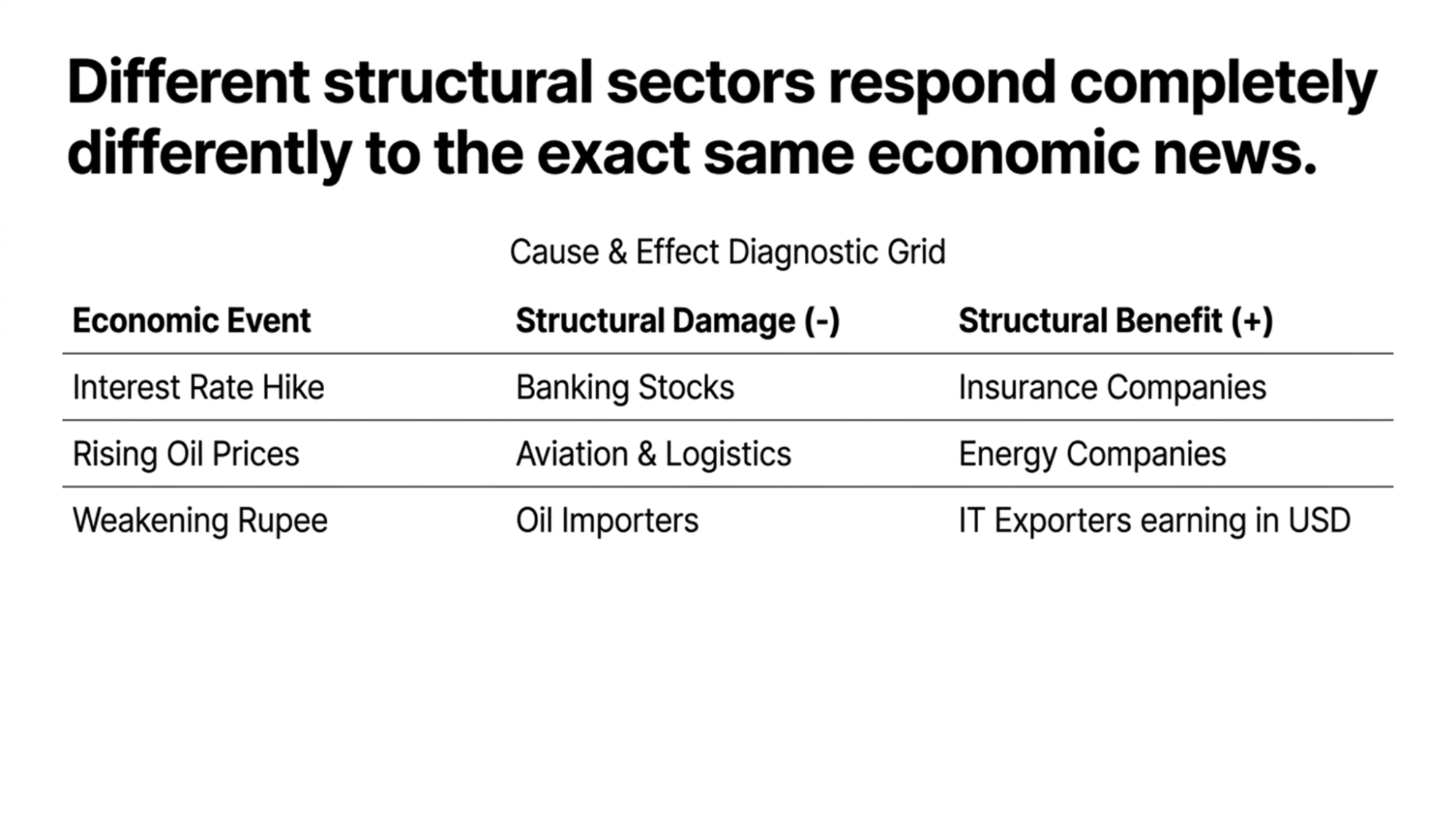
An interest rate hike might hurt banking stocks but benefit insurance companies. Rising oil prices crush aviation and logistics but boost energy companies. A weak rupee is bad news for oil importers but excellent news for IT exporters who earn in dollars. Understanding these relationships is what separates a thoughtful investor from a lucky one.
The Balanced Diet Analogy
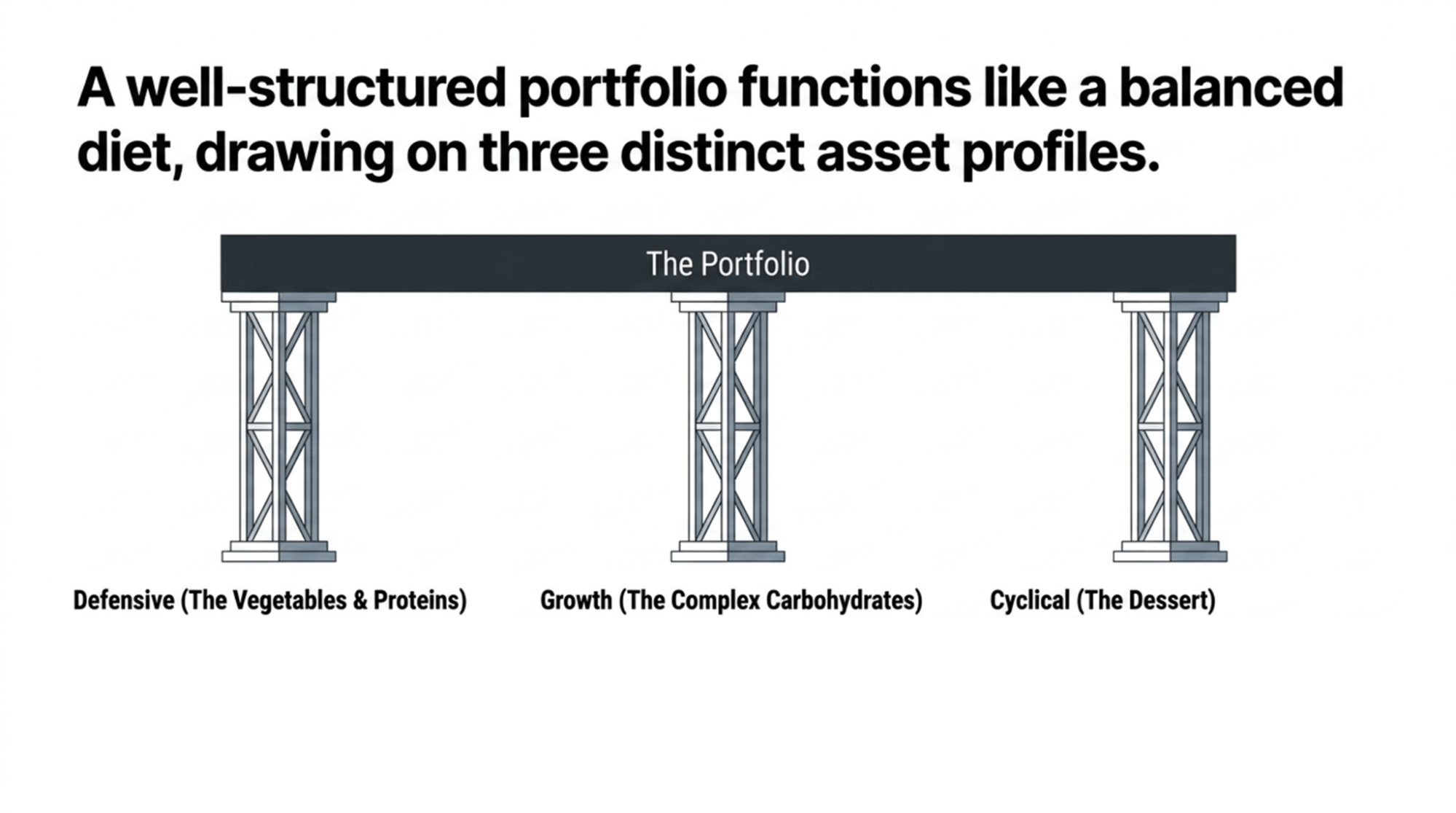
Think of your portfolio like a nutritious meal. You wouldn't eat only protein or only carbohydrates and expect to stay healthy. A well-structured portfolio draws from multiple sectors; some defensive, some growth-oriented, some cyclical; so that your overall financial health remains stable regardless of which economic weather is passing through.
Defensive sectors are the vegetables and proteins of your portfolio. People buy soap, medicines, and packaged foods whether the economy is booming or contracting. These sectors don't deliver explosive returns, but they hold their ground when everything else is falling.
Growth sectors are your complex carbohydrates; they fuel long-term energy and deliver strong returns in favourable conditions, but can be volatile during global downturns.
Cyclical sectors behave like dessert; fantastic in the right season, best consumed in moderation and at the right time in the economic cycle.
The Trap to Avoid
Many beginners invest only in what they personally use or recognise. They buy only tech stocks because they work in IT. They buy only their bank's stock because they have an account there. This feels intuitive but is actually a concentration risk dressed up as familiarity. Familiarity is not the same as investment quality.
Building a sector-aware portfolio requires both breadth of knowledge and depth of research; knowing not just which sectors exist, but which specific companies within each sector are worth owning at any given point.
Ethica Invest's model portfolios are constructed with this cross-sectoral balance as a deliberate design principle, ensuring that your portfolio isn't accidentally betting everything on a single industry's good fortune.
You can now think about your investments in terms of balanced sectoral exposure.
“But there's more”.
In the next Level: The Strategist Phase; where we stop navigating and start mastering.
We'll cover fundamental and technical analysis, portfolio rebalancing, tax harvesting, and the psychology of staying calm when the market tries its best to make you panic. The endgame begins now.