How to Place Your First Order?
"You can read the screen. You know the stock you want. Now comes the moment every investor remembers: the first buy."
In the previous Article, we decoded the language of the market; tickers, LTP, volume, the works. You're no longer staring at an alien screen.
Now let's use it.
Placing your first order feels monumental, but the mechanics are actually very simple once you understand the two fundamental choices in front of you.
Finding the Order Window
On any broker app; Zerodha, Groww, Upstox, or others; you search for the stock you want, tap on it, and hit the "Buy" button.
A small order window pops up.
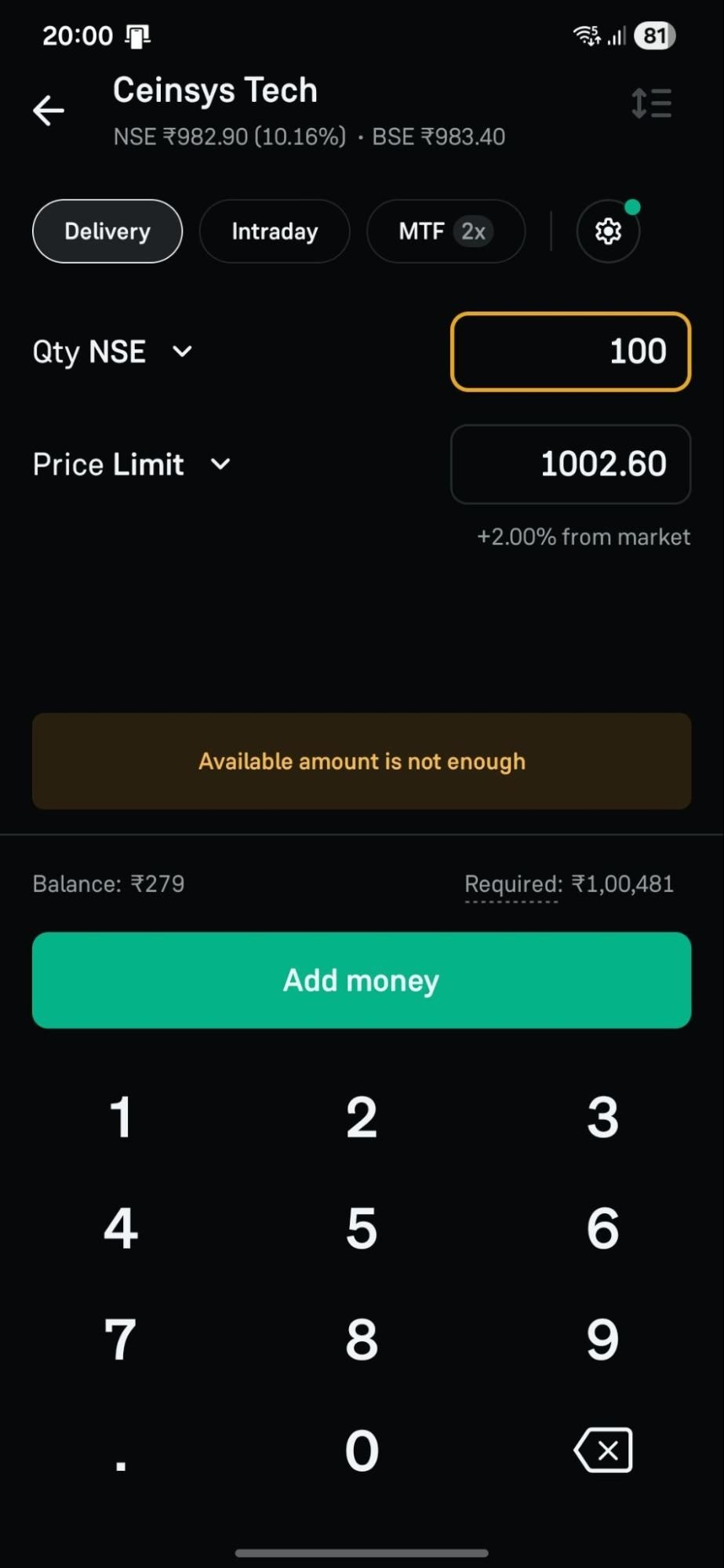
This window will ask you for three things: the quantity (how many shares), the order type (this is the important one), and the price (depending on your order type).
That's it.
Let's focus on the order type, because this is where most beginners hesitate.
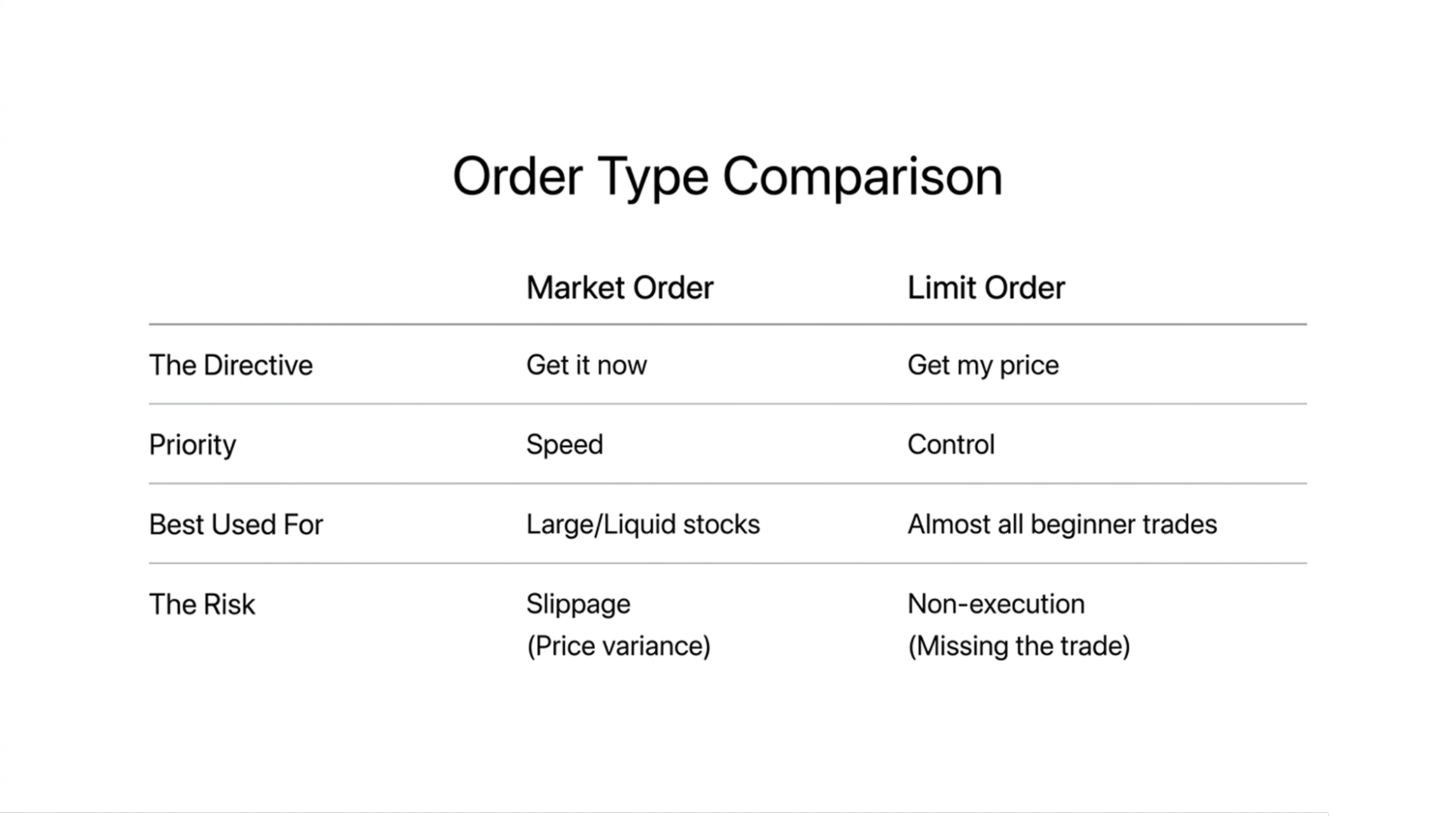
Option 1: The Market Order — "Buy it now, whatever the price"
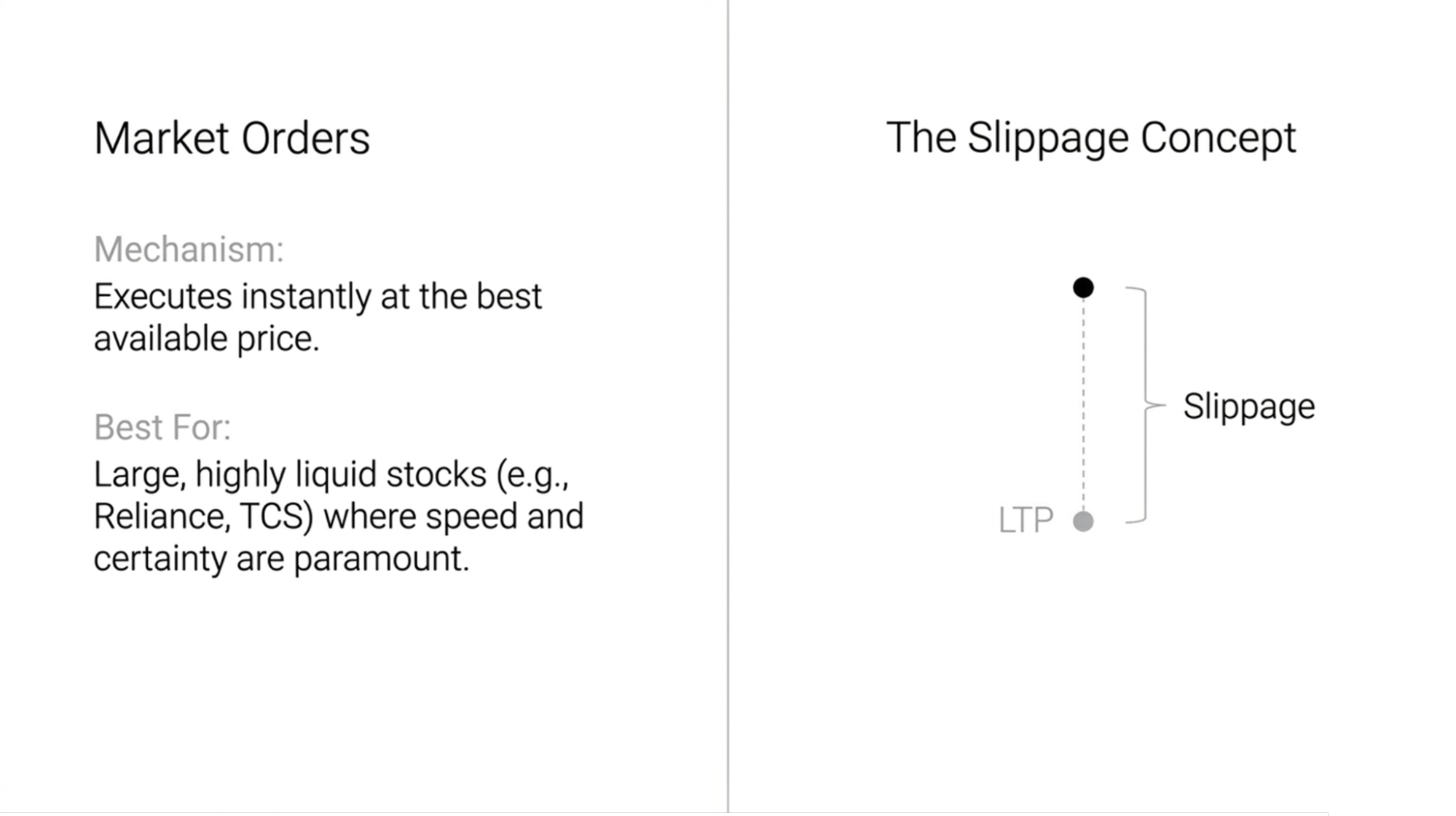
A Market Order tells your broker: "I want this stock right now. Just get it done at the best available price." The trade executes almost instantly. You don't specify a price; you accept whatever the market is currently offering.
When to use it: When you're buying a large, highly liquid stock (like Reliance or TCS) and the price difference of a few rupees doesn't matter much to you. Speed and certainty of execution are your priority.
The small risk: In a fast-moving market, the price you get might be slightly different from the LTP you saw a moment ago. This difference is called ‘slippage'. For large stocks with heavy trading volume, slippage is usually negligible. For smaller, thinly traded stocks, it can be more pronounced.
Option 2: The Limit Order — "Buy it, but only at my price"
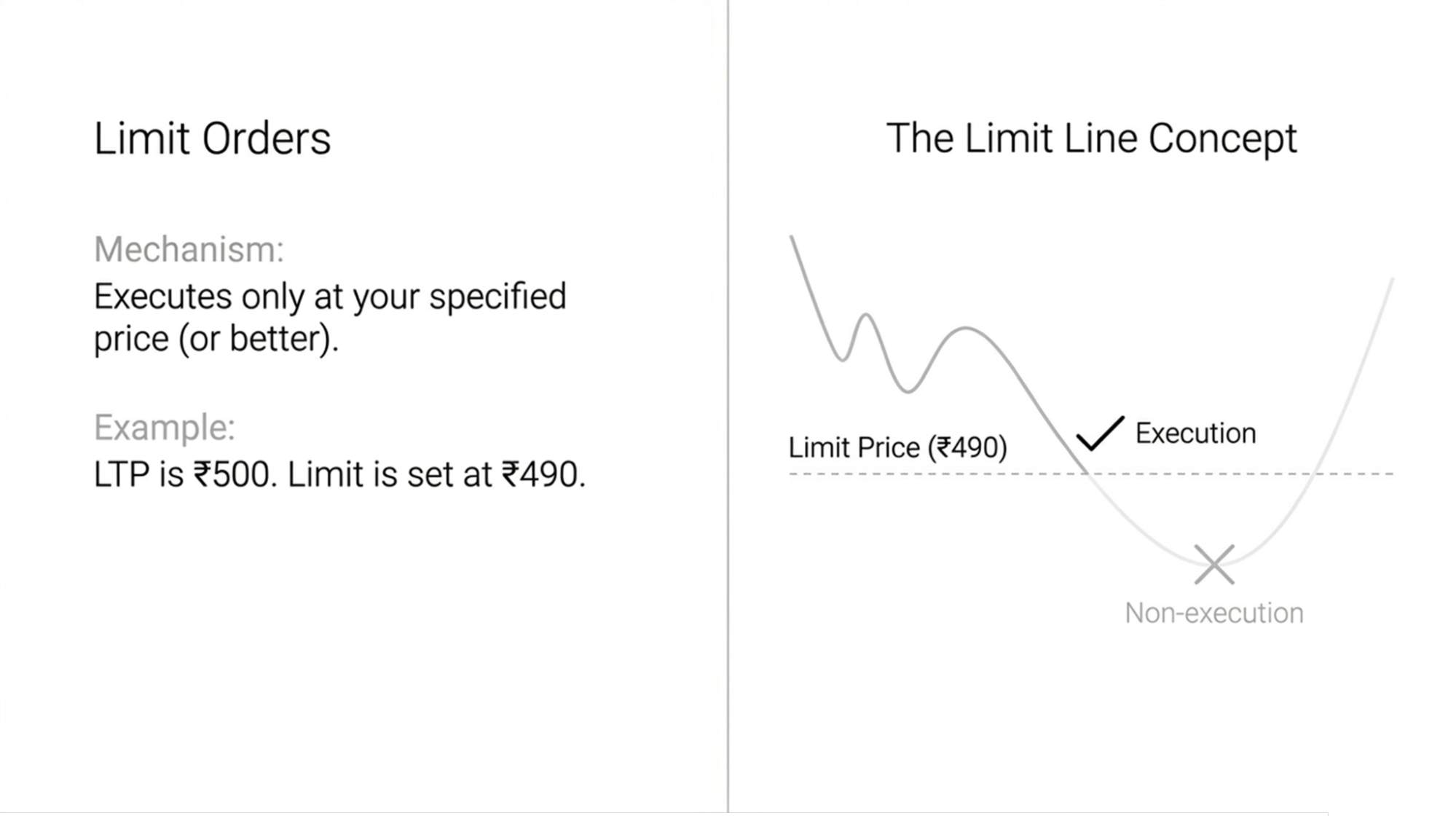
A Limit Order lets you specify the exact price at which you're willing to buy. If the stock is trading at ₹500 and you think ₹490 is a fairer entry, you set a limit order at ₹490. Your order sits in the system waiting. The moment the stock touches ₹490, your order executes automatically.
When to use it: Almost always, especially as a beginner. It gives you control, prevents overpaying in volatile moments, and keeps you disciplined.
The small risk: If the stock never drops to your limit price, your order simply doesn't execute. You may miss the trade; but you'll never overpay.
A Quick Practical Tip
For your first few trades, use limit orders on large-cap, well-known stocks. This keeps you in control, teaches you patience, and prevents the anxiety of seeing a wildly different execution price. Set your quantity conservatively; start small, get comfortable with the process, and scale up as your confidence grows.
Now,
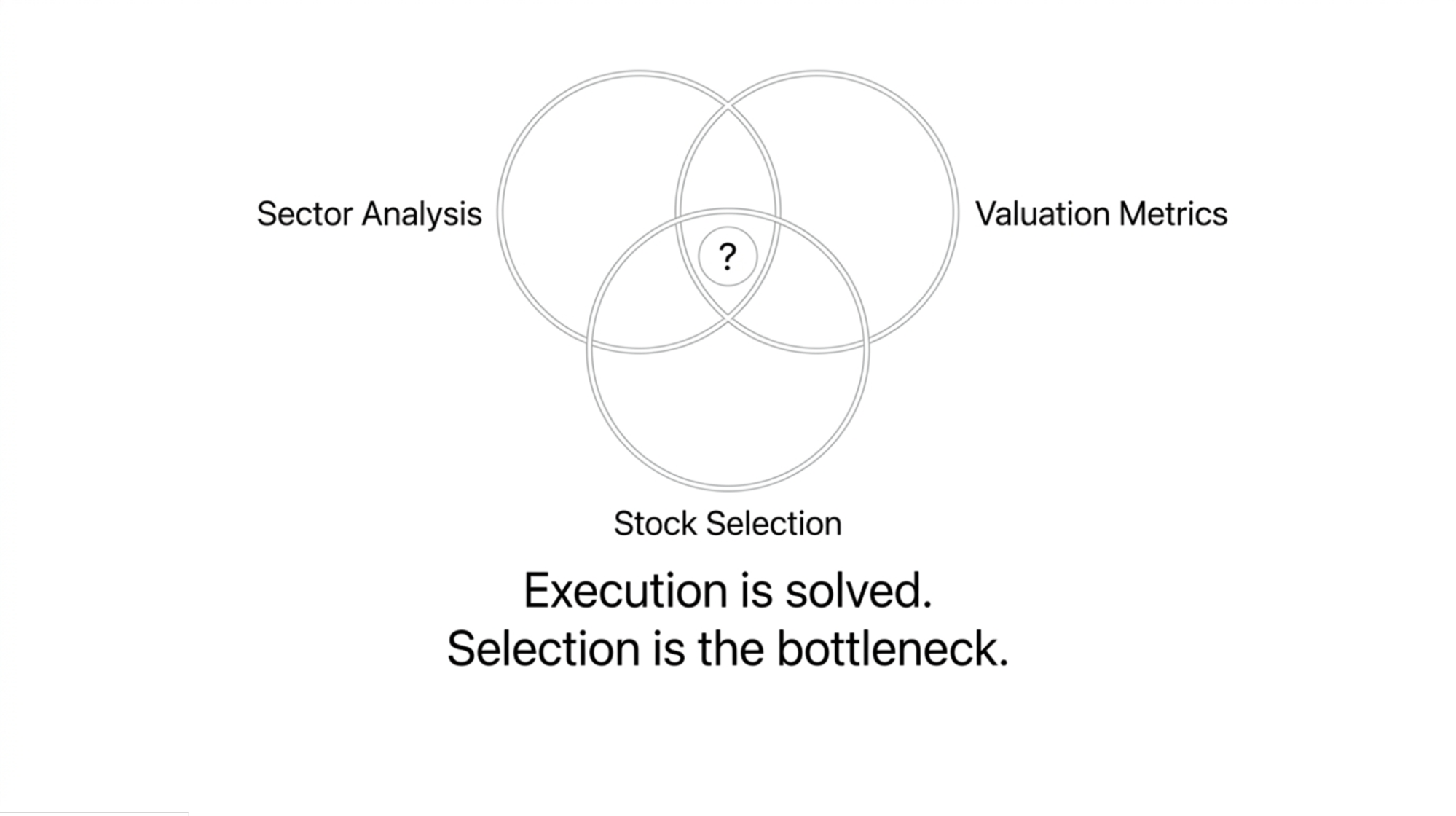
The what to buy question; which stock, at what valuation, in which sector; is a deeper conversation. Ethica Invest's curated model portfolios take that stress off your plate entirely, giving you a researched starting point rather than a gut feeling.
You've placed your first order. Now you're officially in the market.
But one question probably still lingers in the back of your mind: "Is all of this actually safe? What if something goes wrong?"
The next Article introduces the most powerful protector you didn't know you had.