What are Large, Mid, and Small Caps?
"Now it's time to understand the players on the field; and why not all of them play the same game."
In any sport, you don't put a beginner in a championship final and you don't put a heavyweight boxer against a flyweight. Matching players by their size, strength, and risk level is just smart strategy. The stock market has its own version of this classification system, and understanding it will fundamentally change how you think about building a portfolio.
The measuring stick the market uses is called "Market Capitalisation", or "Market Cap" for short.
What is Market Cap?
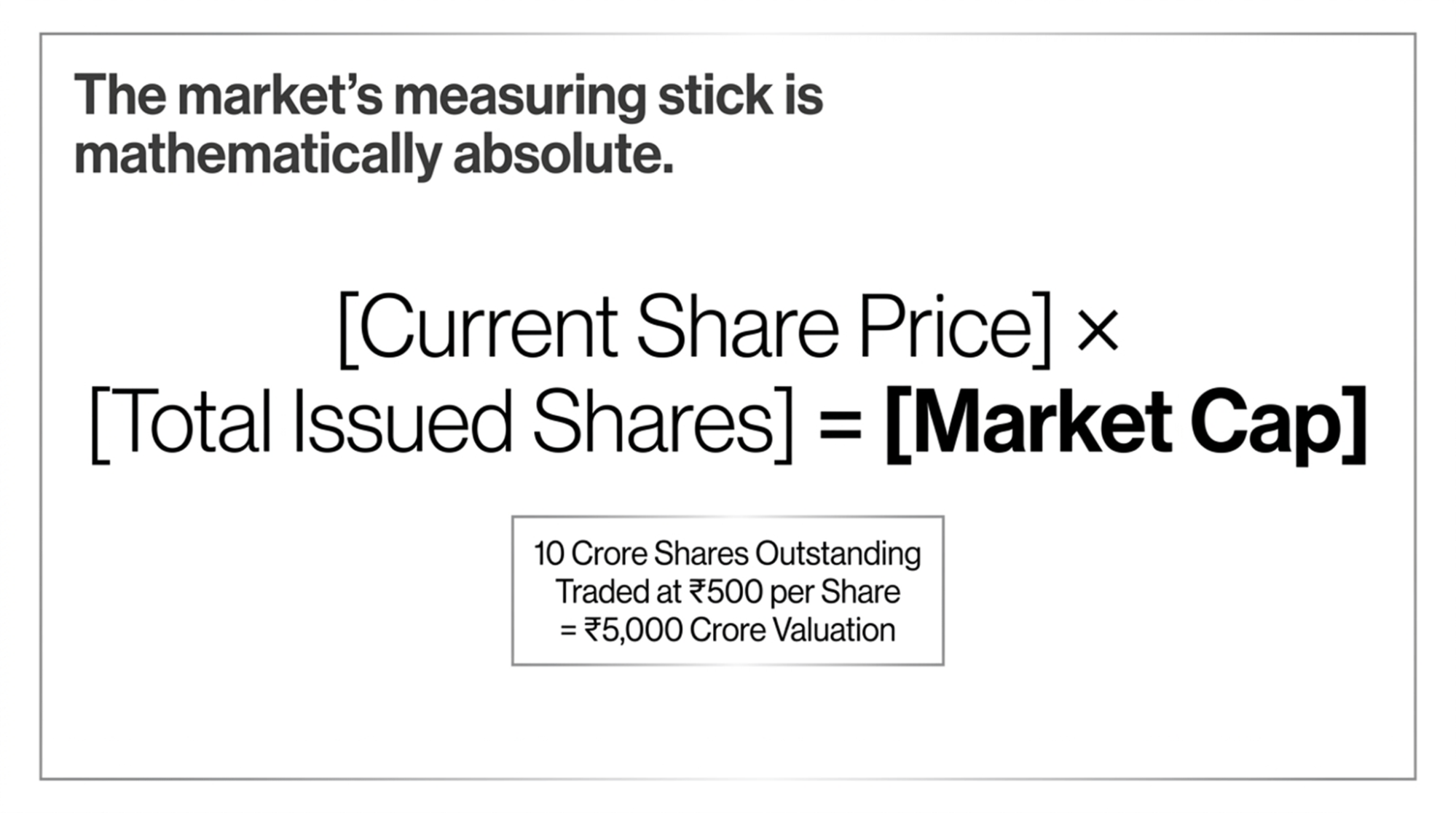
The formula is beautifully simple: Market Cap = Current Share Price × Total Number of Shares the Company Has Issued.
If a company has 10 crore shares outstanding and each share trades at ₹500, the company's market cap is ₹5,000 crore. That single number tells you what the entire stock market currently thinks this company is worth. It's not about revenue, profit, or employee count; it's pure market valuation, changing every second as the share price moves.
SEBI has defined the categories clearly.
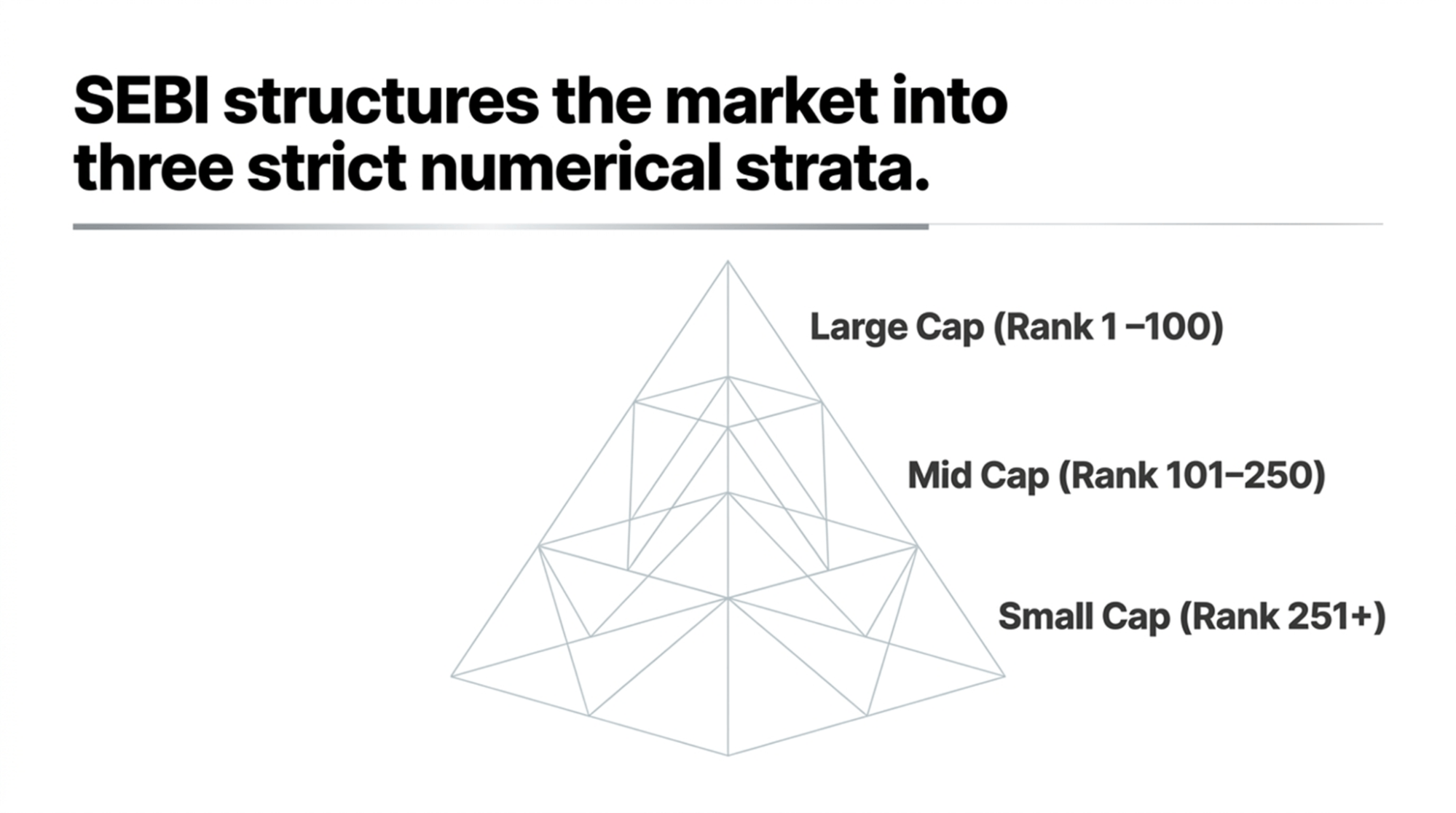
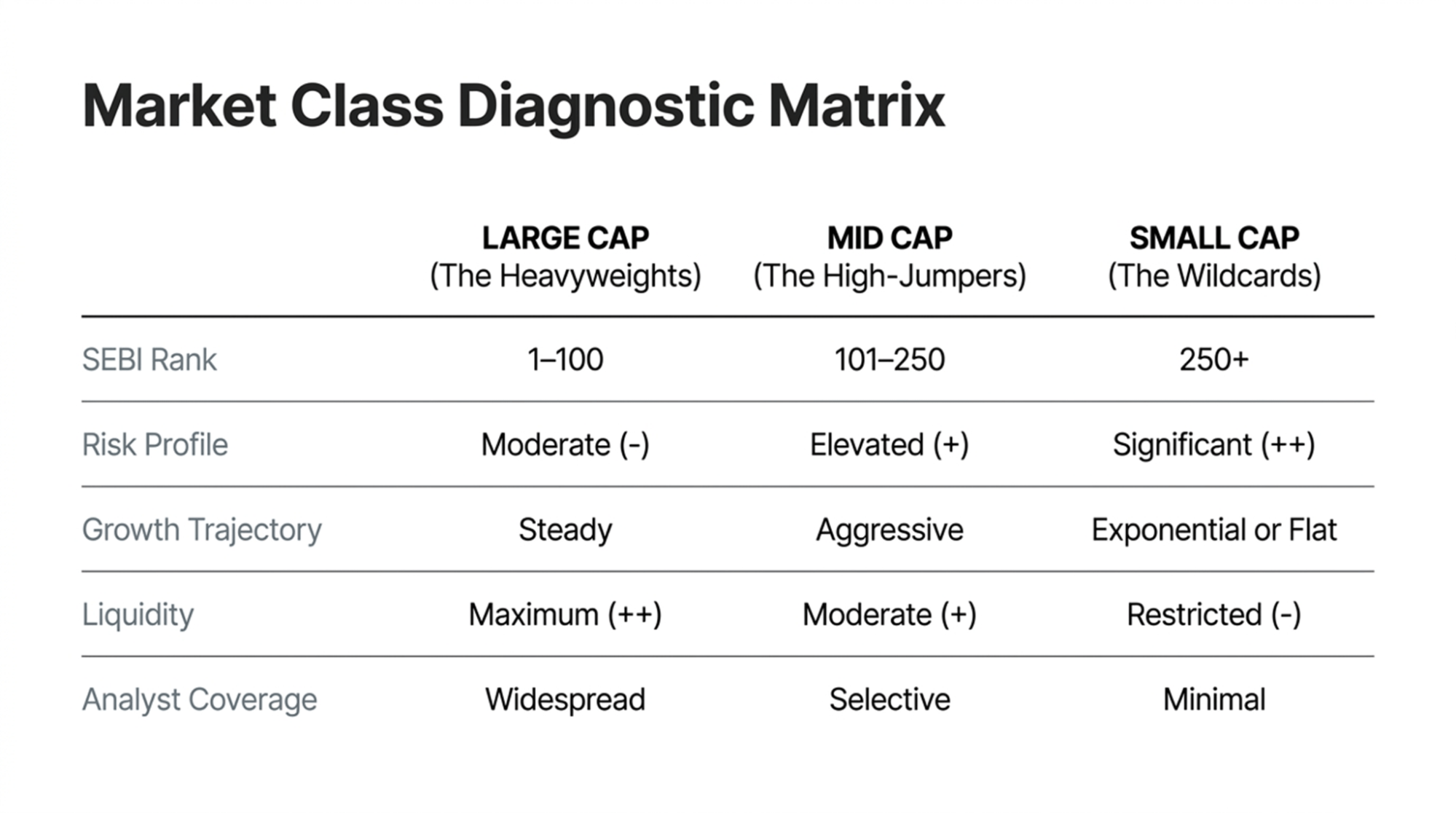
The top 100 companies by market cap are Large Caps. Companies ranked 101 to 250 are Mid Caps. Everything beyond 250 falls into Small Cap territory.
The Heavyweights: Large Cap Stocks
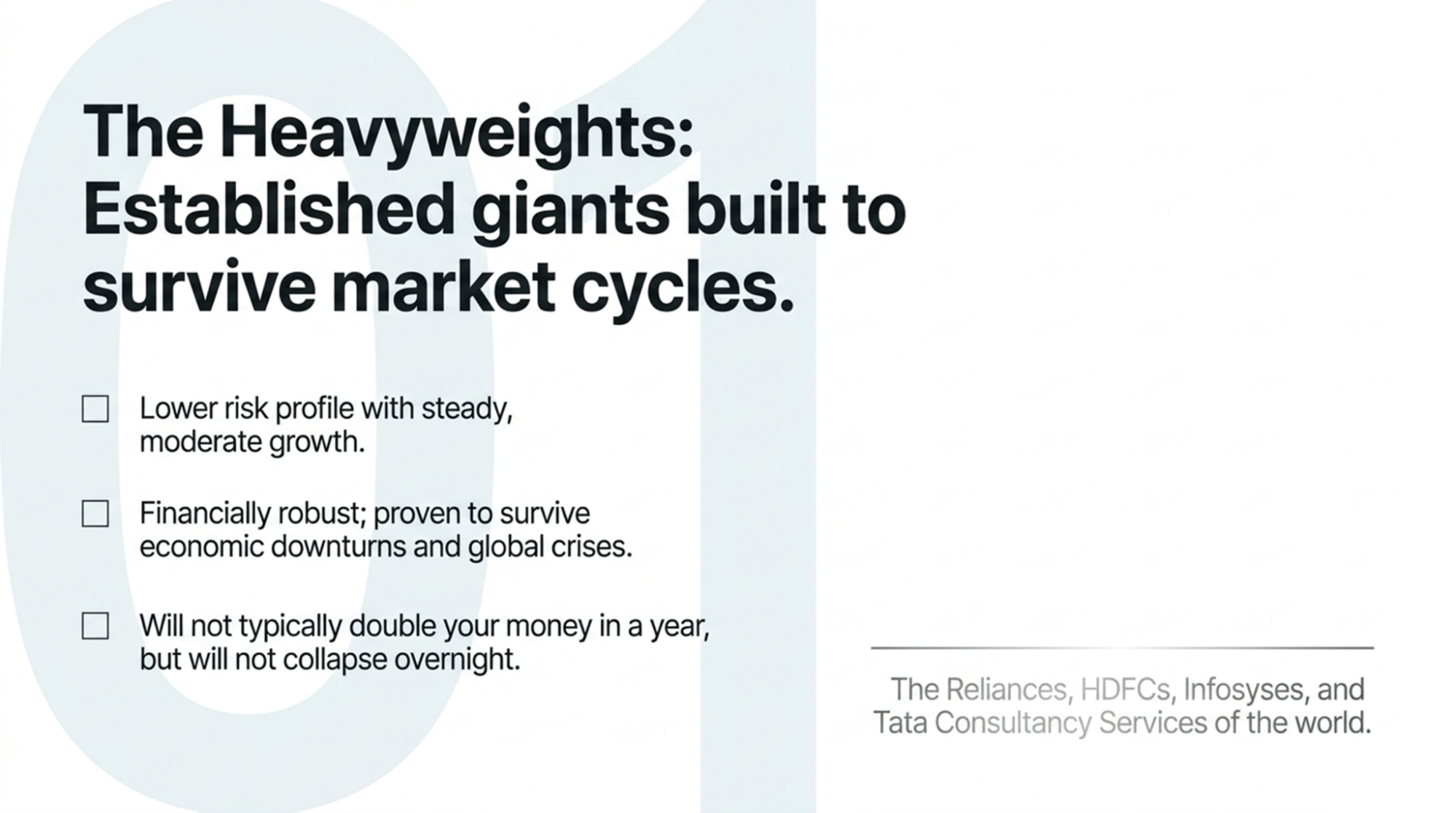
Large cap companies are the Reliances, HDFCs, Infosyses, and Tata Consultancy Services of the world; established, widely followed, and financially robust. They've survived multiple market cycles, economic downturns, and global crises. They don't usually double your money in a year, but they also don't typically collapse overnight.
The trade-off is straightforward: lower risk, steadier (but moderate) growth.
The High-Jumpers: Mid Cap Stocks
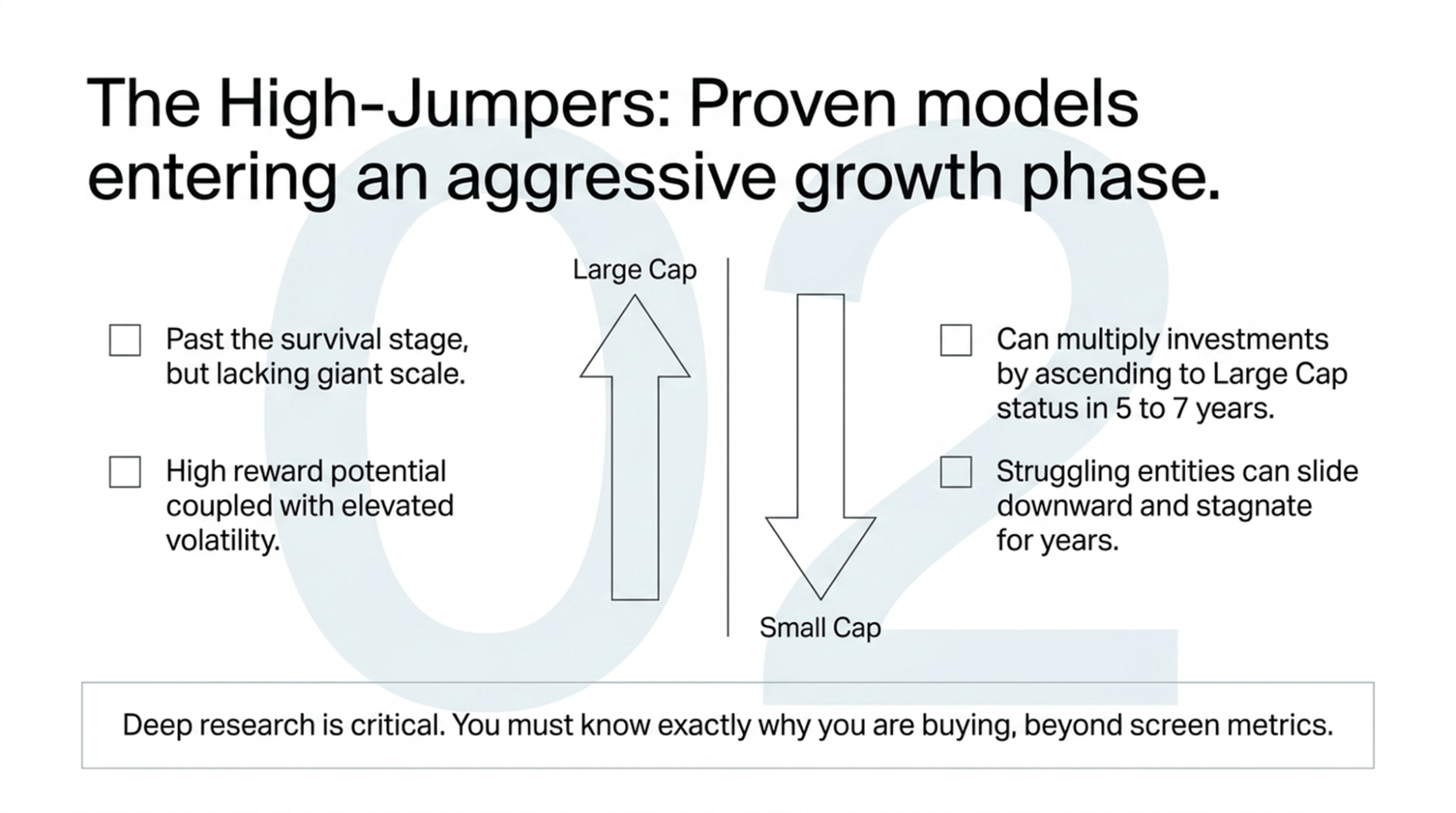
Mid caps are companies that have proven their basic business model but are still in an aggressive growth phase. They're past the survival stage but haven't yet reached the scale of the giants.
The reward potential here is higher than large caps, but so is the volatility. A great mid cap can become a large cap in five to seven years, multiplying your investment handsomely. A struggling mid cap, however, can also slide into small cap territory and stay there for years.
Research is critical here; you need to know why you're buying a mid cap, not just that it "looked good on a screen."
The Wildcards: Small Cap Stocks
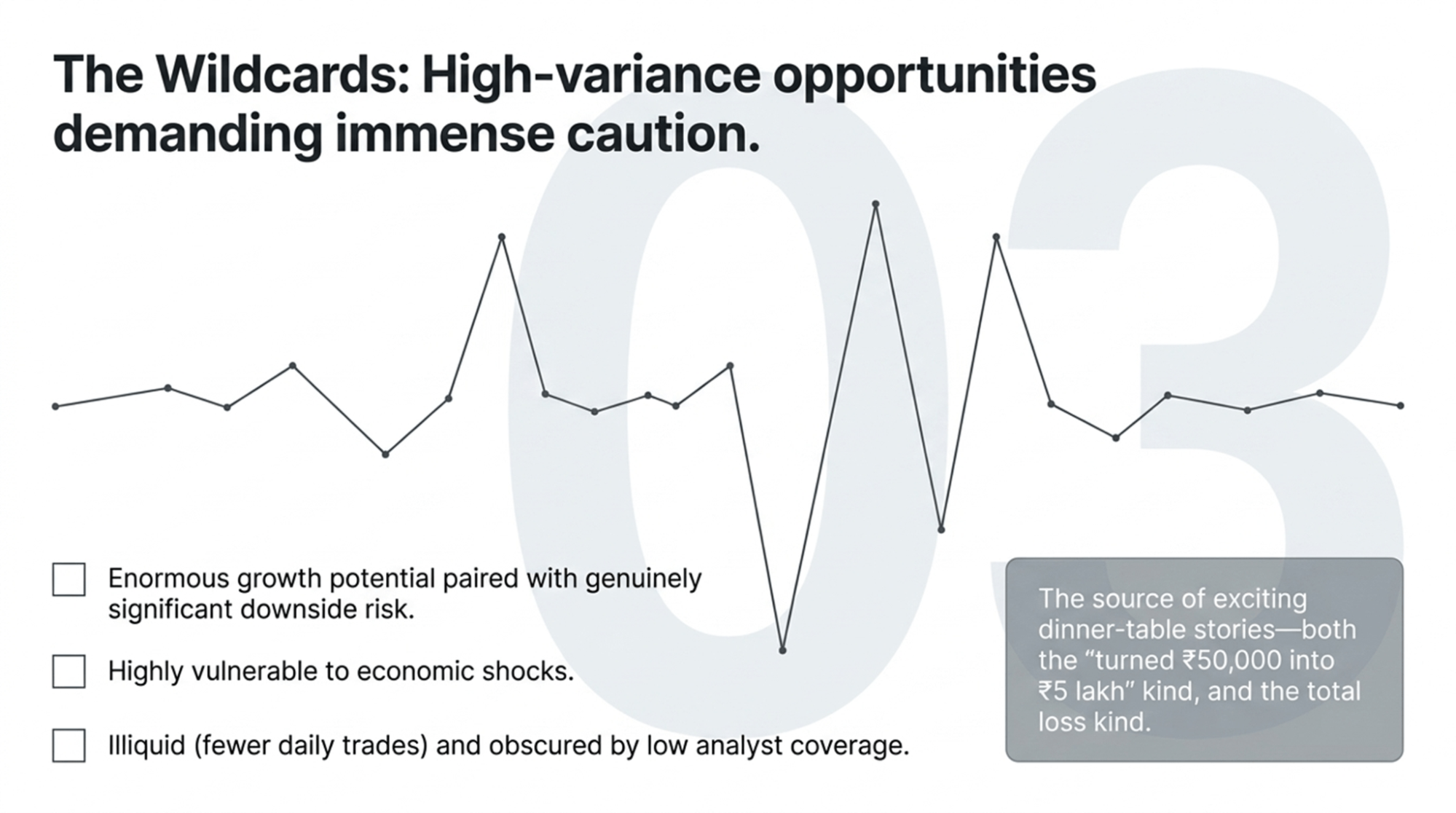
Small caps are the ones that make for exciting dinner-table stories; both the "I turned ₹50,000 into ₹5 lakh" kind and the "I lost most of it" kind. These are smaller, often newer companies with enormous growth potential if their business takes off, but with genuinely significant risk if it doesn't.
Small caps are less liquid (fewer people trading them daily), more vulnerable to economic shocks, and harder to research because they're less covered by analysts.
The Balanced Diet Approach
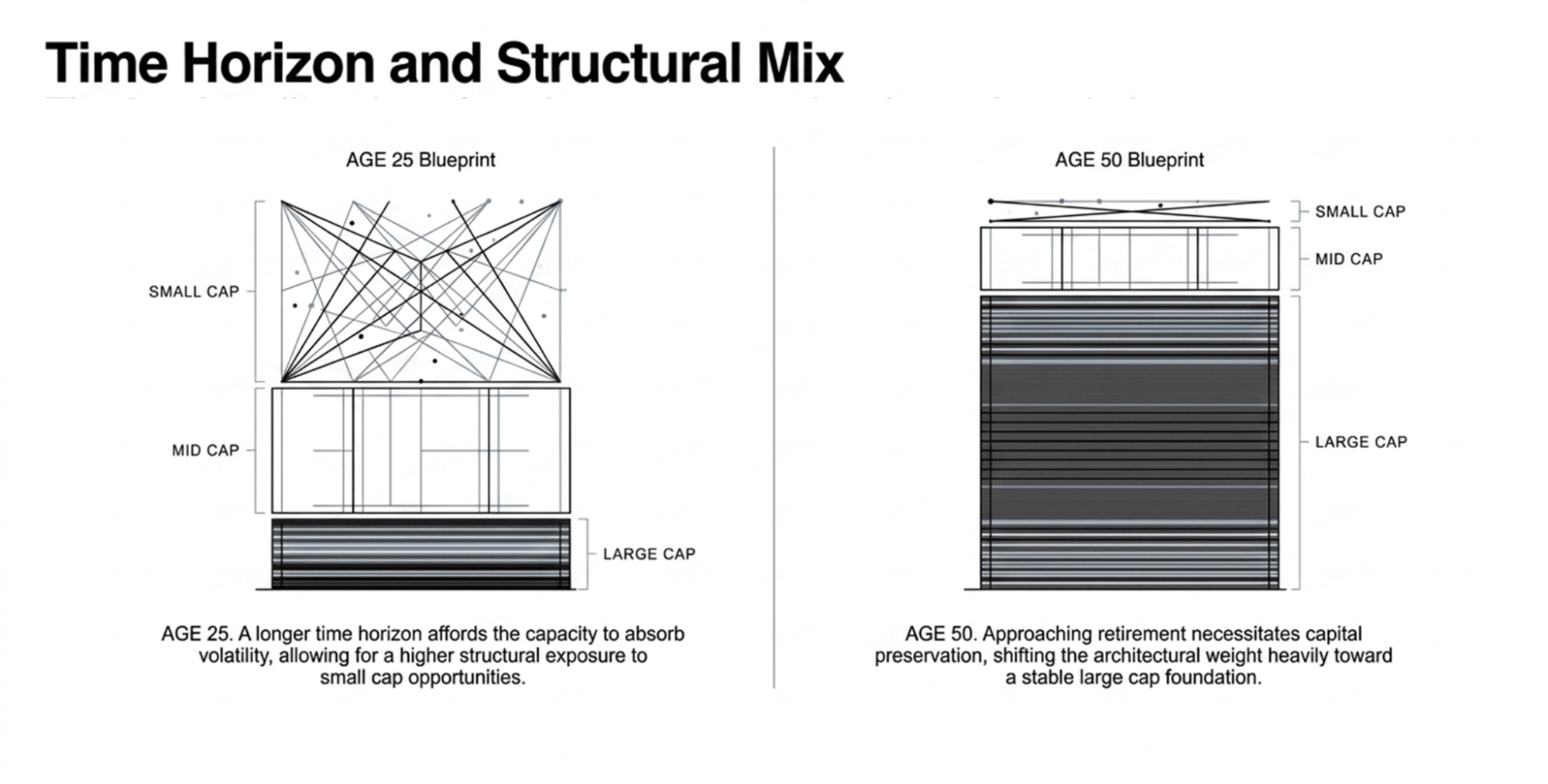
Most experienced investors don't pick just one category. They build a layered portfolio; a stable large cap foundation, some mid cap growth engines, and some carefully selected small cap opportunities. The exact mix depends on your age, risk appetite, and investment horizon. A 25-year-old can afford more small cap exposure than a 50-year-old approaching retirement.
Ethica Invest's model portfolios are structured precisely around this principle; thoughtfully mixing cap sizes based on research, so you're not randomly assembling a portfolio but building one with intention and logic.
Navigator Tip: Beyond Large, Mid, and Small caps, there's an even more adventurous corner of the market; one that promises the highest potential rewards but comes with risks that demand serious respect.
In the next Article, we venture into the Wild Frontier: SME Stocks.