What is Rebalancing?
Strategist Insight: Your portfolio is built with intention and balance. Now comes the discipline that separates serious investors from casual ones; the ongoing art of maintenance.
"Even the finest garden in the world turns into a jungle if you never tend to it. Your portfolio is no different."
Here's something that surprises most beginners.
Over time, even a perfectly balanced portfolio loses its balance; not because you made bad decisions, but because it worked. Your winners grew and now occupy a disproportionately large share of your portfolio.
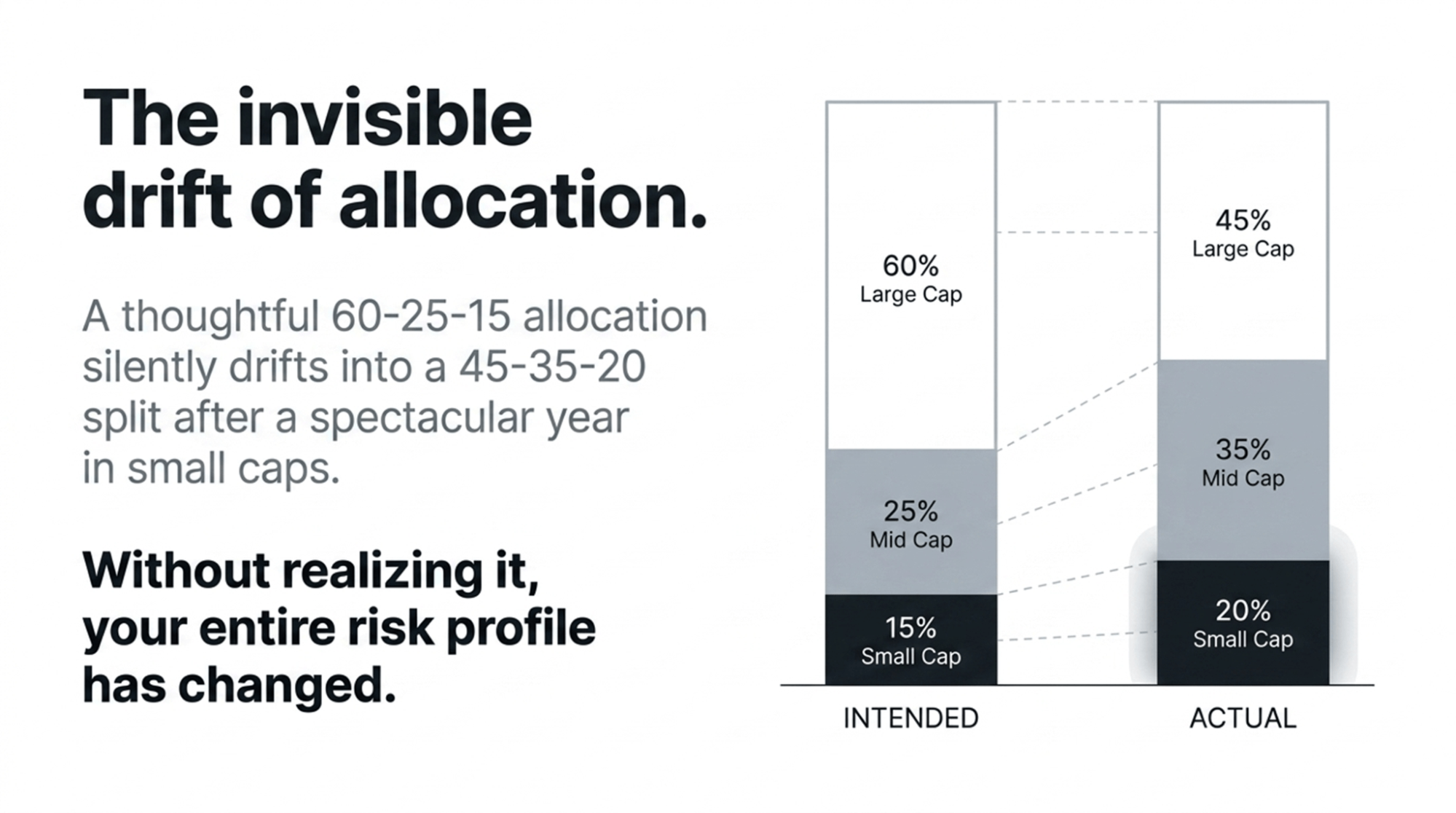
What began as a thoughtful 60-25-15 allocation across large, mid, and small caps has silently drifted into a 45-35-20 split because your small caps had a spectacular year. Without realising it, your risk profile has changed.
Rebalancing is the discipline of periodically restoring your portfolio to its intended structure.
The Quarterly Earnings Trigger
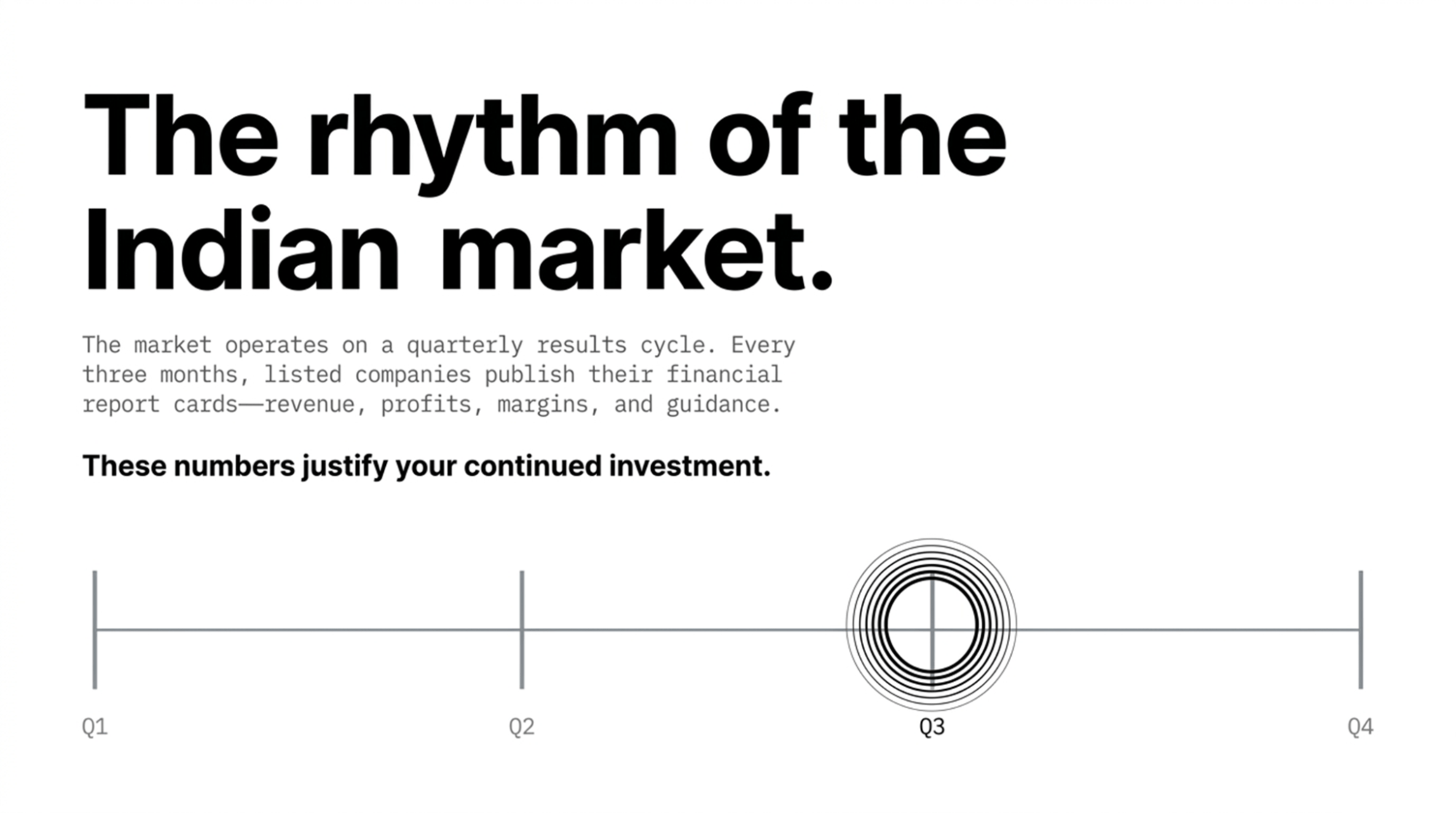
The Indian market operates on a quarterly results cycle.
Every three months, every listed company publishes its financial results; revenue, profits, margins, guidance for the future.
These results are not just numbers; they're report cards that tell you whether the businesses you own are continuing to justify your investment.
Reading quarterly results doesn't require a finance degree.
You're asking a few essential questions:
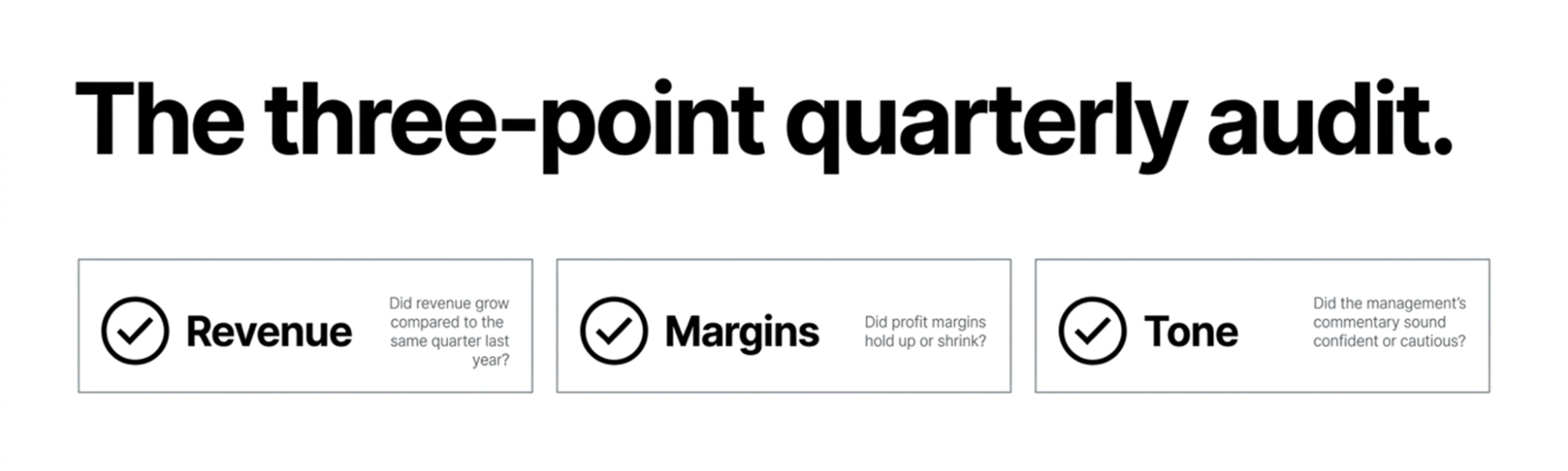
Did revenue grow compared to the same quarter last year?
Did profit margins hold up or shrink?
Did the management's tone in their commentary sound confident or cautious?
One weak quarter is rarely a reason to sell; businesses have bad seasons. But two or three consecutive quarters of deteriorating numbers often signal a structural problem worth taking seriously.
How Rebalancing Actually Works
The mechanical process is simpler than it sounds.
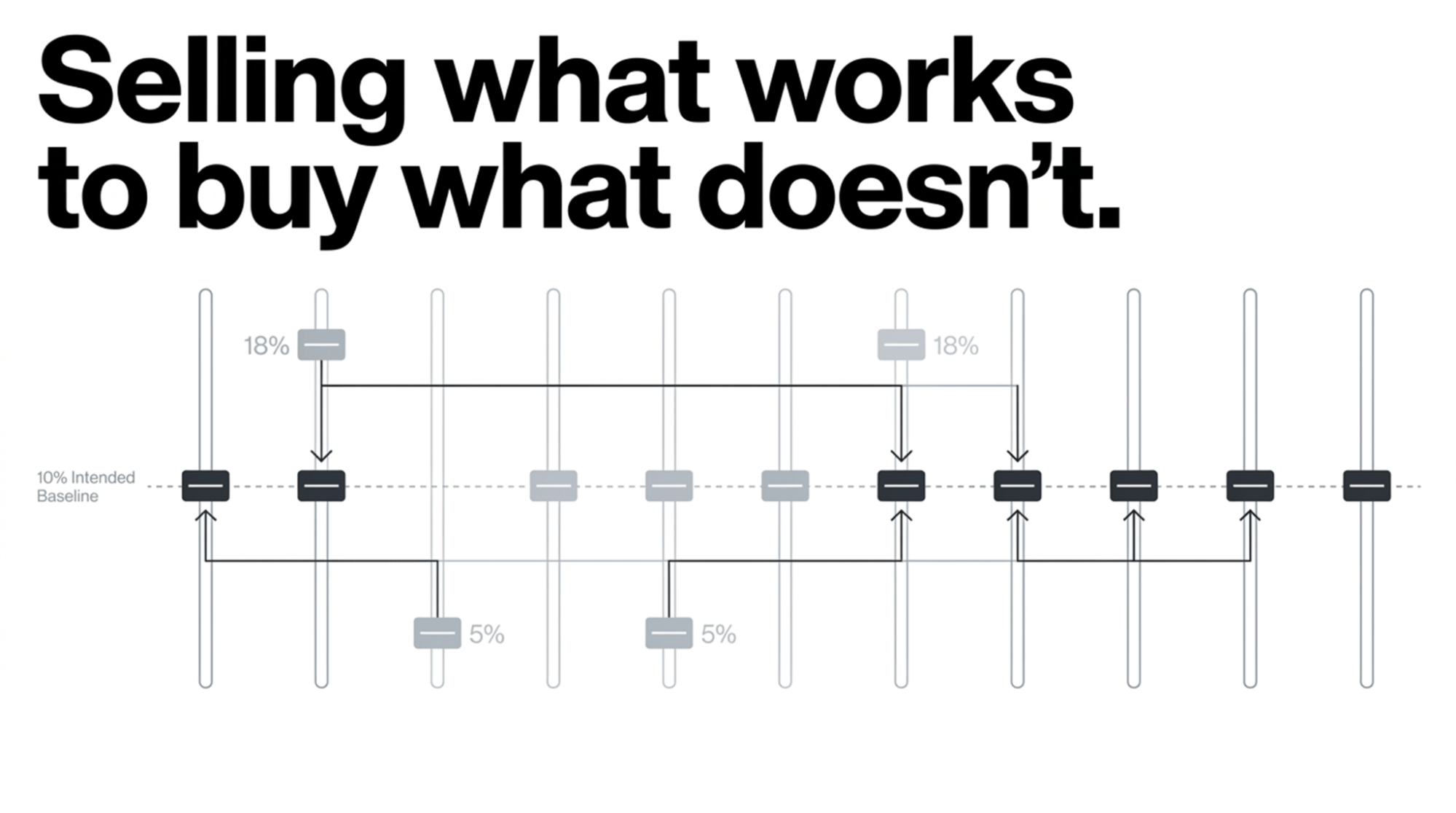
Imagine you set out with 10 stocks, each representing 10% of your portfolio. After a strong year, two stocks have grown to 18% each, while two laggards have shrunk to 5% each.
Your portfolio is now concentrated in your winners and underweight in your laggards.
Rebalancing means trimming the positions that have grown oversized and deploying that capital into the positions that have fallen behind; assuming the underlying businesses still deserve to be in your portfolio.
This feels counterintuitive, because you're effectively selling what's working and buying what isn't. But you're not doing this on a whim; you're doing it because your original research said these were all good businesses, and the allocation drift, not the business quality, is what changed.
Pruning vs. Exiting
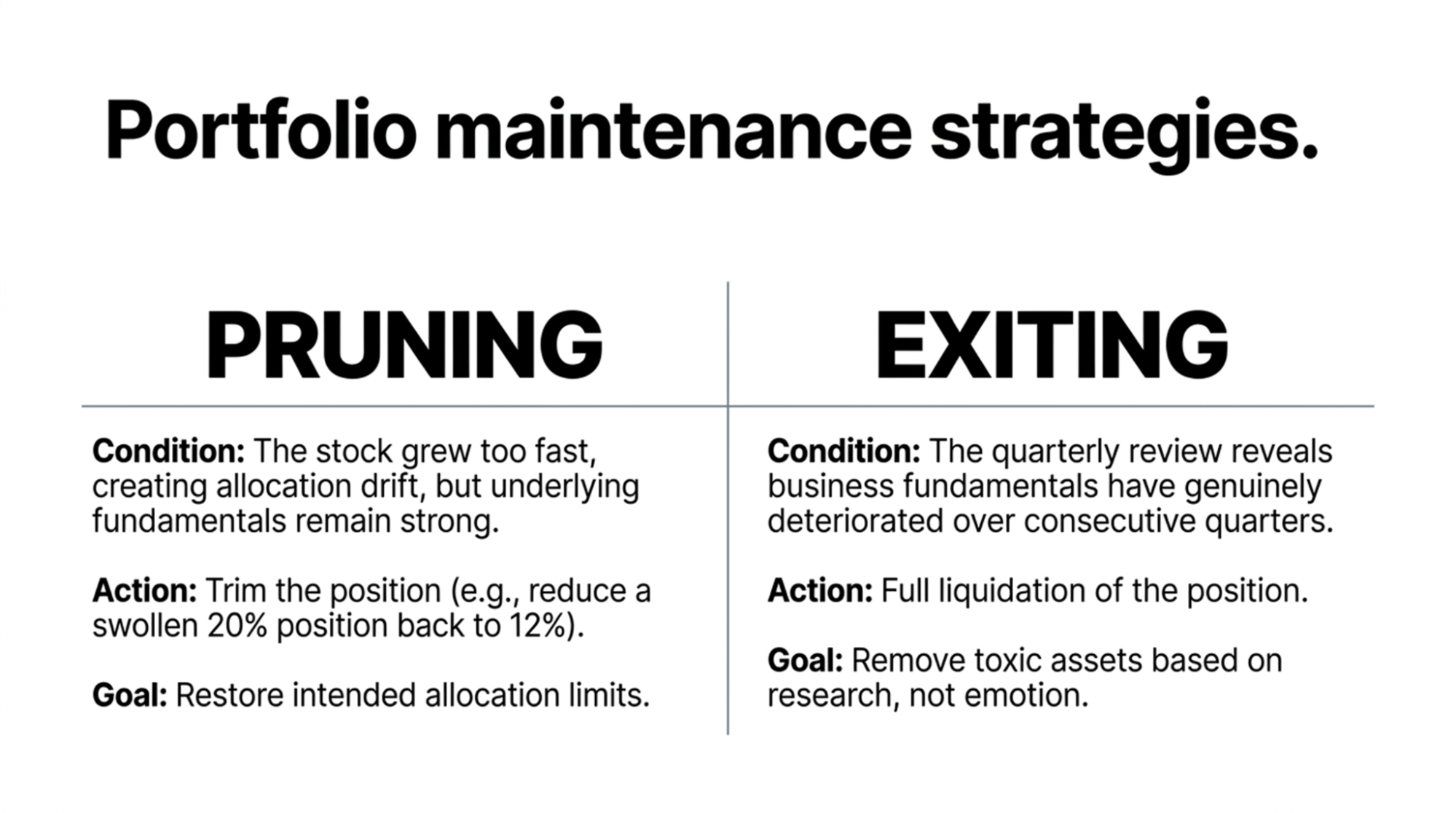
Not every rebalance involves selling entirely.
Sometimes it's a small trim; reducing a 20% position back to 12%. Other times, if a quarterly review reveals that a company's business fundamentals have genuinely deteriorated, a full exit is the right call.
The key discipline is making this decision based on research, not on how the stock made you feel last week.
Pro Tip: Schedule a portfolio review on your calendar every quarter; the week after major earnings season ends is ideal. Treat it like a car service appointment. It doesn't take long, but skipping it consistently leads to problems that are expensive to fix.
Next Up: Rebalancing keeps your portfolio healthy. But there's one more dimension of portfolio management most beginners completely overlook; and it can meaningfully increase the money you actually keep at the end of the year.
In the next Article, we unlock the tax code's best kept secrets.