AllETec: The Fallen Comet Warping Through Intergalactic Medium
A considerable number of people start their career working for small businesses (about 10-20 employees). At least, that’s what I did. Small businesses generally have different spreadsheets to keep track of finances, operations, as well as marketing. I interned at a logistics company which dealt with small shipping clients, i.e., people that need to send 100-200 kgs of goods outside India. Generally, a large company would hire full containers on board the ship and send its goods, but if the amount of goods is small, then hiring a full container does not make economic sense.
Let’s call my company ABC. So, what ABC did was it took orders (courier orders) from various small customers and clubbed them into one container and sent that container away. For example, a container from CMA-CGM or Maersk would cost $3000 to go from point A to point B. They would charge 10 customers $500 each and make their profit.
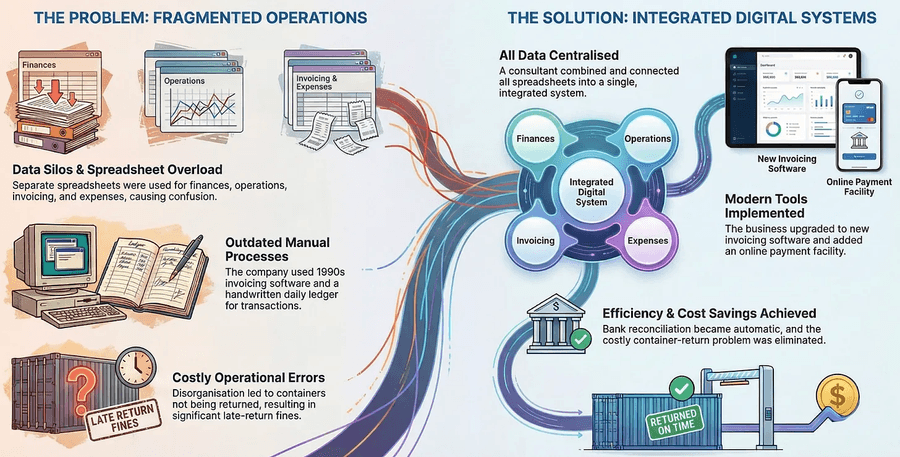
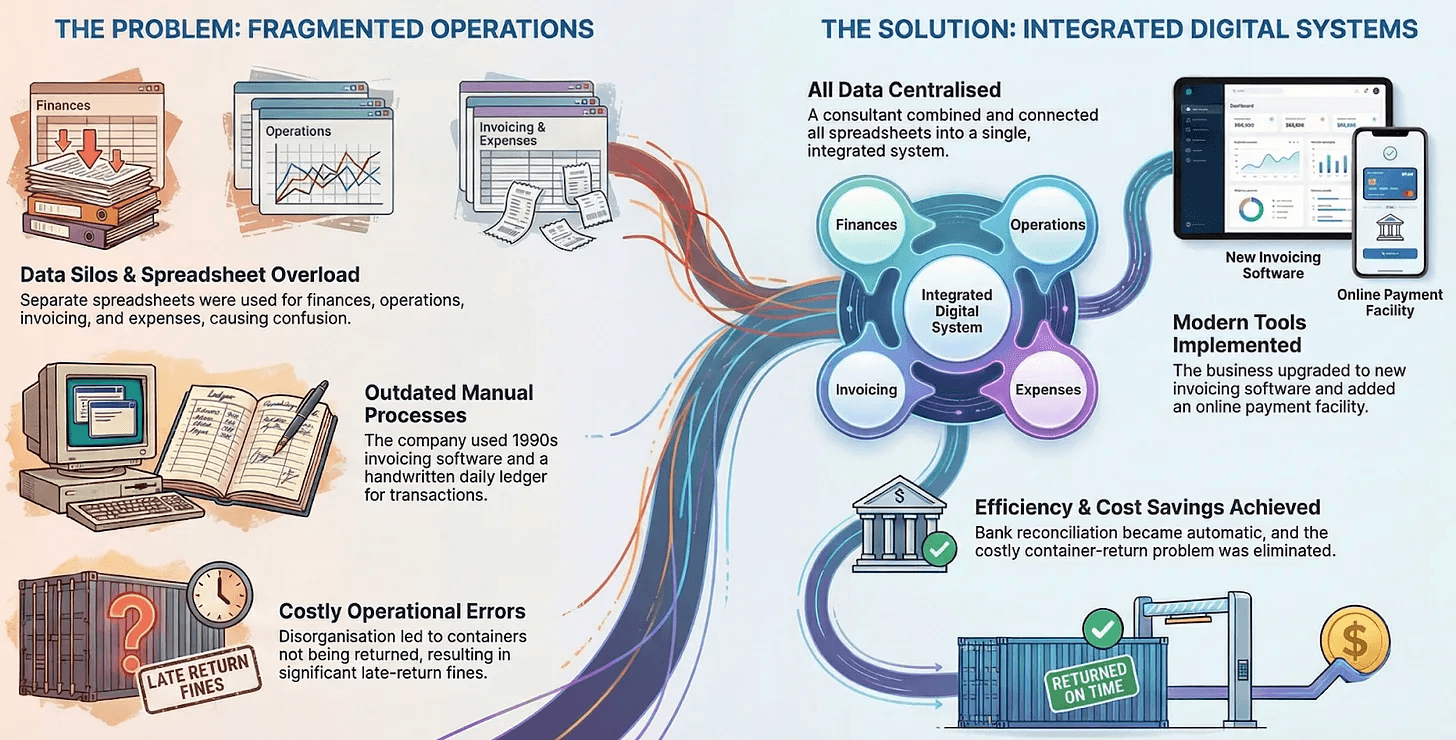
Now, what happened was that they had a spreadsheet for nearly everything, and for each month. For invoices, they had another spreadsheet. For hiring containers from shipping companies, they had another spreadsheet. For expenses, they had another spreadsheet. They also had ancient software from the 90s to make invoices.
The employees used a daily (sort of) ledger, which was handwritten, and it included expenses as well as payments received that day. Until the operation was small, say 1-10 entries each day, that was not an issue, but slowly, as the operation started getting bigger, it started becoming harder and harder to manage the different spreadsheets among employees. Also, what happened frequently was that hired containers were not returned to the shipping company, and it racked up a lot in late return fines. So they hired a small consultant to clean it all up.
Ethica Invest
Serious about long-term investing?
Unlock our professionally managed portfolios.
What this consultant did was combine, connect, and put all spreadsheets into one, changed the invoicing software to a new one, and also added an online payment option facility, and everything was integrated. Bank reconciliation was done automatically, and, more importantly, no containers were lying around. So they had to pay this consultant the same amount that they had to pay for two two-week delays in returning the container, plus the cost of online accounting software.
Now, as the company expands, it needs more bespoke solutions rather than off-the-shelf software. ERP companies, including SAP, Oracle (with NetSuite), and Microsoft (Dynamics 365), are some of the big names that install these systems for large multinational organisations. However, they need help from their partners, who help with customisation based on the requirements of different clients.
AllETec
This is where AllETec comes into play. As a Microsoft Dynamics 365 partner, it uses the Microsoft platform to provide a gamut of services for medium to large companies. Microsoft Dynamics helps with nearly every aspect of the business. AllETech has expertise in implementing it for different clients.
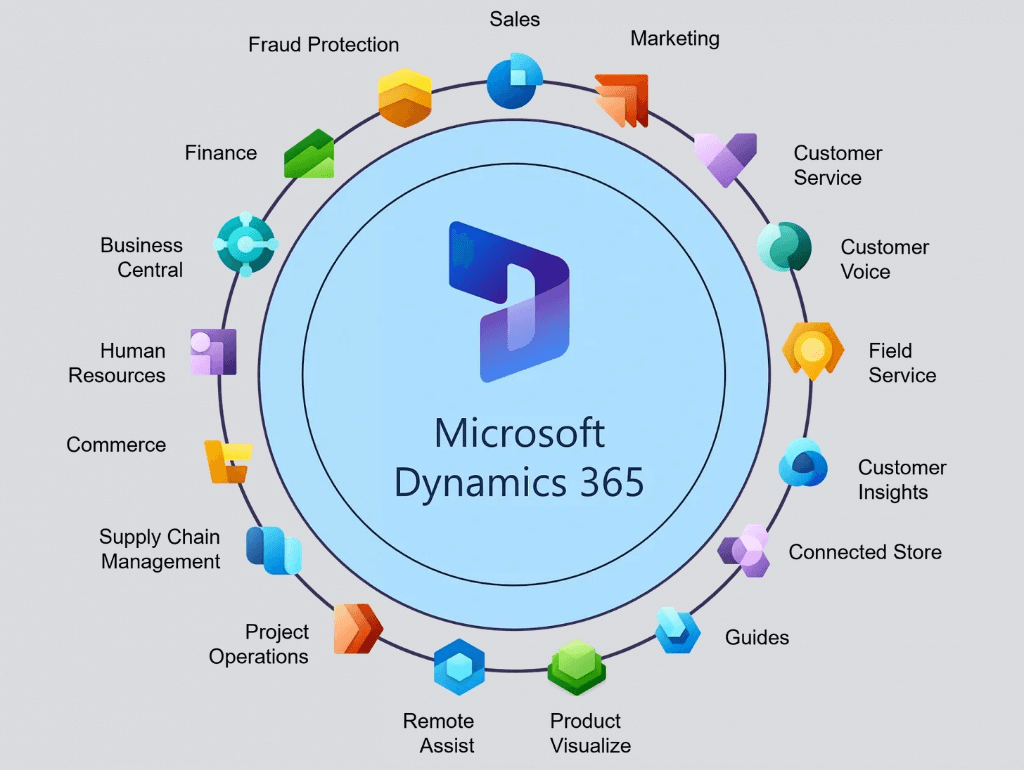
AllETec is involved in:
- Streamlining and automating operations using Microsoft Dynamics product-based solutions.
- Providing IT services for software development and maintenance.
- Digital Core Modernisation and Enterprise Applications such as ERP and CRM.
- Consultation and cybersecurity solutions, and AI-driven contact centre offerings.
As a Full-Stack Microsoft Partner, the company has been recognised in the “Inner Circle,” representing the top 1% of global partners in the business applications space.
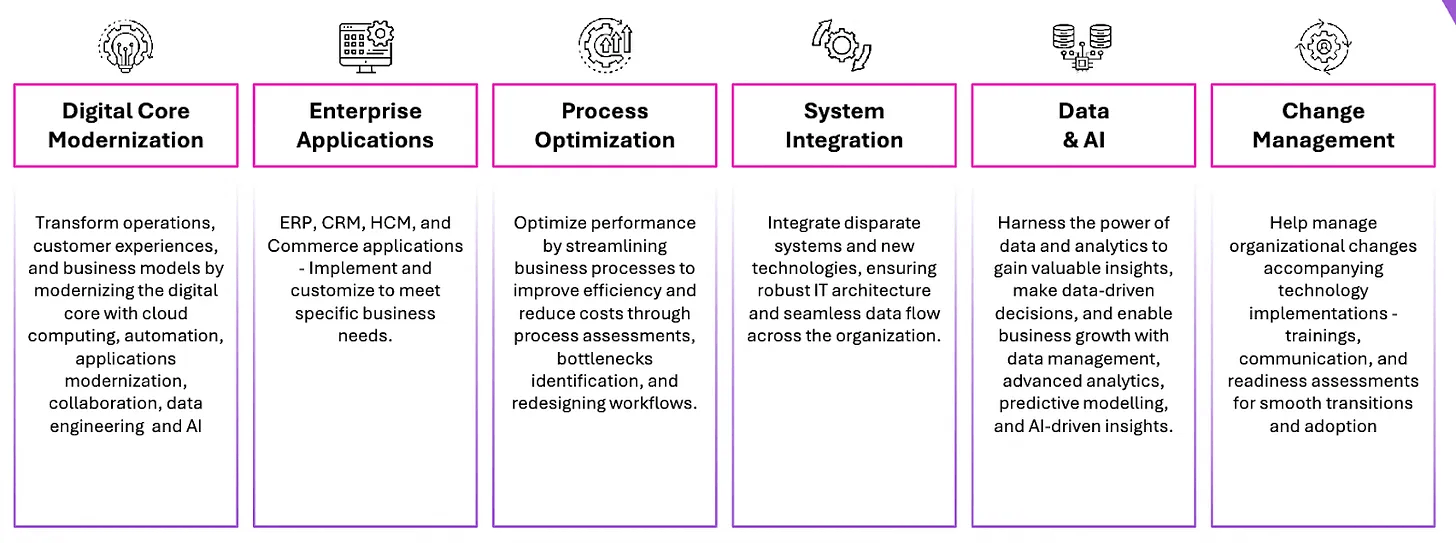
Now, understanding the verticals for Alletec can be a bit confusing for someone not very well versed with the CRM IT industry, which is why we had taken the liberty to discuss a detailed scenario in the first place.
Alletec Financials: The Fallen Comet
Alletec has been blessed financially and has seen much better days than it is going through now. We look at different snippets which help us understand how the company is doing and what we can expect in the future.
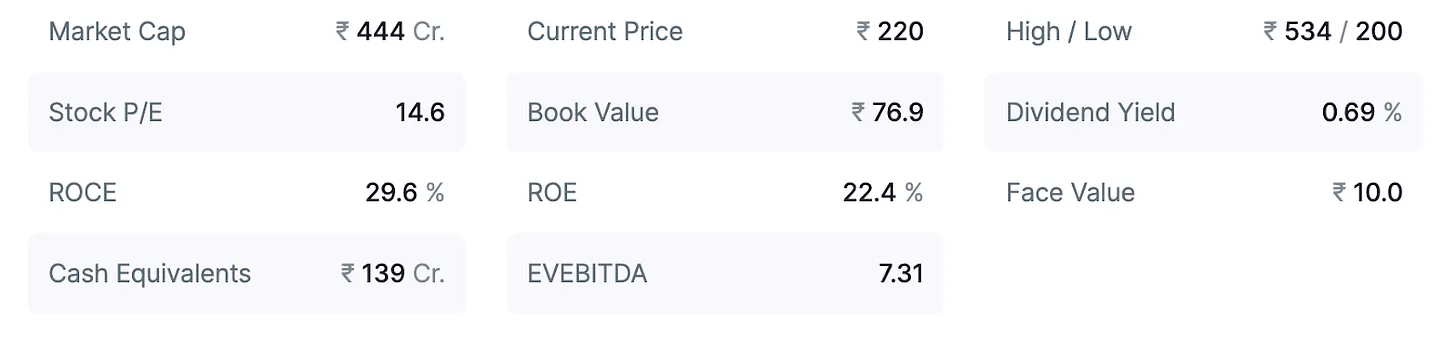
With an ROCE of 30%, the return on invested capital is high amongst the peers. The P/E ratio is near 15, which is significantly less than the industry median of 27. This PE is low even when nearly one-third of the market cap of the company is idle cash.
An EV/EBITDA ratio of 7.31 is also on the lower side when the same industry ratio median for the top 50 companies is around 17. Valuation indicators suggest a significant undervaluation.
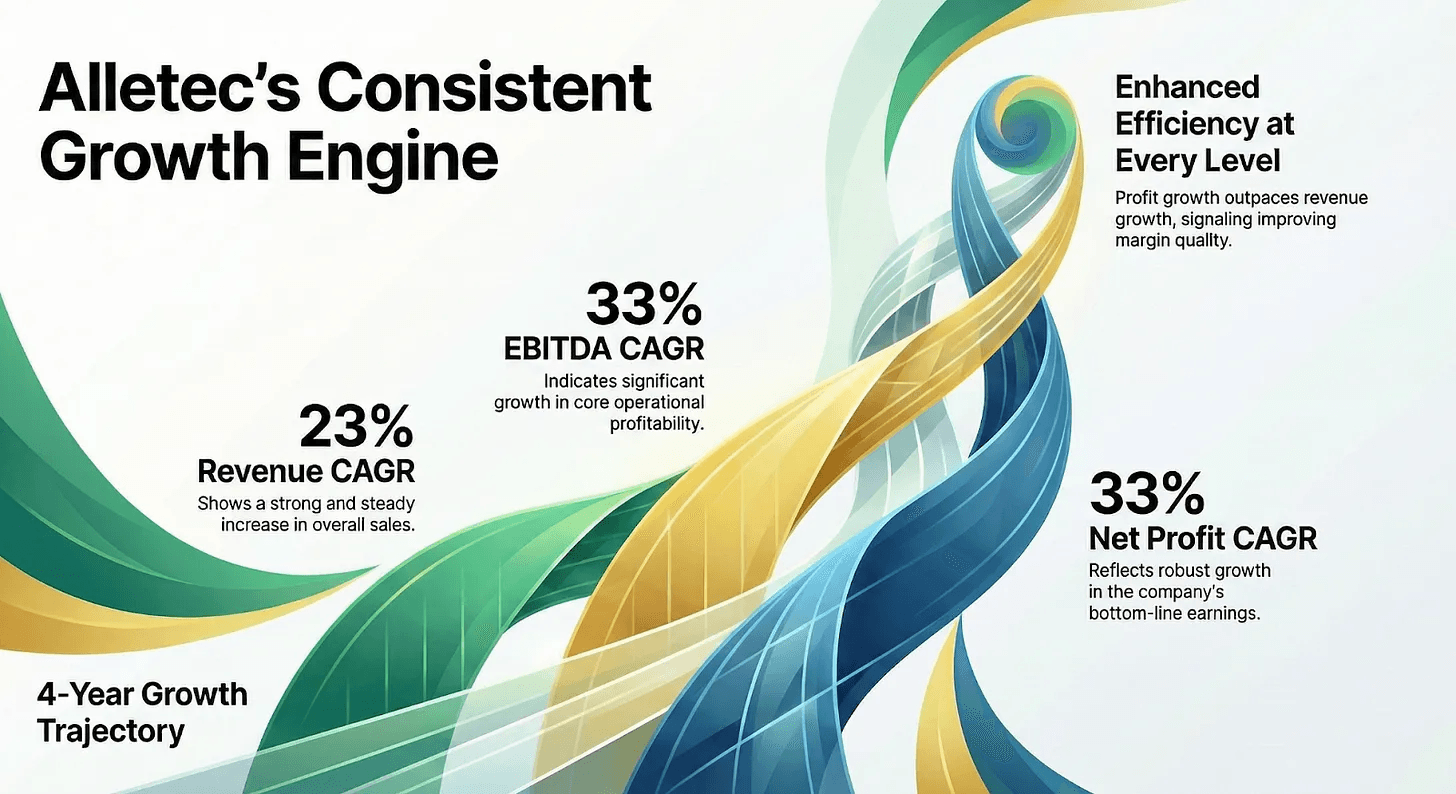
The company has seen an uptrend in sales and has been doing well over the past 4-5 years. Over the last four years, Alletec has delivered a consistent growth trajectory:
- Revenue CAGR: 23%.
- EBITDA CAGR: 33%.
- Net Profit CAGR: 33%.
This shows improving margin quality at subsequent levels in the income statement and is indicative of enhanced efficiency at each level.
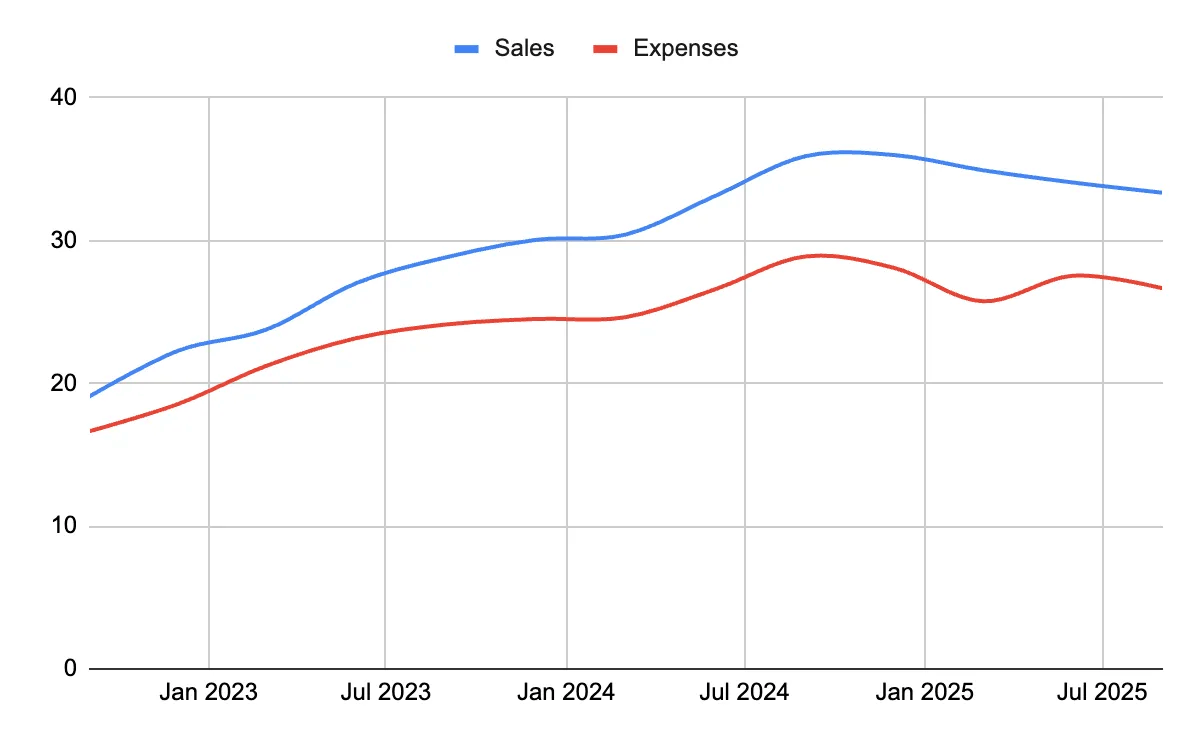
However, the preceding 12 months have been a bit problematic with sales slowing down and plateauing, but not falling drastically.
Ethica Invest
Serious about long-term investing?
Unlock our professionally managed portfolios.
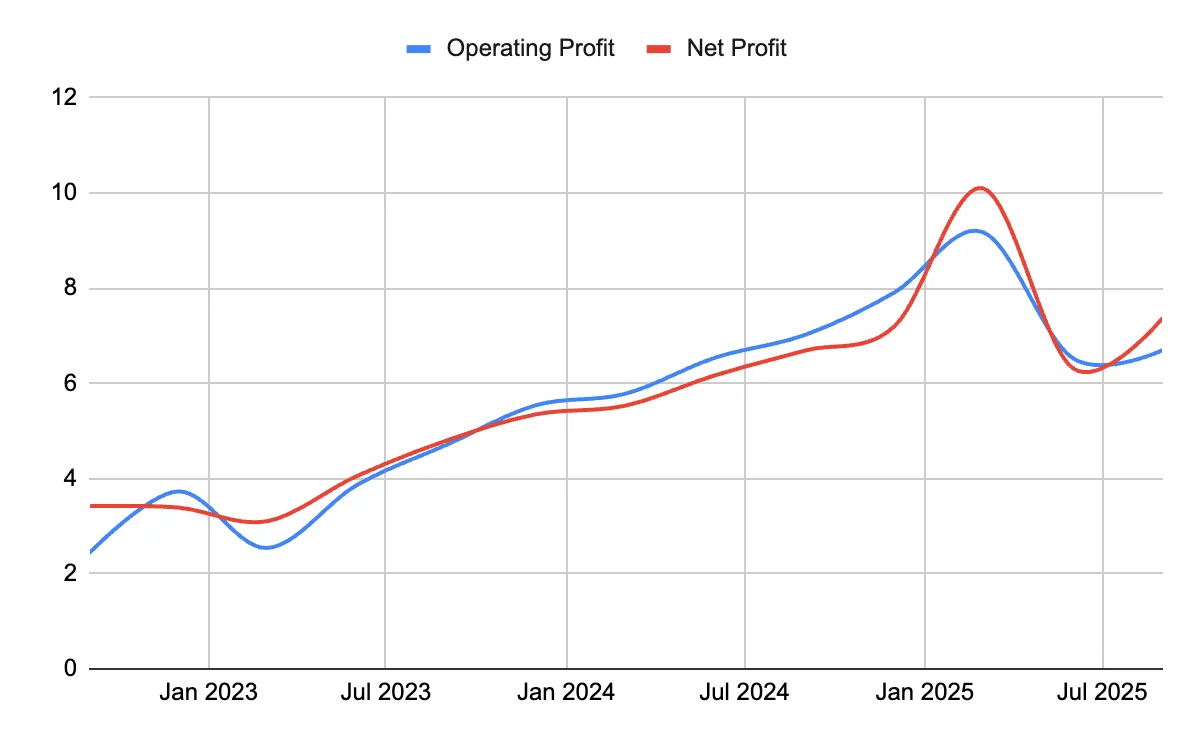
The operating profit and the net profit have been nearly the same. This is due to interest income received from the cash pile of around 139 crore that the company is holding. Now the company is not investing elsewhere and is rather keeping it handy to make the most of an acquisition opportunity. The management also indicated that they are in talks, but would rather not reveal much at the moment.
Growth Interregnum: Why has the growth taken a break?

Historically, the company has grown with a CAGR of around 23% from March 2021 to March 2025. After that, the previous three to four quarters have been muted, and if we see the TTM figure, it’s similar to what it was nine months ago. There are reasons for this, such as the IT industry in India, in general, not doing very well based on macroeconomics. We identify the major factors below.
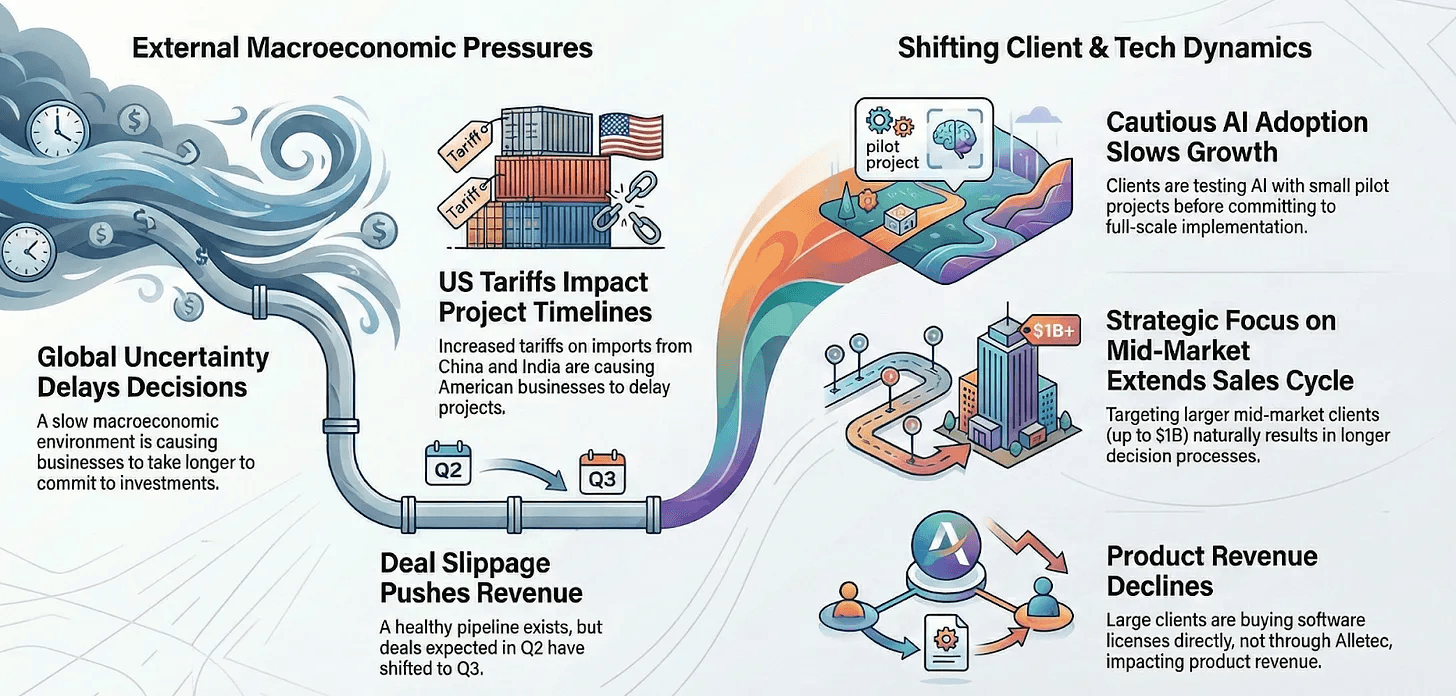
Slow Macroeconomic Sentiment: A slow global macroeconomic environment led to longer decision-making cycles. Businesses are taking more time to commit to large investment decisions due to factors like geopolitical uncertainty and war.
Impact of Tariffs: Specifically in the American market, businesses that import from regions like China and India have faced increased tariffs. Project decisions are delayed due to this.
Deal Slippage: Management noted that a healthy pipeline exists, but several deals that were expected to close in Q2 slipped into Q3. This shift in timing resulted in a lower-than-usual number of new international customer additions for the quarter.
Decline in Product Revenue: The decline in overall numbers was primarily seen on the product side, whereas service revenue remained steady. Because some large deals—such as a significant project in Saudi Arabia—involved customers purchasing licenses directly from Microsoft rather than through Alletec, that revenue did not contribute to Alletec’s top line.
Strategic Shift to Mid-Market Clients: Alletec is focusing more on medium-sized businesses in the range of USD 50 million to USD 1 billion. A larger organisation on the client spectrum means that implementation and decision-making take more time, which extends the sales cycle.
AI Transition Phase: The Tech sector sits at the inflexion point where the implementation of AI has seen a surge and has impacted nearly every industry. Clients are testing the water with proof of concept (PoCs) before committing to a full-scale implementation, which slows down revenue growth.
What is the company doing to enhance future profitability?
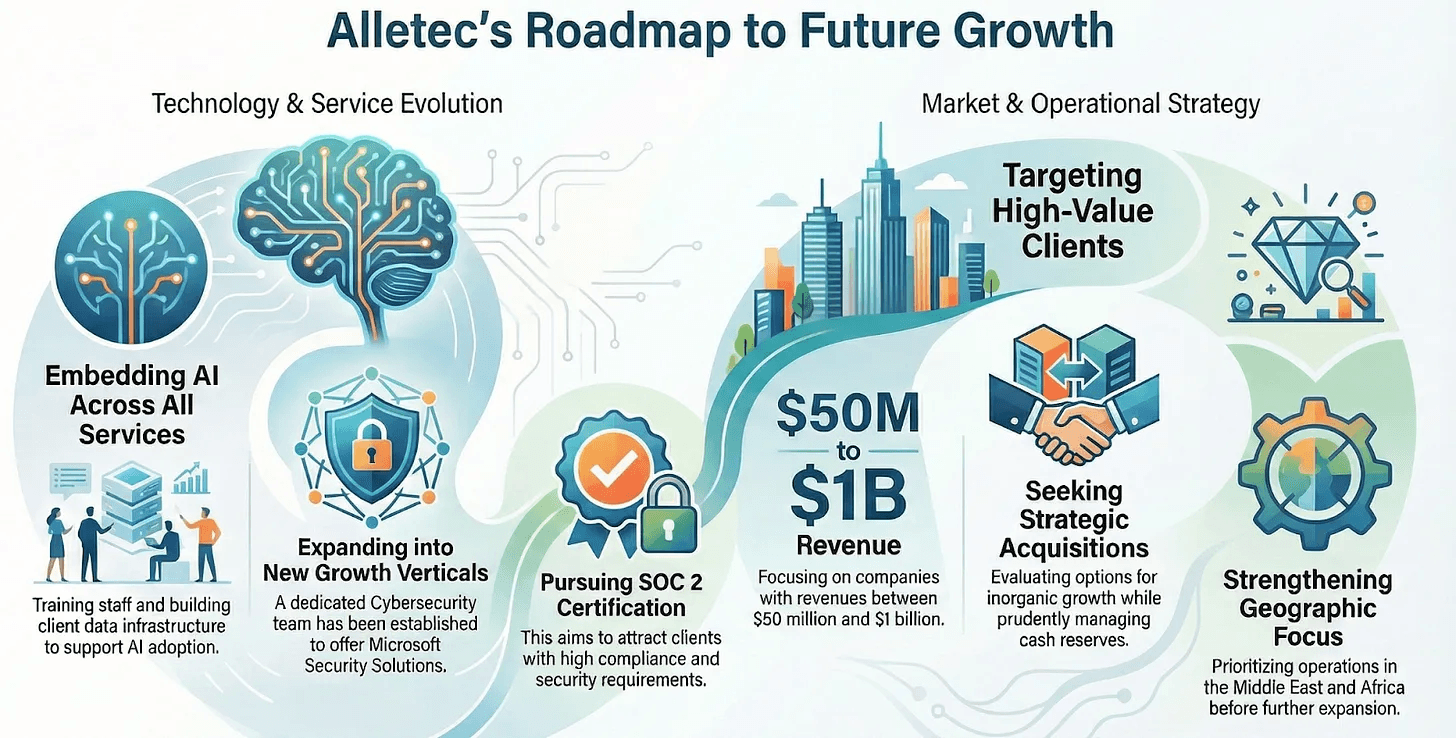
AI Integration and Service Evolution
Management is actively embedding AI capabilities across all service offerings and training staff to use AI for internal processes. This is supported by data engineering to help clients build the necessary infrastructure for AI adoption. AI-Driven Contact Centres are being launched with CRM offerings.
Strategic Market and IP Shift
Alletec is focusing on capturing higher-value segments of the market (revenues between $50 million and $1 billion). While these accounts have longer, committee-led decision cycles, they offer larger project values and more complex consulting opportunities.
Expansion into New Growth Verticals
The company is diversifying its revenue streams via Cybersecurity. A dedicated team has been established to provide Microsoft Security Solutions. The company expects to receive SOC 2 certification soon to attract clients with high compliance requirements.
Prudent Financial and Geographic Management
The company is looking for Inorganic Growth with the help of acquisitions. However, they are evaluating options for the best fit and have not touched the cash pile for the same reason. In addition, the company is strengthening its operations in the Middle East and Africa before expanding into further new territories.
Why can AllETec be a good investment choice?
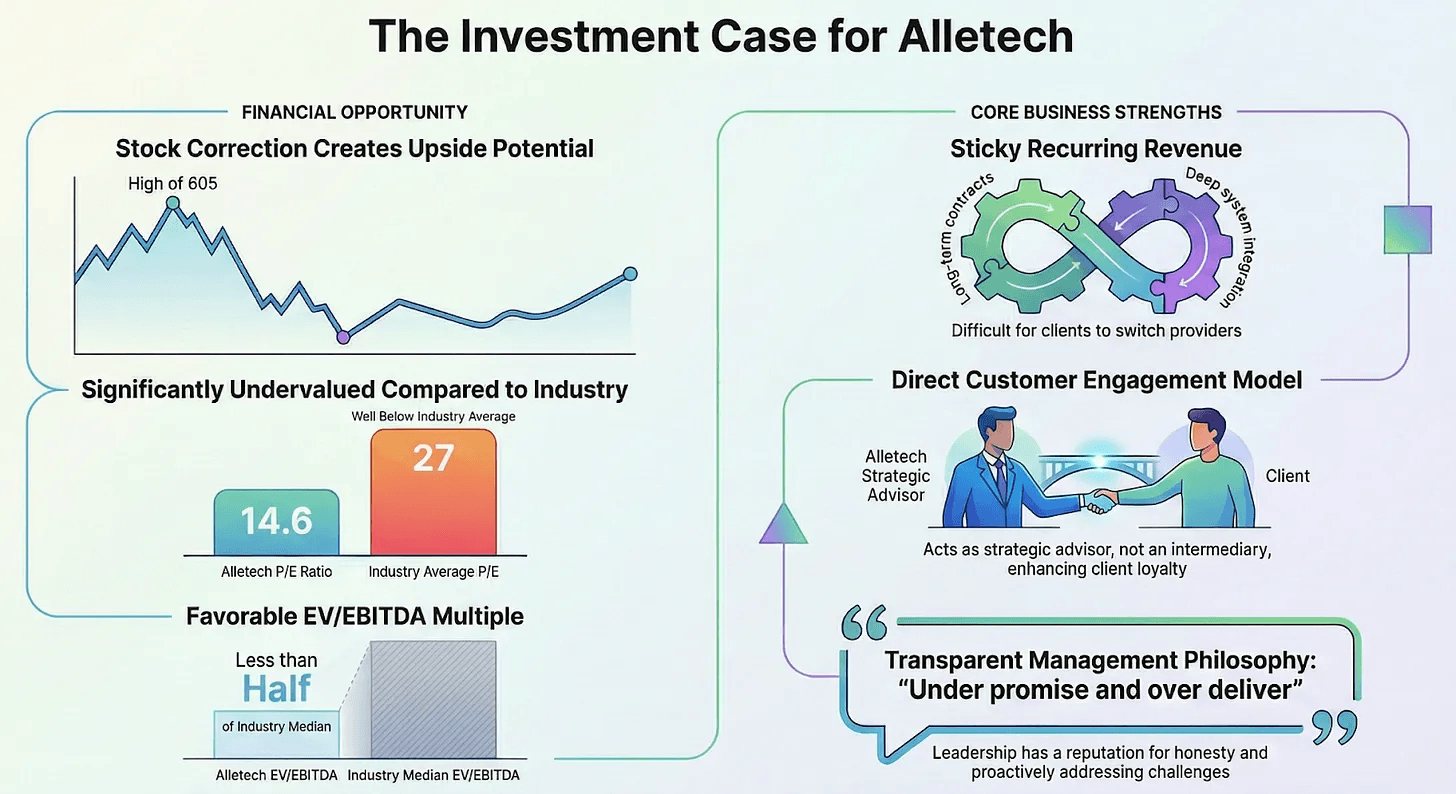
Stock correction: With a high of 605 slightly more than a year ago, the stock seems to have seen a significant correction. This reduces the probability of further correction and enhances the chances of upside as conditions improve.
Valuations: With a mean reversion to the industry P/E of 27 from the stock P/E of 14.6, the stock is expected to see a rise. EV/EBITDA is less than half of the Industry median.
Management is actively pursuing new growth opportunities and adapting to AI to enhance its services.
Transparent and Honest Management: The management is clear on its goals and has a reputation for wanting to “under promise and over deliver.” Identifying and accepting problems is nearly halfway to correcting them.
Revenue Stickiness: The contracts are generally long-term with recurring annual revenue. Once set in motion, the client will find it hard to switch to another provider as the system is integrated.
Direct Customer Engagement: Alletech engages with the clients as a strategic advisor rather than an intermediary. This again enhances revenue stickiness and reduces risk.
Taking a detour from Dalal Street?
What makes Alletec stand out? An investor will look for answers for this, and with macroeconomics not working out, the company has to do something out of the ordinary. Well, this is exactly what happened: Alletec did not just sit back and act as Microsoft’s Dalal. It got to work.
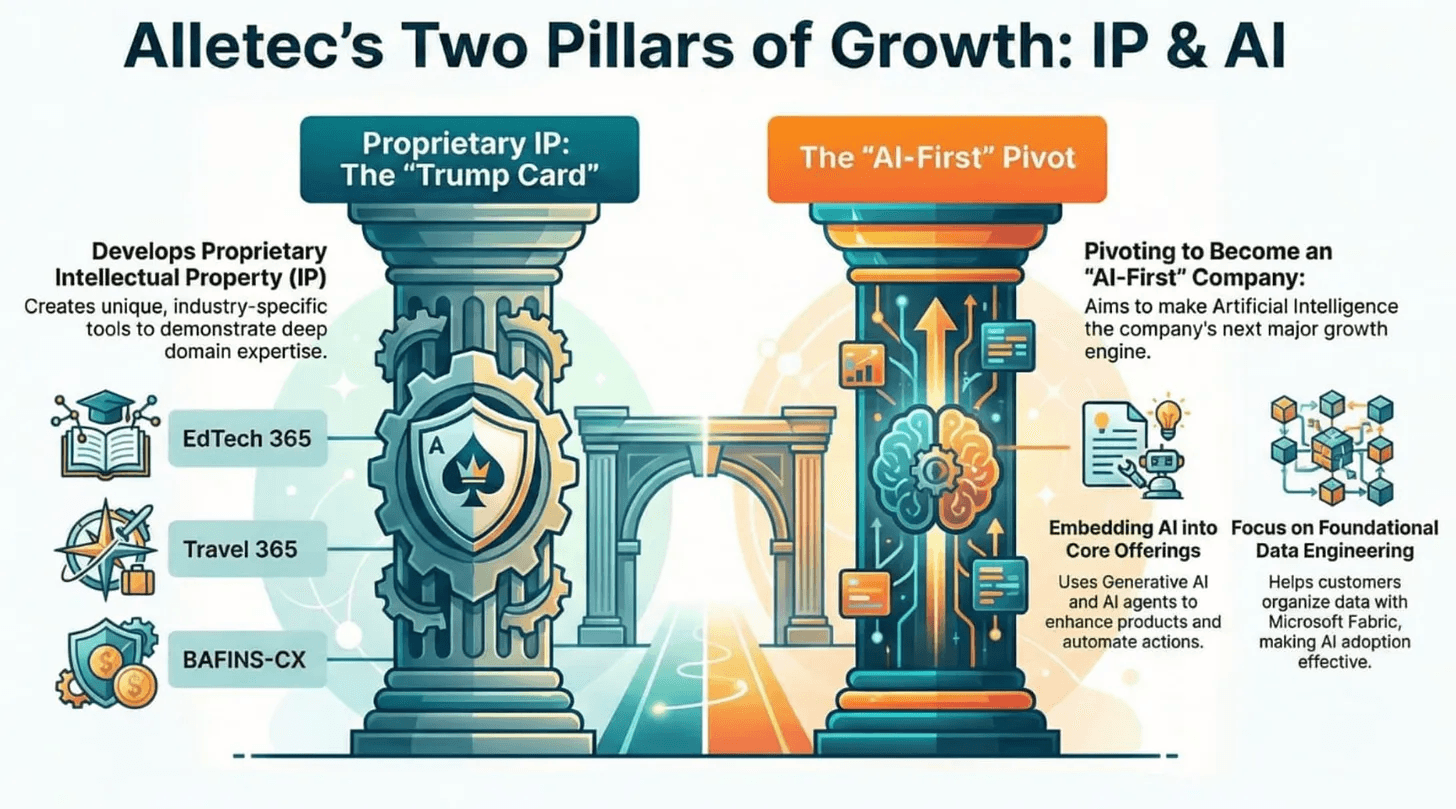
Alletec leads with proprietary Intellectual Property (IP) and has developed industry-specific tools. Some of the notable ones are:
- EdTech 365: For higher education institutions.
- Travel 365: For the travel and hospitality sector.
- BAFINS-CX: Specifically for the banking and financial services industry. These IPs act as a “trump card” during sales, allowing them to win contracts by demonstrating deep domain expertise rather than competing solely on price.
These tools are helping it navigate a downturn in the industry, and while the revenues have not risen, they haven’t fallen either.
Early Mover in AI and Data Engineering
AI is everywhere and has traversed the time-space continuum, not literally. Alletec wants to make the most of this, and rather than adapting, it wants to make it the next growth engine.
In the last con-call, the management said that they are pivoting to become an “AI-first” company. They are already embedding Generative AI and AI agents (such as their Machine Maintenance AI Advisor), enhancing core offerings and driving business actions autonomously. By focusing on Data Engineering (using Microsoft Fabric), they ensure they are essential to customers who need to organise their data before they can effectively use AI.
Alletech: Cutting through the Noise
Ethica Invest is an ethical Shariah-based investing platform that helps guide investors across faiths to choose investment options based on set guidelines and ethical businesses. Alletech is one standout that not only follows the word of law, but also the spirit of the law and ethics. The management is clear and transparent and does not seem to misguide investors.
With solid fundamentals and probable growth opportunities as discussed earlier, the stock seems to have potential. Investors and readers can reach out here regarding this stock or any queries that you might have with investing. Ethica has SEBI-registered analysts and investment professionals who can provide deep insight into available investment options. We will be happy to get you started!
General Disclaimer and Release: Nothing contained herein constitutes tax, legal, insurance or investment advice, or the recommendation of or an offer to sell, or the solicitation of an offer to buy or invest in any investment product, vehicle, service or instrument.