Knowledge Marine - Integration Beyond Dredging Value Chain
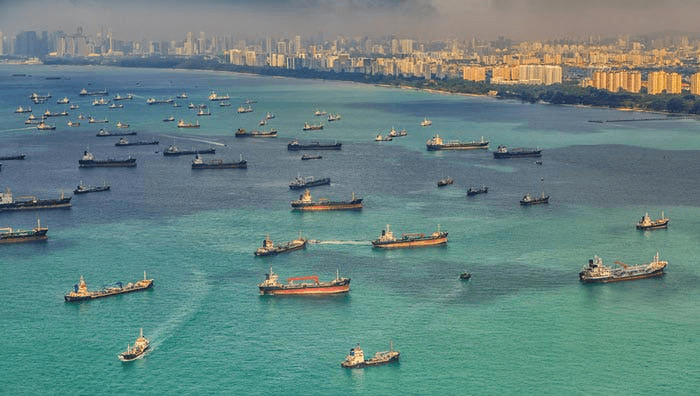
If you have ever visited Mumbai seafront, especially around the Gateway of India, you might see large ships anchored far away from the shore. This is because large ships cannot come into Mumbai Port as it is only 10-11 metres deep. Mumbai port worked well a few years back, but the inability to hold large container ships has led to ports in Gujarat taking its limelight away. In comparison, Mundra port in Gujarat can go upto depth of 25 metres. This is one of the major reasons why the cargo transferred annually by Mumbai port is less than half that of Mundra port. Some large ships coming into Mumbai port have to offload their cargo using other instruments, such as crane ships. This increases costs significantly as ports are much cheaper.
Why Ports? Why not Rail or Air?
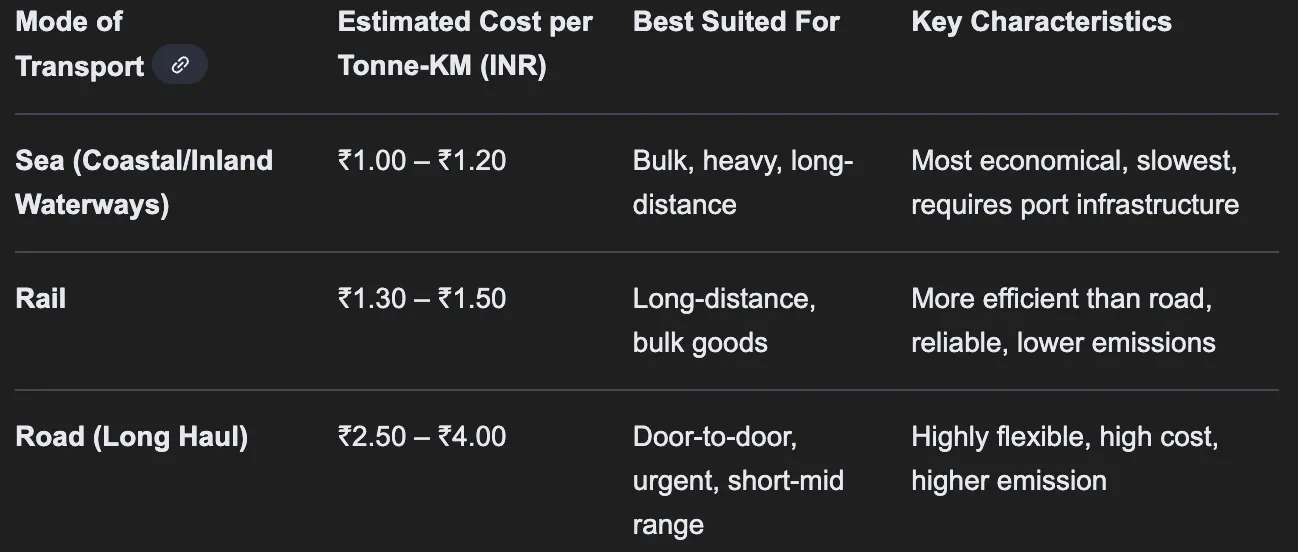
Sea is the most economical mode of transport, as shown in the table above. We are not discussing air because it is very costly, but very fast too. But cost is one factor. Another factor is that beyond 20 nautical miles of any country’s shores, the sea is for anyone to use. You cannot lay railway lines beyond your country’s borders, but you can take a ship where there is a sea.
Countries will also develop ports in other countries to reduce transport costs and have strategic advantages. An excellent example is the Chabahar port, which is an Indo-Iranian collaboration to provide a direct route to Central Asia for India, bypassing Pakistan. It becomes extremely important for the energy sovereignty of our country. It also helps India undercut China, which has developed the Gwadar port with Pakistan. The depth of the port is 14-15 metres, which may not be very deep, but is important since it is owned by India in another country.
Over the past decade, Chabahar port has been significantly improved by increasing its depth by excavating sand and land beneath the sea. The marine term for this type of digging is dredging. Ports with larger depths can accommodate larger ships, which in turn helps transfer goods at a lower cost due to economies of scale. For example, in India’s case, large ships can take goods from India to Iran (facing sanctions) as well as Central Asian countries at a significantly lower cost.
 Ethica Invest
Serious about long-term investing?
Unlock our professionally managed portfolios.
Dredging
Coming back to dredging. Dredging is an important marine transport operation and is carried out for three major reasons:
- Enhancing the depth of a port (or any other waterway) that naturally might not be deep enough.
- Maintenance dredging to remove silt once the port has been operational for a while
- Mining sand, which is used in construction or land reclamation.
Some ports are topographically deeper than others. In addition, ports need constant dredging to remove sand accumulated (brought in by the sea). This maintenance helps because if the depth decreases due to the accumulation of silt, larger ships cannot come in, or worse, they can get stuck in shallow water. Finally, sand mining is a lucrative business. You might have heard the term, “Baalu Mafia.”
Tug boats and how they work
Dredging is an intensive and costly activity, no less than cutting and removing mountains for building roads. Ports are large, but the channels (something similar to a railway platform) in which ships dock are thin, and the width, if not the natural feature, will be kept at minimum to reduce dredging costs while making the channel.
Small ships can navigate channels, but larger ships have difficulty doing so. A slight acceleration or a turn here and there, and boom, it can destroy the channel and port infrastructure as well as the ship. So small boats, which generally have large engines (compared to their sizes), are tied to the ships, and they pull and/or push them from all directions to guide them through the channel.
Ford vs Ferrari, Ken Miles- A Maverick

One of my favourite movies is Ford vs Ferrari, which details the development of the GT40 as a racing car for Le Mans in France. Le Mans is more of a test of endurance rather than speed for drivers around the world, which usually takes 24 hours to complete.
After the Ford Motor Company failed to buy out Ferrari to get technology for a high-speed and durable car, they decided to build one of their own. At the helm was Ken Miles (Christian Bale), a British engineer/mechanic who had migrated from England to the USA and operated an automobile repair and service garage. Ford Motor Company invested heavily in them and provided them with the latest tech for research, but as the movie showed several times, it was the mechanical experience of Ken Miles that improved the car, especially with the aerodynamics.
The story of the company that we are discussing, “Knowledge Marine & Engineering Works (KMEW),” has some resemblance to how repairing automobiles helped Ken Miles make a maverick racing machine, earning respect even from competitors like Enzo Ferrari.
Brief History
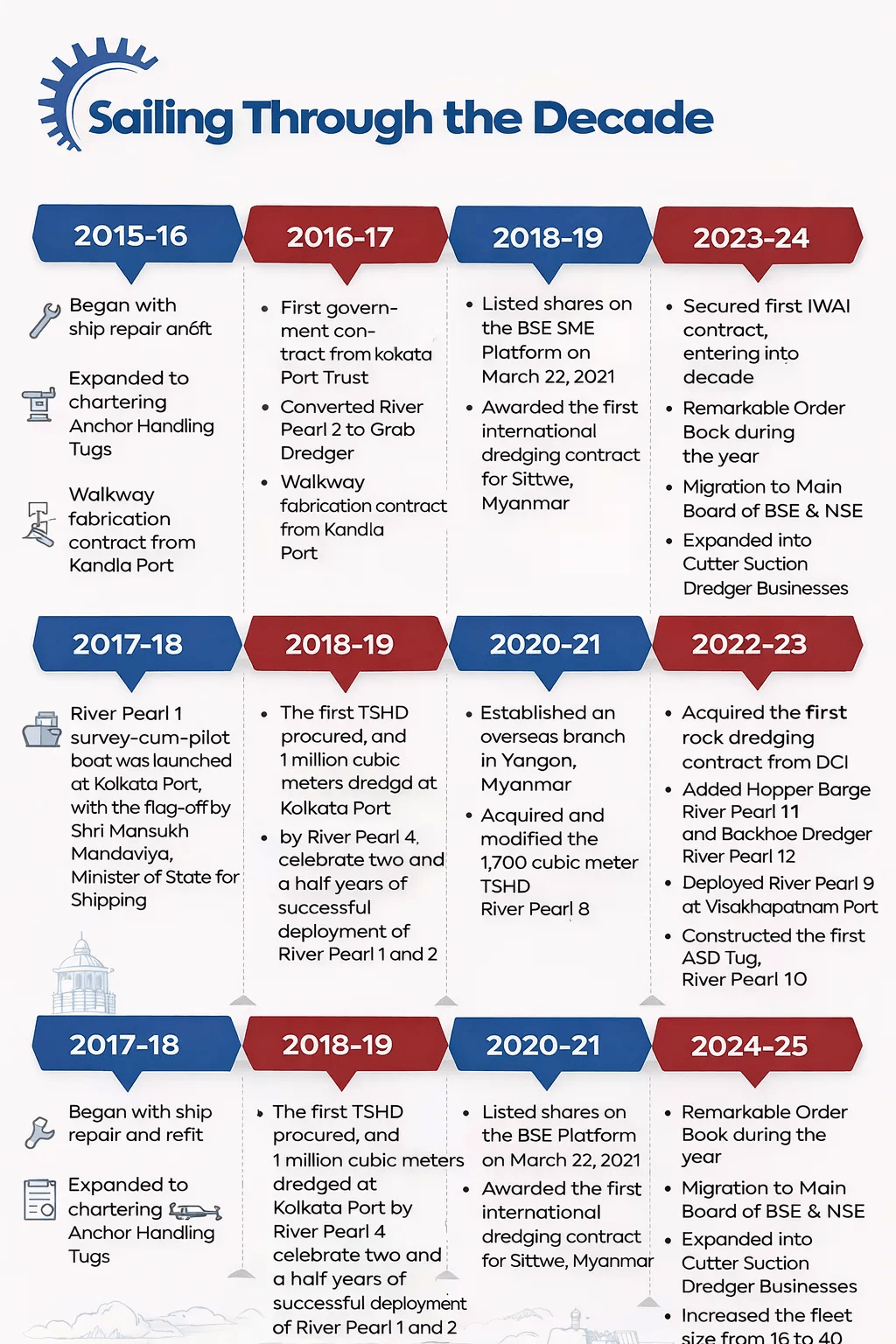
The company started as a ship repair/refit unit in 2013 with a paid-up capital of a mere 1 lakh. The phases of operations over a decade can be classified into three major phases:
- The Bioler Room (2013-2015) - KMEW carried out repair and maintenance services supporting the maritime needs of a single client and growing from there. When finally incorporated in 2015, it had only 20 employees. With experience in repairs and maintenance, the company transitioned to owning ships and integrating vertically.
- Ship Owning and Dredging (2016-2020) - With good knowledge in repairs and maintenance, the company started acquiring obsolete boats and refurbishing them for its own use, and started taking up dredging contracts. The company entered into its first government contract with the Kolkata Port Trust in 2016. In 2019, KMEW inducted a Trailing Suction Hopper Dredger (TSHD), River Pearl 4, also deployed at Kolkata port.
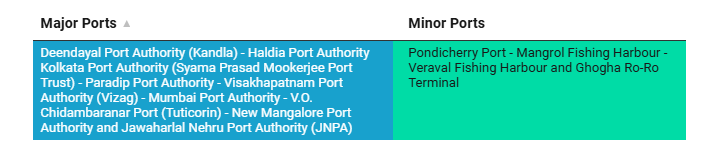
- Stock Exchange listing and further diversification (2020-2025) - The company listed its equity on the stock exchanges. From 2021 to 2023, the company secured foreign dredging contracts in Myanmar and established sand mining operations in Bahrain. At the same time, it entered the Indian inland waterways sector through its first contract with the Inland Waterways Authority of India (IWAI). During this period, KMEW also secured contracts from other ports in India. These include:
KMEW Locations
KMEW Assets
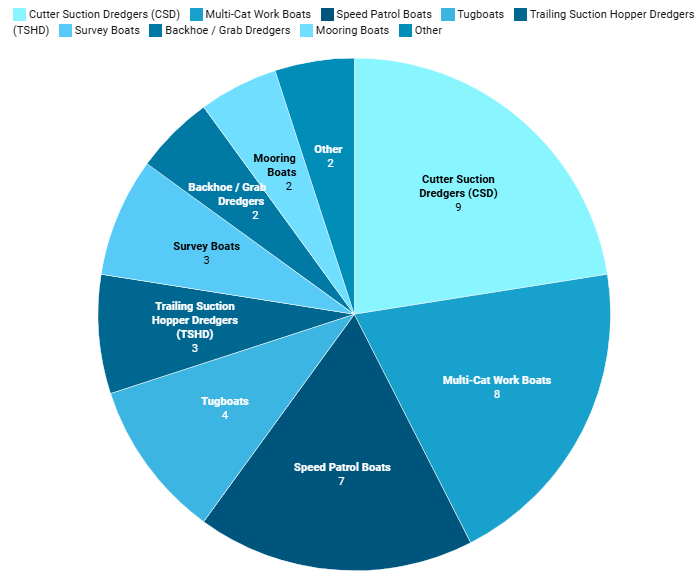
In addition, KMEW is currently executing orders for the construction of 24 new crafts, including boats and dredgers, to enhance its fleet.
Business Verticals
As we have already established, the company started as a repair and then expanded into shipbuilding and dredging. As a result, business verticals reflect the company’s core competencies.
Dredging
This is still the primary revenue generator with the company engaged in both maintenance dredging (maintaining navigable depths) and capital dredging (deepening channels). This is done using specialised ships, Trailing Suction Hopper Dredgers (TSHD) for deep water, Cutter Suction Dredgers (CSD) for hard materials, and Backhoe Dredgers for precise excavation in shallow waters.
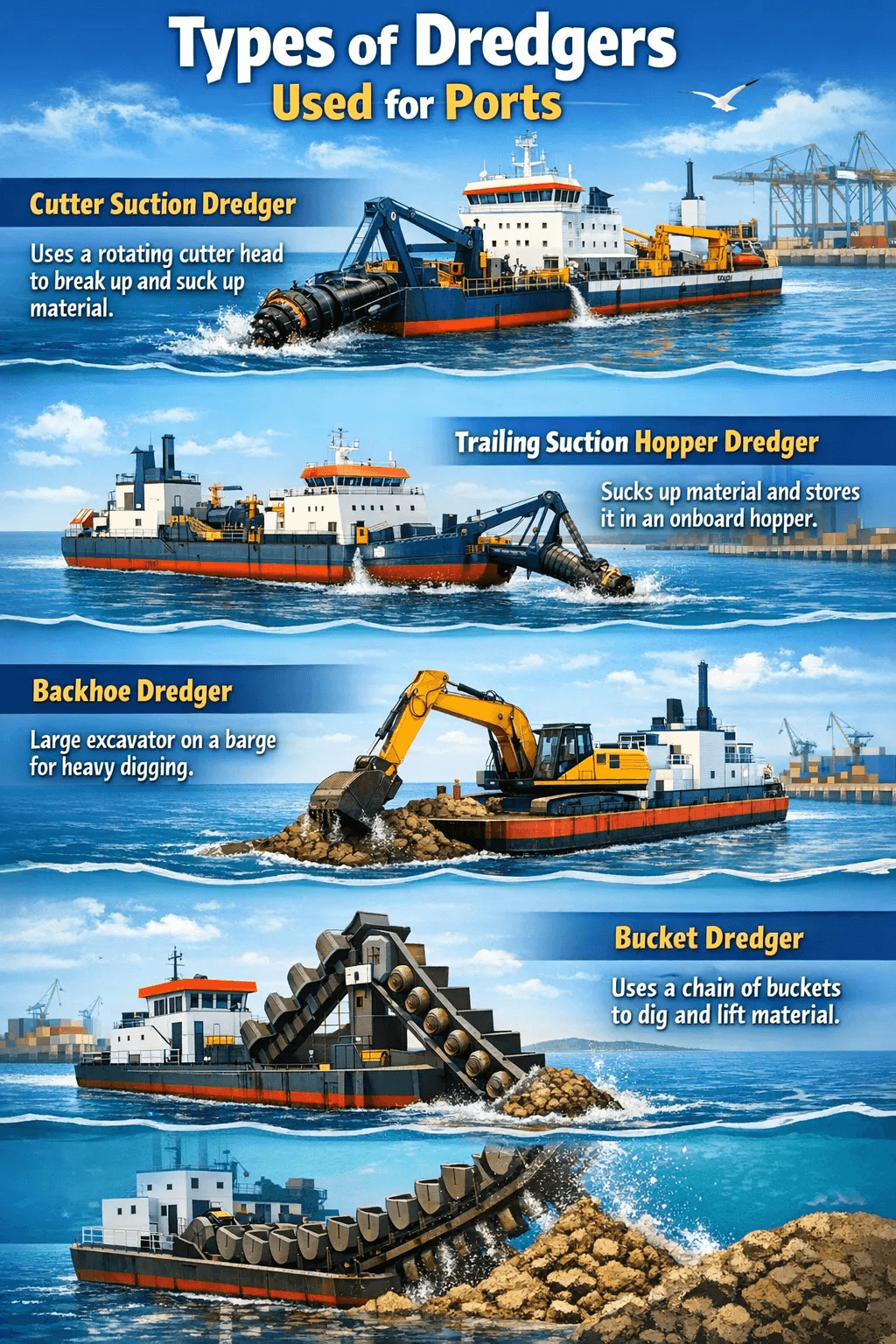
Among these, TSHD is most important because it does the heavy lifting and accounted for nearly half of the revenue of KMEW last financial year.
Ethica Invest
Serious about long-term investing?
Unlock our professionally managed portfolios.
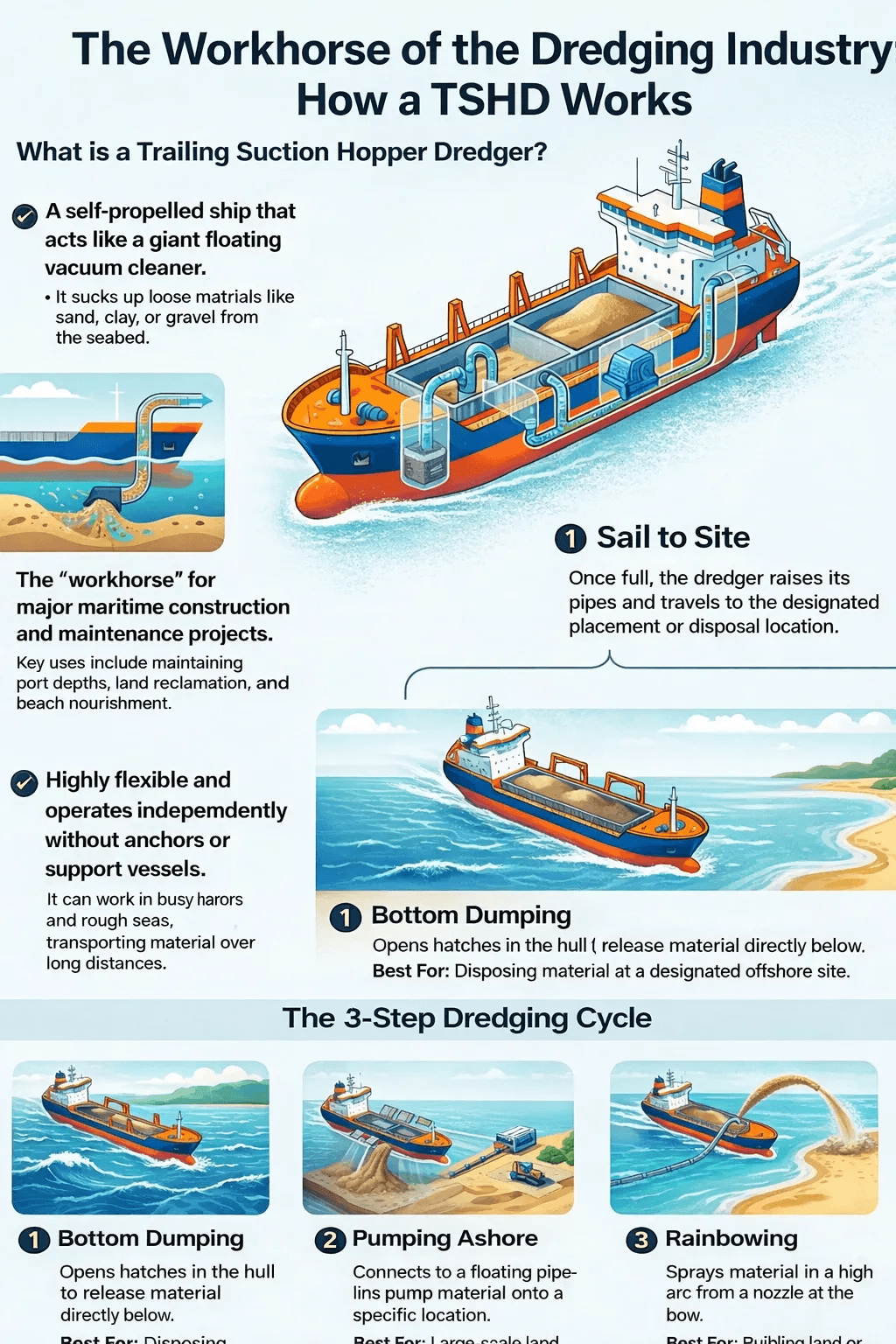
The company is a small player in the dredging space, but it becomes important in the value chain because large companies with larger assets do not usually take up contracts for dredging shallow spaces. More so because they are not very lucrative. As a result, KMEW has made a niche for itself in this space and can provide more precision with smaller assets. Dredging accounted for nearly 70% of the revenue for H1FY26. While dredging is expected to rise in absolute terms, its share of total revenue is likely to fall as other sectors pick up. Dredging is the cash cow for the company, providing operational margins north of 40%.
Shipbuilding
This came out of the repair shop for ships that the company ran from the start and has since integrated backwards into shipbuilding through its subsidiary, Knowledge Shipyard Private Limited (KSPL). KSPL takes up in-house design, construction, and supply of marine crafts, as well as the repair, refit, and maintenance of existing naval and merchant ships.
Both design and construction are taken care of by the subsidiary. KMEW has a cost advantage because it has highly skilled engineers who can retrofit and refurbish older ships into new ones. For example, for its contract in Myanmar, the company bought a ₹5 crore old boat and spent another ₹15 crore to retrofit/refurbish it. A similar new boat would have cost ₹100 crore. This sector accounted for nearly 30% of the revenue, but the percentage is expected to rise.
While shipbuilding generally provides margins of ~20%, this figure is higher for KMEW as it leverages its repair and maintenance capabilities.
Port Ancilliary Services
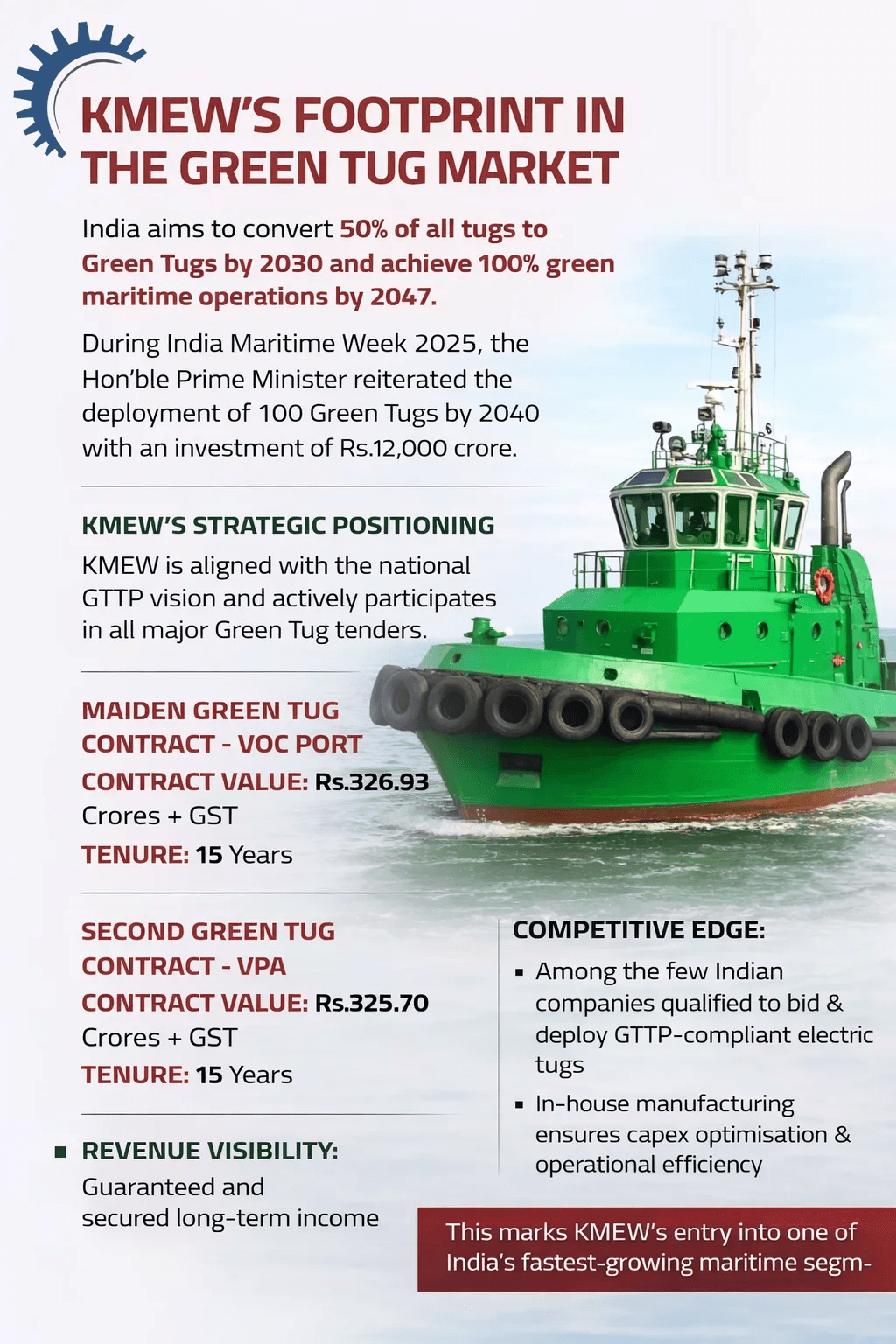
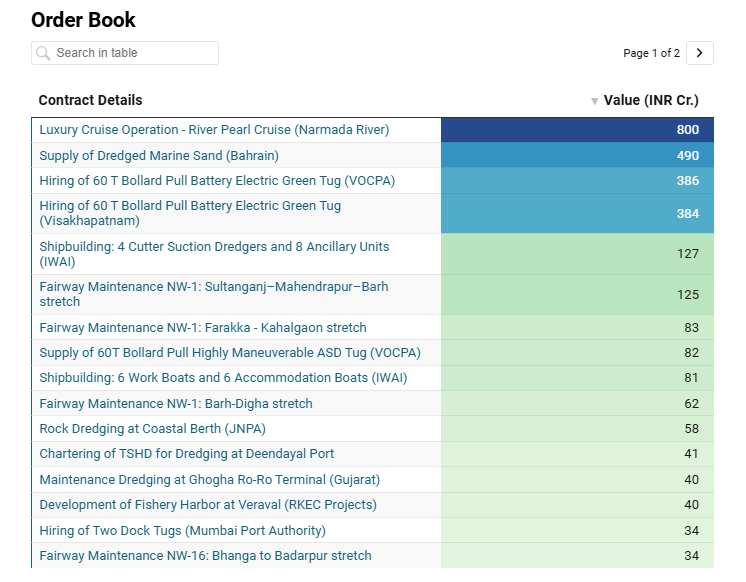
KMEW owns and operates pilot boats, high-speed patrol boats for security, mooring boats, and service-cum-tug boats. It is a beneficiary of the Green Tug Transition Program (GTTP), where KMEW has secured long-term, 15-year contracts to deploy battery-electric green tugs at two major ports:
- VOC Port (V.O. Chidambaranar Port): Contract value approximately ₹385.76 crore.
- Visakhapatnam Port Authority (VPA): A contract valued at approximately ₹384.33 crore.
Guaranteed Income: The 15-year tenure for the contracts offers regular revenue and financial stability.
GTTP-compliant electric tugs are a market estimated to be worth ₹12,000 crore. KMEW is among the few qualified bidders and can grasp a significant share of the market. The company expects to take up 10%-15% of this market, which, averaged out, leads us to an order book of nearly 1,500 crores.
Cruise and Maritime Tourism
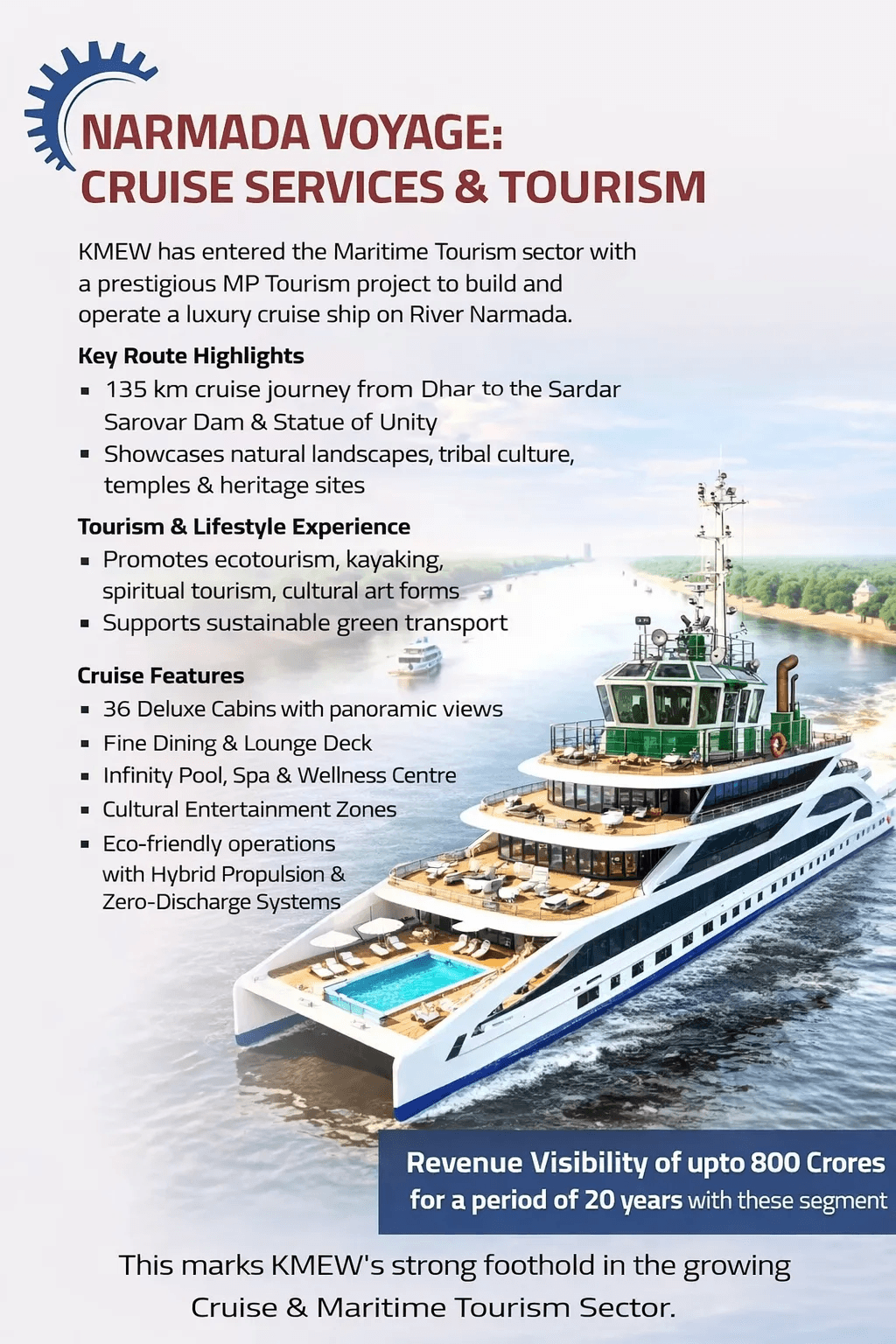
With this, the company is integrating forward in the value chain and has secured a contract to build and operate a 70-metre luxury catamaran which will run from Dhar, M.P to statue of Unity in Gujarat. This contract from the MP tourism department is expected to generate nearly 800 crores of revenue over the next 20 years. This opens up a new vertical for the company where it can leverage its shipbuilding experience and enhance revenues. The annuity model also stabilises the revenue stream. With more contracts, this will help de-risk operations.
Operations Outside India
Bahrain (temporarily on hold) - KMEW secured a 5-year, major sand mining contract in Bahrain in March 2023, valued at approximately ₹489.78 crore. Sand mining can be highly lucrative and open up a completely new vertical for the company.
Sittwe Port Project: The company completed a maintenance dredging contract at Sittwe Port, Myanmar, which is a part of the Kaladan Multi-Modal Transit Transport Project (KMTTP), funded by the Indian Ministry of External Affairs. This helps better connectivity to the northeast, especially Tripura.
These two projects helps company gain international exposure and lend it credence.
Industry and Macros
The dredging industry is expected to grow at somewhere 5% to 7% upto 2035, depending on different estimates. But this is not the only vertical where KMEW is betting on. It is also betting on Shipbuilding, which is currently experience very high growth rate in India, ~25% CAGR. This provides a great opportunity for KMEW, which can take up both new and refurbished builds.
The sand mining in the Middle East is also a high-growth industry expected to grow 7% to 8% in the foreseeable future, again a significant growth opportunity. Green tug opportunity is also a significant growth opportunity, which is further expected to spill over to other growing economies. Sand mining is also a high margin industry somewhat similar to dredging with operational margins of nearly 40%.
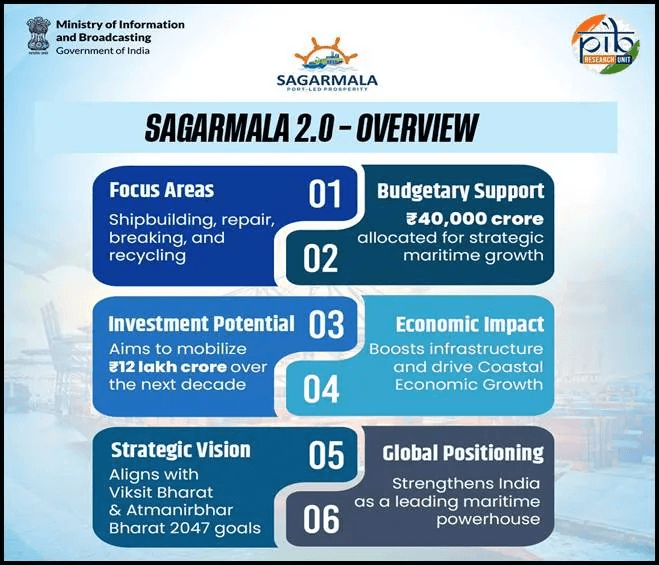
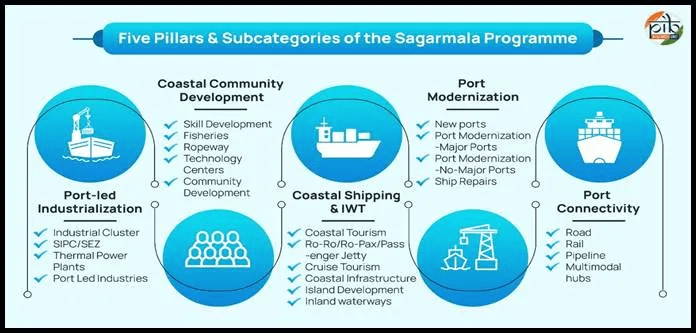
The GoI has launched the Sagarmala initiative to develop the coastline and enhance the operations of minor and major ports to boost logistics and reduce costs. 839 projects worth ₹5.79 lakh crores have been earmarked, and work has been completed for 272 projects worth nearly 1.41 lakh crores. With both port modernisation and shipbuilding covered, the regulatory tailwinds are great for KMEW.
Maritime Amrit Kaal Vision 2047 provides a blueprint for nearly ₹80 lakh crore investments in the sector, aiming to project India as a maritime powerhouse.
The Green tug program, worth 12,000 crores, has already been working in favour of KMEW. In addition to this, the tonnage tax regime provides a presumptive tax based on the volume or tonnage of the ships rather than the income generated. Since the tonnage-based tax regime is progressive, the amount of tax liability for small ship operators is significantly low. KMEW mostly operates smaller ships/boats and hence stands to benefit greatly. It estimates nearly 90% lower tax liability for the company.
In addition, the Union Budget 2025 also established a ₹25,000 crore Maritime Development Fund. Further, ₹69,725 crore shipbuilding and maritime reform schemes were unveiled in September 2025. This also includes the National Shipbuilding Mission, from which KMEW stands to benefit significantly.
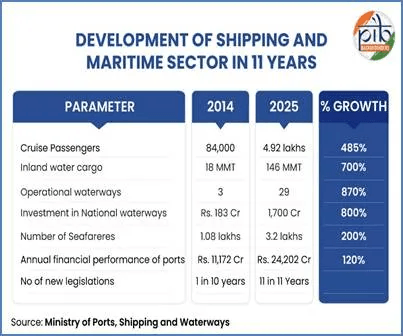
Expansion of Inland Waterways: India has nearly 20,000 km of navigable waterways (mostly rivers), but only a small portion of this is currently used for navigation. The stretch after the confluence of the Ganges and the Yamuna at Allahabad to Haldia in WB has been classified as National Waterway 1. Similarly, parts of the Brahmaputra in India are classified as National Waterway 2.
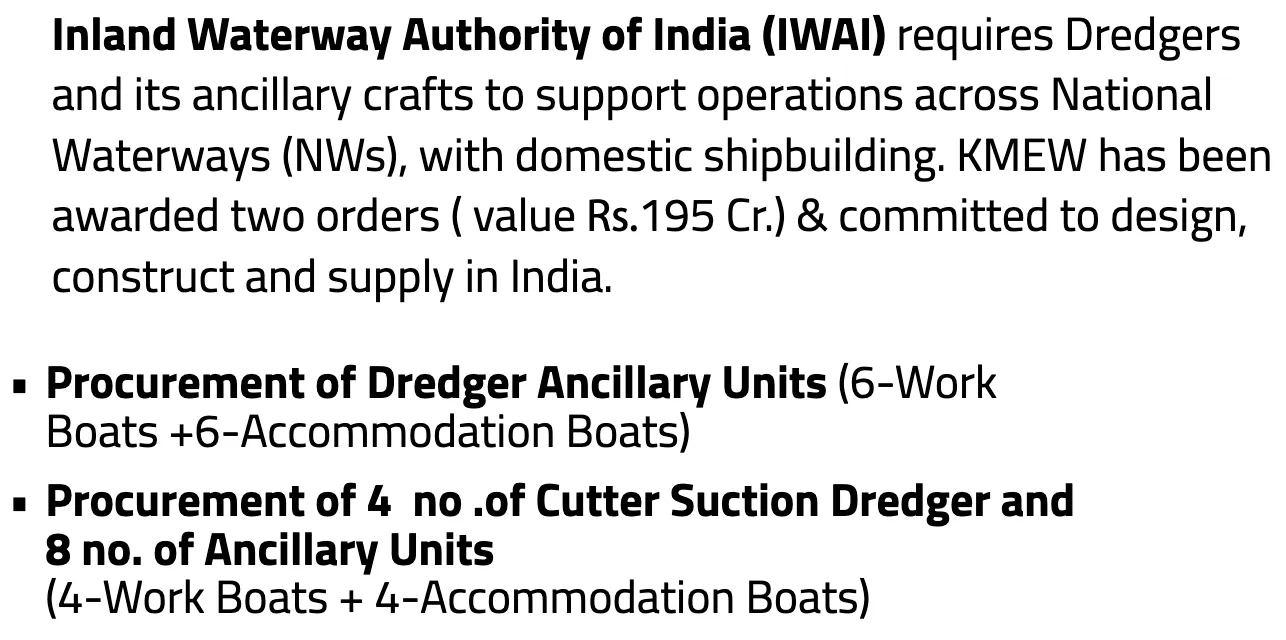
The Ganga River has significantly lower depth (Averaging 15m) than the Brahmaputra (Averaging 30m). To boost navigation capabilities, maintenance and dredging need to be more frequent for the Ganga than the Brahmaputra. Jal Marg Vikas Project on the River Ganga (NW-1) are creating substantial demand for maintenance dredging and specialised shallow-draft vessel construction. This results in a significant scopeo for the company. As a result, the company has landed two contracts worth 195 crores to provide dredgers and other ancillary units.
Bidding Guidelines
The potential projects that the company is aiming to bid for are around 2,000 crores. KMEW has a guideline of targeting projects with an expected EBITDA margin of atleast 35% to ensure profitability and liquidity since the cash conversion cycle is high at 131 days.
As per the regulations, projects worth under 200 crores need to be awarded to domestic companies. This helps KMEW, which is among the few that fall in this category. The competition under 100 crore is even less, as companies tend to ignore them due to lower scales, but KMEW specialises in such projects. This has resulted in the company being successful in nearly 50% of its bids.
The company also bids as the sole provider to reduce the risk of joint ventures and partnerships.
Ken Miles’ Shop - Ship Repairs and Turnaround
Since KMEW started off as a repair shop for ships, the company has nearly 40 specialised engineers who can work on a given ship at a given time. For example, KMEW’s chief technical officer has 11 years of experience in repairs, refitting, and docking marine crafts, a true Ken Miles spirit.
But the company did not wait to expand its repair unit organically. It acquired Kamal Marine & Engineering Works, now Knowledge Shipyard Private Limited, to solidify in-house repair and maintenance. All this leads to:
- Speedy Repairs: Other large competitors may have to dry dock vessels for repairs up to six months, but KMEW typically completes the same processes within three to four weeks.
- Maintenance Strategy: The company uses different sets of crews to carry out regular preventive and breakdown maintenance during both day and night, ensuring that crafts remain operational with zero or negligible downtime.
- Lean Operations: KMEW utilises a smaller, more specialised staff for operations, while others typically use a much larger staff.
This helps the company work with older ships that might need more frequent repair and maintenance. This also becomes important because a small company does not have access to high capital to procure or build new ships.
KMEW’s repair and maintenance activities are supported by its commitment to internationally recognised ISO standards, including Quality Management (ISO 9001).
Financials
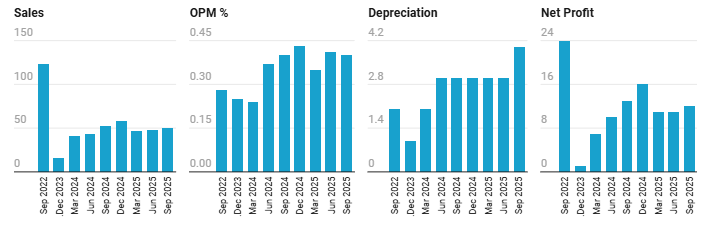
KMEW has historically seen ups and downs in its operations, and the financials may not provide a good picture of the company. We look at the quarterly and annual figures.
[KMEW Quarters]
KMEW P&L
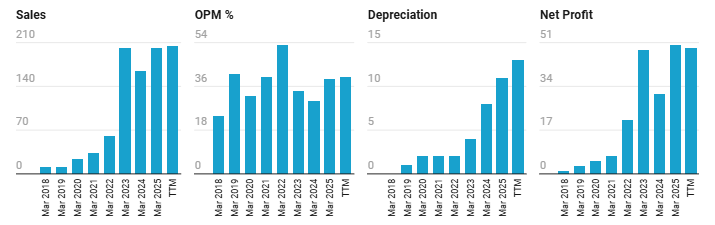
Now the revenues seem to be hanging around at around 50 crores per quarter without any growth, but with an order book of over 1,000 crores, this is expected to change. In fact, CARE ratings forecast a revenue growth of 15-20% on an annual basis and an operating margin of 35%.
The operating margin also seems to be holding up at ~40% with some exceptions. The depreciation is only 10-12 crores on the fixed assets of nearly 190 crores. This will enhance profitability but needs to be evaluated based on how the company operates. Since the company mostly uses an ageing fleet, depreciation on the books is very low, but in reality, this may overstate the profits to some extent.
Consider an example to understand this. An ageing boat, which if new should cost 100 Cr., will have, say, a depreciation of 10 Cr. each year, but the same boat when purchased after 10 years of operations will only cost say 10cr with only 1 crore of depreciation on the books annually. The effect on Net Income of the company using the older boat will be much less.
Cash Flows
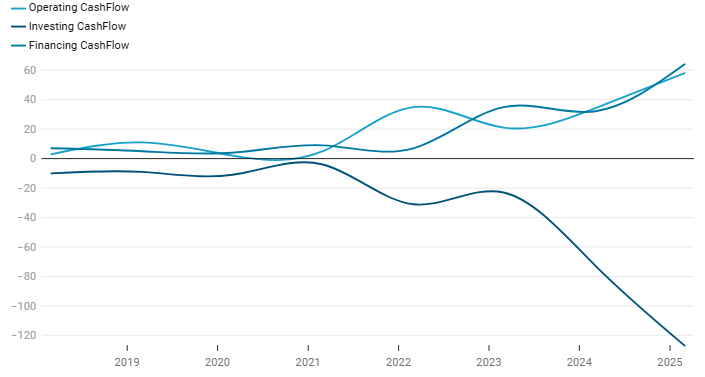
The operating cash flows are positive. Operating cash, together with financing cash flow, is being reinvested nearly completely. This is important for the growth of the company as shipbuilding requires significant upfront cash.
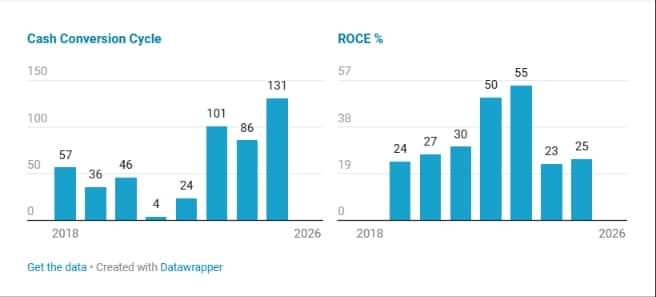
The receivables cycle has been increasing, which can be troublesome. At 131 days, it is more than 4 months of receivables. Government contracts in which KMEW is engaged tend to go through a lot of red tape before contracts can be paid. This is one of the reasons why the cycle is high, industry factors notwithstanding.
Liquidity Ratios
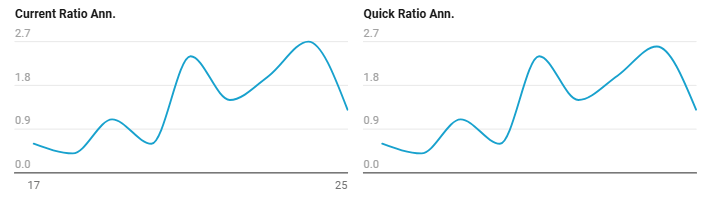
The liquidity ratios had been increasing but have deteriorated recently, which can result from deteriorating receivables cycles as well as capital expenditure. The company is sitting on a 50 crore cash pile, which is good. It has nearly 200 crore of debt facility from the bank, which could prevent risk to the operations, but could put it into trouble from a Shariah Compliance perspective.
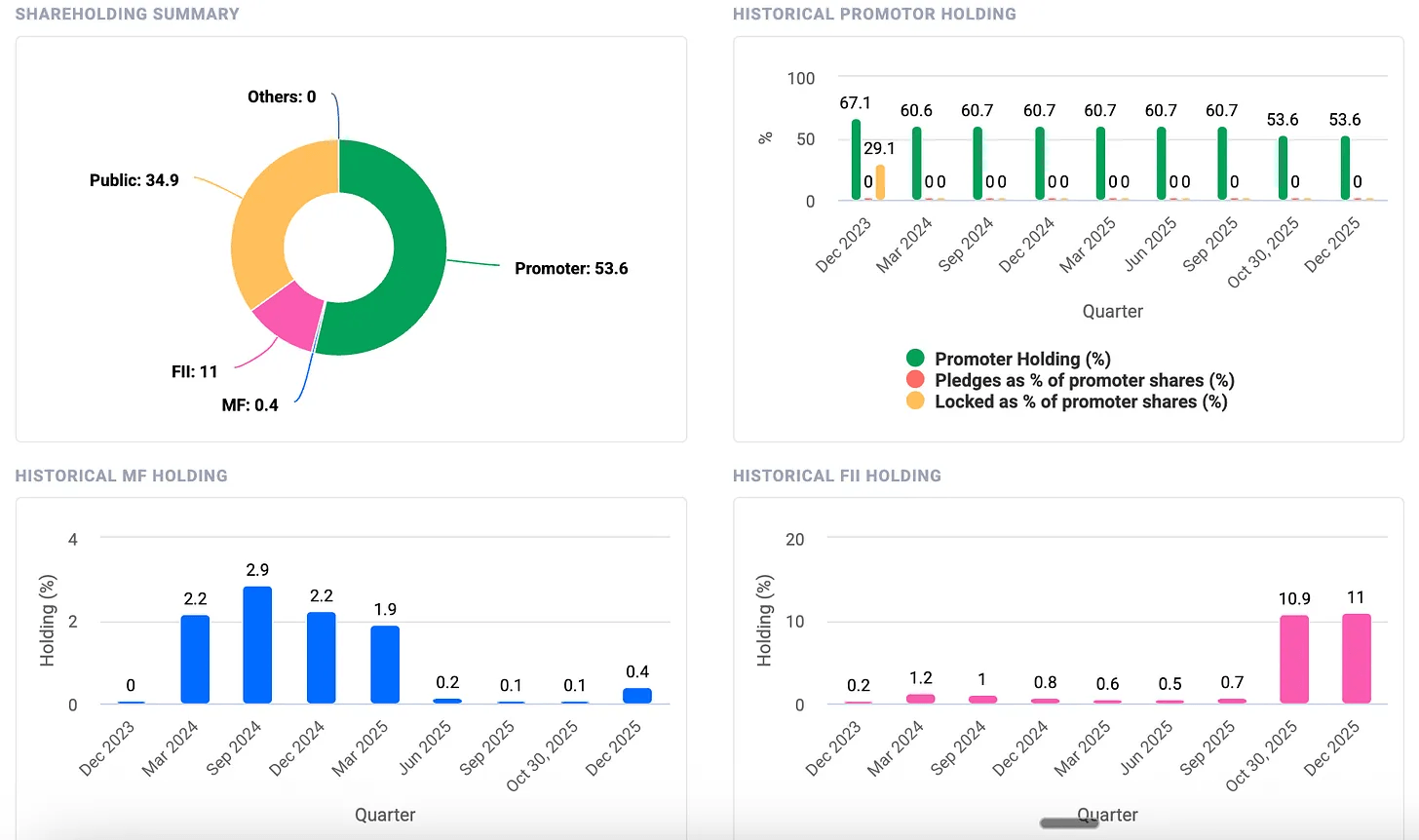
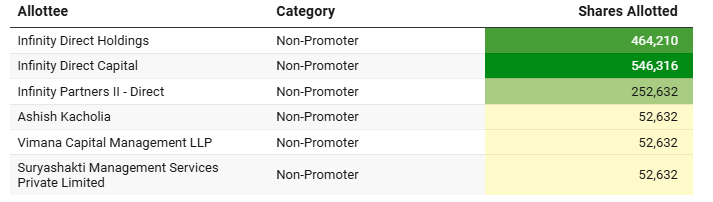
From September 2025, the promoter holdings have decreased by around 7%, and the general public shareholding has also reduced by ~4%. As per the regulatory filings on 30th October, 2025, KMEW completed a preferential allotment of 14,21,054 equity shares at ₹1,900 per share, raising ₹270 crores. The allotment was picked up by financial institutions who raised their stake to ~11%. Mutual funds also increased their shares. These investments provide a vote of confidence in the company stock.
Valuations - How much is too much?
From 10 September last year till the end of the year, the stock rose from ₹875 to ₹1927, more than doubling in price. Now, even with growth prospects and financial performance, this needs to be evaluated.
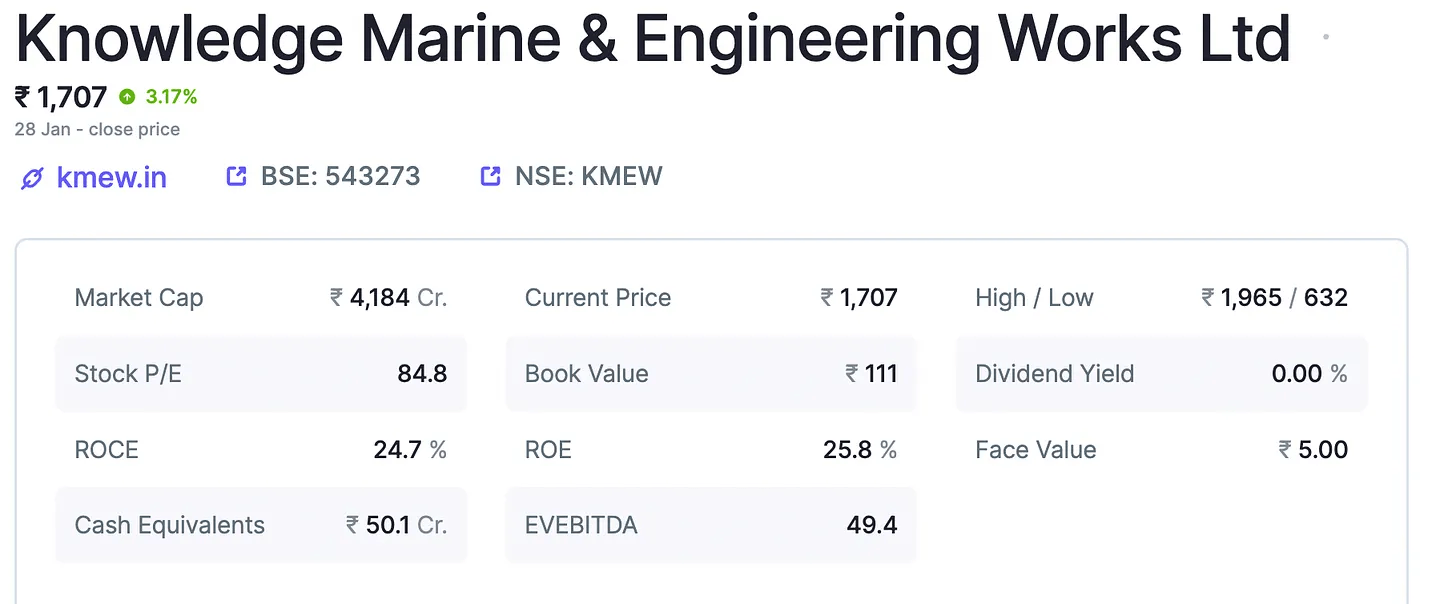
Using an asset-light model, and the fact that the company invests in capex only after securing a contract, has resulted in high ROE & ROCE of nearly 25%. This is not usual for dredging companies, which tend to have lower ROCEs.
Before we move on to further comparisons, we need to understand that KMEW is only one of its kind and similarity with other companies is hard to find. We cannot compare it with pure dredgers or pure shipbuilding companies, but rather with companies that do both, as well as marine tourism and other activities.
PE and EV/EBITDA ratios of 85 and 49, respectively, seem to be on the higher side, comparable to early age tech companies rather than Maritime units. Might indicate overvaluation, and since the price has nearly doubled in the past five months or so, this reduces the probability of further rise.
KMEW key risks
The Company’s small scale heightens its exposure to certain risks. This section discusses the key risk factors that the company faces.
Client concentration in Order Book
As per the last financial year (FY25), the top three orders accounted for 60% of the order book. This concentrates revenue in a small number of client and any trouble in executing orders or risks to clients will significantly and adversely affect KMEW.
Ageing Fleet and Maintenance Costs.
KMEW’s Trailing Suction Hopper Dredger (TSHD) fleet accounted for roughly 47% of revenue in FY25. But with an average fleet age of over 50 years for TSHD, this may require significant maintenance or replacement capex, even though they were refurbished before use. Additionally, older ships are technically obsolete, less efficient and may also ward off prospective customers.
Working Capital and Financial Stress
We have already discussed that the company faces an elongated 131 days in the receivables cycle. This is further compounded by Gross Current Asset (GCA) Days at approximately 230 to 240 days as of March 2025.
Tender Driven Government Business
As the company completes a contract, it needs to work on another. This requires scouting for contracts, which is not efficient when compared to long-term revenue receipts in other businesses. With government contracts, there is a political risk as well as a risk of payments being delayed due to red tape.
Another risk that KMEW faces is that its business is dependent on government allocation for various maritime development projects. As these projects are completed, spending is likely to taper, and so will the revenue of the company. It will have to start looking for other private clients. Tender-based projects also put pressure on margins, and the company has to keep applying for new contracts, whether private or government.
International Risk
With operations in Myanmar and the Middle East (Bahrain), the company is faced with risks it does not fully understand. A good example is that it had to redeploy assets from Bahrain into India. TSHD, River Pearl 18, the specific ship for the project, has been redeployed to Deendayal Port and Puducherry Port. While the Bahrain contract is still on, this affects the reputation, and the company may have trouble landing similar contracts in future.
What to watch out for
The company has potential with a good order book of 1,100-1,500 crores, depending on how you count it. We have discussed the risks that can affect the company. Factors that need to be kept in mind if you are following this company include:
- High margin dredging contracts in the order book.
- Diversification and forward and backward integration through shipbuilding, tourism and ancillary services.
- Technical moat - Good technical expertise from repair and maintenance, which spills over to shipbuilding.
- Technical moat reduces costs as well as turnaround time for repairs, reducing dry docking time to less than a month.
- Government expenditure on the development of ports and other maritime activities.
- Low tax rate due to the implementation of the tonnage tax regime.
- First mover advantage in the green tug space, leading to higher market share expectations.
- The company maintains a superior order-win ratio of greater than 50%, supported by its specialised knowledge and competitive pricing.
Leveraging Ken Miles’ Skillset!
We may not have Ken Miles amongst us today, but the spirit of his dedication lives on. As someone who changed the game for speed as well as endurance, our SEBI-registered analyst is also navigating turbulent markets for value stocks that also pass Shariah Screen guidelines. Small Caps may not have a high level of information available publicly, but we are happy to bridge the gap. To know more, book a consultation here. Explore Ethica Invest to find more interesting stories.
General Disclaimer and Release: Nothing contained herein constitutes tax, legal, insurance or investment advice, or the recommendation of or an offer to sell, or the solicitation of an offer to buy or invest in any investment product, vehicle, service or instrument.