Oriana Power - High Growth Amid Increasing Market Saturation
Winters make people consider leaving Delhi.
The pollution in Delhi is a crisis that has not been addressed for long, and only cosmetic changes have been applied. It is exacerbated in winters when a combination of factors takes it to murderous levels. This is one thing that takes away a lot from a city that has nearly everything to offer, and maybe is better than other cities in India. No Bengaluru traffic, no high real estate cost of Mumbai, no dilapidated Kolkata infrastructure, but with job opportunities from all these cities.
However, after more than a decade in Delhi, I decided to call it quits and move back to build a home on a parcel of land that my grandmother had purchased and left for us in the ancestral town. The town has since been incorporated into the city’s suburbs, although the infrastructure was still under development. With the proliferation of work-from-home options, such as those offered by Ethica Invest, it no longer made sense to stay in Delhi.
The air was clean (AQI averaged around 100), the water supply was fair (had to install a 2000-litre tank), and connectivity to the Golden Quadrilateral was exceptional. And the icing on the cake was that my cousins and extended family also moved into the town during COVID, and a lot of them stayed back
 Ethica Invest
Serious about long-term investing?
Unlock our professionally managed portfolios.
But the electricity was a big issue. While the official supply did not include any load sheddings, any fault could literally take days to rectify. So we decided to install a solar energy off-grid system that also had the option to draw from the grid whenever required. This was a lifesaver, as the batteries would run out pretty soon after sunset. Eventually, we learnt to be frugal with energy post sunset, but storage capacity was a big issue. With actual storage of about 5-7 units, ACs could not run through the night, and we decided to double the capacity, but still needed to be frugal. There was another drawback with less storage; a significant amount of energy generated around noon could not be utilised (neither used nor stored) as charging capacity was limited.
Similarities with the solar industry in India
It makes you wonder why I am discussing this. The discussion becomes important because this situation faced by us can be scaled up to the whole of India. Before the advent of solar, nearly all our electricity needs came from coal and some from hydro power. Both coal and hydel had one advantage, they could produce electricity round the clock. So, minimal storage is needed, but solar is another ball game. It’s a maverick that would exceedingly shine (again, literally) 8-10 hours a day but will take a rest for 12-14 hours.
The output of the coal plants is easy to control, and the output from the plants can be matched to the demand from the grid. But for solar, the output depends on sunlight, which is hard to control. The energy generated during the day needs to be used or stored.
In addition, the solar can be erratic. A cloud cover can significantly reduce the production. This affects grid stability due to a mismatch in consumption and production. While the PowerGrid is installing new technologies to enhance stability, solar projects are having to wait to be connected to the grid. The wait time equals the revenue lost for the period. To allay these issues, the government, as well as companies, are coming up with storage solutions to enhance the efficiency of production, make the best use of solar generation, and increase grid efficiency.
True RE Pivoting
As a result, major solar producers are pivoting towards full renewable producers, which include solar generation, storage, and consumption. Oriana Power is one of the companies in the industry that is undergoing puberty.
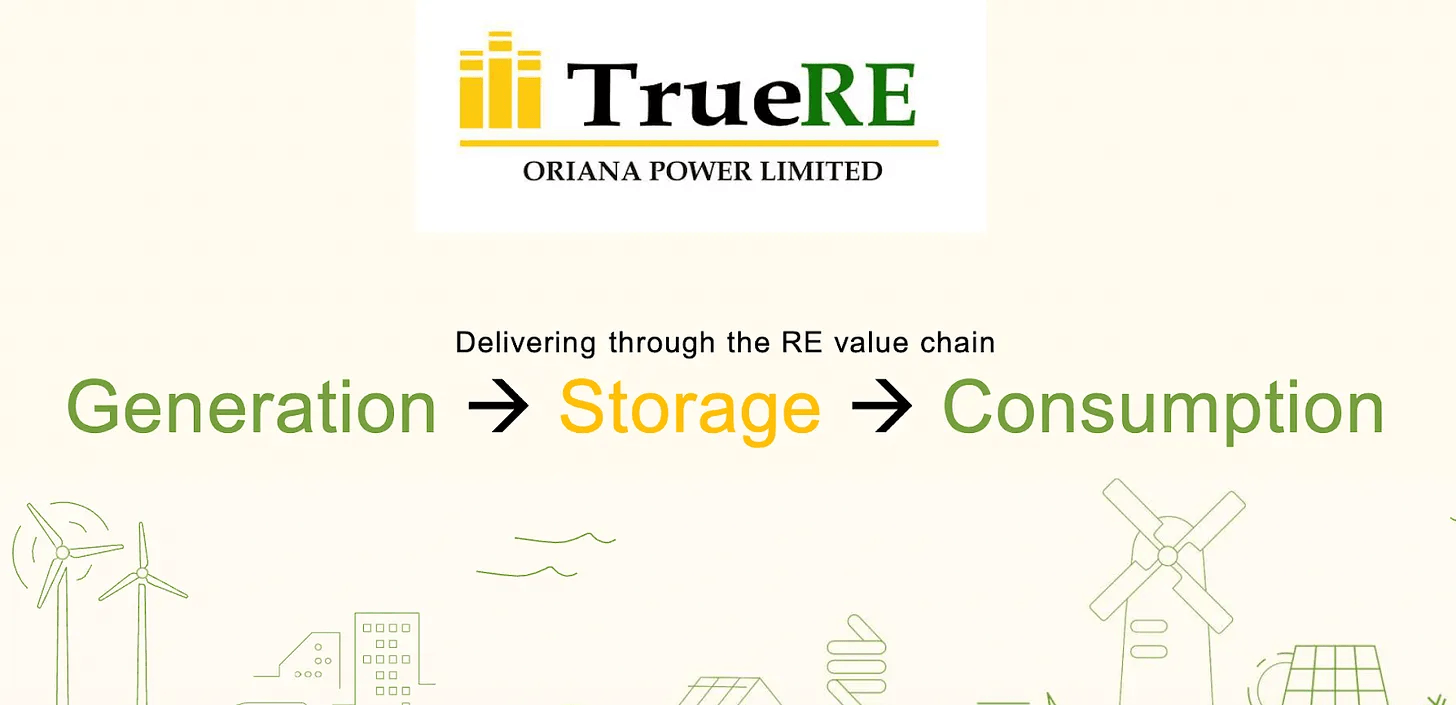
Oriana True RE is a mid-sized player in the industries it operates in. In layman’s terms, it does three major things:
- Installs and delivers solar energy systems to other businesses (private or government) for their use. Clients include Hero Motocorp, Hindustan Petroleum, JK Laxmi Cement Limited, Mrs Bectors, etc.
- Installs commercial-scale solar energy systems and sells energy on a per-unit basis based on long-term contracts known as power purchase agreements (PPAs). Oriana usually owns/leases the land. Clients include Hindustan Copper, Sona BLW Precision Forgings Ltd, Mahindra CIE Automotive, Maral Overseas, etc.
- Builds solar plants on client properties but does not transfer them initially. Sells electricity for 15-20 years with the option of transferring to the client after that.
In addition, it takes up Grid-scale & C&I Battery Energy Storage Systems (BESS). What it means is that it installs large battery banks to reduce solar energy volatility. In the day, batteries are charged. After sunset, batteries provide energy to the grid. This helps stabilise the grid.
Other sectors where it operates include Green Ammonia/Green Hydrogen and Compressed Biogas Production (CBG).
Order book
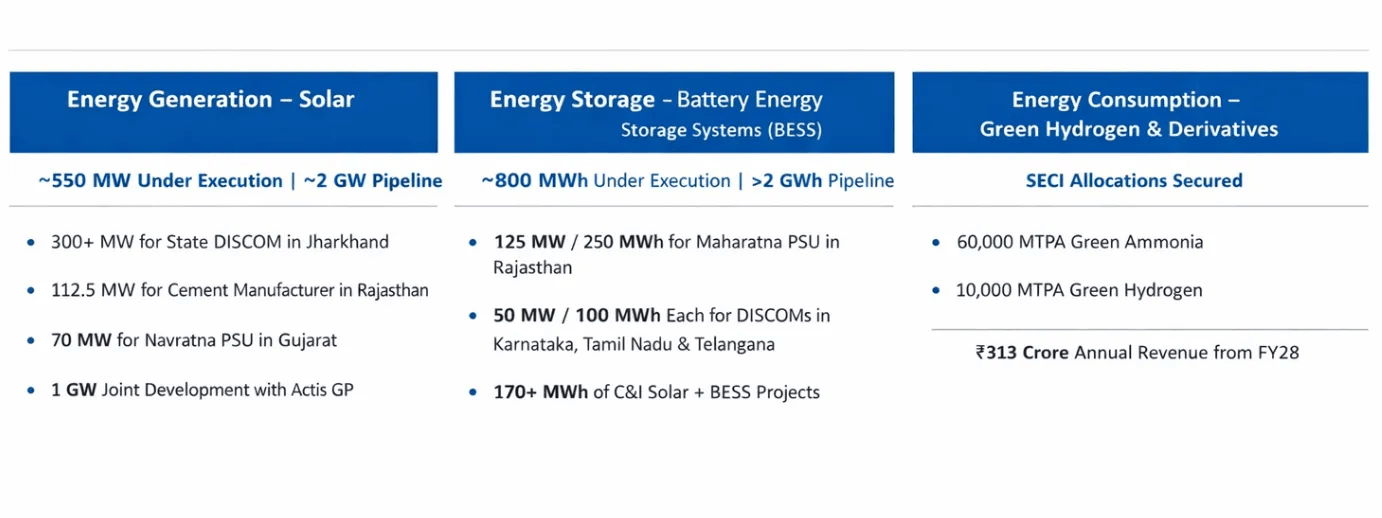
The order book for Oriana Power is rich and has significant projects under its belt. Important projects for different verticals are discussed here.
1. Energy Generation (Solar)
More than 550 MW of cumulative capacity is presently being executed with a pipeline of projects worth 2GW.
Recent Large-Scale Orders:
Ethica Invest
Serious about long-term investing?
Unlock our professionally managed portfolios.
- 300+ MW for the state Discom in Jharkhand.
- 112.5 MW for a cement company in Rajasthan.
- 70 MW for a Navratna PSU in Gujarat.
- 1 GW joint development agreement with Actis GP.
2. Energy Storage (Battery Energy Storage Systems - BESS)
Oriana has expanded exponentially in BESS and has revised its 2030 target to 20 GWh due to the rapid growth. The company has 800 MWh of BESS projects, which are currently under execution with a pipeline of more than 2GW. Recent orders include:
- 125 MW / 250 MWh for a Maharatna PSU in Rajasthan.
- 50 MW / 100 MWh each for state Discoms in Karnataka, Tamil Nadu, and Telangana.
- 170+ MWh in secured Commercial and Industrial (C&I) orders for solar and BESS hybrid projects.
3. Energy Consumption (Green Hydrogen & Derivatives)
The sector is new for Oriana and is expected to contribute significantly from FY28. The company has received an allocation of 60,000 MTPA for Green Ammonia and 10,000 MTPA for Green Hydrogen from SECI. These allocations are expected to generate an annual recurring revenue of approximately INR 313 crore from FY28.
What ails solar producers in India?
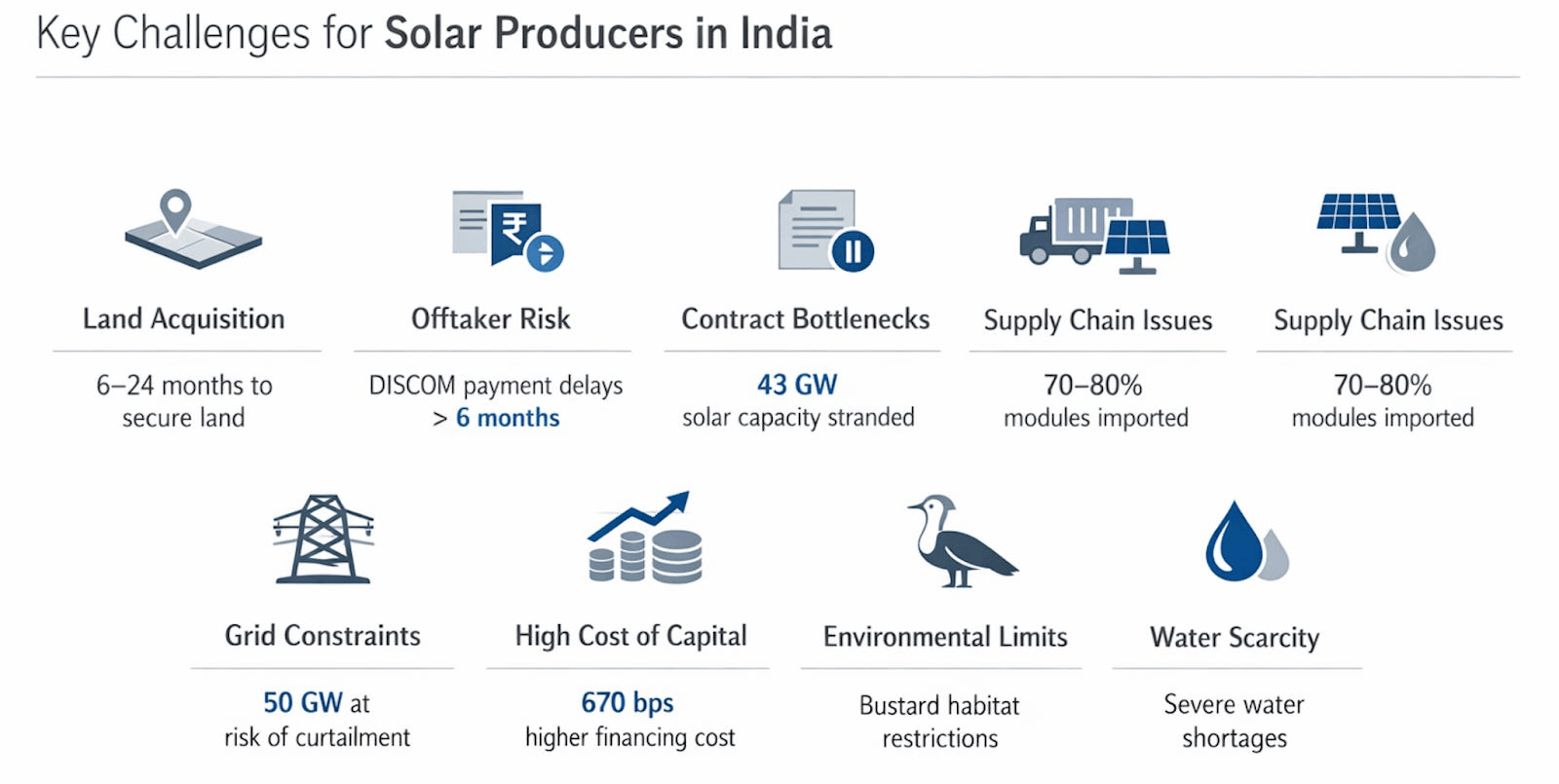
The solar sector has outpaced GDP significantly with a CAGR of around 14% for the past 10 years. It is expected to maintain a similar growth rate in the coming years. We had discussed how grid stability is an issue with solar energy. However, various additional issues curtailing growth in the solar and renewables sector in India also pose a threat. This has led to the Capacity Utilisation Factor (CUF) for solar plants to fall from 19.2% in 2022 to around 16.5% in late 2025. Factors ailing the solar industry in India include:
- Land Acquisition and Procurement: Due to fragmented land ownership in India, land acquisition can take up anything from 6–24 months, which consumes a vast portion of the project commissioning timeline.
- Offtaker and Counterparty Risk: State Discoms have chronic cash flow issues due to transmission losses and thefts. This leads to payment delays and even renegotiation on Power Purchase Agreements (PPAs).
- Grid and Transmission Issues: Inadequate evacuation (transmission) infrastructure leads to a delay in the start of revenue. As a result, nearly 43GW-50 GW of installed renewable energy has not been connected to the grid as of 2025 (PowerGrid).
- High Cost of Capital: Solar projects in India face significantly higher financing costs compared to developed markets (6%-7% higher), which strains project economics given the capital-intensive nature of the sector.
Oriana’s Industry Landscape - Making Hay while the Sun Shines
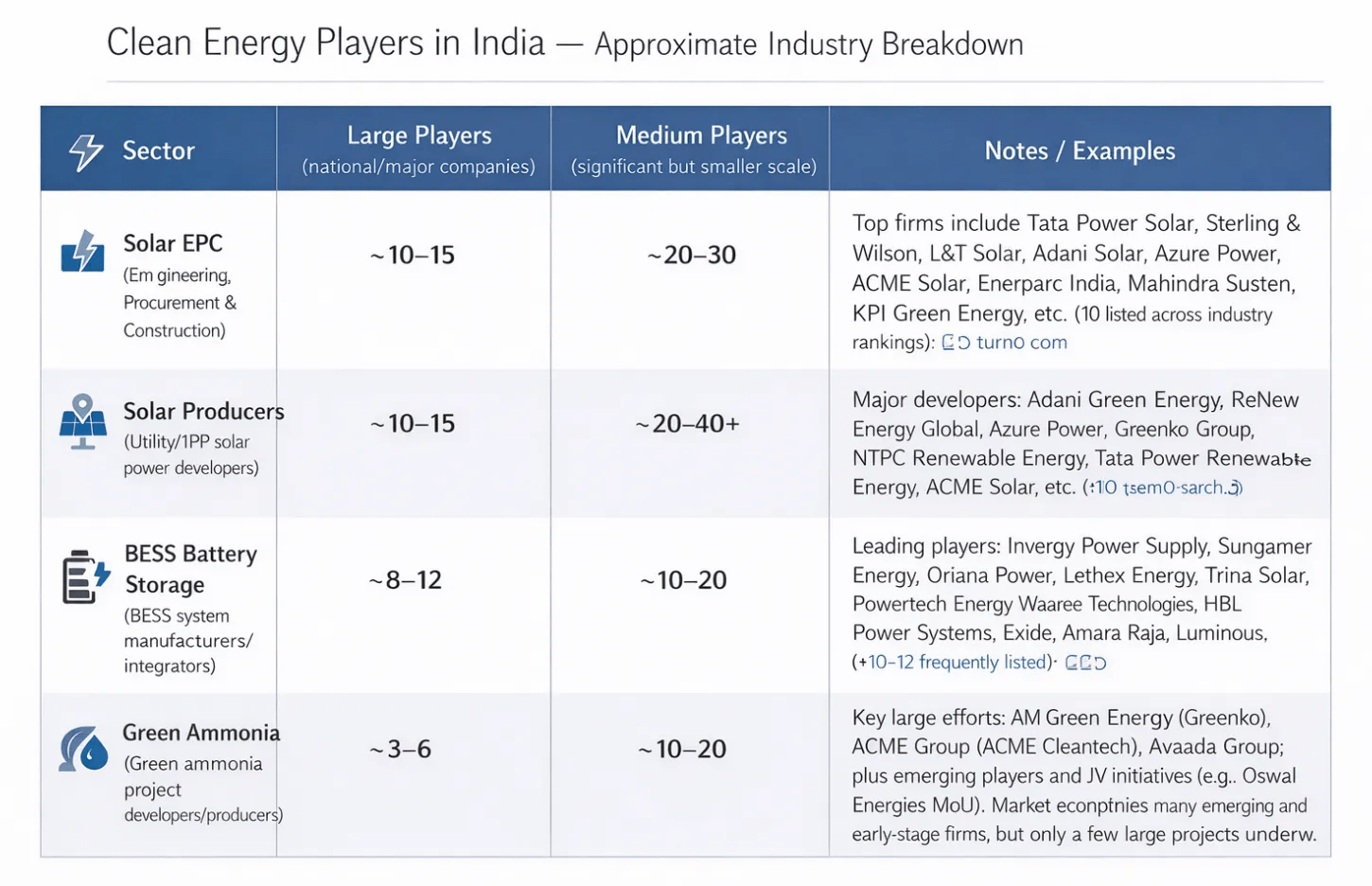
The solar energy producers in India include 20-30 major players and more than 100 significant players, indicating the industry is fragmented. In addition, the battery storage industry, also known as the BESS industry, comprises a significant number of players (~20-30). Another industry that Oriana Power has made inroads in is Green Ammonia, which also has 15-20 players.
Growth in Multiples (X) rather than percentages (%)
The company has been blessed financially and has been growing exponentially with good growth opportunities. We take a look at the annual results for the past five years.
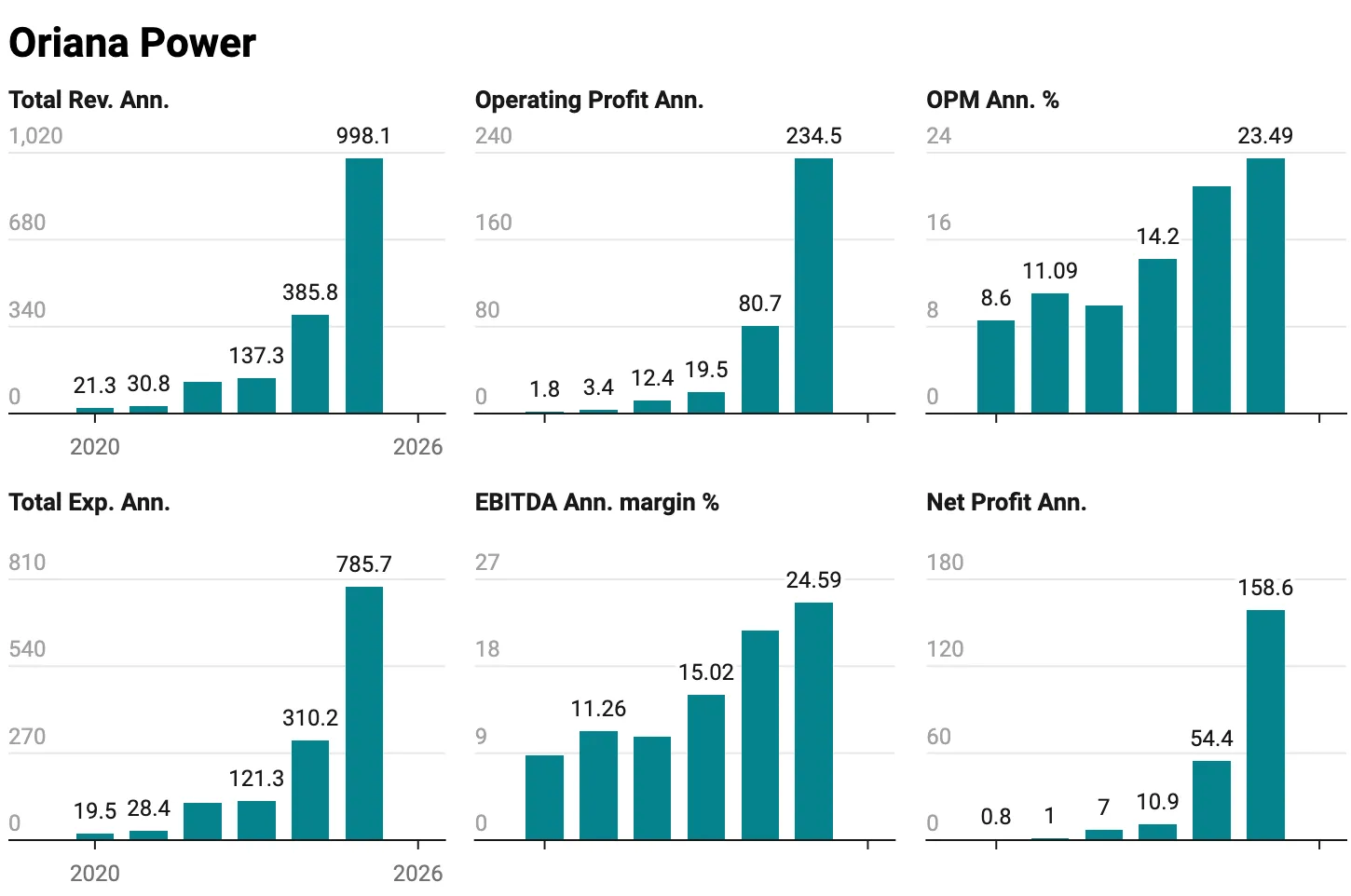
With growth in revenues and profits seeing more than 100% growth in some years, financials can be described as blockbuster. The highlights include:
- Total revenue has grown significantly. 46X in the last five years. 2.58X in the past year alone.
- Operating profit has nearly tripled in the last year.
- Operating margins have been improving and are at 23.49% currently.
- Net profit has also tripled (3X) in the last year.
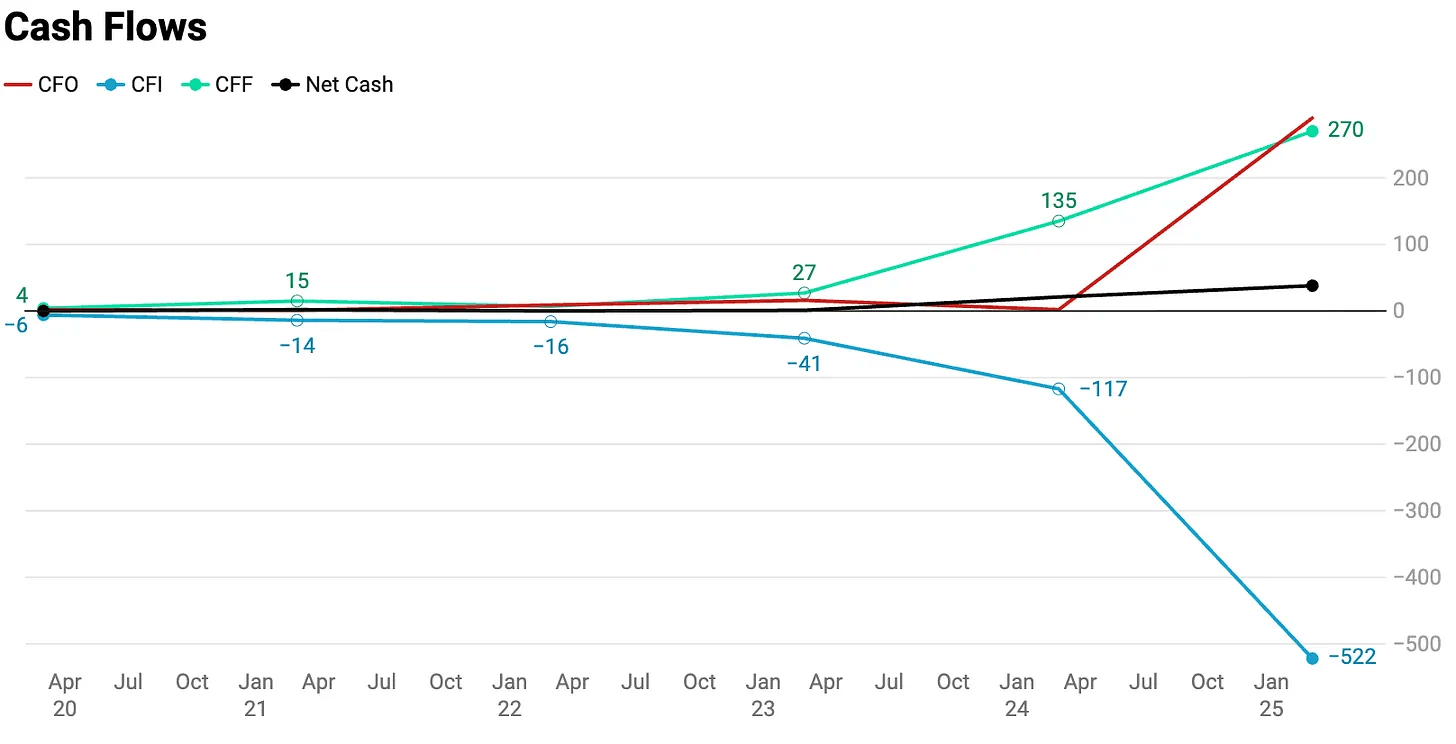
Operating cash flows have been 290 crore, with financing cash flows at 270 crore. Cash flows from operations and financing have been invested back into the company to enhance growth.
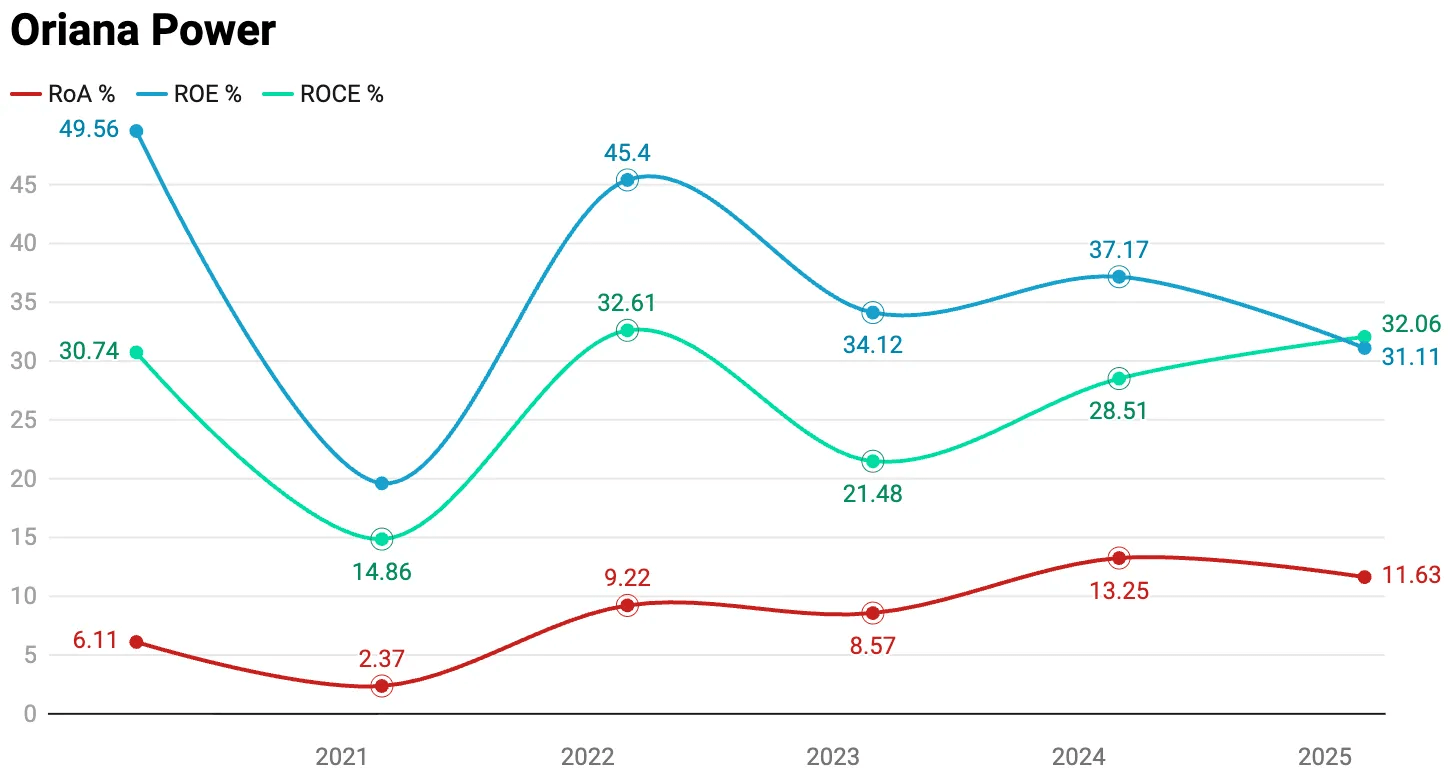
Since we have growth in the form of multiples rather than percentages, it is natural that returns on investments are extraordinary. ROE and ROCE are beyond 30% and seem to be holding up. ROCE has surpassed ROE in the last financial year. This suggests a good return on investment for the company. However, this needs to be concurred with the valuation figures to see how much of the growth has already been absorbed in the stock price.
EV/EBITDA
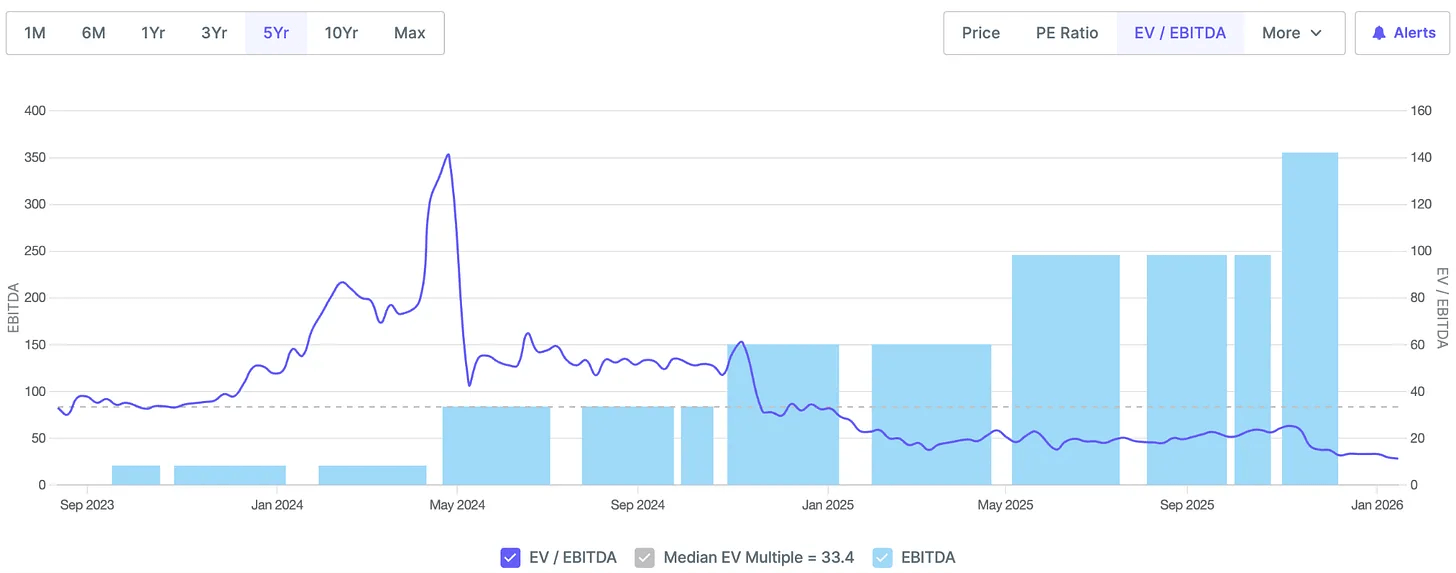
Okay, so this is where the stock gets interesting. It has traded at an EV/EBITDA multiple of 140 but is now down to 11.3. This may or may not suggest a stock price uptrend, but the stock is trading at much lower valuation multiples. This provides an opportunity for upside. The median multiple of 33.4 also suggests a valuation re-trigger, but we need to check it in conjunction with other indicators. We compare it with the industry ratio, which seems to be around 50.

P/E Multiple
Oriana Power has a P/E ratio of 17, which is less than the average industry ratio of around 20-25. This also indicates slight undervaluation. Valuation measures indicate that the stock may see some upside in the coming time.
Eminem’s Headlights
The industry growth rate is good, and Oriana has a small but significant market share. Coupled with financial exuberance, the company has surely done well. Does this make investing in the stock a good bet? Maybe yes, but not necessarily. There area few ways in which a stock can maintain such growth. The company might be a first mover in the industry and has a good market share. There can be other reasons, such as being a monopoly or having a competitive advantage. But most importantly, the company needs to be constantly innovative.
Oriana does not seem to do anything that is very innovative. Some innovation in the form of a partnership with other large companies or research institutions has been suggested by the management. But not something that makes it shine like Eminem in a sea of African American rappers. With a large number of firms in the fray and companies depending on contracts from governmental bodies, the risk is also significant.
Final Thoughts
So this takes us to the question. Why are we discussing Oriana Power? The answer is related to the industry. The industry growth rate is pretty good, and expanding renewables capacity has something for everyone, at least for the next 3-4 years. This is the reason why Oriana has historically performed well financially. With a good order book and recurring revenue from its agreements, it needs to be explored for value.
The stock reached highs of INR 3000 less than three months ago but has since plummeted nearly 40%. This results from no major contracts or opportunities since then. However, this can change, and one needs to follow the stock. Get in touch with the team at Ethica to know more about Oriana Power or any other stock that might have caught your fancy.
General Disclaimer and Release: Nothing contained herein constitutes tax, legal, insurance or investment advice, or the recommendation of or an offer to sell, or the solicitation of an offer to buy or invest in any investment product, vehicle, service or instrument.