
Windlas Biotech - The Pill Maker
The ubiquitous MR: Skinny Pete
You might have come across your friends or relatives working as a Medical Representative or an MR in India. What an MR actually does is that he goes around visiting doctors and showcases his company's medicines, which the doctor will prescribe to his patients. He will tell the doctor why a particular brand is better than the other.

Something like this guy.
The Generic Dosage:
Pharma companies and research labs come up with new drugs and are generally granted a patent for new drugs, which expires in about 15 years. The company holding the patent can manufacture that drug and can be the sole seller for 15 years. Beyond that, it comes into the open market and is now a generic drug.
The Peddler
If the drug is commonly used, a number of companies will manufacture it and start marketing it. This is where MRs come into play, and they go door to door to market the drug. Take any drug that is fairly used, and you will have a large number of companies selling it. Many of the companies selling a drug will not manufacture it themselves but will go to say Solan/Baddi in Himachal Pradesh and get someone with a manufacturing license and ask them to manufacture it on their behalf.

Breaking Bad
The company with a manufacturing license will gladly oblige and can also package that drug as per requirements. The first company here is the marketer, and the second one is the manufacturer. The marketer will hire MRs and ask them to go to doctors to market their drug.

Now this is where Indian Pharma gets shady. It is a common practice that doctors would get commissions in the form of cash, electronics, or even world tours. And the health of Indians comes last. Anyway, that's a topic for a different article.
How it works in India
It is also the case that many large pharmaceutical companies in India outsource the manufacturing of their drugs to others. There can be many reasons, including the expertise of the manufacturing firm for a particular drug formulation. Let’s take, for example, a drop used for infants to relieve symptoms of cough and cold. This is its front packaging:
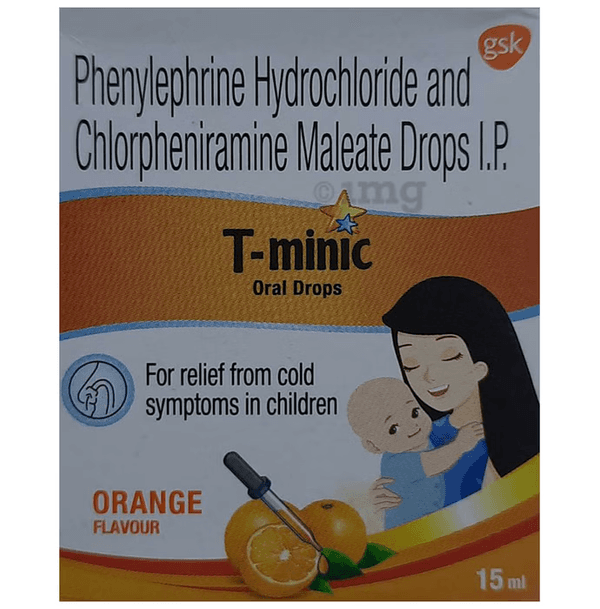
The company here is Glaxo Smithkline, which is a well-established company in India and outside. We now look at the details of the side crimp:
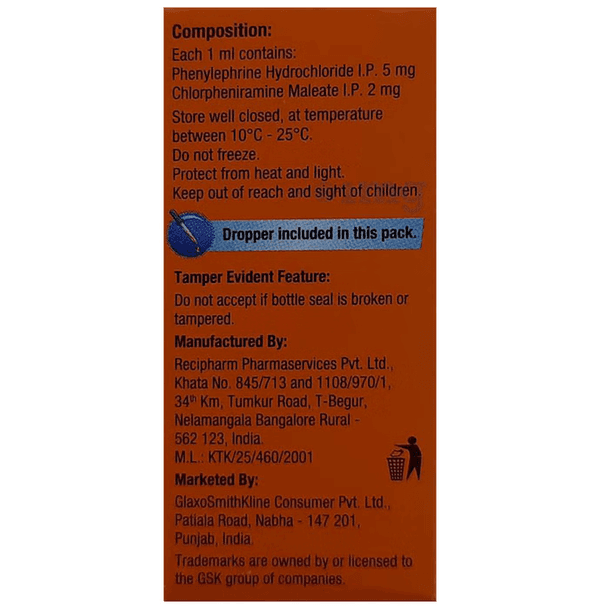
The manufacturer is different from the marketer here. So GSK would have asked Recipharm to manufacture this drug on its behalf for a stipulated payment.
Now, since a lot of manufacturers do not have retail clients like you and me, they would approach larger companies or vice versa to manufacture the drugs and earn from the Pharma pie. The manufacturer here is a contract manufacturing organisation (CMO), which can also be a contract development and manufacturing organisation (CDMO) if the company is also engaged in development and trials of a drug.
Windlas Biotech
Now Windlass Biotech has a similar story. While it started off making its own drugs and marketing them, and it still does that, it has also moved on to the CDMO route, mainly manufacturing drugs for other clients, including:
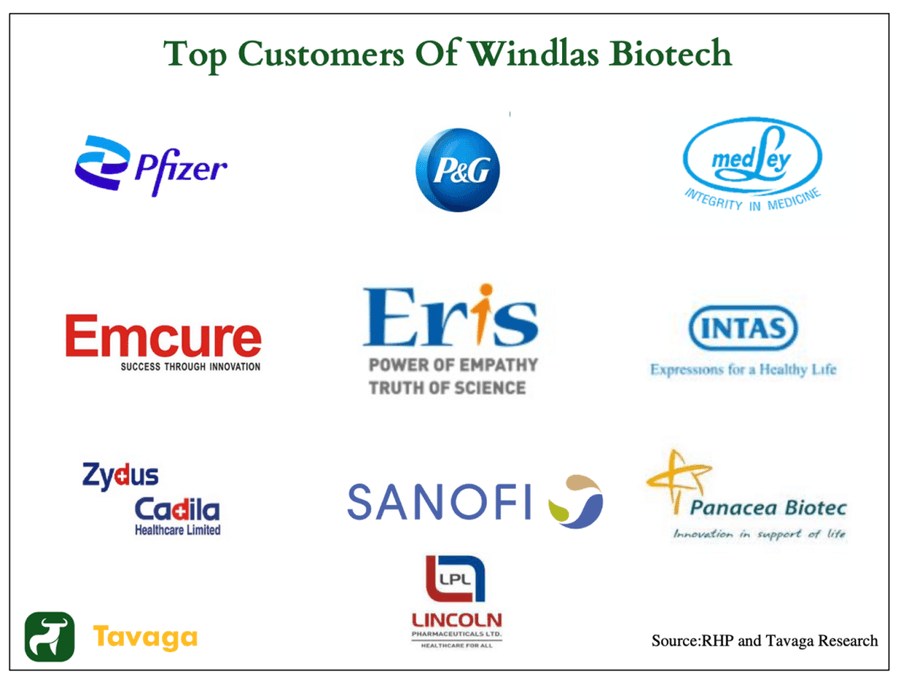
Now those are some large pharma companies. And that’s a very diversified revenue source. And it shows that large companies trust Windlas. As we discussed earlier, while companies like Pfizer or P&G have their own research and manufacturing facilities, Windlas would have expertise in other formulations, and hence, the manufacturing is outsourced to it.
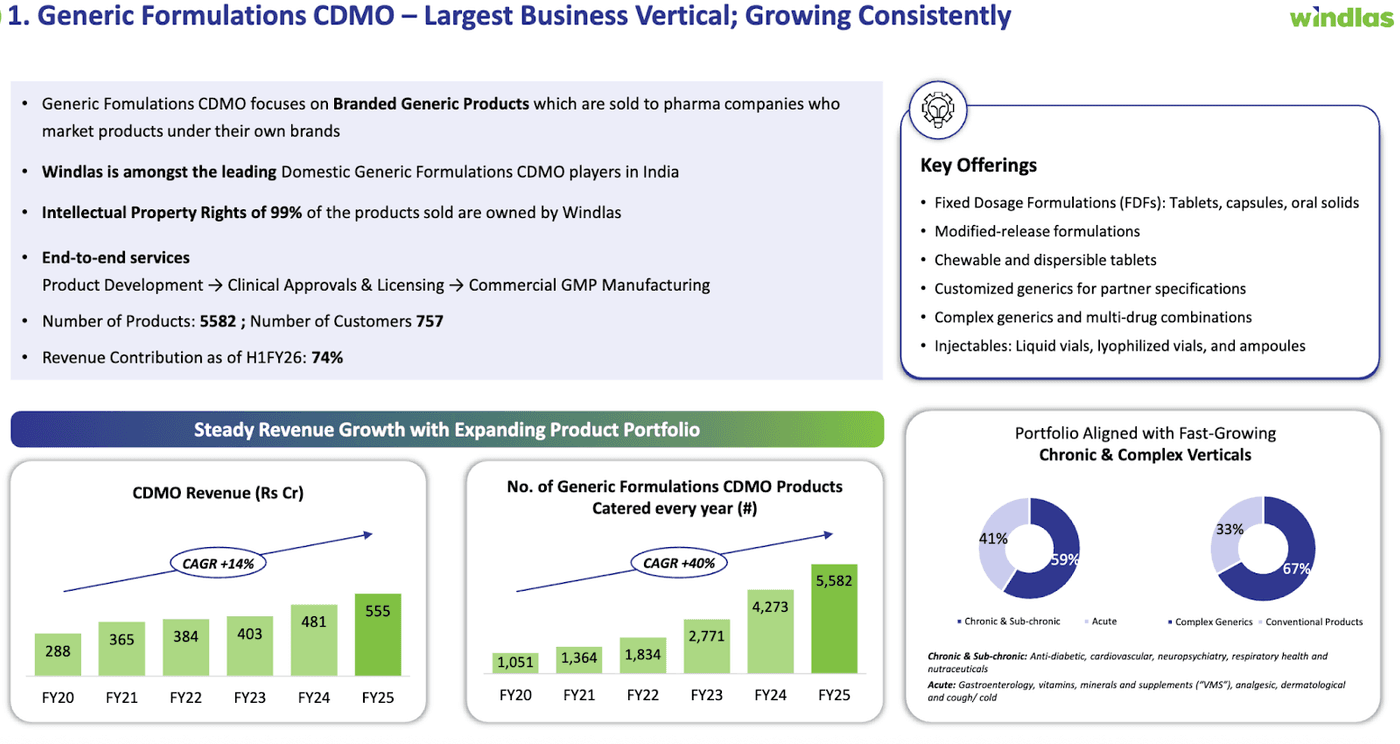
So Windlas has expertise in high-margin complex generics and high-growth segments like anti-diabetic, cardiovascular, and neuropsychiatry, which account for nearly 3/5th of its portfolio.
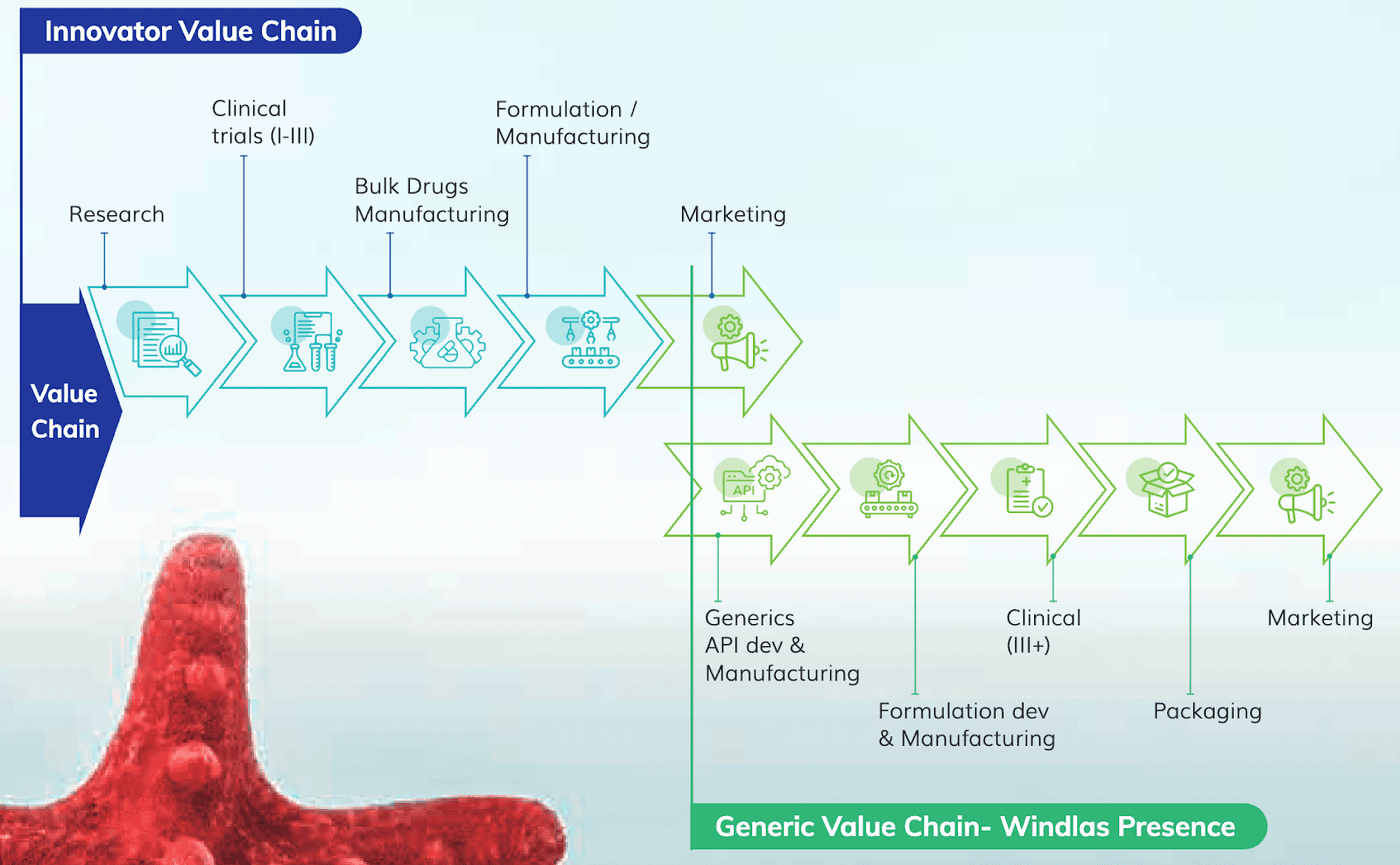
We now see where Windlas stands in the value chain. Remember our article about Aarti Pharma. Aarti Pharma derives its major revenue share from the first half of this value chain, whereas Windlas derives it mainly from the latter half. Windlas is also a CDMO because it also does clinical trials, but those are III+, which are post-approval trials and are conducted to test effectiveness and safety after commercialisation.
Business Verticals
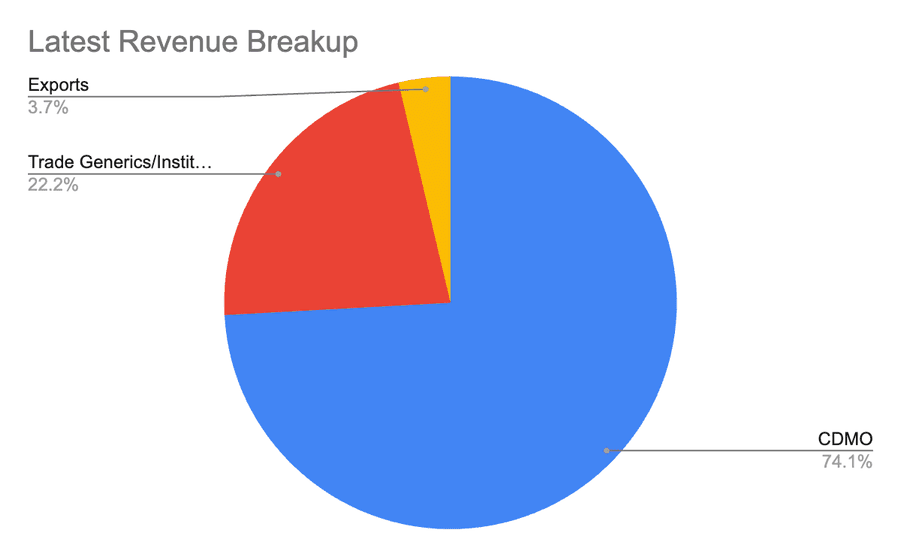
Revenue sources from Windlass are divided into three verticals:
- CDMO, which is the major portion as we have discussed earlier, is ~74%
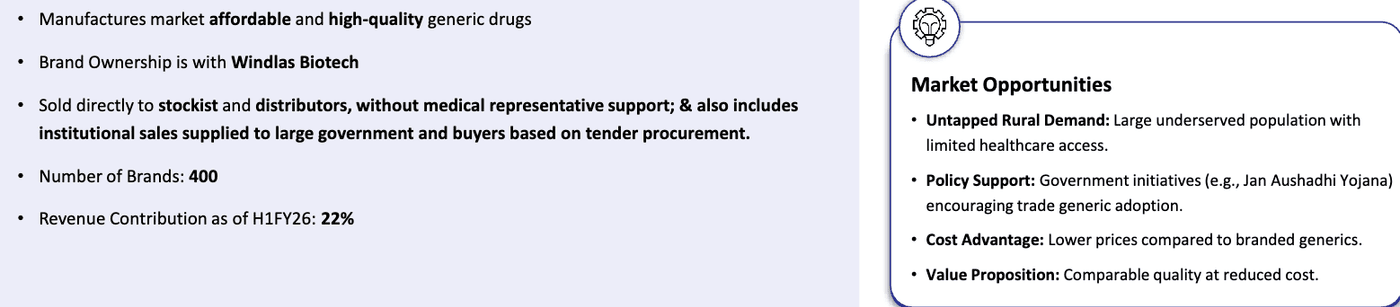
- Trade Generics and institutional at ~22%. The company manufactures generic drugs and markets them itself. It comes under the Windlas brand and has nearly 400 products.
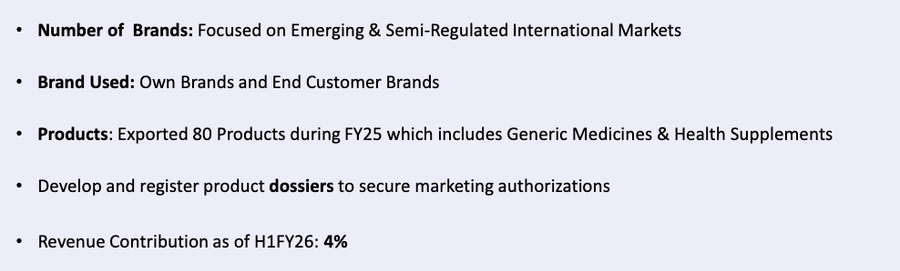
- Exports at ~4%
The latest revenue breakup is based on H2 FY2026, which indicates a CDMO contribution of ~74%. The total CDMO percentage has decreased slightly over the years but still contributed the largest chunk.
A little history
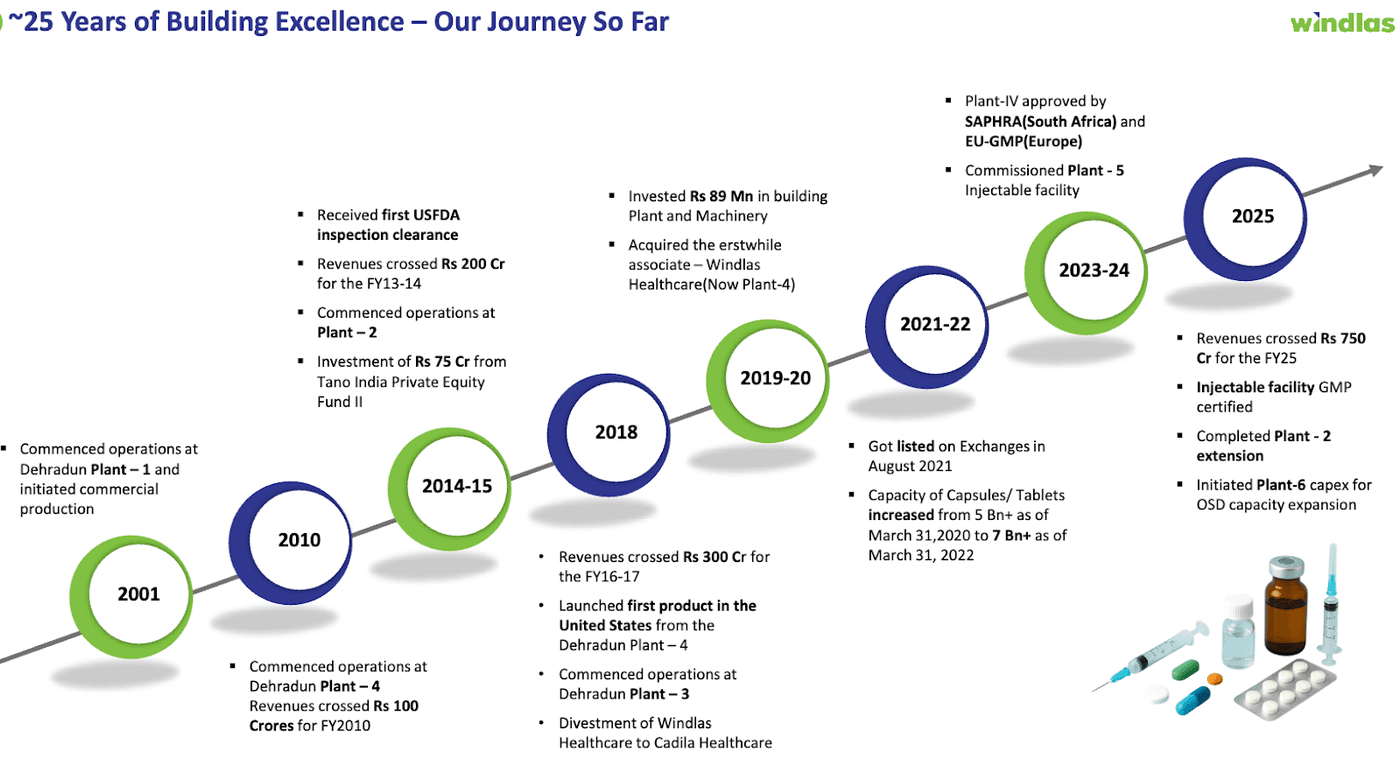
The company commenced operations in 2001 in Dehradun and has since grown to five operational plants, with another one soon to be operational. The new plant, no. 6, will produce oral solids and is undergoing modernization. Let's use their own slide for major milestones for the company.
Infra and Human Capital:
All currently operational Windlas plants are WHO-compliant and engage in a diverse manufacturing process, including the production of tablets/capsules, vials, sachets, pouches, ampules, and more.
Capacity Utilization: 63%
Employees: 1146
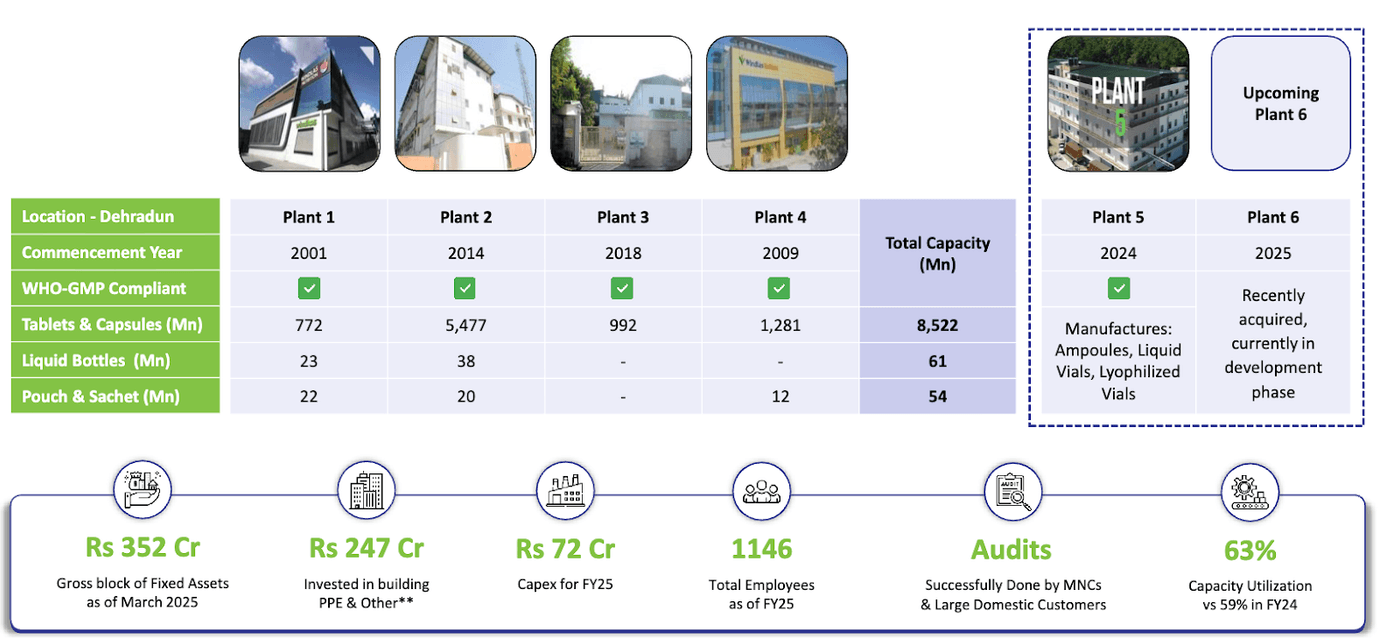
Plant 2 has also seen capacity enhancement recently and has been utilizing enhanced capacity from Q4 FY25.
Plant 5 is the major injectables facility manufacturing Ampoules and vials. It was commissioned in April 2024 and commenced production soon after. In early 2025, it received WHO-GMP compliance status.
The upcoming plant 6 is oral solids plant added inorganically and is being modernized and enhanced. As per the con-call, it should be ready within FY 2026.
The management also noted that as capacity utilization increases they could add more plants organically or inorganically. In addition, the management alluded to the fact they can potentially keep adding new dosage forms (the latest one being injectables, coming soon), like gels, inhalers, etc.
How does Windlas stack up against its peers?
Let's put in some stats to compare Windlas against its peers.
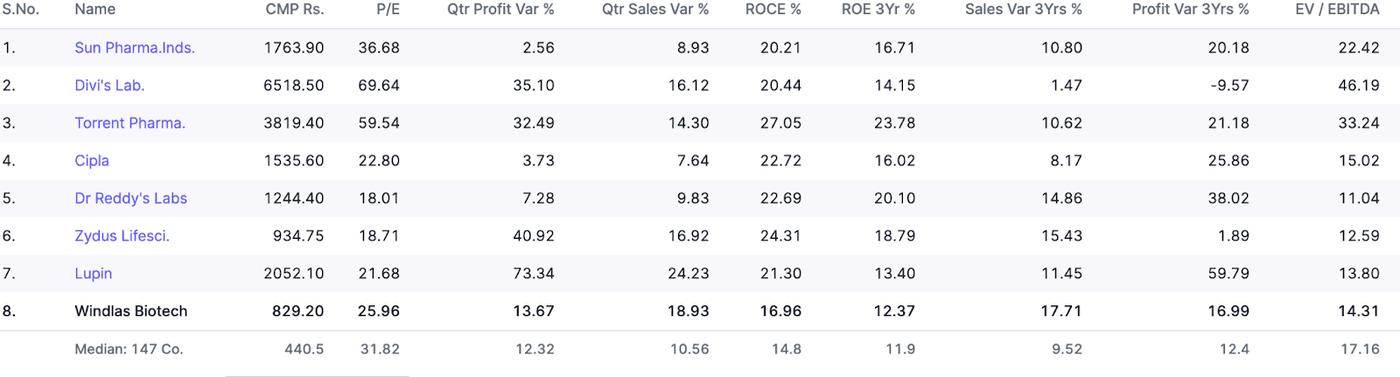
At the outset, it seems that Windlas is slightly better than its peers due to:
- Profit growth of ~17% when compared to the industry median of 12.4%.
- PE ratio of ~29 compared to industry average of ~32, which indicates slightly undervaluation and suggests uptrend potential.
- Sales increased by 17.71% annually over the last three years, which is significantly higher than the average industry growth of 9.52%.
- ROCE of 16.96% which is higher than the industry median of 14.8%.
- EV/EBITDA is slightly better for Windlas at 14.31% compared to the industry median of 17.16, again indicating slight undervaluation.
These indicators provide an overview, and the stock seems better than the average industry. However, we need a deeper analysis to support this.
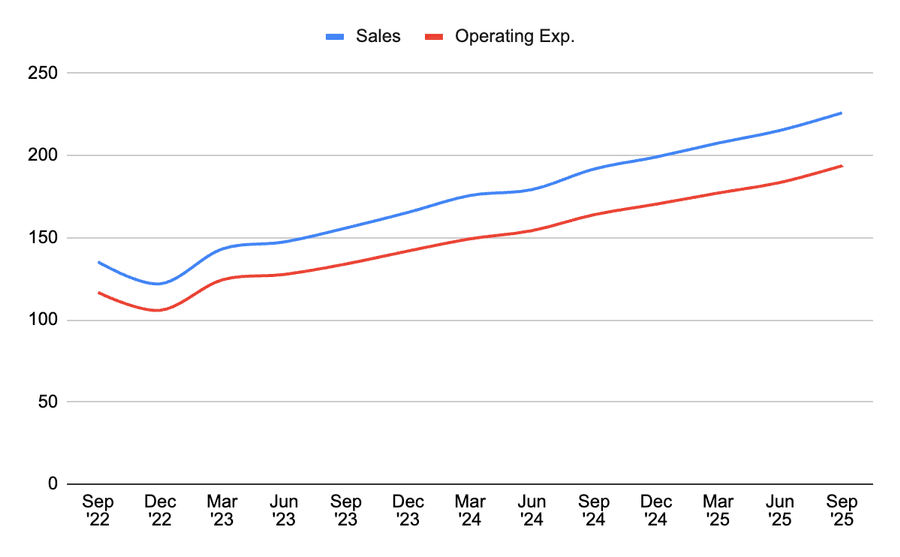
Sales have seen an uptrend, but operating profits have followed similarly. For the previous 12 quarters. As sales increase, an efficient company should see its operating expenses diverging lower.
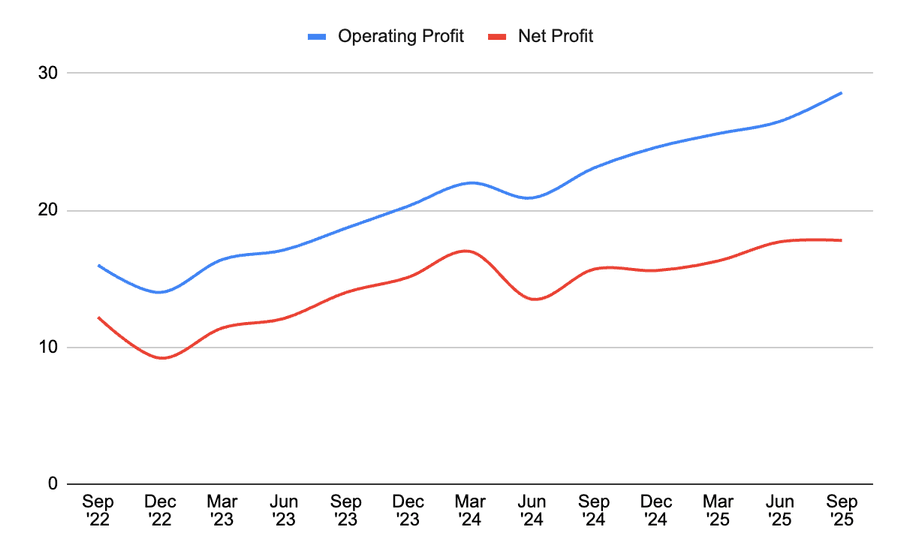
Operating profit has been increasing, but net profit seems to have diverged slightly lower. Hence, it seems that efficiency is decreasing. One reason is that depreciation is increasing. The management noted that due to the extension of plant 2 and the overhaul of newly acquired plant 6, the depreciation has increased. We see that from March 2024, depreciation has seen an uptick.
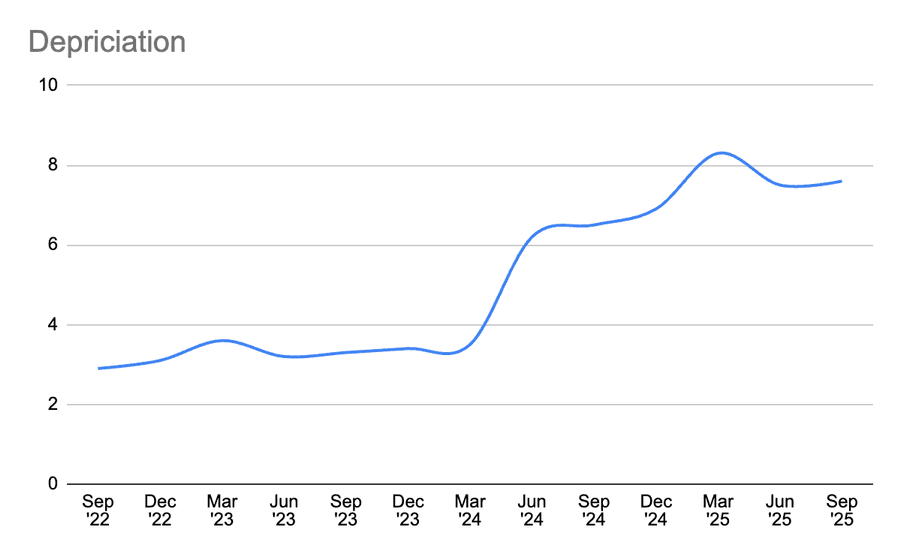
The depreciation is likely to stay for at least two quarters until plant 6 becomes operational.
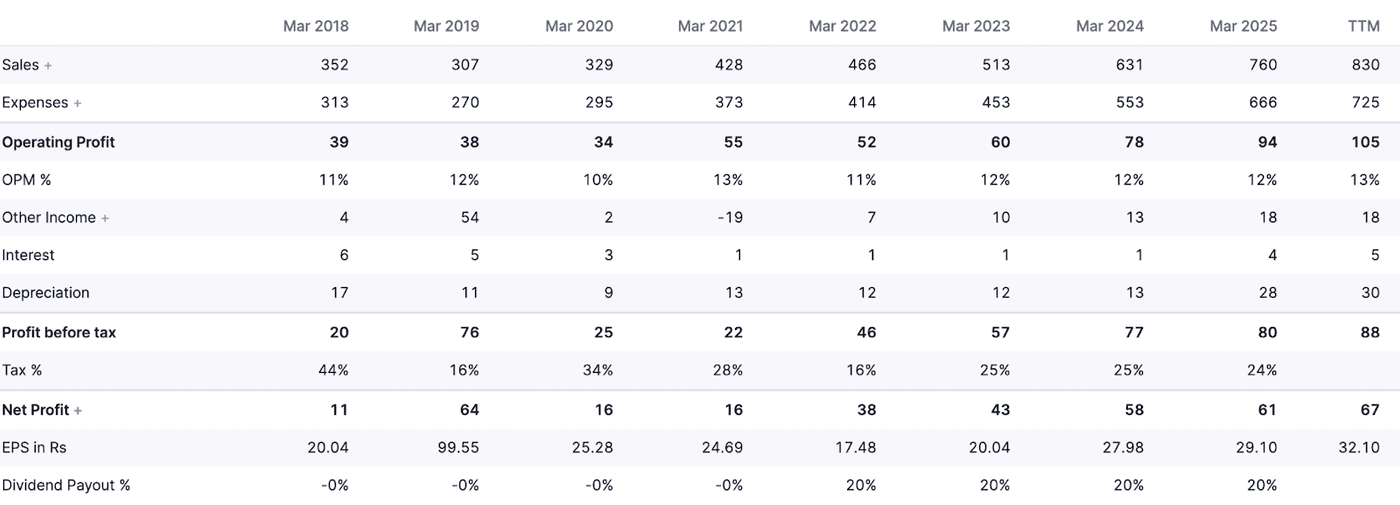
Let’s look at annual figures:
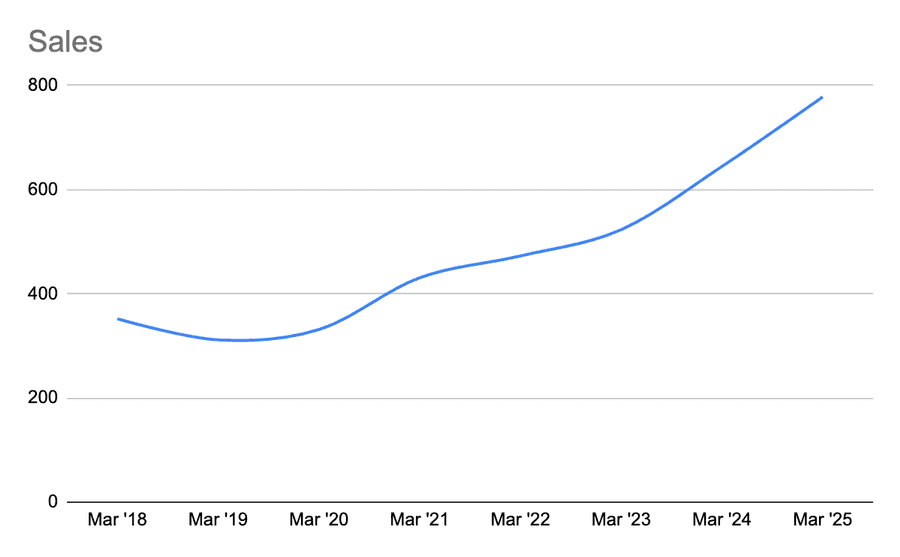
Sales have seen a good growth rate with the last five years CAGR at around 18.6% which is good. This is higher than the around 8% growth in the Pharma industry in India, so Windlas is ahead of the curve based on sales figures.
We now look at profit margins
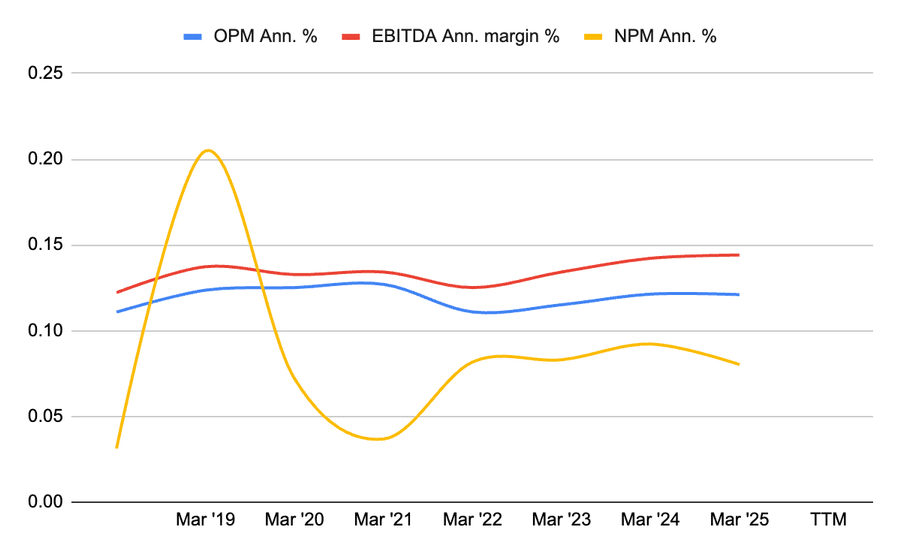
Operating profit margin and EBITDA margins have been stable. It means the company has neither seen an improvement nor a deterioration in efficiency till EBITDA. Net profit has been volatile and has seen a high jump in FY 2019 due to extraordinary items, but has been in the range of 7-9% mostly. This margin is near the average margin for pharma in India for generic drugs, which forms a major part of Windlas’ sales.
ESOP and its impact
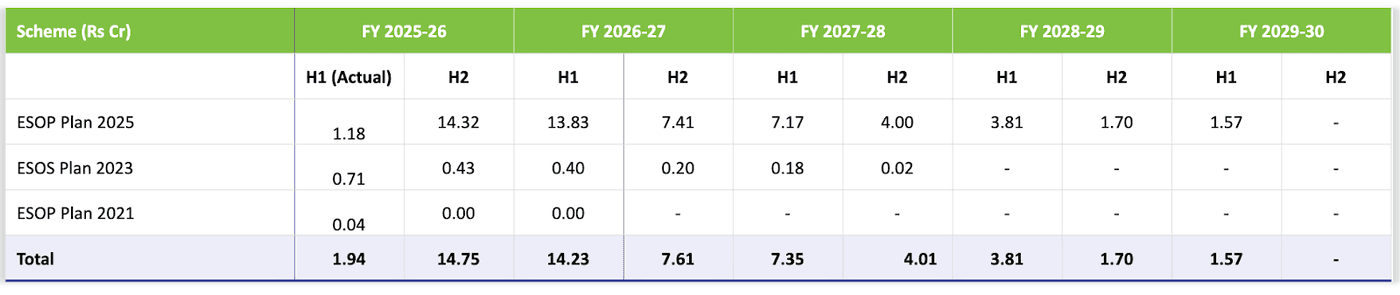
The management and the board have provided ESOP options to employees in 2021 and 2023. The financial impact of these two ESOPs has simmered down. The most recent ESOP was launched in Q2, FY 2026, which is likely to have a significant impact.
ESOPs do affect profits, but can have a good impact on the performance of the company. Retaining good employees based on performance-linked ESOP can be a good way to remain ahead ot he curve. Windlass doing this is a good sign, notwithstanding the financial impact.
The valuation of the options has been done using Black Scholes model (BSM), which is a commonly used model but has strict assumptions and hence shortcomings:
- Volatility assessment can be a bit tricky since the company has been recently listed, and a lack of market data can be an issue.
- Since ESOPs are performance and retention-linked, BSM valuations can be outright wrong.
The estimated impact on revenue based on the con-call discussion is around 3% which could rise further if the stock is more volatile.
H2 FY 2026 and H1 FY 2027 will see the highest impact on the revenue due to the exercise of the options. After that, the vesting will decrease. However, the impact on operations and management can be positive if the company pays competitive remuneration in the form of ESOPs.
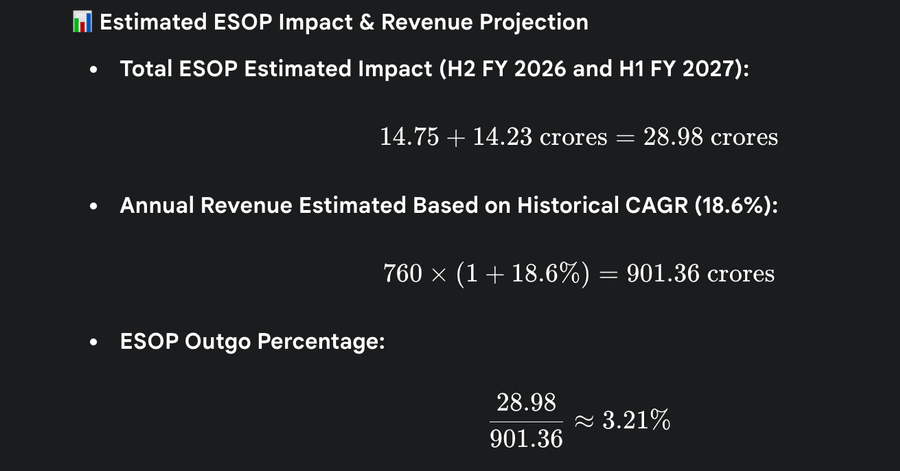
H2 FY 2026 and H1 FY 2027 total ESOP estimated impact = 14.75 + 14.23 crores = 28.98 crores.
Annual revenue estimated based on historical CAGR = 760 * (1+18.6%) = 901.36
ESOP outgo % = 28.98/901.36 = 3.21%.
The revenue hit can well go higher than 3% if volatility is higher.
While 3% may not seem too high when we talk in revenue terms, considering other expenses are expected to remain the same, the effect on profits can be high. We take figures for net profit with a 20% increase of around 77 crores. The expected impact on net income can be:

This is a huge impact, but could be mitigated due to the efficiency provided by retained well-qualified staff. Since the no of employees with ESOPs is around 100, the concentration is on the lower side. This helps in two ways:
- A diversified employee set comes with better and diverse skills which can be applied in a number of ways.
- Two or three bad employees won't pose a large risk to the operations.
The Balance Sheet
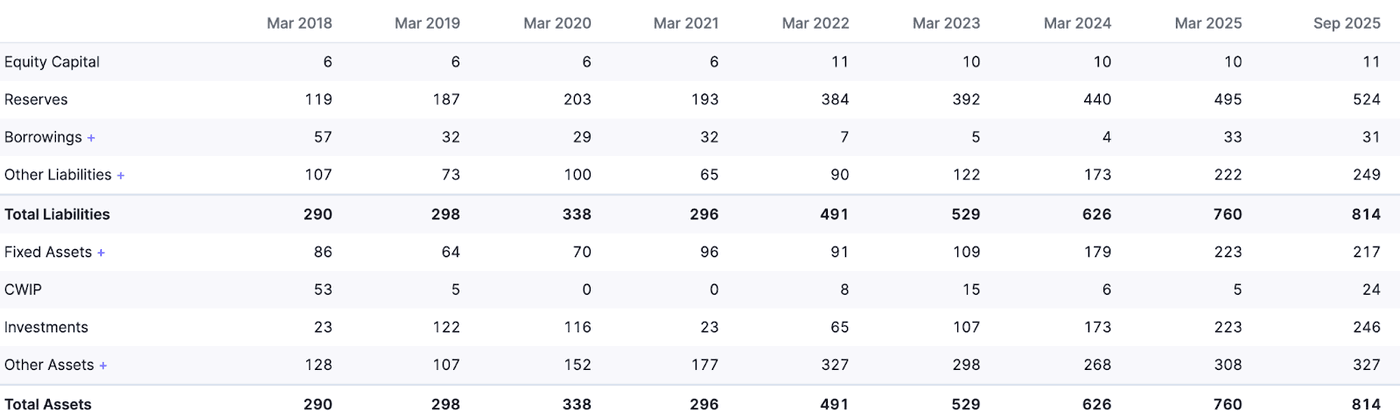
The reserves have been increasing, which means that the company has been reinvesting the earnings. The recent dividend pay-out is 20%, and most of the earnings are being retained. Again, a good sign from a future perspective.
Borrowings have decreased, and interest outgo has fallen. Borrowings have risen slightly recently due to the setting up of two new plants.
Capex has increased substantially due to the addition of new plants.

The effect can also be seen in the cash flows.

Other assets have increased mainly due to an increase in receivables and inventories.
Ratios

ROCE has been improving with slight dip last year. This is usual when a company expands as returns for capital employed will be seen later on.
Cash conversion cycle has improved which is not 14 days. This indicates good liquidity and enhanced efficiency.
Shareholding Pattern
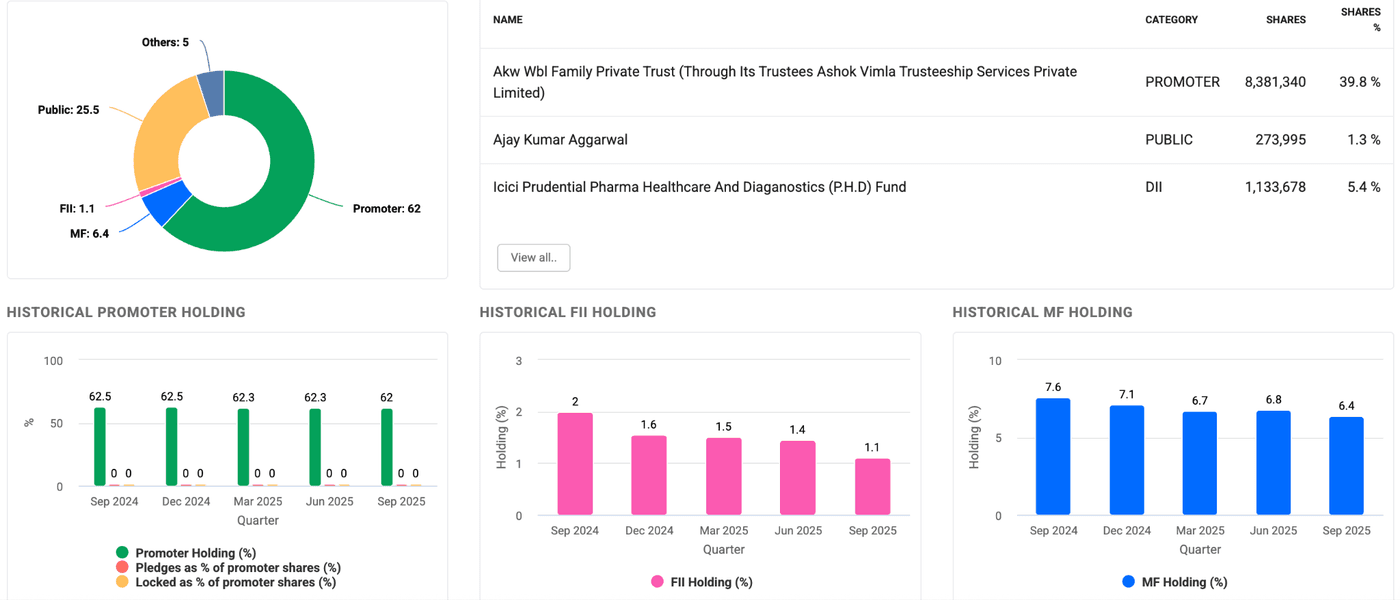
Promoters holdings have been largely stable which indicates confidence from the owners. Promoters have not pledged any significant amount of shares for debt or any other reason, again a positive. FII and mutual funds have offloaded some amount which can indicate lessening confidence but with small decrease one can never be too sure.
The Cough Syrup Incident: Windlas Windfall
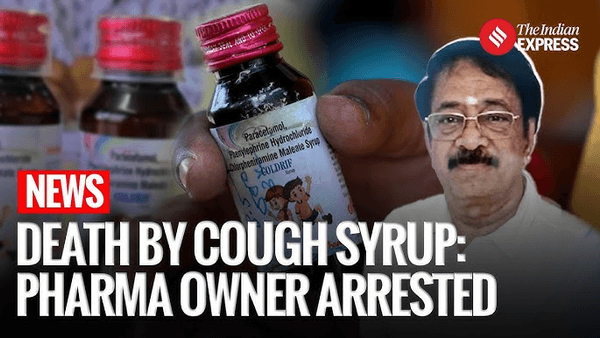
Very recently, substandard cough syrup led to death of children in MP and Rajasthan. While the government investigation is on, the pharma regulator has stepped up inspections. The management is of the view that:
“Pressure on Schedule M compliance is going to increase… more samples being picked… number of investigators… increasing.” Windlas expects consolidation as smaller, non-compliant players exit; larger pharma is prioritizing capex for higher-end regulated markets and is “happy to take products from established CDMOs in India.”
Windlas is expected to gain with smaller non-compiant players exiting and the company gaining some share of the pie. This is because large pharmaceutical companies are investing more and more for high quality regulated markets in India and outside.
Growth Triggers
The company has a history of high growth which is much above the industry growth rate. This makes Windlas a good company to look into. We compared the ratios and performance with average industry and the company has fared better on majority of the indicators. The stock is still trading 30-35% below its high. Let’s see the graph:
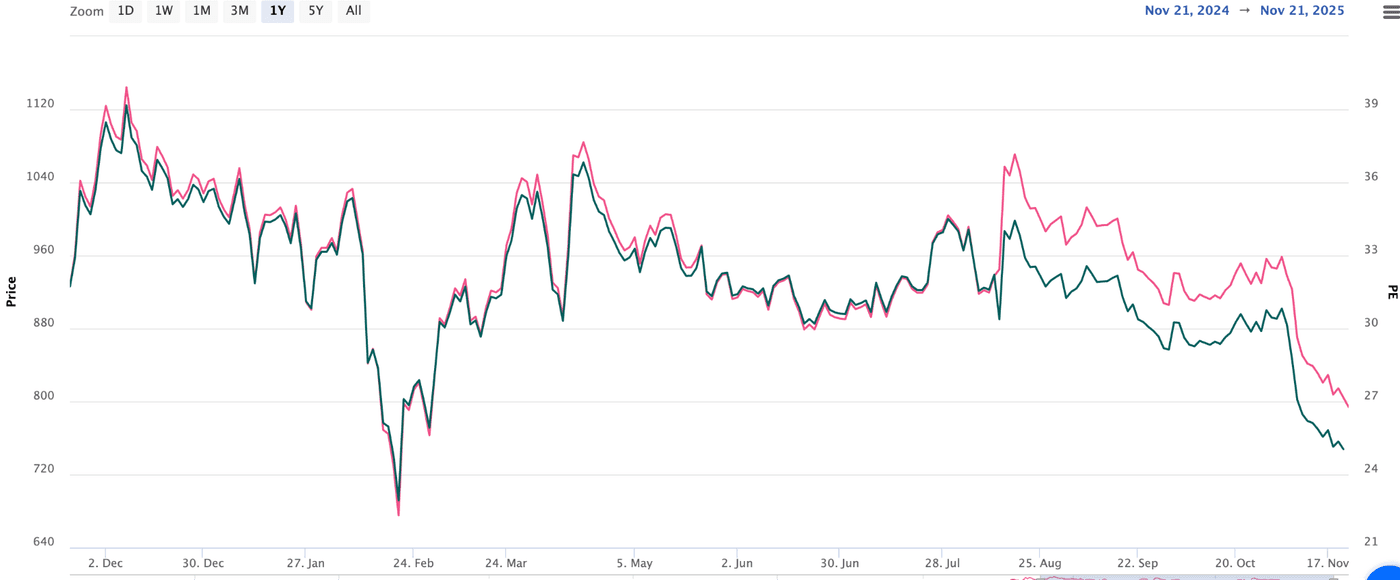
Taking into account the past year when new investment in plants has been put up, the PE ratio ratio has been around 30. This is similar to the average PE ratio for the industry. This indicates the stock might have some upwards potential based solely on PE.
More so, if earnings grow the stock is also likely to grow. Hence we need to look at growth triggers. So, concluding with growth triggers as Abdullah Zaman pointed out:
- Plant 6 capex - A major trigger as the company is not shy of investing in new capacity.
- Injectables producing meaningful revenue very soon.
- Revenue mix tilting towards higher margins product mix as indicated by improving margin.