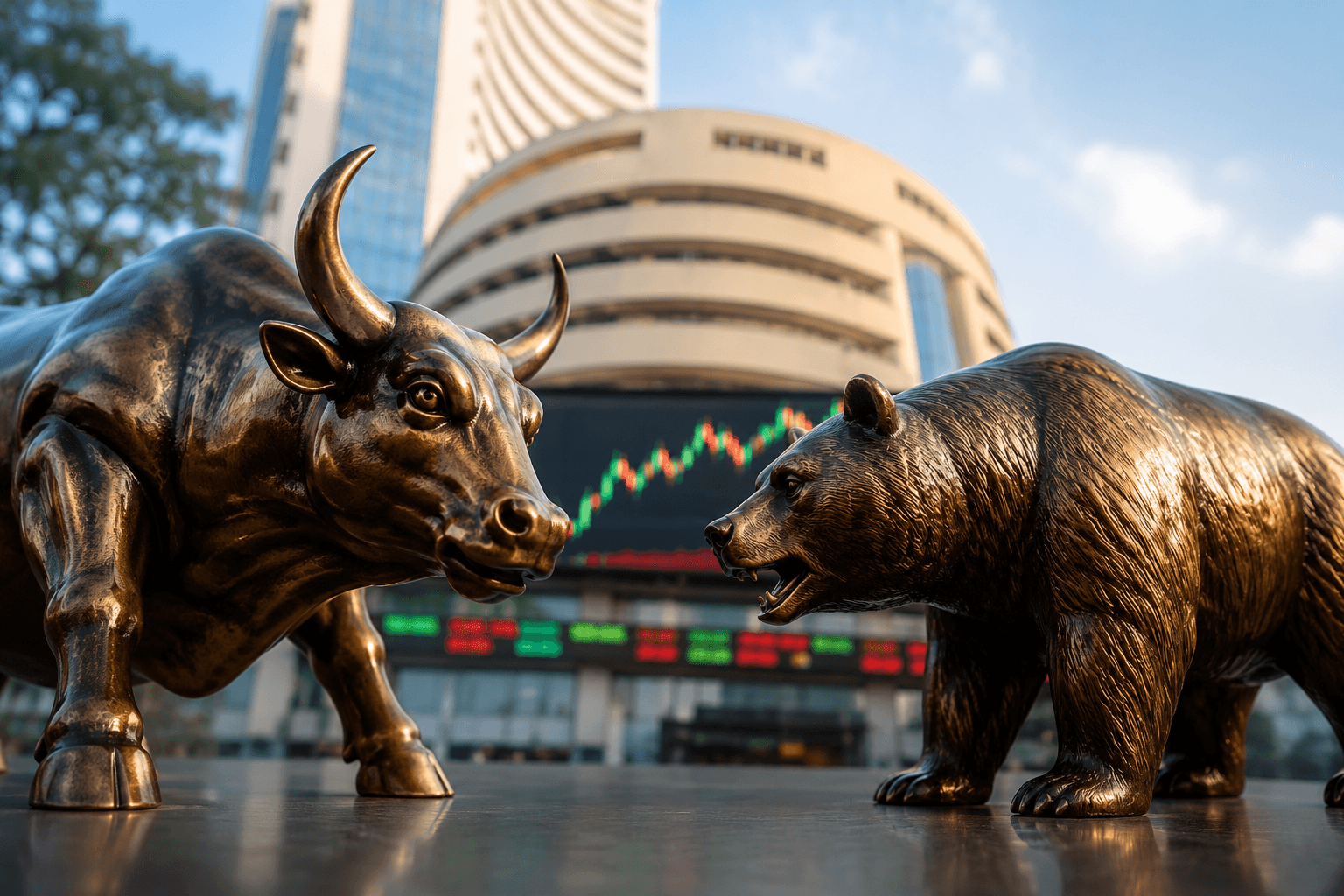
Is BSE's 52% Rally Still Pricing in NSE IPO Excitement?
The Bombay Stock Exchange's stock has surged 52% year-to-date(YTD) on anticipation of the National Stock Exchange's upcoming IPO which is expected to be among India's largest at ₹30,000 crore.
But here's the catch: analysts now believe much of that IPO enthusiasm is already baked into BSE's current valuation.
According to research from SBI Securities, the risk-reward profile for fresh buyers has become distinctly unfavourable, even as existing investors hold their positions. The problem isn't the excitement; it's that the stock has already capitalised on it.
Why BSE's Valuation Leaves No Room for Stumbles
Trading at 46x and 39x estimated earnings for FY27 and FY28 respectively, BSE is pricing in aggressive growth of 28% EPS expansion annually between FY26 and FY28.
That's a steep hill to climb when you consider NSE dwarfs it operationally.
NSE reported FY26 revenue of ₹16,601 crore versus BSE's ₹4,834 crore; NSE's profit after tax hit ₹10,302 crore against BSE's ₹2,487 crore.
With those gaps and BSE's elevated multiples, any miss on earnings growth or market share gains could trigger sharp profit-taking. The stock has already priced in perfection; there's little room for execution error.
NSE's Scale Advantage Puts BSE's Competitive Position Under Pressure
What keeps analysts cautiously bullish is BSE's market share gains in the derivatives segment, where its premium F&O turnover share reached 30.6% as of May 2026. That's the only real growth engine keeping valuations afloat.
But NSE maintains a significant edge: its EBITDA margin sits at 66.9% versus BSE's 64%, and it commands substantially larger revenue and profit pools.
The IPO itself doesn't change competitive dynamics instead it simply validates NSE's dominance and attracts fresh capital into an exchange ecosystem where NSE already holds the largest market share.
For BSE to deserve its current multiple, sustained turnover growth and continued share gains against NSE become non-negotiable.
What Traders Are Watching Next: The ₹4,220 Breakout
Technically, BSE has consolidated into a narrow ₹3,960 – ₹4,220 range after aggressive profit-booking, signalling base-building rather than trend reversal.
The ₹4,220 level is now the critical resistance; a decisive break above it could ignite fresh momentum toward ₹4,600 in the near term. Until then, expect sideways movement with a bullish undertone.
For swing traders, that's a setup worth monitoring. For long-term investors evaluating fresh positions at current prices, the numbers suggest waiting for a pullback or watching from the sidelines as NSE's listing cycle plays out.
 Ethica Invest