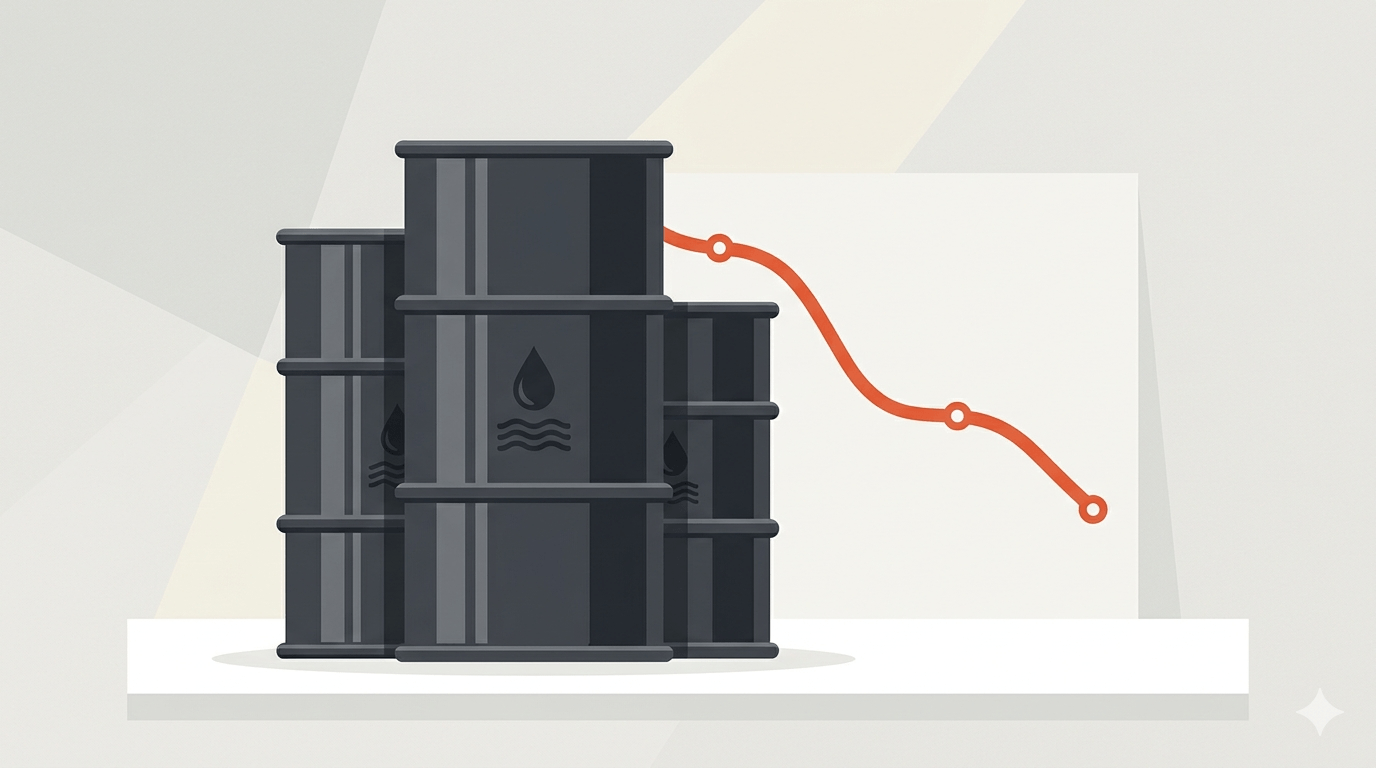
Crude oil prices fell nearly 5% on Monday after the United States and Iran announced a peace agreement that is expected to reopen the Strait of Hormuz, one of the most critical oil shipping routes in the world. The development eased fears of supply disruptions in West Asia and triggered a sharp correction in oil prices.
Brent crude, the global benchmark, fell to around $83 per barrel, while US West Texas Intermediate (WTI) crude dropped below $81 per barrel as traders unwound the geopolitical risk premium built into oil prices during months of conflict. The agreement is expected to restore the flow of oil and gas shipments through the Strait of Hormuz, through which roughly one-fifth of global oil supplies move.
Why Did the Prices Fall
Oil markets had rallied sharply to touch as high as $120 per barrel during the early days of US-Iran conflict in March, due to concerns that disruptions in the Strait of Hormuz could tighten global energy supplies. The latest peace agreement, however, signals a gradual normalisation of oil exports from the region.
According to reports, the deal includes the reopening of the Strait of Hormuz and broader negotiations aimed at ending hostilities and restoring trade flows. With the risk of a prolonged supply shock fading, traders reduced their bets on higher crude prices, leading to the sharp fall in oil.
Why Crude Oil Matters So Much for India
India is the world’s third-largest oil consumer and imports more than 85% of its crude oil requirement. As a result, movements in global crude prices have a direct impact on the country’s economy, inflation, fiscal position and corporate profitability.
Every sustained decline in crude oil prices reduces India’s import bill, lowers pressure on the rupee and improves the country’s current account balance. Conversely, a spike in oil prices tends to widen trade deficits and fuel inflation.
For policymakers, crude oil remains one of the most important external variables influencing economic growth and inflation.
Crude oil is India’s single-largest import item. When global prices decline, the country spends less foreign exchange on importing energy.
A lower oil import bill helps narrow the current account deficit (CAD), which measures the gap between a country’s imports and exports. A smaller CAD generally supports the rupee and reduces dependence on foreign capital inflows.
For a country that imports millions of barrels of crude every day, even a fall of $10 per barrel can translate into billions of dollars in annual savings.
Impact on Stock Markets
Historically, falling crude prices have been viewed positively by Indian equity markets because they improve macroeconomic stability. Lower inflation, a stronger rupee and reduced pressure on the current account deficit create a favourable environment for corporate earnings. Banking, aviation, auto, chemicals and consumer sectors often attract investor interest during periods of declining oil prices.
The latest fall in crude also boosted risk appetite across global equity markets after fears of a prolonged Middle East disruption eased.
Indian equities are seeing strong start on Monday, June 15, tracking a sharp rally across global markets after the United States and Iran announced a peace deal framework that includes the reopening of the strategically crucial Strait of Hormuz.
In Asia, Japan’s Nikkei surged more than 4 per cent in early trade, South Korea’s Kospi jumped 4.3 per cent, and Australia’s ASX 200 gained 1.4 per cent. US futures also advanced, with S&P 500 futures rising 0.8 per cent and Nasdaq futures climbing 1.4 per cent.
 Ethica Invest