How to Read a Stock?
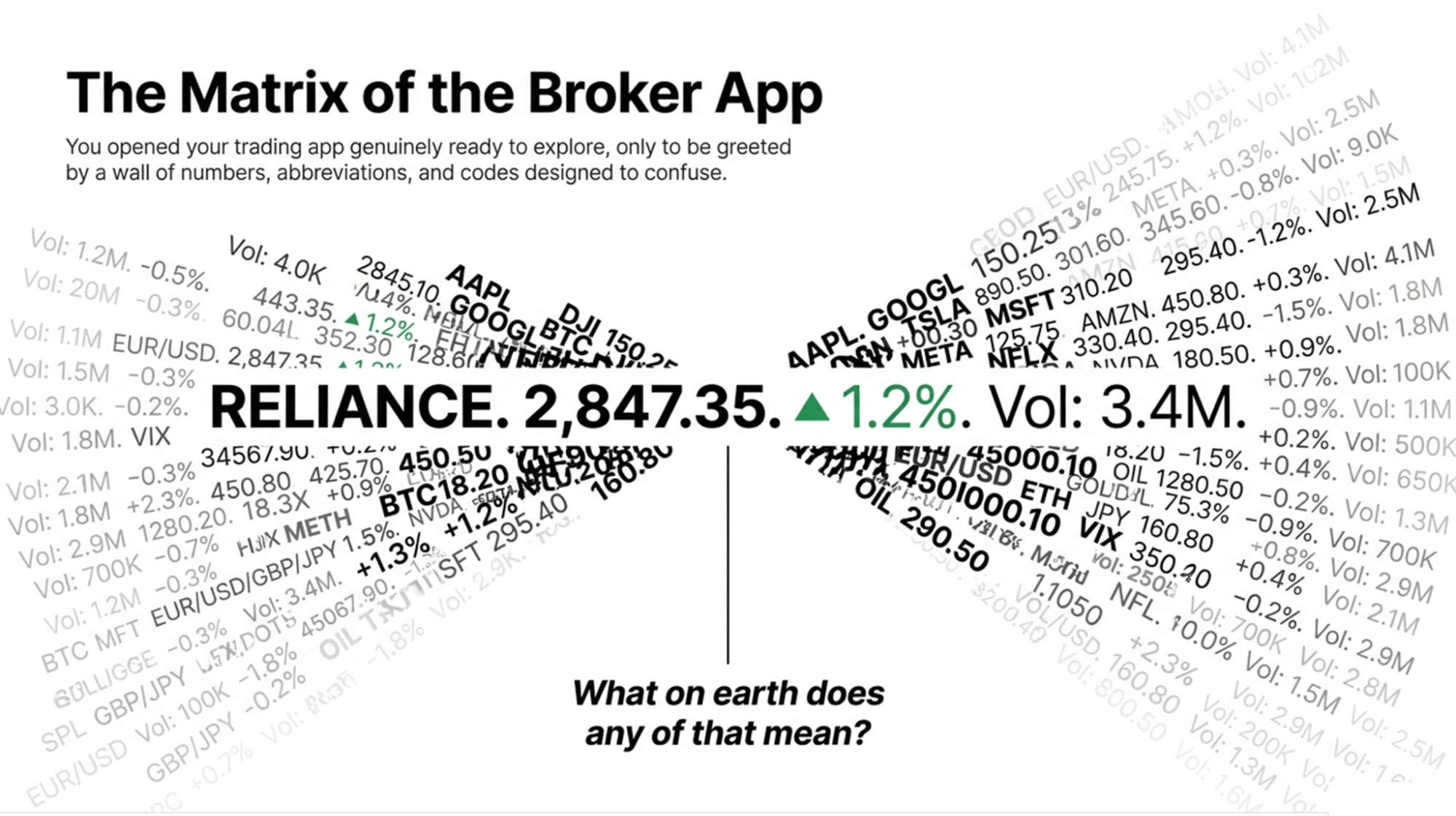
"You opened your broker app. The screen looks like the Matrix. Let's fix that."
You've picked your strategy in the previous Article.
Now you open your trading app for the first time, genuinely ready to explore; and you're greeted by a wall of numbers, coloured arrows, strange abbreviations, and codes that seem designed to confuse. RELIANCE. 2,847.35. ▲ 1.2%. Vol: 3.4M.
“What on earth does any of that mean?”
Breathe. It's simpler than it looks. Let's decode it piece by piece.
The Ticker Symbol: The Stock's Name Tag
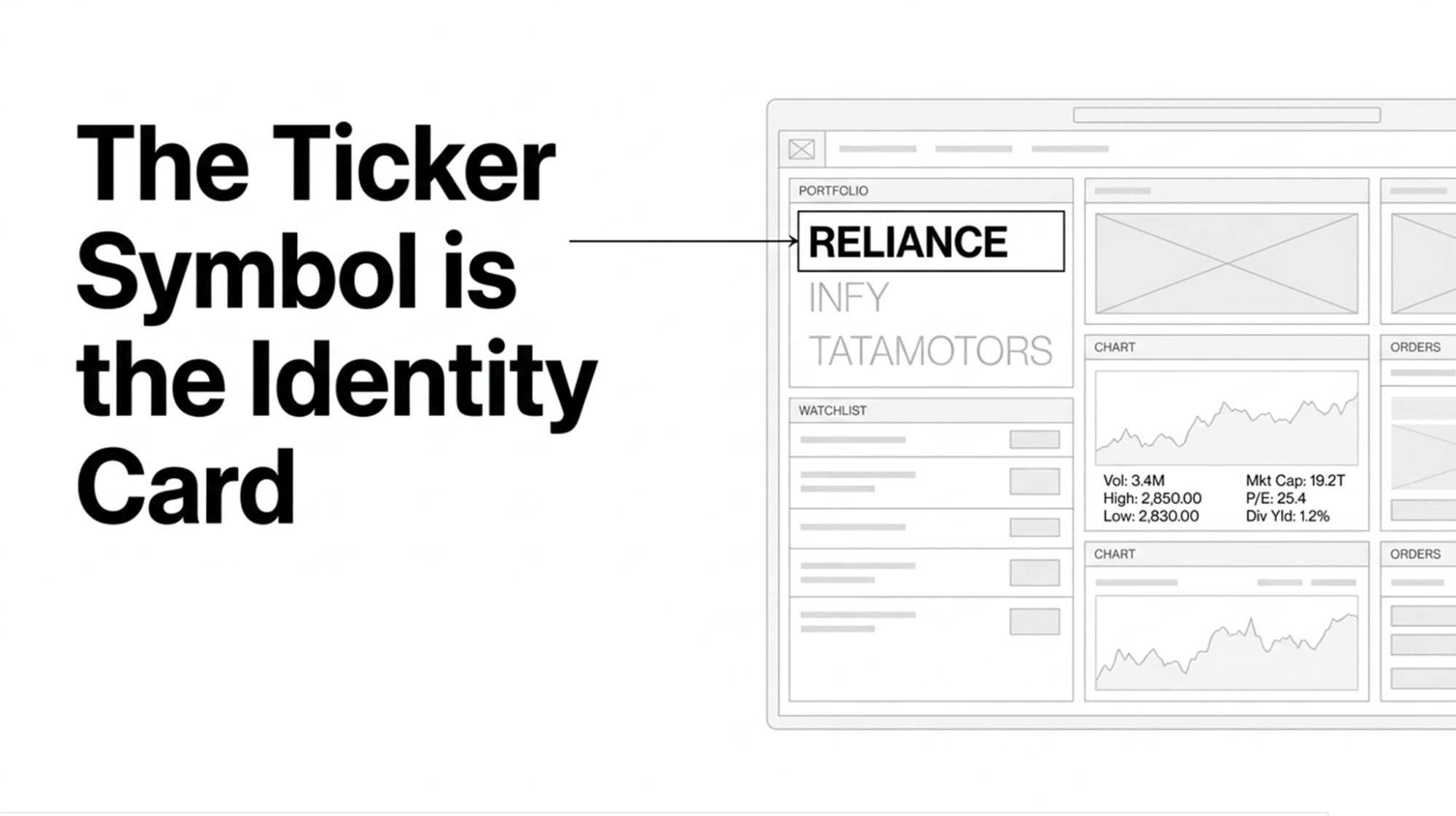
Every company listed on the exchange has a short code called a ticker symbol. “RELIANCE” is Reliance Industries. “INFY” is Infosys. “TATAMOTORS” is Tata Motors. These codes are used because typing them is faster and cleaner than writing full company names, especially when machines are processing thousands of trades per second.
When you search for a stock on your broker app, you'll type this symbol. It's simply the stock's identity card.
LTP: The Most Important Number on the Screen
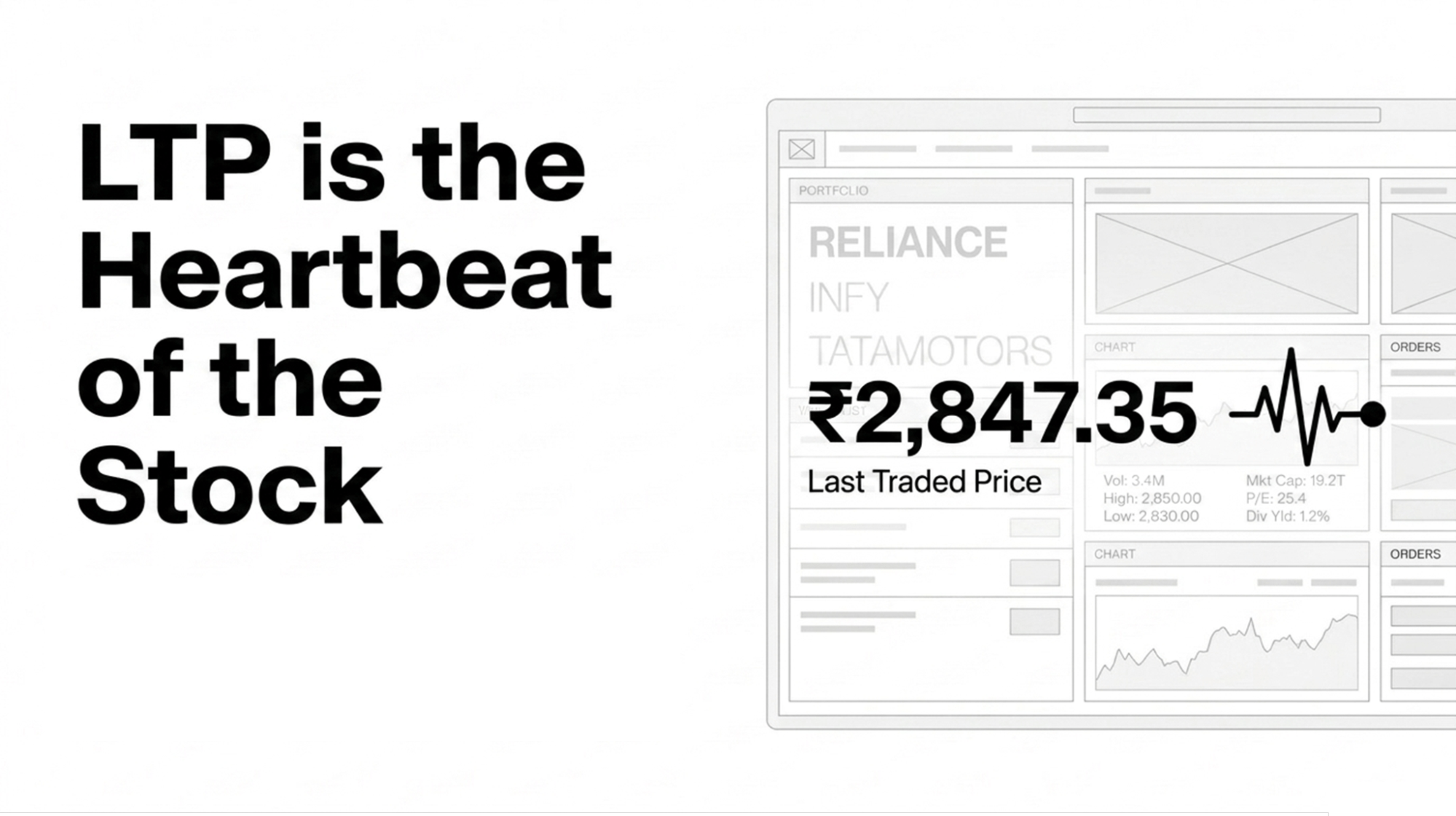
LTP stands for Last Traded Price; the price at which the most recent transaction for that stock was completed. When you see ₹2,847.35 next to RELIANCE, it means the last person who bought or sold Reliance did so at that price.
Notice the word last. Not current, not fixed; last. In an active market, this number changes constantly, sometimes hundreds of times per minute for large stocks. It's the heartbeat of the stock.
The Green and Red: What the Colours Actually Mean
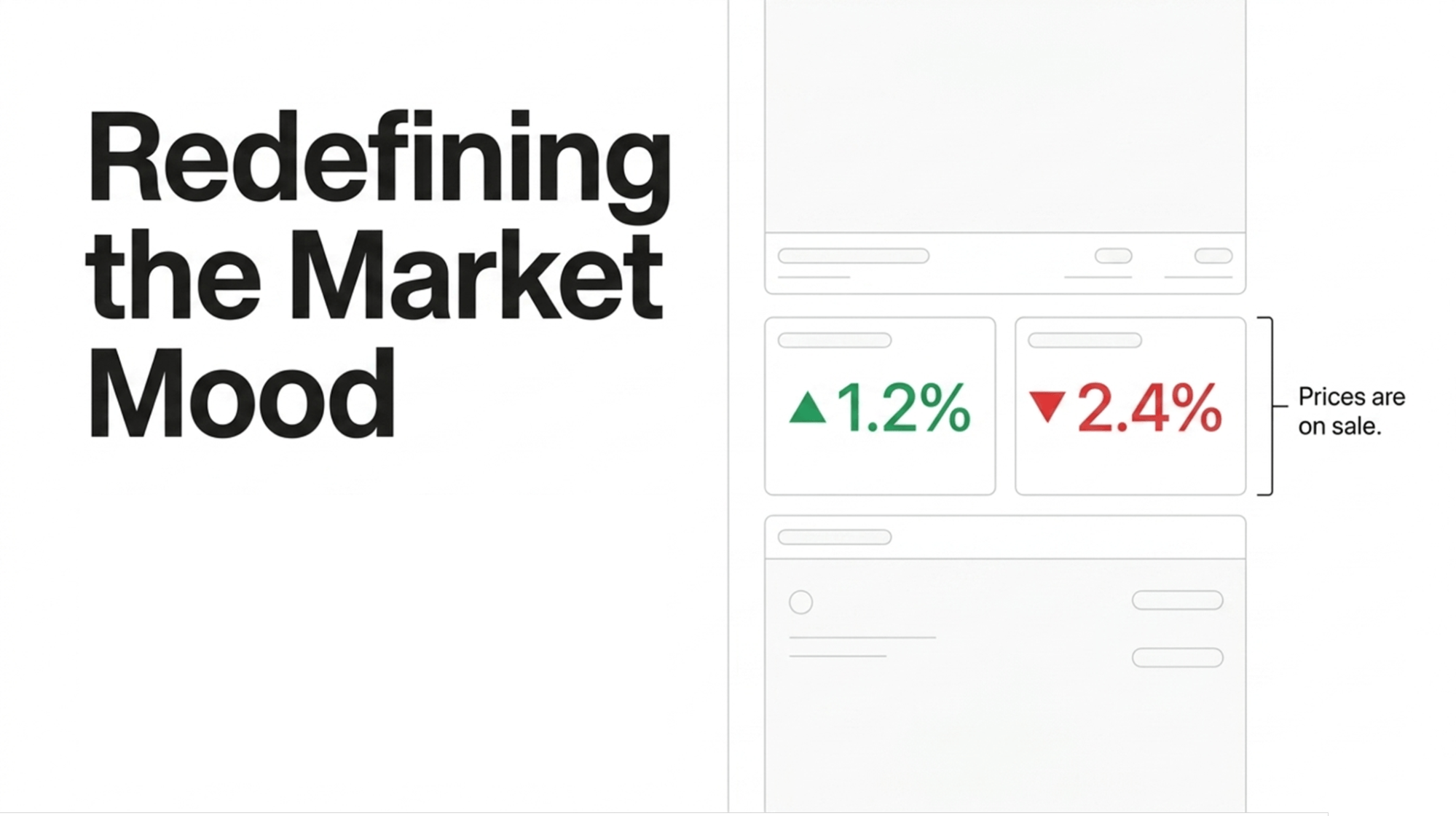
Green means the stock's price is higher than it was at yesterday's market close. Red means it's lower. The percentage figure next to it tells you by how much.
So ▲ 1.2% in green means the stock has risen 1.2% since yesterday's closing bell. Nothing more dramatic than that. When you see an entire screen of red, it means most stocks fell that day; often due to broad market news, not anything specific to those companies. Seeing red doesn't mean "panic." It means "prices are on sale."
Volume: The Crowd Size
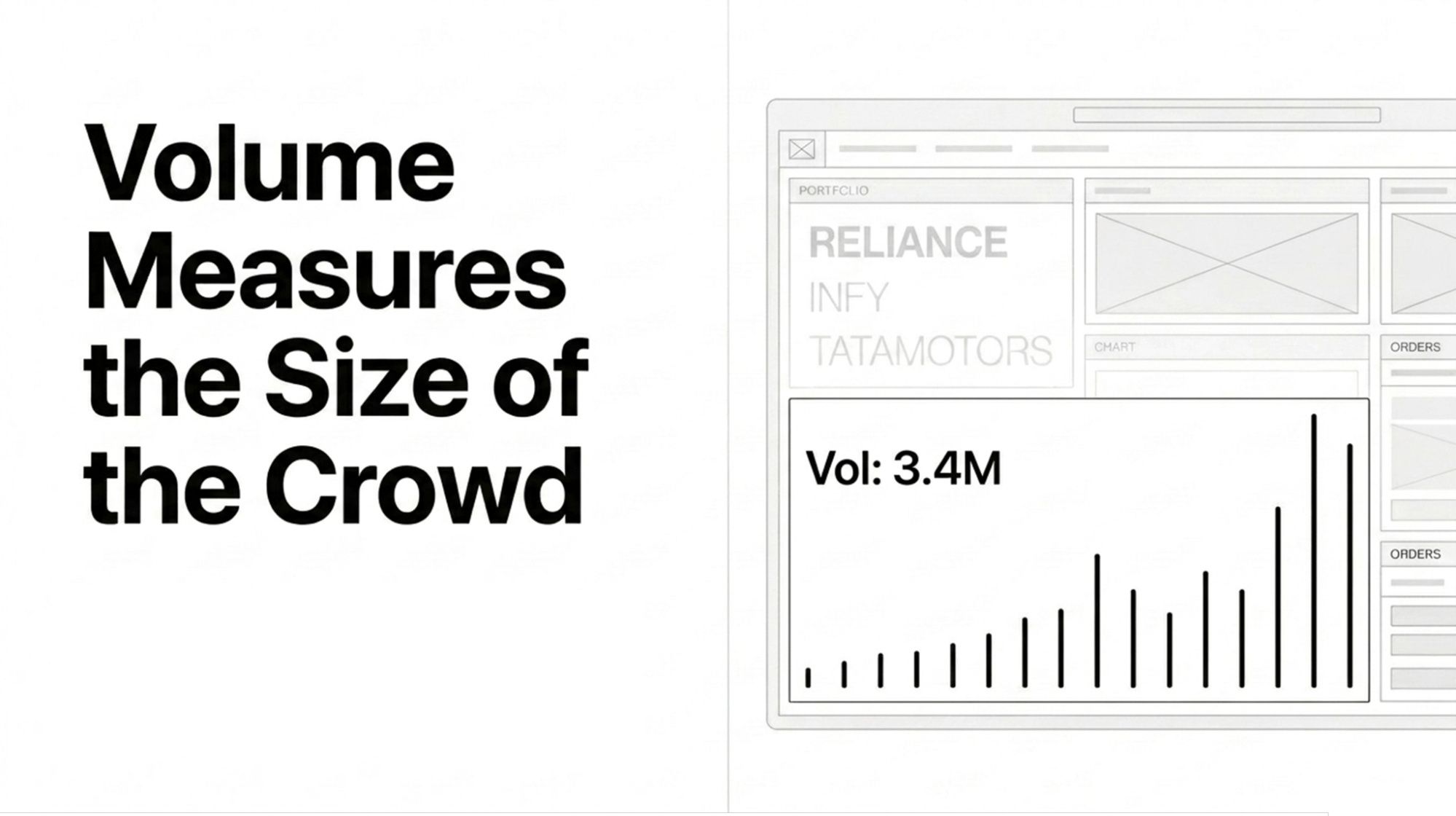
Volume tells you how many shares of a stock were traded today. A volume of 3.4M means 3.4 million shares of that company changed hands. High volume means lots of interest; buyers and sellers are active. Low volume means the stock is relatively quiet.
Volume matters because price movement with high volume is more meaningful than price movement with low volume. A stock jumping 5% on massive volume is a more significant signal than one quietly drifting up 5% with barely any trading activity.
52-Week High/Low: The Range It Has Lived In
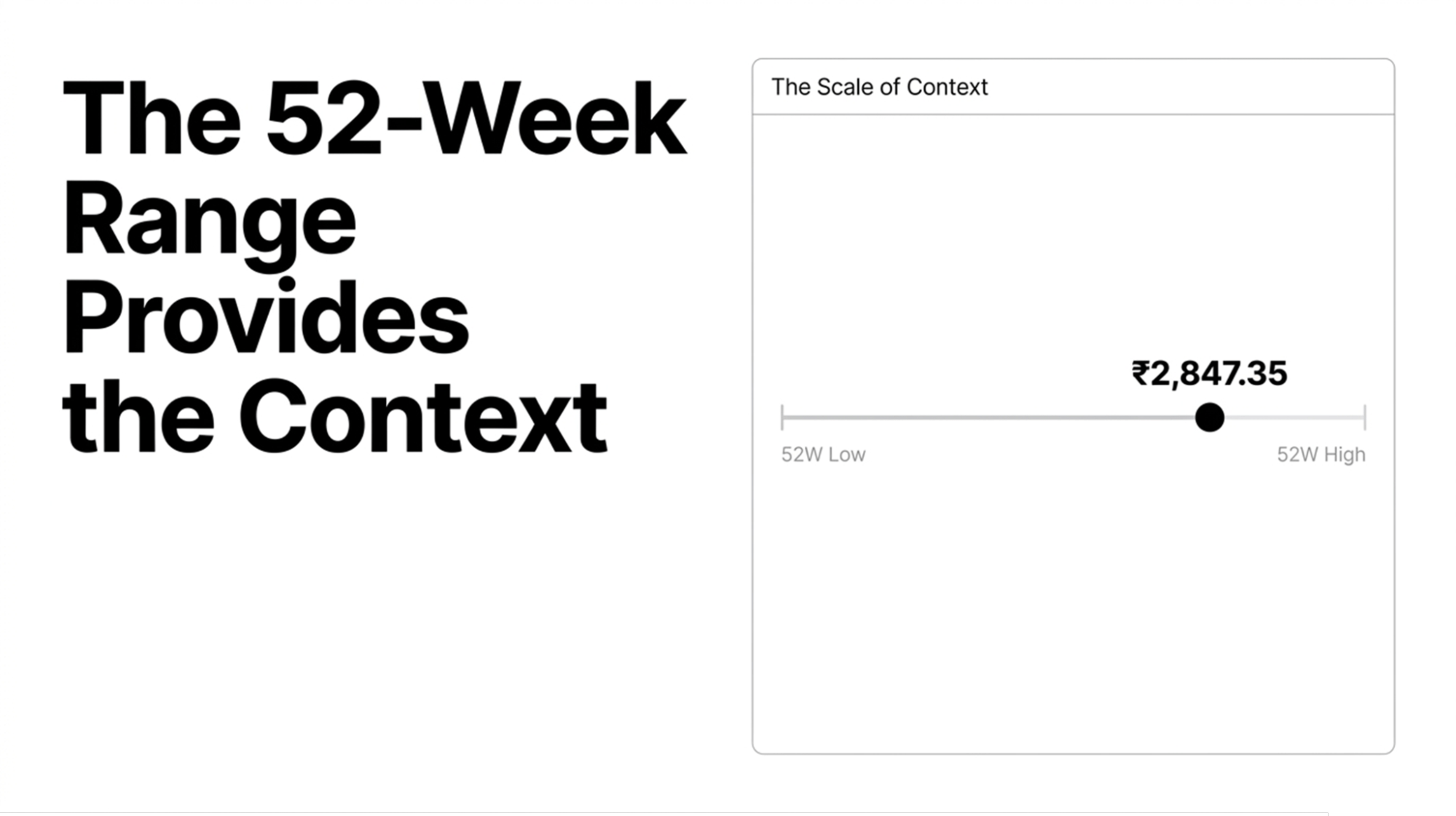
Most stock screens also show the 52-week high and low; the highest and lowest price the stock has touched in the past year.
This gives you immediate context: is the stock near its peak, or has it fallen significantly from recent levels?
Making sense of these numbers together, and knowing which stocks to even look at, is where a research partner like Ethica Invest becomes genuinely useful. They do the filtering so you're reading data about companies worth your attention.
You can now read the screen without flinching.
In the next Article, we go from reading to doing. It's time to place your very first order; and we'll walk you through it click by click.