What Exactly Are SME Stocks?
"Apart from the Large, Mid, and Small Caps; there's a fourth category that doesn't quite fit the standard ladder; and it operates by its own rules entirely."
Imagine the regular stock market is a well-organised IPL tournament; structured, regulated, widely televised, with detailed statistics on every player. Now imagine there's a parallel league happening in a smaller ground across town. The players are younger, hungrier, and some of them will eventually make it to the IPL. But the stands are less full, the rules are slightly different, and the stakes; both upside and downside, are considerably higher.
That's the SME exchange in a nutshell.
What is the SME Exchange?
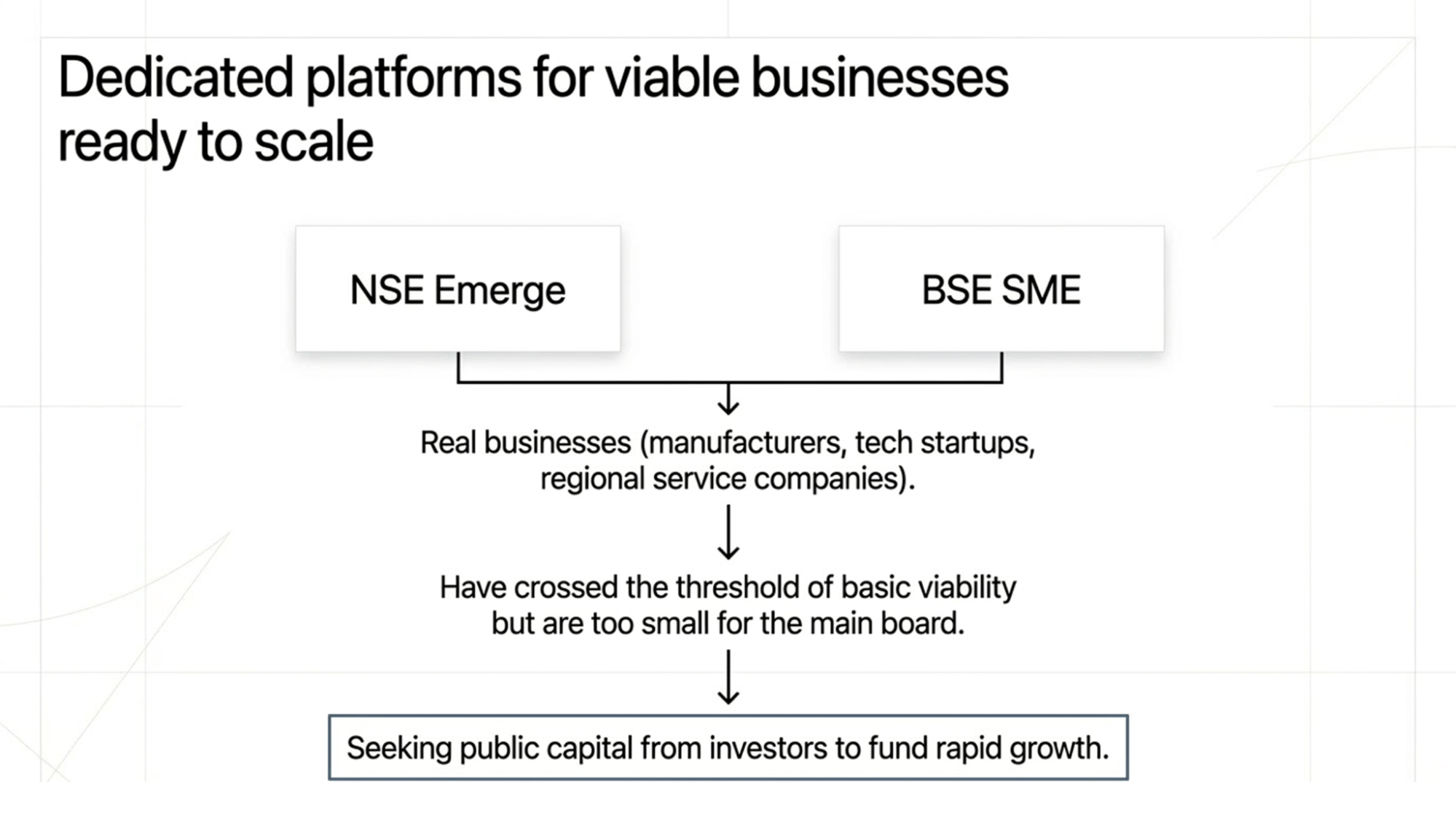
Both NSE and BSE have dedicated platforms for Small and Medium Enterprises; companies that are too small (by revenue and net worth criteria) to list on the main board but want access to public capital to fund their growth.
NSE's platform is called NSE Emerge; BSE's is called the BSE SME platform.
These are real businesses; manufacturers, tech startups, regional service companies, niche producers; that have crossed the threshold of basic viability and want to scale. Listing on the SME exchange lets them raise money from public investors like you and me.
The Allure: Where Multi-Baggers Are Born
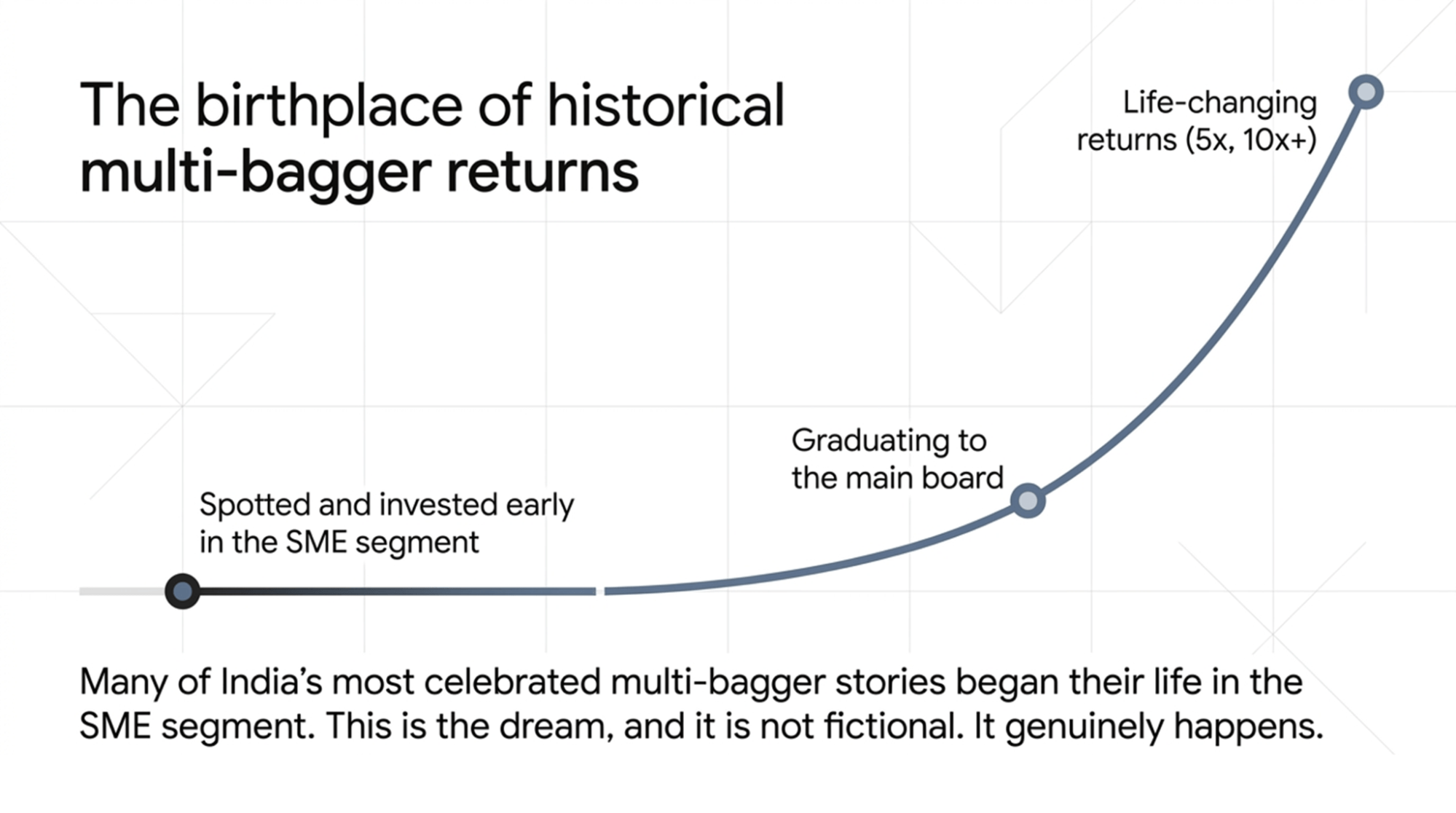
The most compelling argument for SME stocks is historical precedent. Many of India's most celebrated multi-bagger stories; stocks that returned 5x, 10x, or more; began their life in the SME segment before graduating to the main board. If you had spotted and invested in the right SME company early, the returns could have been life-changing.
This is the dream, and it's not fictional. It genuinely happens.
The Reality: The Risks Are Equally Real
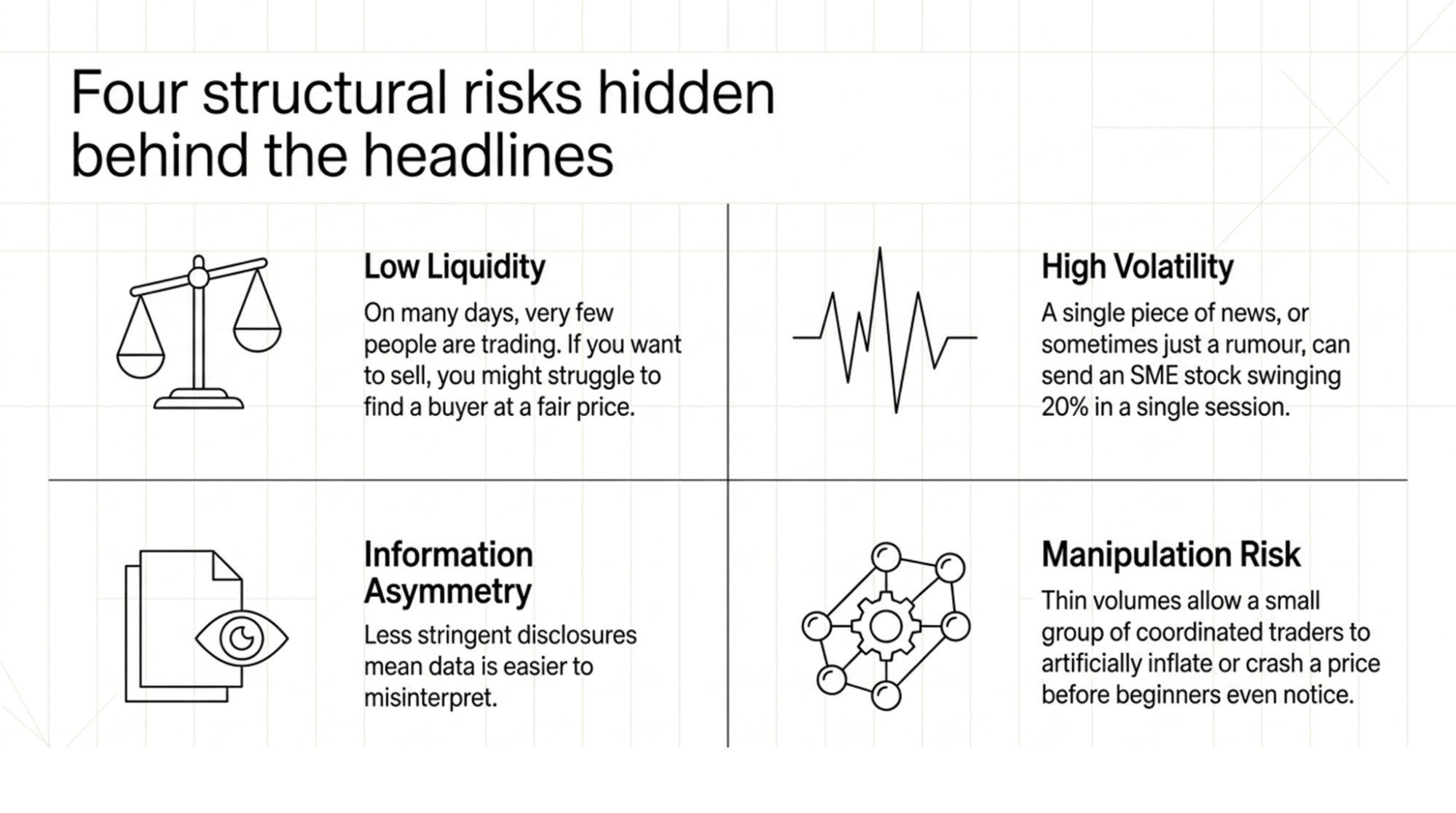
But here's what the exciting headlines don't always tell you. SME stocks suffer from low liquidity; on many days, very few people are trading them, which means if you want to sell, you might struggle to find a buyer at a fair price. They also carry higher volatility; a single piece of news, or sometimes just rumour, can send an SME stock swinging 20% in a single session. Disclosure standards, while regulated by SEBI, are less stringent than main board companies, so information is harder to come by and easier to misinterpret.
There is also a very real manipulation risk in thinly traded SME stocks. Without deep volumes, it's easier for a small group of coordinated traders to artificially inflate or crash a price. As a beginner, you may not even notice until it's too late.
The Golden Rule for SME Investing
SME stocks are not inherently bad investments; they are advanced-level investments that require disproportionately more research than their main board counterparts. You need to understand the company's business model intimately, assess promoter credibility, analyse order books and growth trajectories, and have genuine patience to hold through gut-wrenching volatility.
This is precisely the territory where professional research stops being a luxury and becomes a necessity.
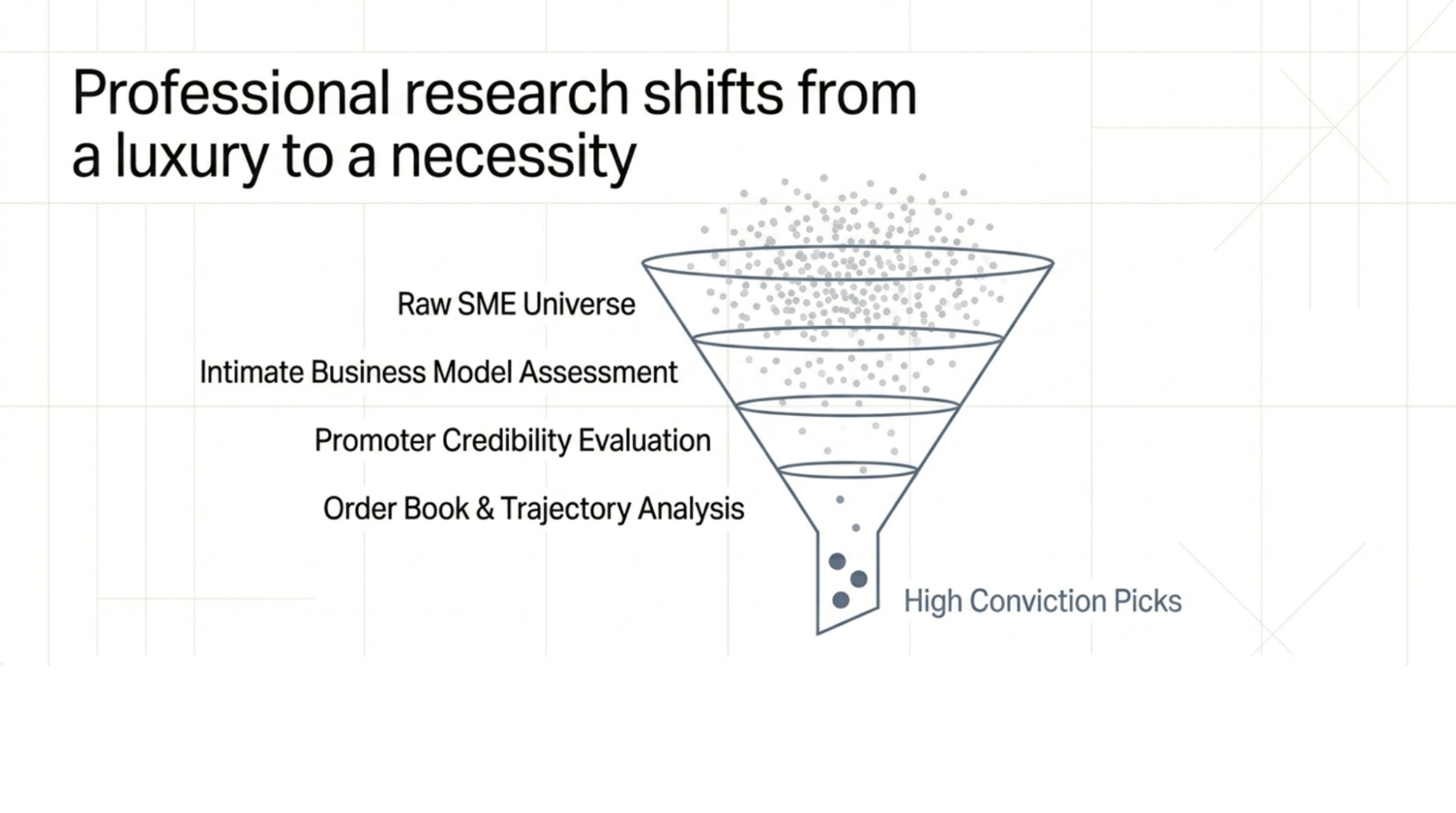
Ethica Invest's research framework is built to navigate exactly these kinds of high-conviction, high-risk opportunities; filtering out the noise and focusing only on the SMEs that have the fundamental backing to justify the risk. Going into the Wild Frontier without a guide is, quite frankly, how most retail investors get hurt.
Navigator Tip:
Whether you invest in main board stocks or SMEs, there's one moment that every investor eventually gets excited about; the chance to get in before a company officially starts trading.
In the next Article, we step into the VIP entrance: the world of IPOs.