Endurance Technologies - Precision Sculpting Mobility
Moulding is an ancient technique with evidence dating back to 4000 BC in Mesopotamia. It involves pouring molten metal into casts (required shapes), which leads to the metal taking the shape of the cast upon cooling. Since iron moulding could be challenging, gold, copper, and bronze moulds were more commonly used. The moulds used simple clay or sand to make the required figures.
In the medieval age, moulds were used to cast tools and weapons from iron. Moulding as a technique had come a long way from ancient times, and moulded parts were now much stronger than before due to refinement in metallurgical processes.
Empires were on the lookout for new moulding technologies and would even hijack or kidnap engineers who were good at this technology. In fact, the fall of Constantinople in 1453 AD can be attributed to this. One of the engineers from Constantinople who fell out of favour with the Eastern Roman King and was estranged went over to the Turks and created the cannon that tore through the walls of Constantinople, eventually resulting in its surrender and subsequent capture, and integration into the Ottoman (Turkish) Empire.
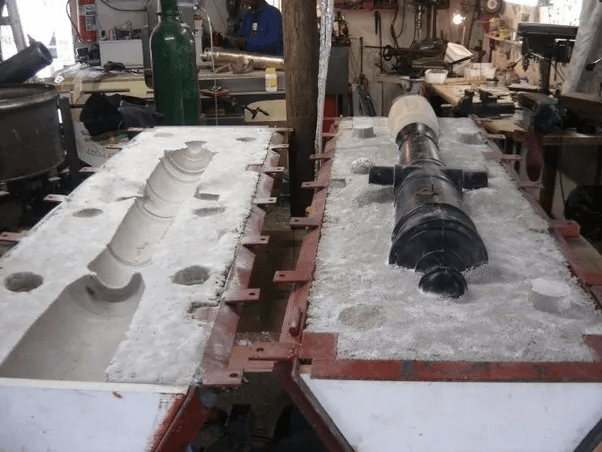
Coming back to the modern era, die casting is one of the most common moulding processes which is used in nearly every industry. Its advantages include high speed for mass production, excellent dimensional accuracy, smooth surface finish, and the ability to create complex, thin-walled parts with good mechanical strength.
 Ethica Invest
Serious about long-term investing?
Unlock our professionally managed portfolios.
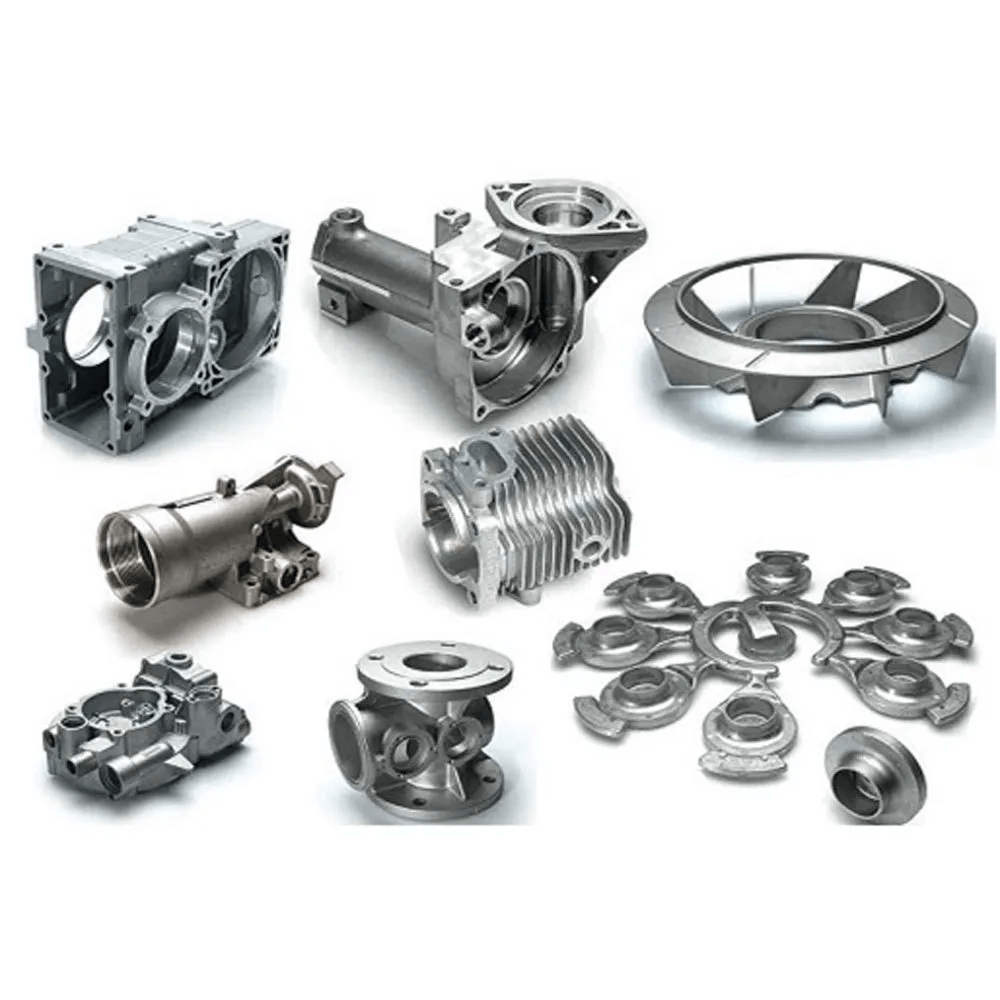
Due to precisional advantages, die casting is used to produce automobile parts ranging from structure to engine blocks, including suspension, transmission, wheels, cranks and a gamut of other parts. Die casting is extensively used in both 2-wheelers and 4-wheelers.
The Die Cast Amalgam
Endurance Tech is one of the leading ancillary providers to OEMs in India and Europe. It specialises in supplying aluminium casts, suspension, brakes, alloy wheels, ABS systems, Battery management System (BMS), among others.
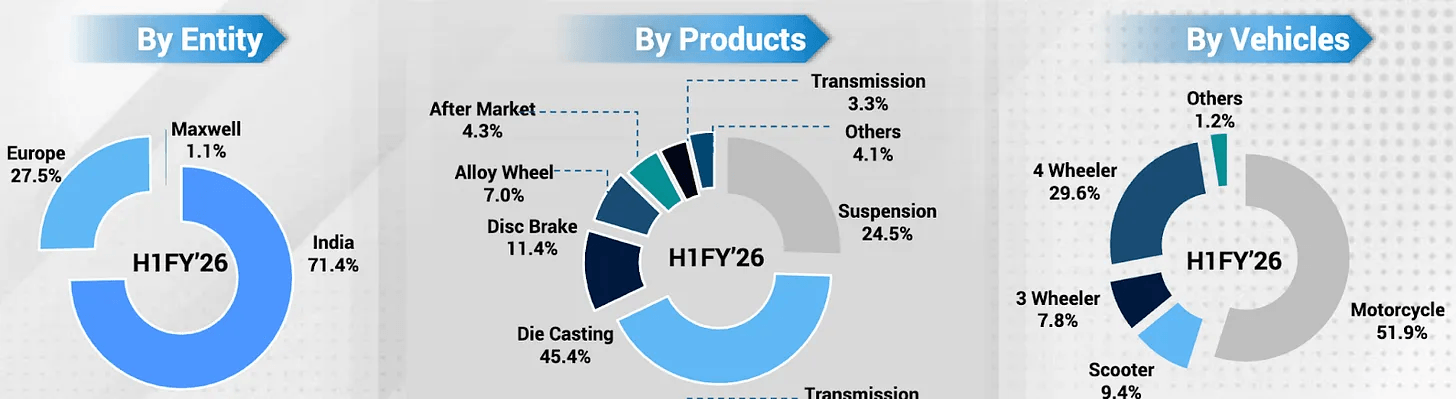
As per the latest half-yearly figures, based on total consolidated income, die casting or moulding accounts for 45% of the total revenue for Endurance Tech. The other major products that include suspension, disc brakes and alloy wheels also use die casting technology for some or more of their parts.
The majority of the revenue for Endurance Tech comes from motorcycles, and a large minority comes from four-wheelers. All in two-wheelers account for nearly 69.1% of the total revenue.
Based on geography, European operations account for 27.5% of the group revenue, while Indian operations account for 71.4% of the total group revenue
Close-haul into headwinds
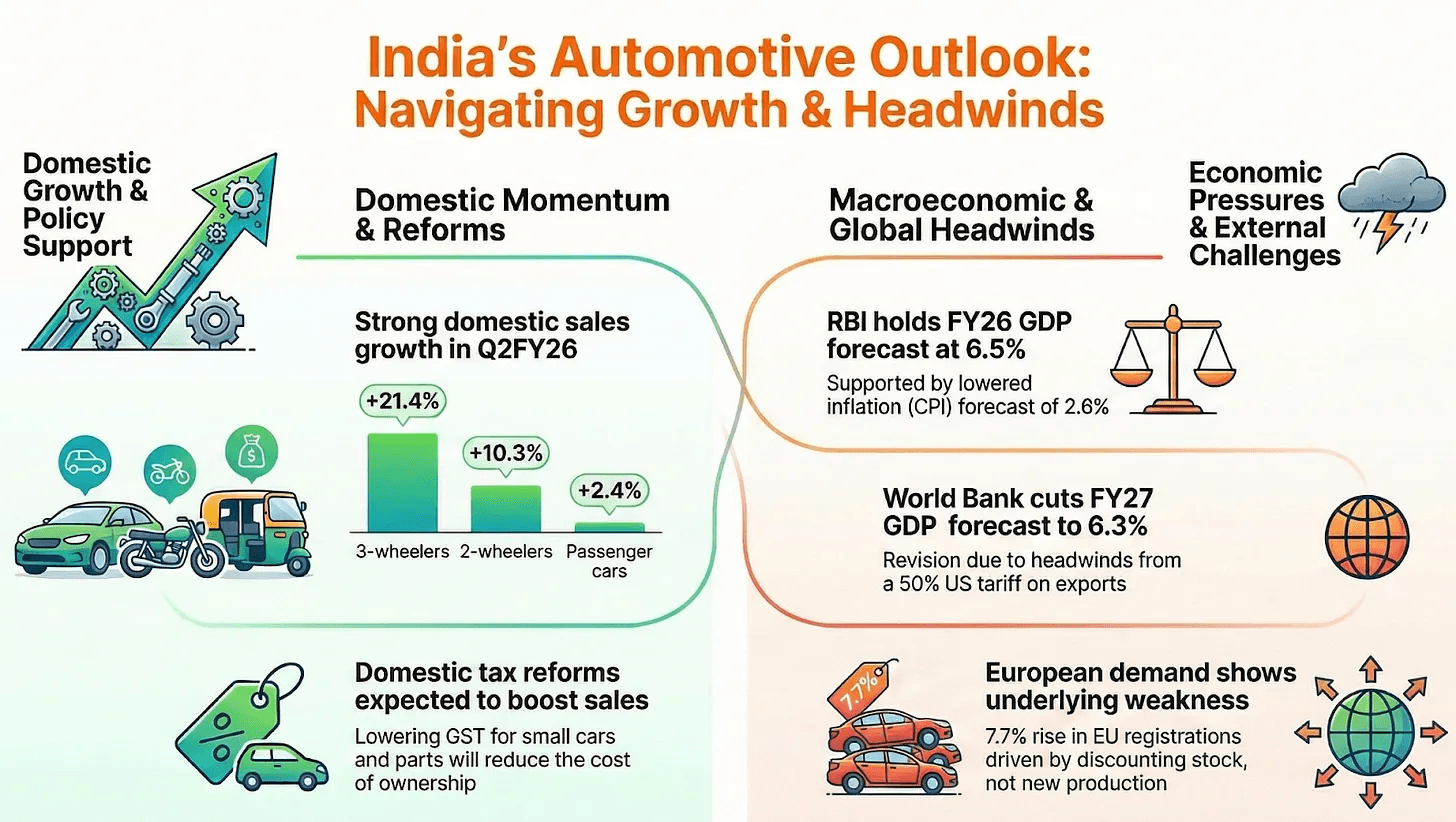
On a macroeconomic level, starting with the economic growth rate. The RBI’s FY26 GDP forecast has been raised from 6.5% to 6.5% with the CPI lowered from 3.1% to 2.6%. The RBI has been positive for investment demand in the country and is expected to keep a steady repo rate. However, a significant portion of this GDP rise comes from a lowering of inflation (CPI) rather than actual growth for a country like India, which is a growing economy. The target inflation rate of 4% is somewhat what the central bank targets. The World Bank has cut on their financial year 27 forecast for the Indian GDP to only 6.3% citing headwinds from the U.S. tariff of 50% which leads to fewer exports to the U.S. from India.
On the industry level, simplification and rationalisation of GST into fewer and lower slab rates for a majority of automobiles (small automobiles), as well as a reduction. A reduction of GST for auto parts is further expected to enhance the sales volume by lowering the cost of ownership.
External macroeconomic Headwinds: The recent 50% US tariff impact is expected to affect exports of automobiles, and slower global demand. However, the management is confident of a good settlement that enhances the consumption.
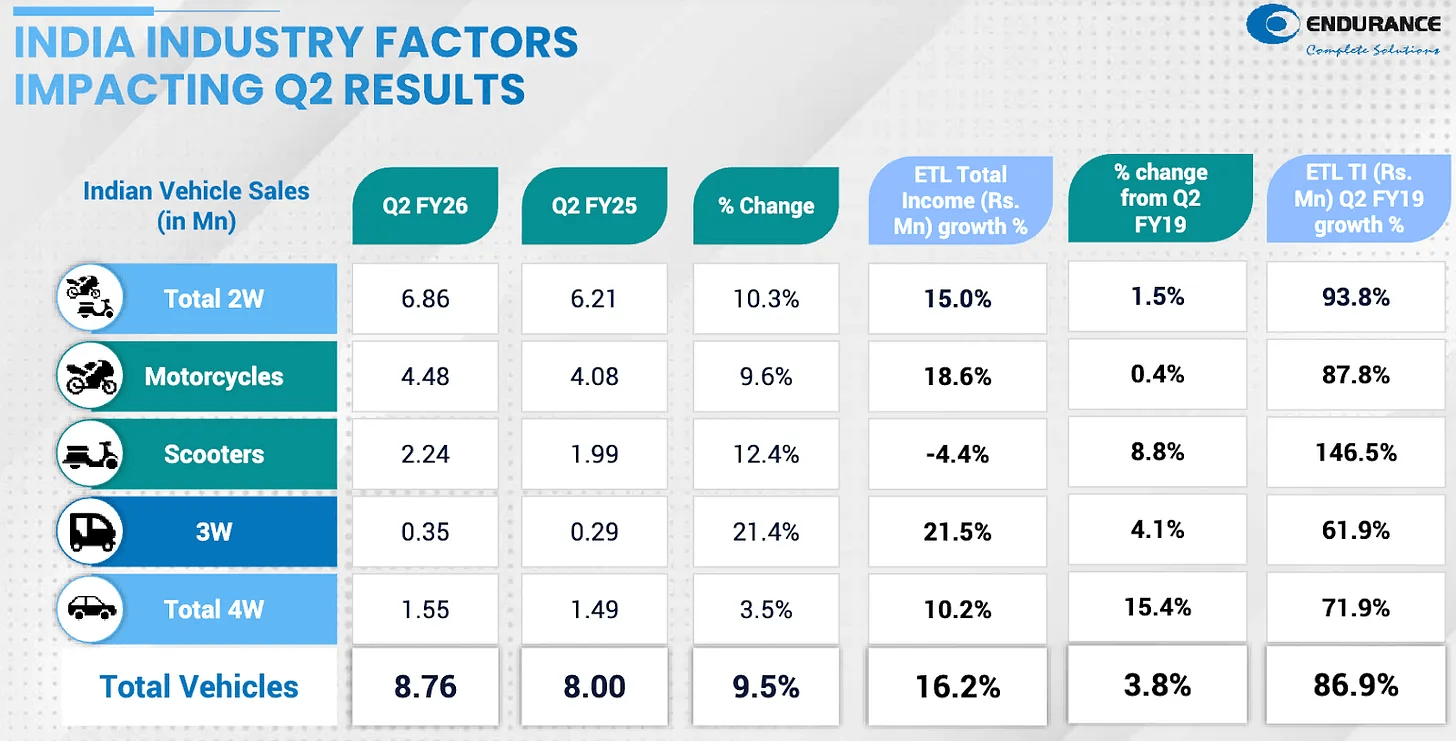
For Q2FY26, 2-wheelers saw a 10.3% increase in sales, while passenger cars saw a 2.4% increase, and 3-wheelers 21.4% increase. New registrations in the European Union saw a 7.7% increase year-on-year. But this increase was more of a reduction of stock with a discount rather than production, since production still continues to trend downwards.
Muscling growth by building ABS.
Have you ever been in a situation where you had to apply the brakes suddenly? Maybe a kid ran across the street, or another vehicle on the crossing jumped the red light?
What do you do in such a situation? Well then, tuition is to apply the brakes and apply them. So, as you might have experienced, when you apply the brakes on your car and, more so, on a bike, the sudden application of brakes would lock up the wheels, and the vehicle would skid on the road rather than rolling. The brakes lock up the wheels, causing the vehicle to skid. You lose control, and the braking distance also increases. This leads to severe accidents. Even if you weren’t to crash into another object, skidding would lead to loss of control, and you may fall off the two-wheeler. It has happened to me at least twice.
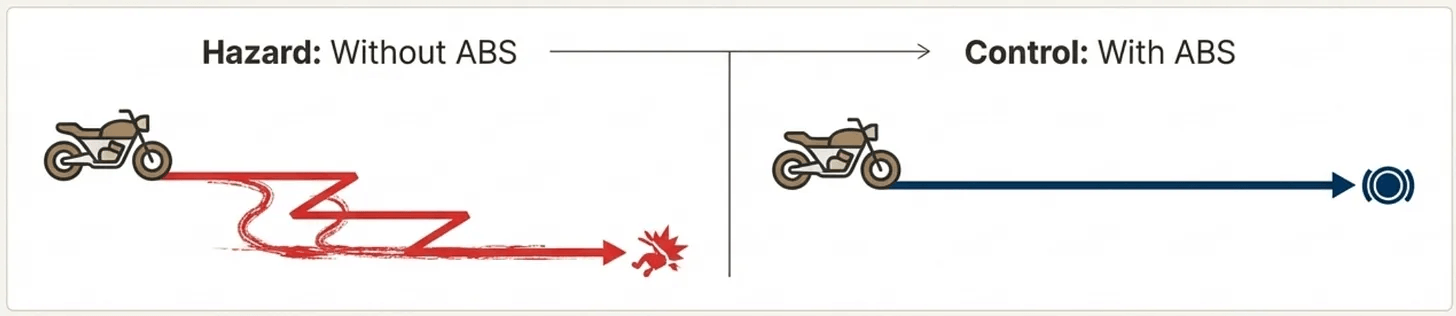
Realising how dangerous wheel locking can be, the government of India mandated ABS for any two-wheeler greater than 125cc. It is also mandatory in cars. In addition, the government is further extending this regulation to two-wheelers less than 125cc, as they are also powerful enough.
Ethica Invest
Serious about long-term investing?
Unlock our professionally managed portfolios.
ABS, or the Anti-lock Braking System, prevents wheel locking by braking intermittently rather than continuously. This is done by an ECU which brakes and releases the brakes alternatively a large number of times in a second (20-30 times). Automobiles need an ECU because this cannot be physically done by the driver or the rider.
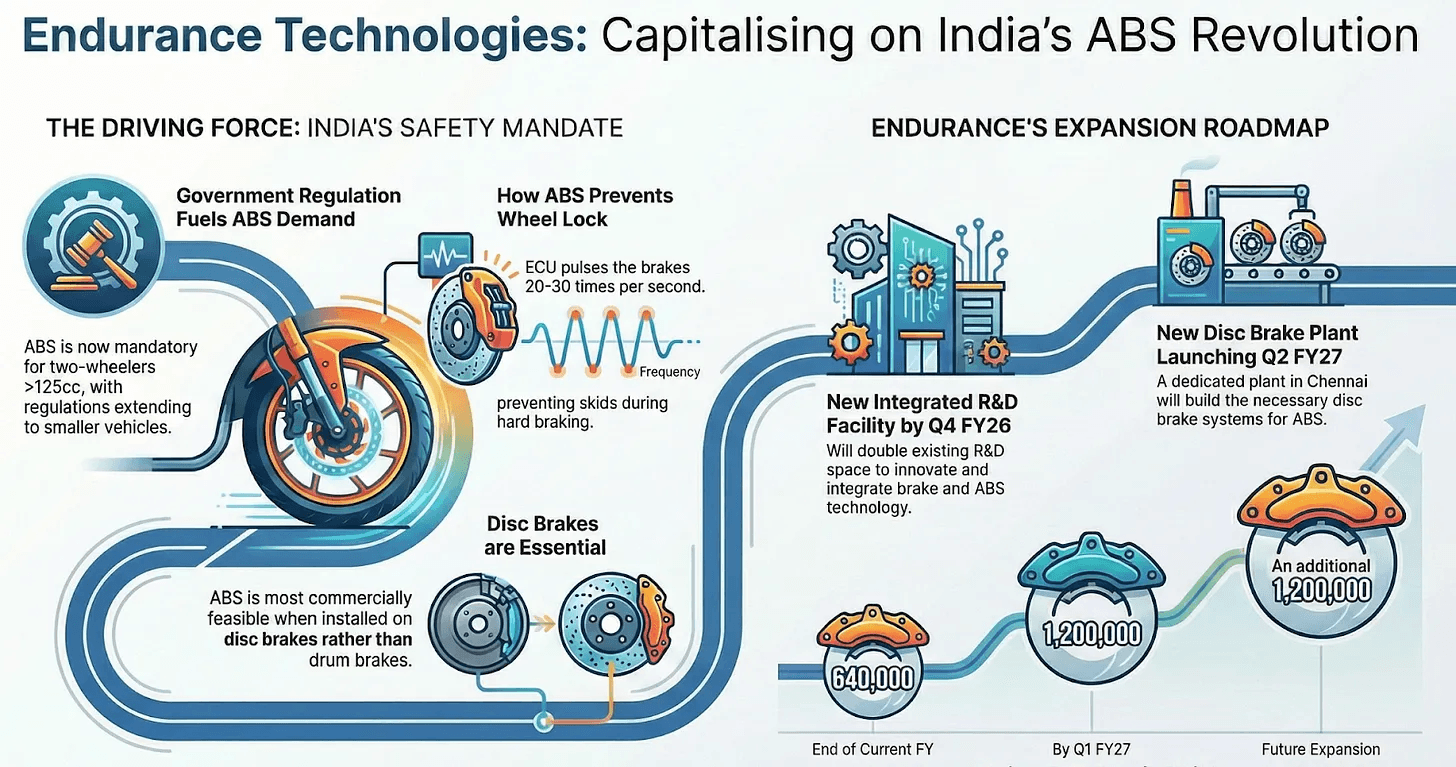
Since most of the two-wheelers in India are 125cc or less, the opportunity for ABS is big. The company is expected to have a capacity of 640,000 ABS systems by the end of this financial year. It will further enhance the capacity to 1.2 million units by Q1 FY27, and another 1.2 million units of capacity is expected to be added later based on the new guidelines from the Government.
New integrated brakes R&D facility: ~2x existing size is expected to be ready Q4 FY26, integrating 2W brakes + ABS R&D, and a new testing lab. Allocation of space for 4W brake assemblies R&D is also included. This is expected to enhance growth by bringing new tech into ABS.
It is important to note that ABS is commercially feasible when installed on disc brakes. While it is possible to install ABS on drum brakes, it can be costlier, and therefore it’s generally done on disc brakes. The company has set up a new plant at Chennai for disc brake systems, which is expected to start the SOPs in Q2 FY27.
Die Casting - The Bread and Butter
Die casting generates 45.4% of the total revenue, and being the bread and butter for the company, Endurance, has been setting up new capacity. There is something unique about this division because the company does not get a chance to have spare capacity. Most of its facilities are running at full capacity or are booked at full capacity. Facilities at AURIC in Aurangabad do a lot of heavy lifting for Endurance.

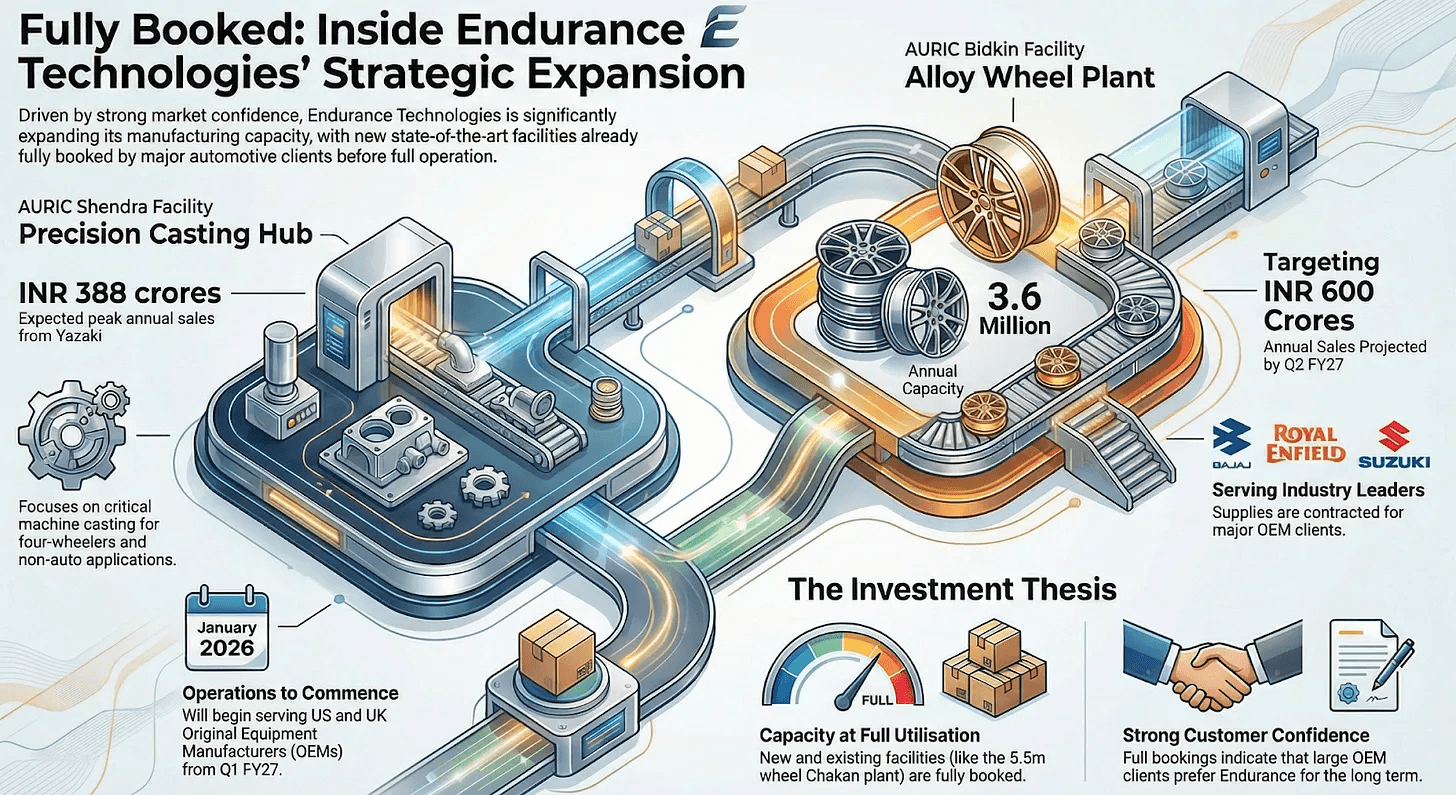
AURIC Shendra facility in Aurangabad (Sambhajinagar) has been allocated for critical machine casting for four-wheelers and non-auto applications, as they require more precision. A new customer, Yazaki, has been added, with peak sales expected to be INR 388 cr/ann. It will also serve US and UK OEMs from Q1 FY27, with sales peaking in 2028. The SOP for the AURIC Shendra plant is expected to start in January 2026.
The AURIC Bidkin capacity facility with an installed capacity of 3.6 million wheels per annum. For this plant, the SOP has already started in October for Bajaj Auto, whereas supplies for Royal Enfield will start before the end of this year. Alloy wheels for Suzuki will start in Q1FY27. The plant is expected to generate annual sales of Rs 600 Crores by Q2 of the financial year 27. This facility has been entirely booked by OEM clients.
Additionally, the Chakan (Pune) alloy wheel plant, with a capacity of 5.5 million wheels, is also fully booked and operating at full capacity.
Considering that the installed capacity for the company is already near full and any new facility is already booked, it indicates that the customers (the large OEMs and 4-wheelers) prefer endurance technologies and are not going anywhere in the near future. Full utilisation of new capacity adds an important point to the investment thesis.
2-wheeler Suspension - Syncing quality and volume
The company is a market leader in two-wheeler suspension, offering products such as inverted forks and monoshocks. Clients include TVS, KTM, and others.
KTM has been ramping up orders and is expected to cross a total of 650,000 Inverted Front Fork sales in this financial year. KTM bikes tend to be sporty and high-performance in each of their classes, and the accompanying shocks need to be of good quality. A first-mover and a market leader advantage make Endurance stand out among others.
New client addition from Hero MotoCorp, which is a market leader in two-wheelers along with a leading Chinese 2W OEM, will help the company play the high-stakes volume game from Q1 FY27.
Battery Packs (Talegaon/Pune):
Starting Jan’26; for a “leading 2W OEM with order value of INR 300 cr p.a. from one OEM.
Order Book - Building up Regular Orders- Double-edged sword
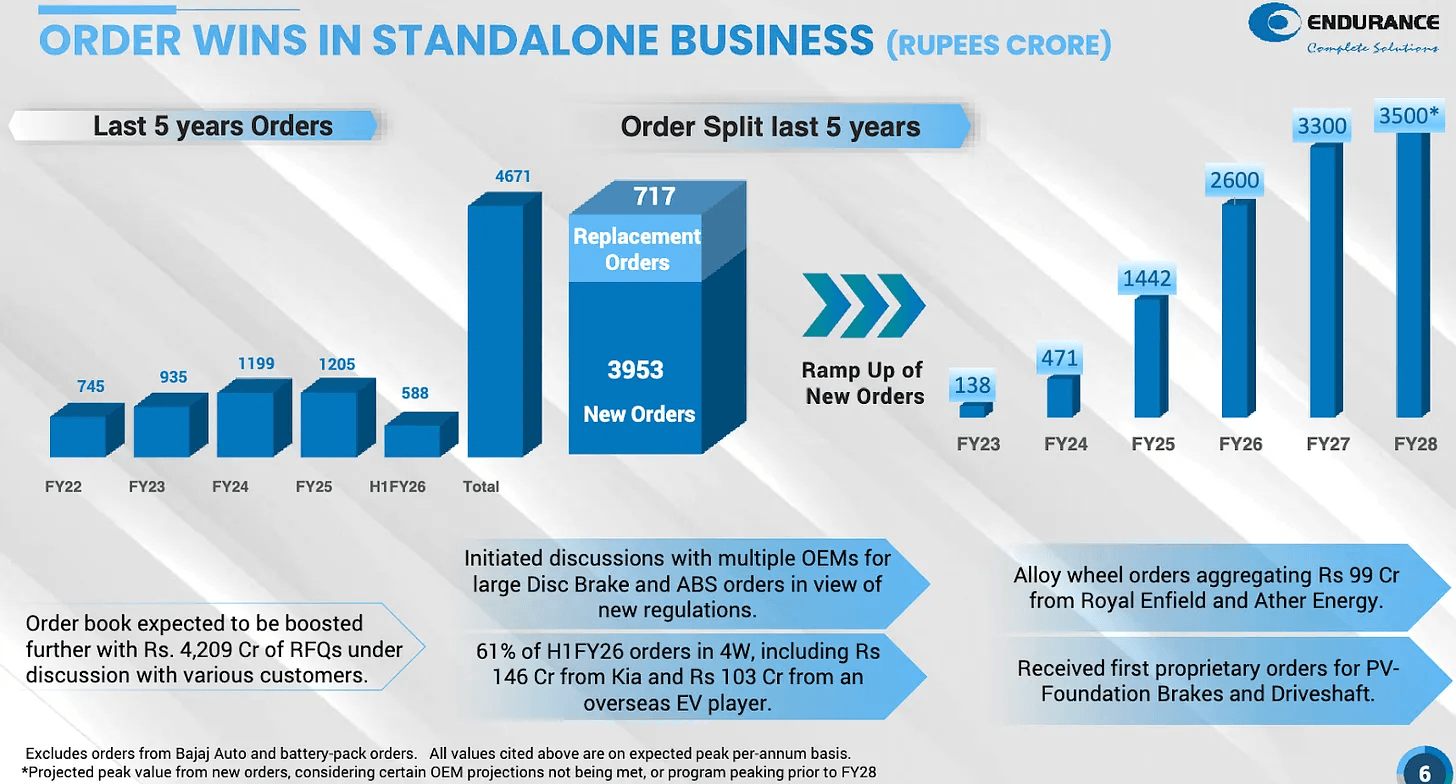
Endurance has been winning new regular orders that scale up over the years, providing it with a regular source of revenue. New customers diversify the revenue source in addition to enhancing the revenue. This acts like a double-edged sword.
Major New Order (Per annual basis).
- H1 FY26: INR 909 cr p.a.
- INR 103 cr EV casting for a leading US EV OEM
- INR 146 cr aluminium casting order from Hyundai & Kia (SOP FY27)
- EV order: INR 1,195 cr p.a.
- RFQ book: INR 4,209 cr, with conversion expected around INR 1,500 crores.
Financials:
The financials look good to begin with. The sales in the past 4-5 years have seen a double-digit CAGR. We take a deep dive into the actual number.
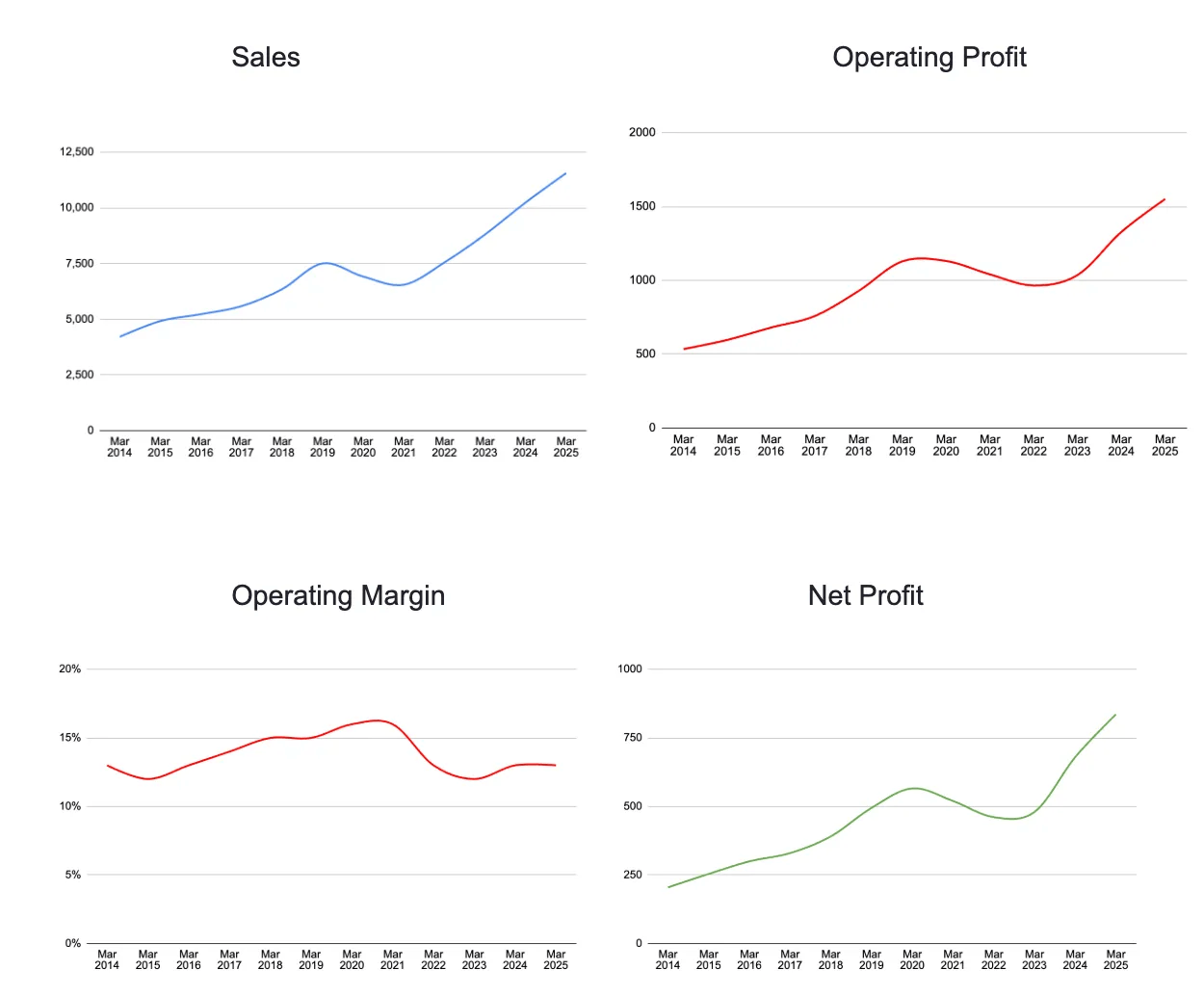
The sales have seen an uptrend, which is mirrored by the operating profit. If we see the operating margin, it has remained nearly the same. The net profit, on the other hand, sees a trend which is similar to the sales, but the increase in net profit seems to be steeper. There is evidence of improvement in margins, but we need to dig deeper.
Let’s look at the numbers based on CAGR over the past decade:
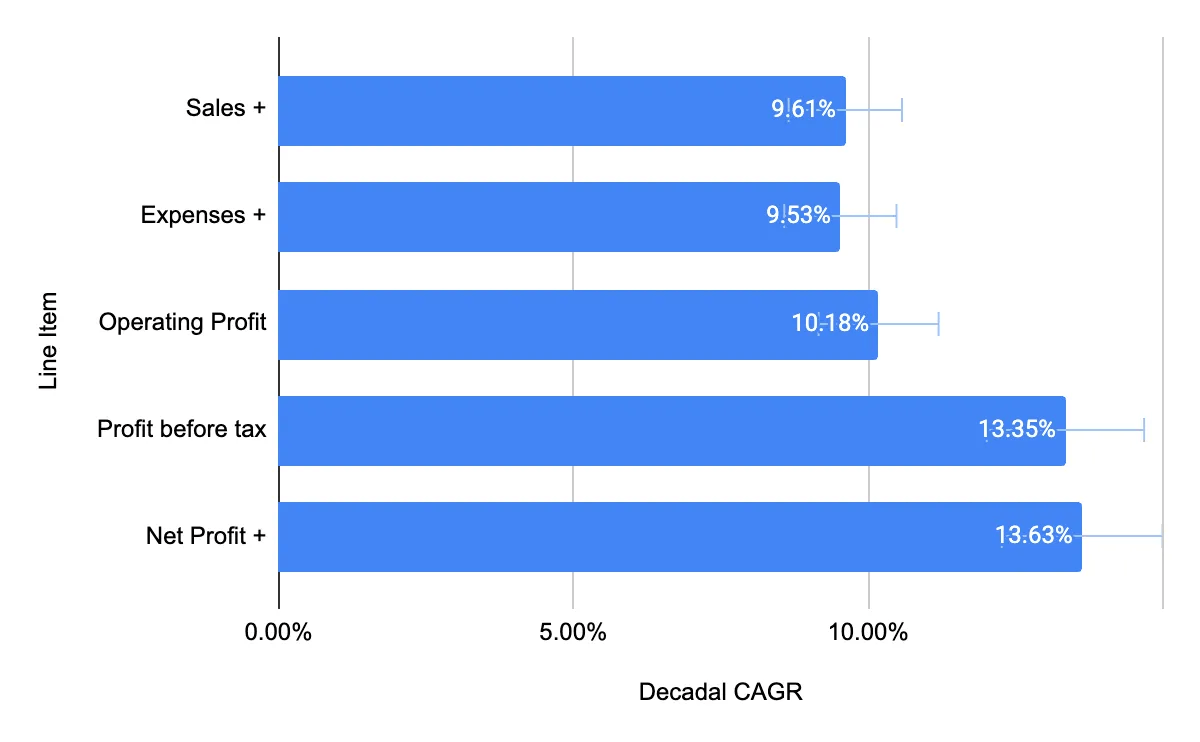
Expenses have grown only slightly less than the sales. However, the growth in net profit has been significantly more, indicating that the efficiency has been increasing. This results from near full capacity utilisation.
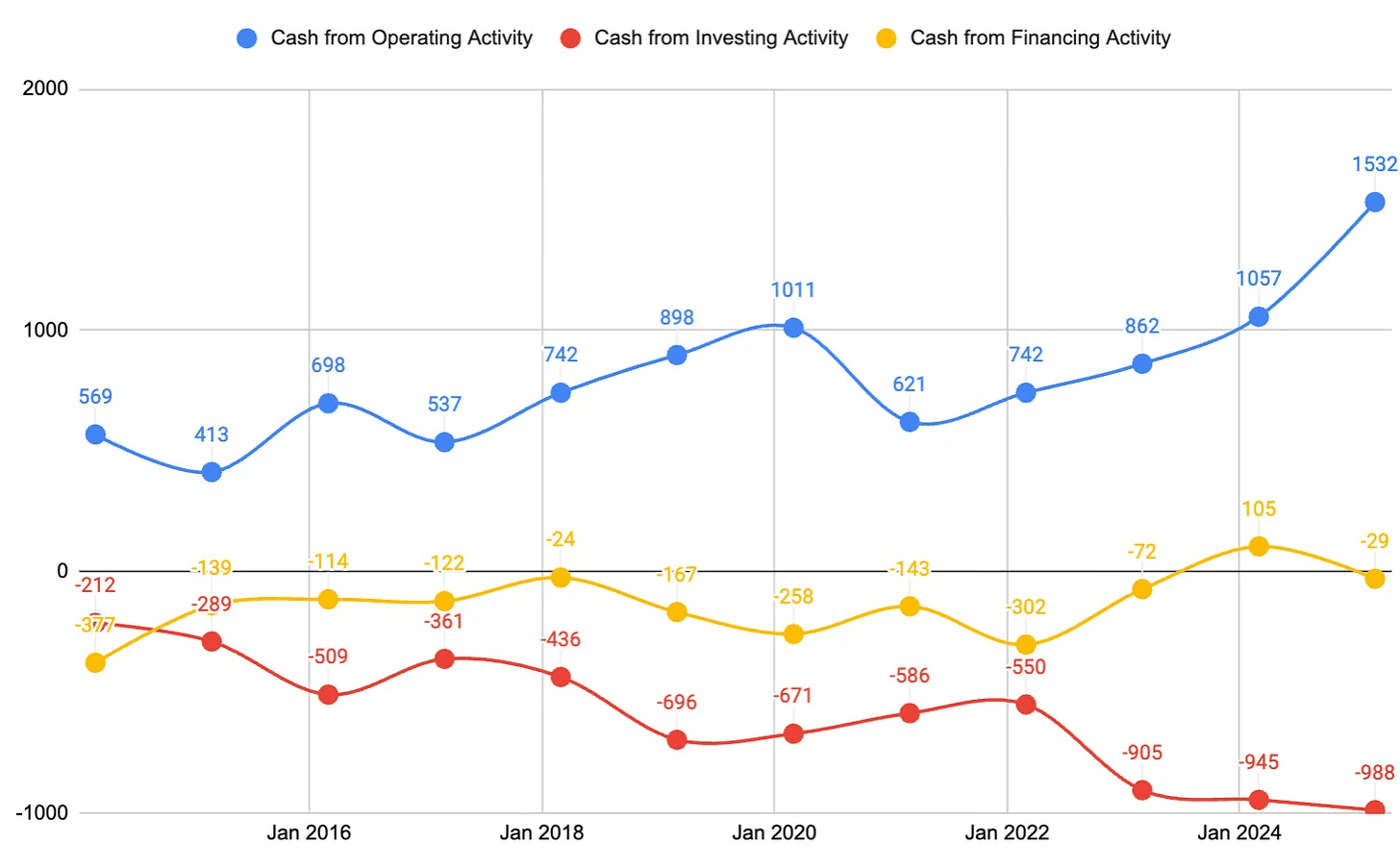
The operating cash flows have been positive, which is a good sign as the operations are generating a good amount of cash flow.
Cash flows from financing are slightly negative, which is expected of a growing company.
Now, the investing cash flows are negative and range somewhere between 60-70% of operating cash flow. These cash flows are being used mostly to finance fixed assets purchases, purchases of property, plant and machinery, and some for the acquisition of machinery. There have been some investment purchases, too.
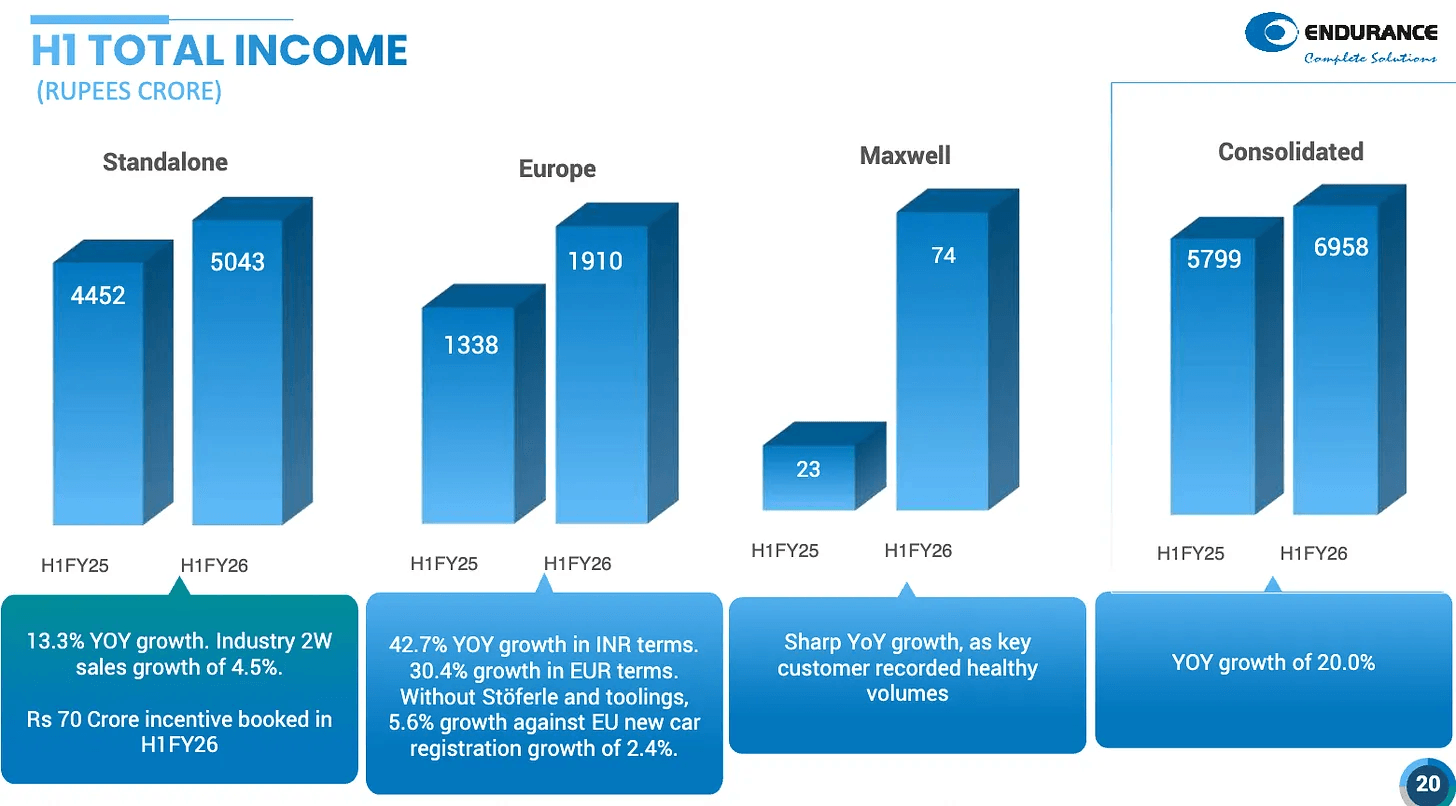
The consolidated revenue for the half-year has grown 20% over the previous year. The standalone income from India has seen a lesser growth at 13.3%. Major customers in the form of two-wheeler sales have grown only 4.5%.
The European operations have seen a good growth in INR terms of about 42.7%, which is still higher than 30.4% if we see that in EUR terms. However, any extraordinary increase in revenue from the European operations is attributed to the inclusion of revenue from Stoferle.
Maxwell has seen more than three times the growth in revenue, but that’s still small when compared to the total revenue.
Investing in the Future
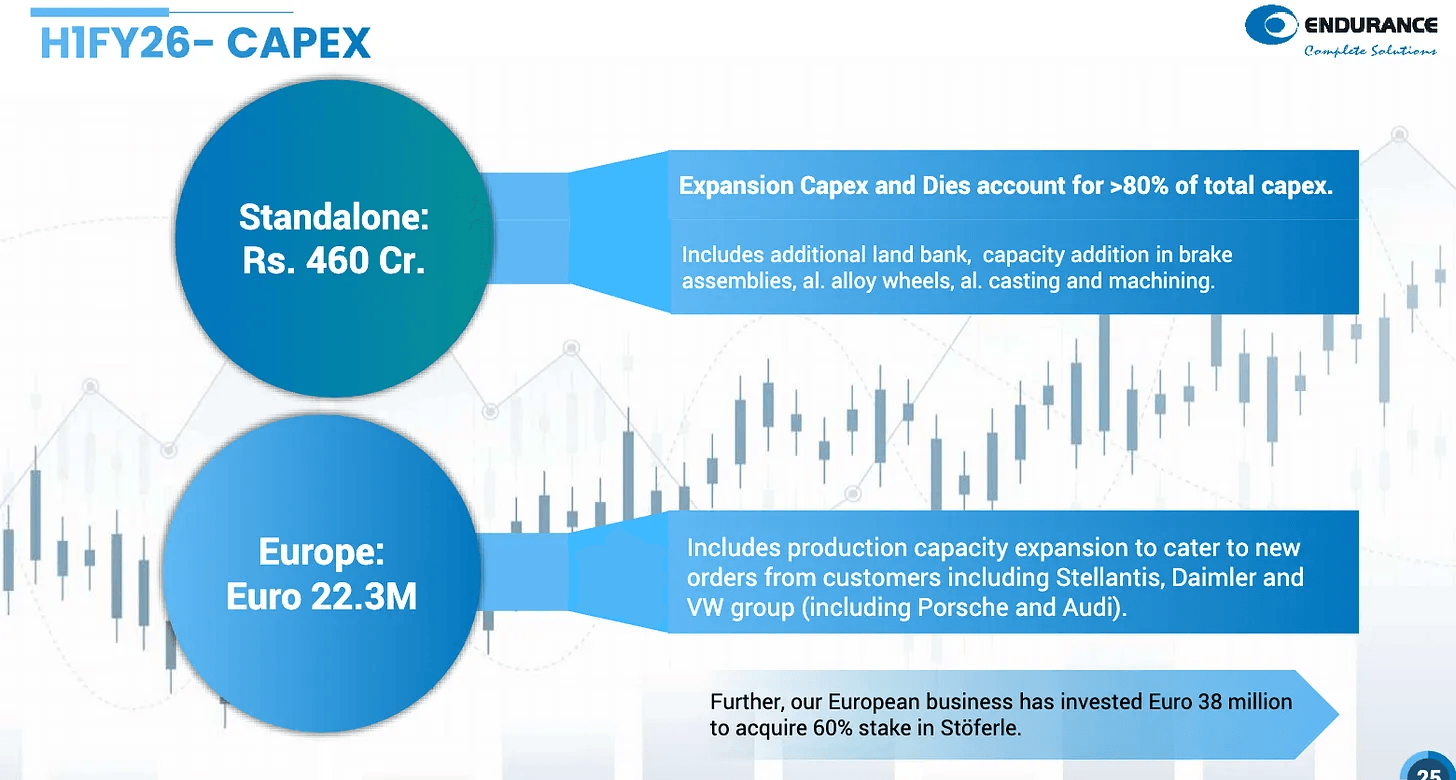
How can CapEx signal growth for Endurance? With 460 crores spent, will it enhance growth and improve margins? More than 80% of the capex is for expansion and moulding dies, but the question we need to ask is how much of this is depreciation?
The last financial depreciation for the whole year was 290 crores. Pro-rating this for half a year, we get that depreciation is around 30% of the capex. While it’s not easy to estimate actual depreciation, this gives us an indication. It also means that capex is enhancing capacity, which is an important parameter for growth.
Both expansion and increase of dies as machinery enhance the growth. A minority share of the capex also includes land bank, increase in capacity in assemblies, alloy wheels and casting.
The European capex is around €22.3 million, which translates to approximately ₹230 crores. This capex will be used to increase production capacity for Stellantis, Daimler, and Volkswagen. An additional €38 million has been spent to acquire a 60% stake in Stoferle.
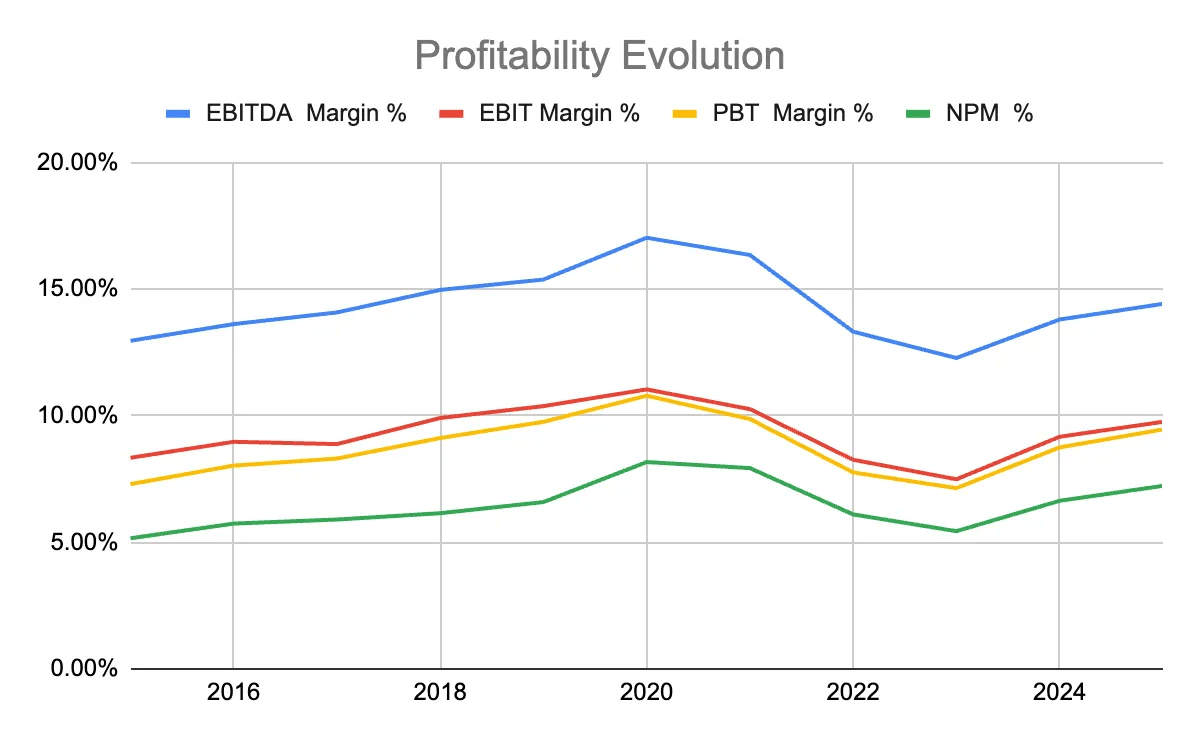
Profitability ratios have been slightly higher than they were a decade ago. They rose up to their highest pre-COVID and fell sharply after that. However, the uptrend is back again from 2023. Improvement of margins comes at a time when the auto-ancillary industry is facing headwinds to growth and rising raw material costs. Do we expect these ratios to maintain or to rise? Let’s consider some factors:
- Establishment of an R&D system for brakes.
- Economies of scale due to new capacity addition.
- Operational efficiency due to full capacity utilisation.
- Expansion of product portfolio.
The headwinds to enhanced margin primarily are the increase in the cost of raw materials, which is plaguing the auto industry.
The analysis, however, is incomplete because we need to see how much of this growth and opportunities have already been reflected in the stock price.
Shareholding
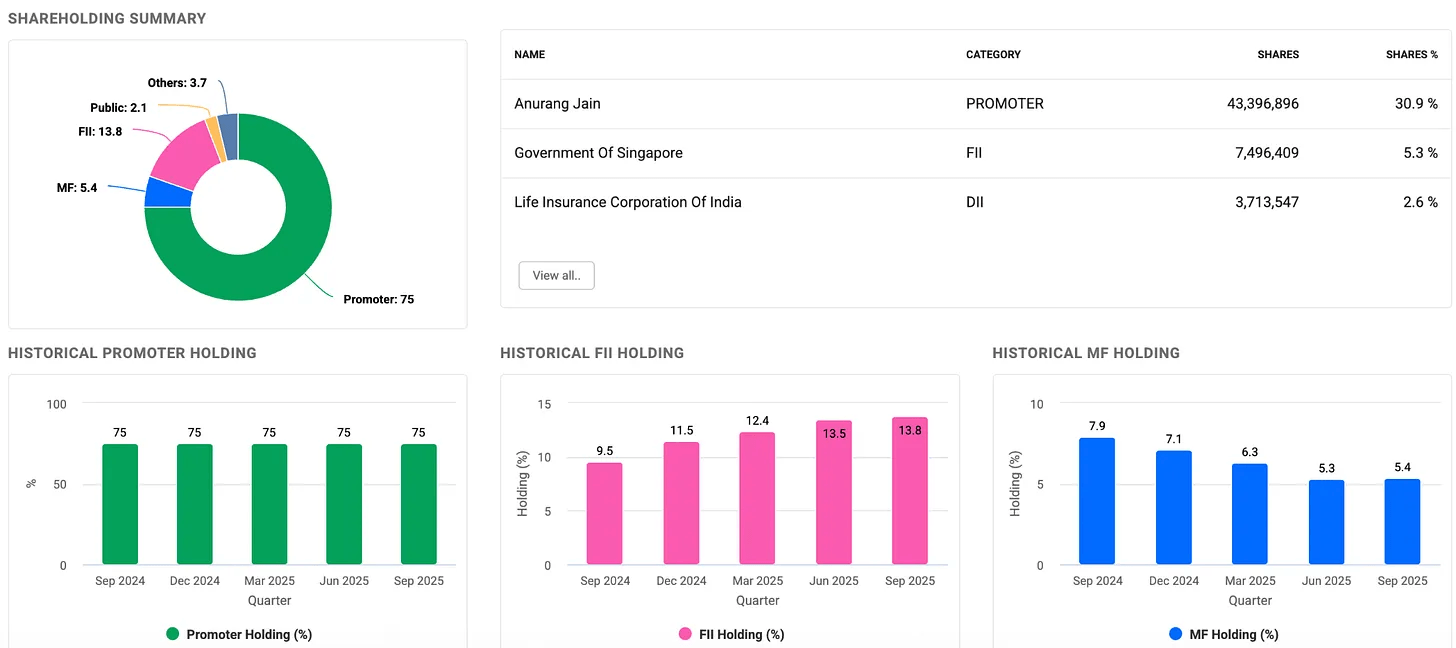
The promoter holding has been maintained, and the combined FII and the mutual fund holding has increased slightly. There have been no large movements in shareholdings.
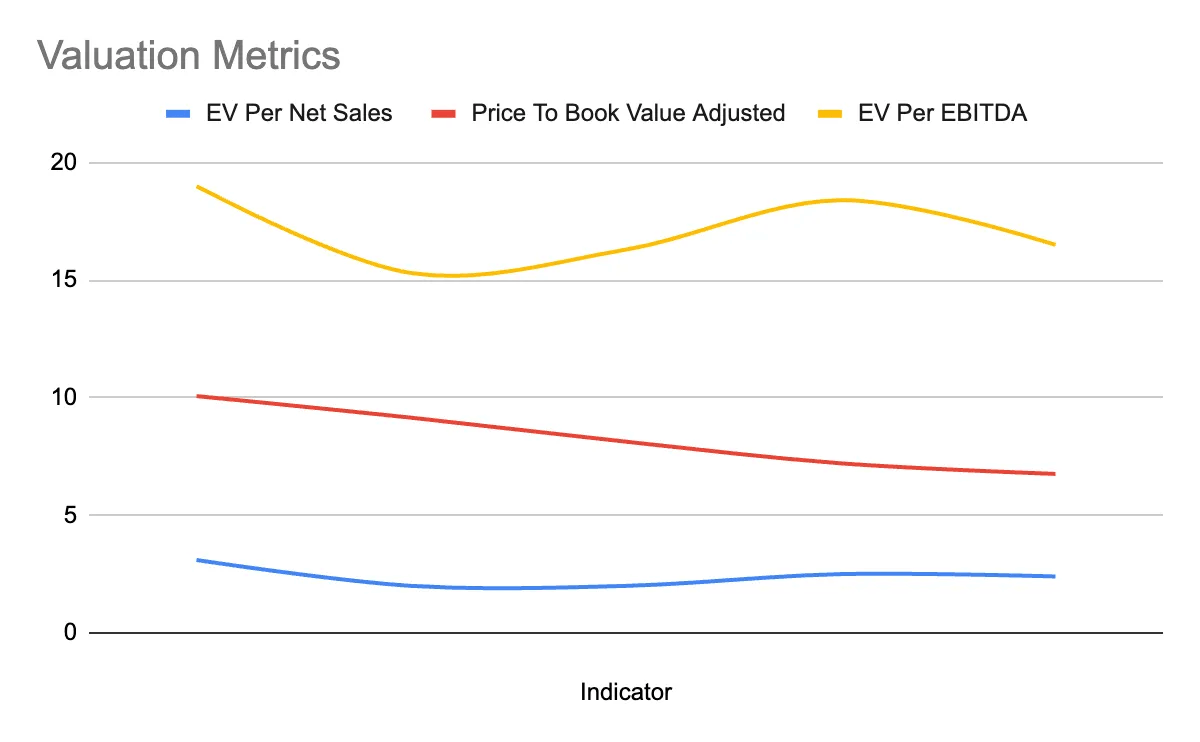
Considering the fact that the company still has good growth opportunities and has been working to enhance margins, the valuation metrics indicate there is some juice left. Looking at EV/EBITDA for the past five years, it has remained within the band of 15 to 20, which indicates stability.
Similarly, the price-to-book value has decreased. Now, this decrease at a time when the company has seen good growth indicates decreasing valuations.
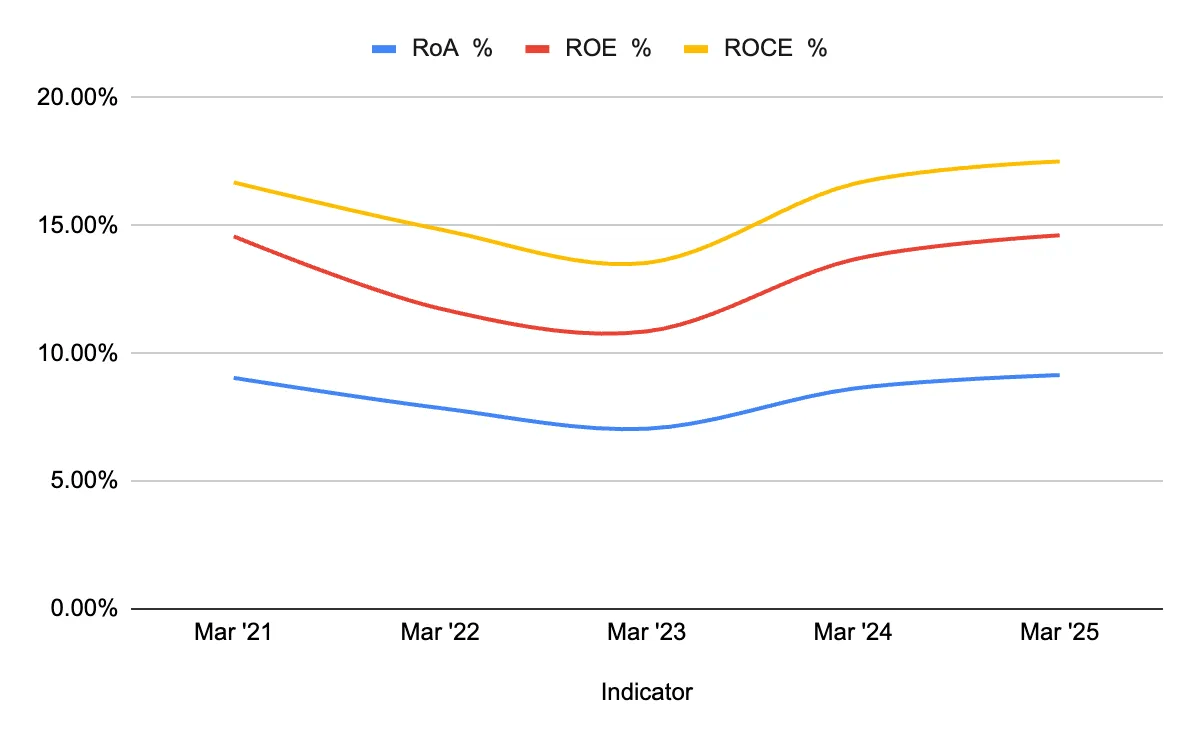
The Endurance stock is trading at a PE of 41.6, which is near the median PE of the top 50 companies in the Auto Components & Equipment industry. The ROCE of 17.5% is also near the median for the industry. ROCE may seem ordinary, but it comes at a time when margins have been contracting for similar companies.
Redlined Growth
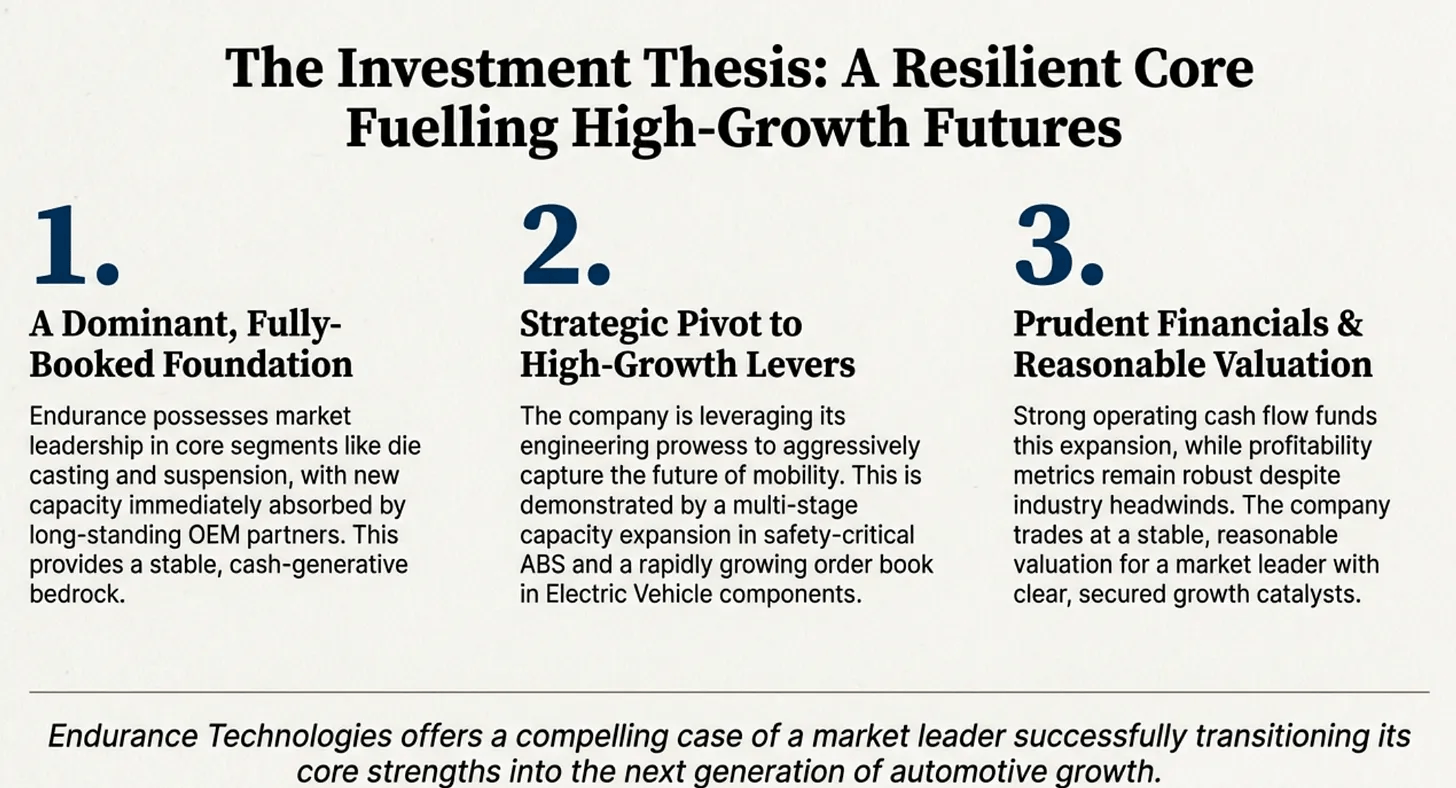
Endurance seems good from the outside, and also looks good on paper, and yes, it has opportunities that have catapulted its growth. This includes:
- Strong Market Position and Capacity Utilisation: A market leader in two-wheeler suspension and a leading ancillary provider for OEMs in India and Europe, running at full capacity.
- Regulatory Tailwinds (ABS Mandates): Large orders anticipated. Endurance Technology is scaling capacity to meet this demand.
- Expansion into Electric Vehicles (EVs): The Company is diversifying its portfolio to mitigate the risk of internal combustion engine (ICE) obsolescence. It has secured a ₹300 crore per annum battery pack order for a leading 2W OEM.
- Inorganic Growth and Global Reach: The acquisition of a 60% stake in Stoferle has significantly boosted European revenues, while new capital expenditure in Europe is focused on serving high-end clients like Daimler and Volkswagen.
- Financial Efficiency: While sales have grown, net profit growth has been significantly higher, suggesting that the company is becoming more efficient as it reaches full capacity utilisation. Additionally, its Price-to-Book value has decreased during a period of growth, which may indicate more attractive valuations.
Having said that, Endurance faces risks which may not allow it to realise its full potential.
- Macroeconomic Vulnerabilities: India’s FY27 GDP forecast cut to 6.3%, citing headwinds from potential 50% US tariffs.
- European Production Trends: Although European revenue has increased in INR terms due to the Stoferle acquisition, actual production in the European Union continues to trend downwards.
- Input Cost Pressures: A primary threat to profit margins is the rising cost of raw materials, mainly Aluminium, which has risen by nearly 15% in USD terms.
- High Segment Concentration: A significant portion of the company’s revenue (69.1%) is derived from the two-wheeler segment.
To understand the investment profile of Endurance, think of it as a high-performance engine running at its redline. It is operating at peak efficiency and capacity. Still, its continued success depends on whether the “track conditions”—global trade policies and raw material costs—remain favourable enough for it to maintain that speed without overheating.
General Disclaimer and Release: Nothing contained herein constitutes tax, legal, insurance or investment advice, or the recommendation of or an offer to sell, or the solicitation of an offer to buy or invest in any investment product, vehicle, service or instrument.