Eppeltone: Revolutionising Precision Metering
Do you remember the old electric meters in your house with the disk running? The higher the load, the faster the disk runs. It was pretty fascinating to see the disk running.
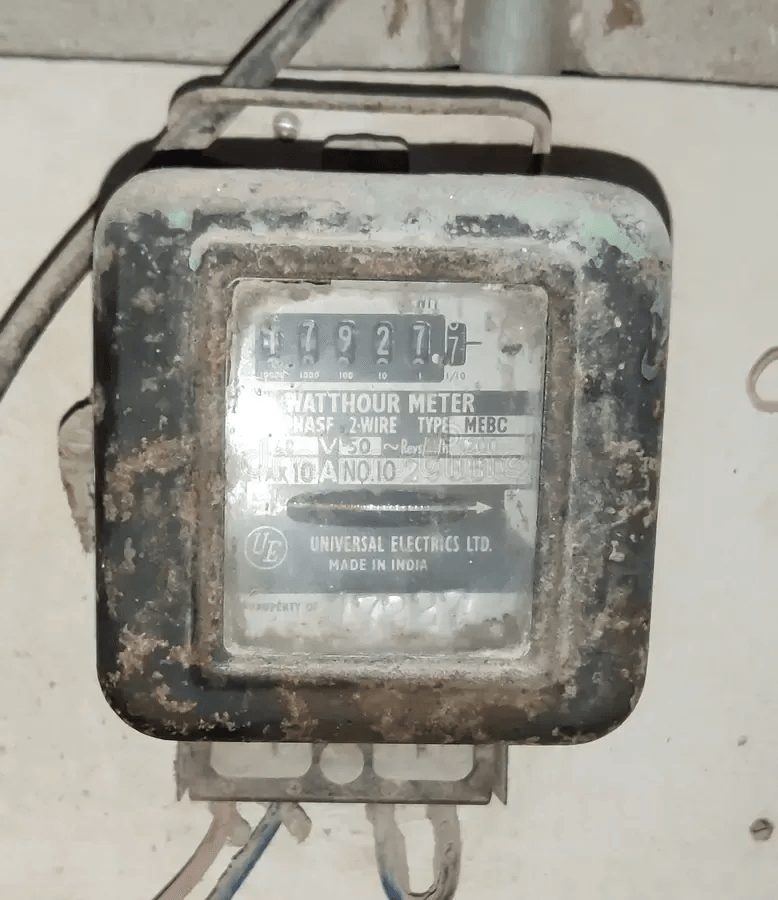
However, this meter would only tell you the amount of units consumed. The disc rotation would depend upon how each electric meter was calibrated. For example, in this one, about 200 disc rotations would increase the 1/10th unit. You can make this out from the revolutions per watt hour as 200, as demarcated on the image above.
Now, this old meter is pretty informative, but it will not tell you the total load that is drawn at once. The total load is the highest amount of wattage that you draw from the grid for some specified time, which may range from 15 minutes to an hour, depending upon the meter used and the DISCOM. The new meters that we use today include a lot of other information in addition to the units consumed. They will tell you:
- The total load that you draw from the grid
- The voltage that is coming into your house
- The load factor
Moving on, it’s important to understand the difference between the new electronic meters and smart meters. I mean, they are mostly the same based on the information that they can display. However, smart meters can communicate directly with the DISCOM or any other entity that they need to. This helps keep track of the electricity being consumed. For example, if everyone has smart meters, this would help producers/power plants get details about the instantaneous demand. This will help the power plants to adjust production to balance the electricity being produced and consumed. This helps in reducing the transmission loss because if more electricity is produced than is consumed, then the balance would be wasted.
 Ethica Invest
Serious about long-term investing?
Unlock our professionally managed portfolios.
Smart meters also help with electricity theft by providing live, instantaneous data on the consumption. The DISCOM can analyse the data and identify the theft from the confines of their office, rather than going and checking each and every house. This reduces transmission losses from theft.
Eppeltone Engineers:
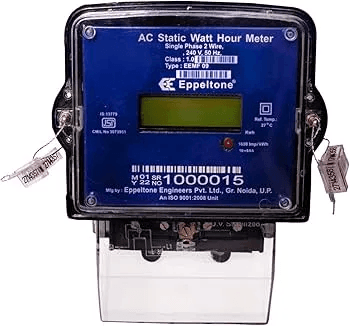
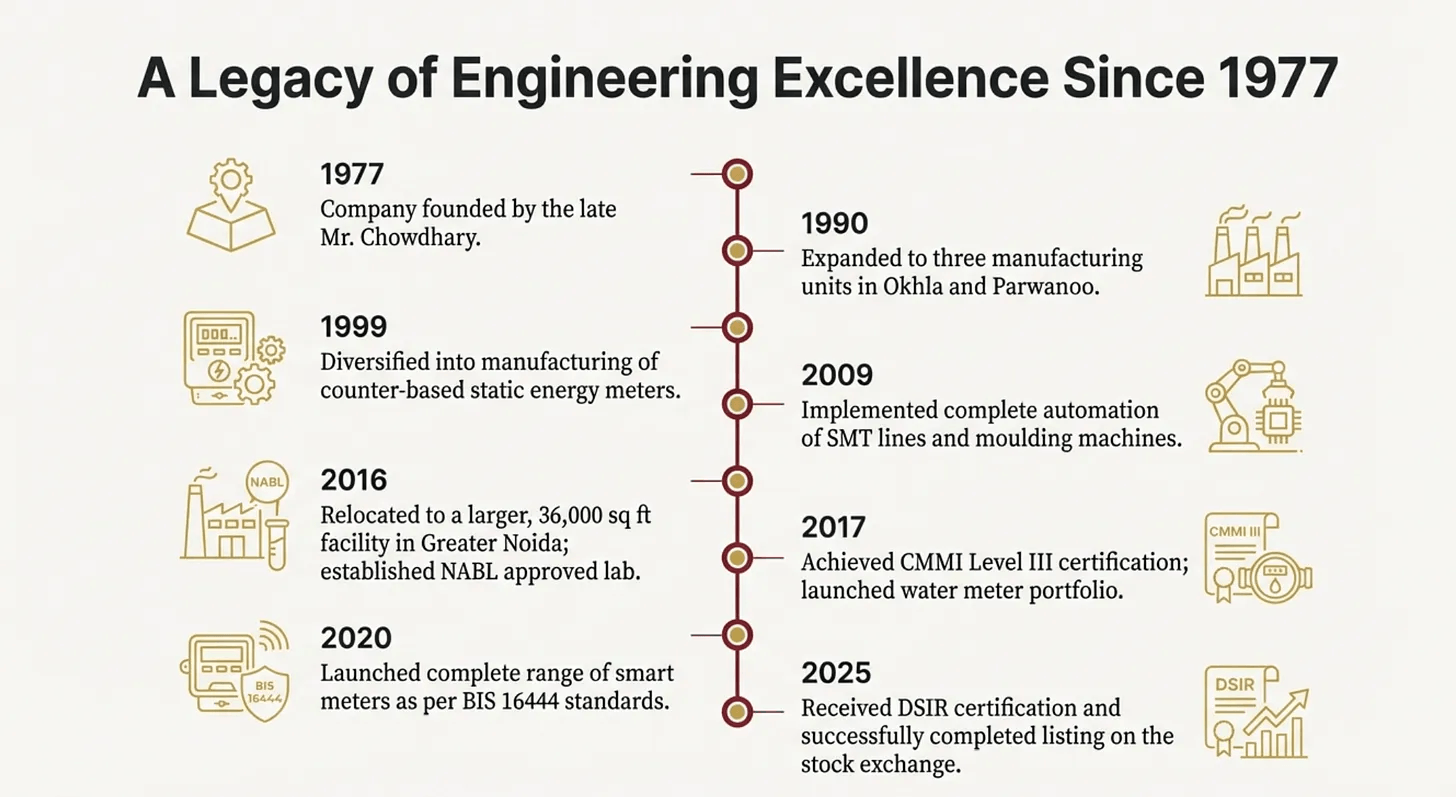
Okay, so now going back to the image of the electronic meter, if you look at the name of the manufacturer, Eppeltone. We will be discussing Eppeltone engineers as it has a large footprint among the state DISCOMS in India. The company has nearly half a century of existence, and it started manufacturing static energy meters in 1999. A new facility at Greater Noida was established in 2016. In 2020, the company launched a set of smart meters as per the prevailing BIS standards. In 2025, the company was listed on the stock exchange.
Operations:
The company is engaged in the manufacture of:
- Multi-function meters, including single-phase and three-phase meters.
- Smart meters and accessories
- Water meters, gas meters, and under-slug chargers for railways
The company derives a lion’s share of its revenues from the meters, while the rest from accessories. Water meters, gas meters, and under-slug chargers have still not made it to the assembly line, so revenue from them does not contribute to the top line.
Customers:
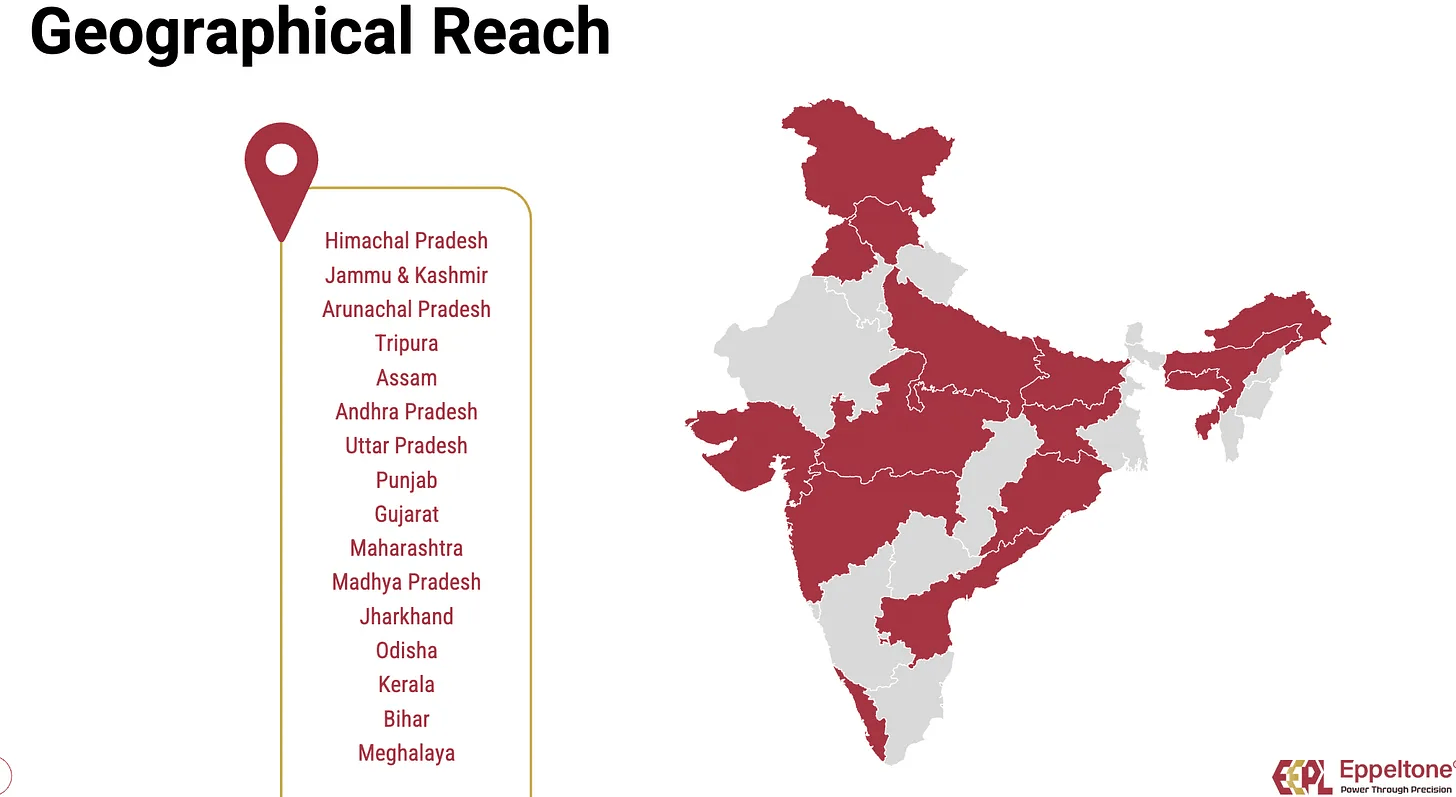
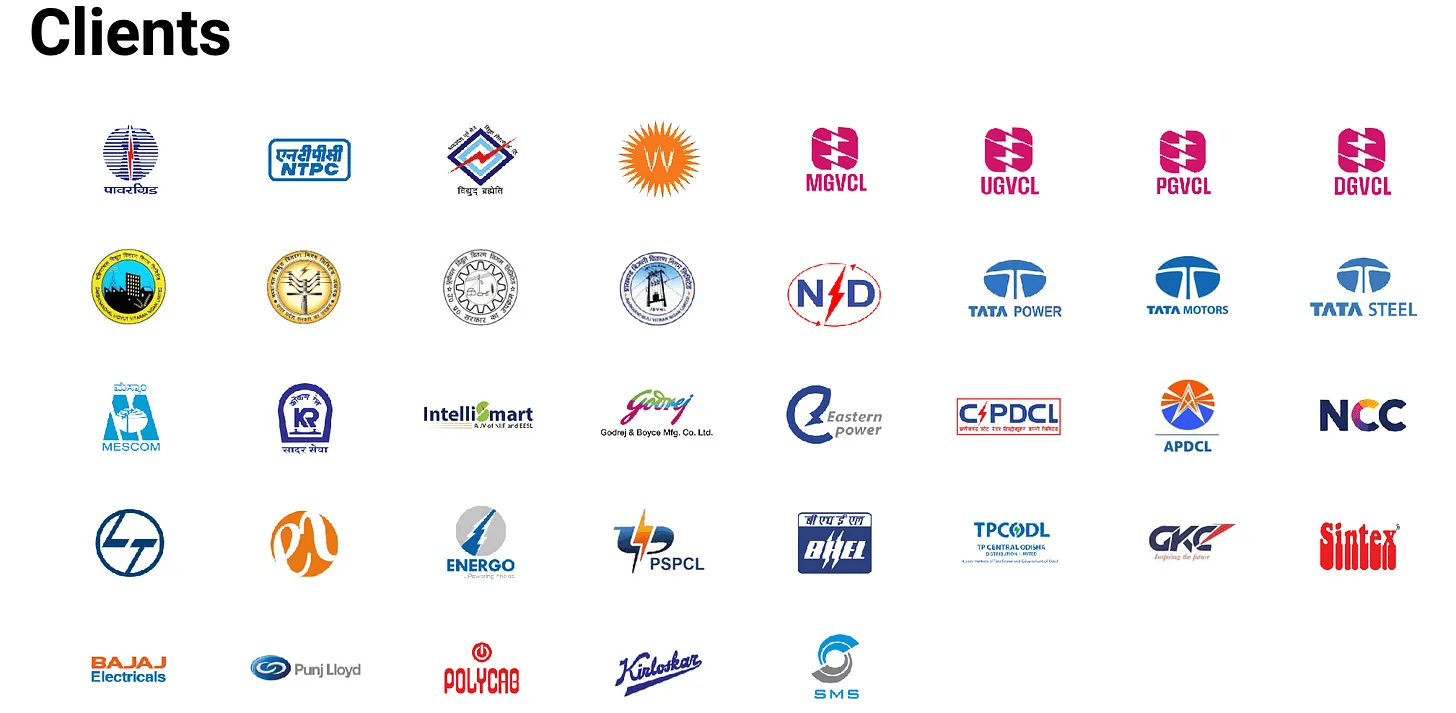
The current customers for the company are various state and private discoms across parts of India. Some industries also require industrial meters, and therefore the company provides the same, such as L&T, Godrej, Polycab and Tata, among others.
Growth Opportunities:
The Government of India is launching the Smart Meter Installation Mission, which aims to install nearly 25 crore smart meters. The benefit of this is two-pronged:
- With the installation of smart meters, grid stability can be enhanced.
- Smart meters help prevent theft.
The National Smart Metering Programme, which has sanctioned nearly 25 crore meters, has to be done over the next 2-3 years, and Eppeltone is expected to get a large pie out of this. Because of the installation of smart meters, the transmission losses have reduced from 21% to 16%.
Role of Eppeltone in Smart Metering Program:
RDSS is a scheme launched in 2021 to reform power distribution in India. Its aim is to reduce transmission losses and bring them up to 12-15% and improve power quality. The government is allocating 2.5 lakh crores for the RDSS scheme.
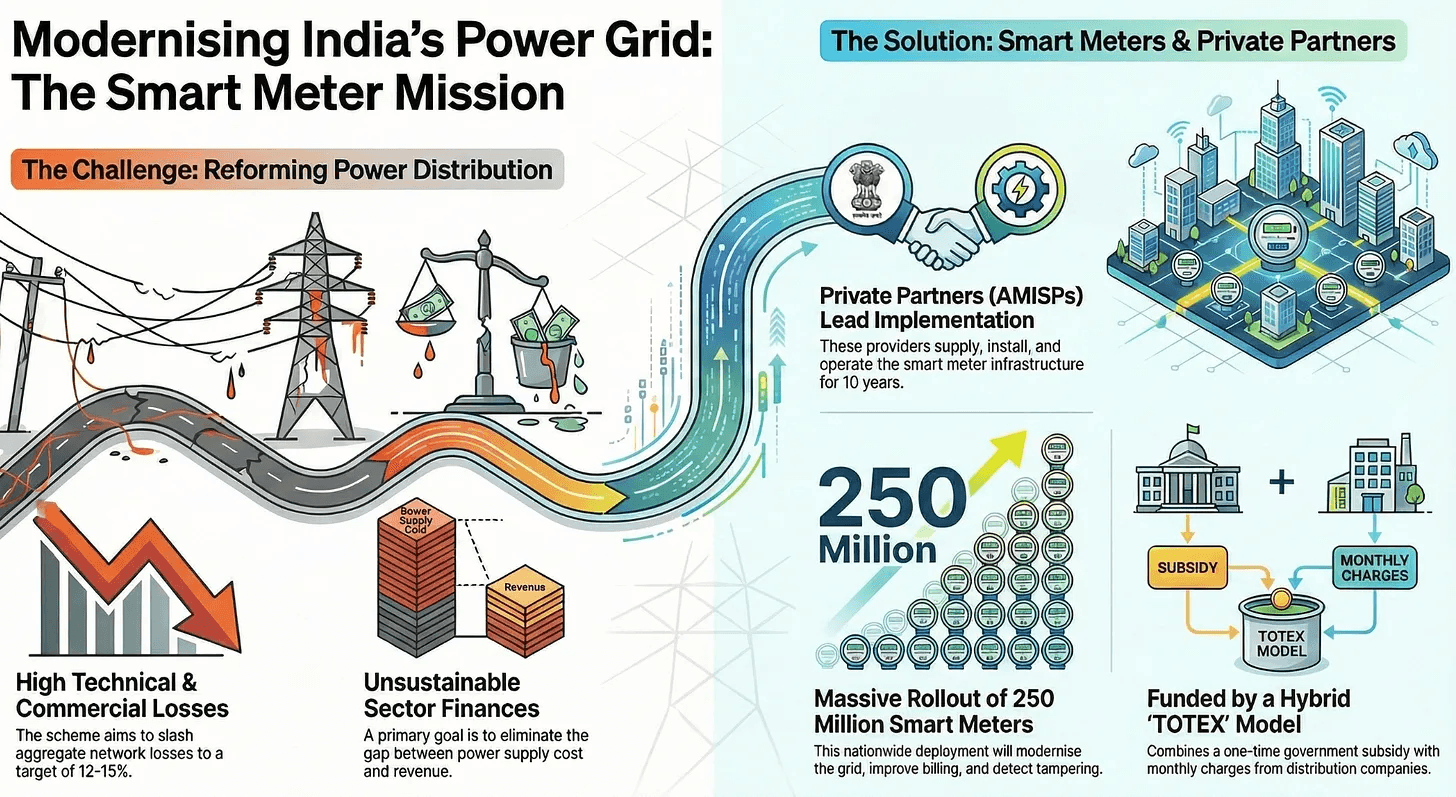
AMISP is a smart meter provider that will supply, install, maintain, and operate smart meters on a 10-year contract. Eppeltone has applied to become AMISP and is expected to be empanelled in the next 1-2 months.
An AMISP will work on the TOTEX model. In the TOTEX model, the central government will provide a one-time subsidy of about 15% of the cost for installation up to INR 900, and the DISCOMS will provide a monthly payment for the smart meters.
The Indian smart meter market, which is currently USD 610 million, is expected to reach USD 2.7 billion by 2033 at a CAGR of 20.4%. This reflects a significant growth for meter providers. As of October 2025, nearly 4.5 crore smart meters have been installed, while 22.4 crores have been sanctioned. The management expects that it could provide about 10% to 15% of the total smart meters to be installed.
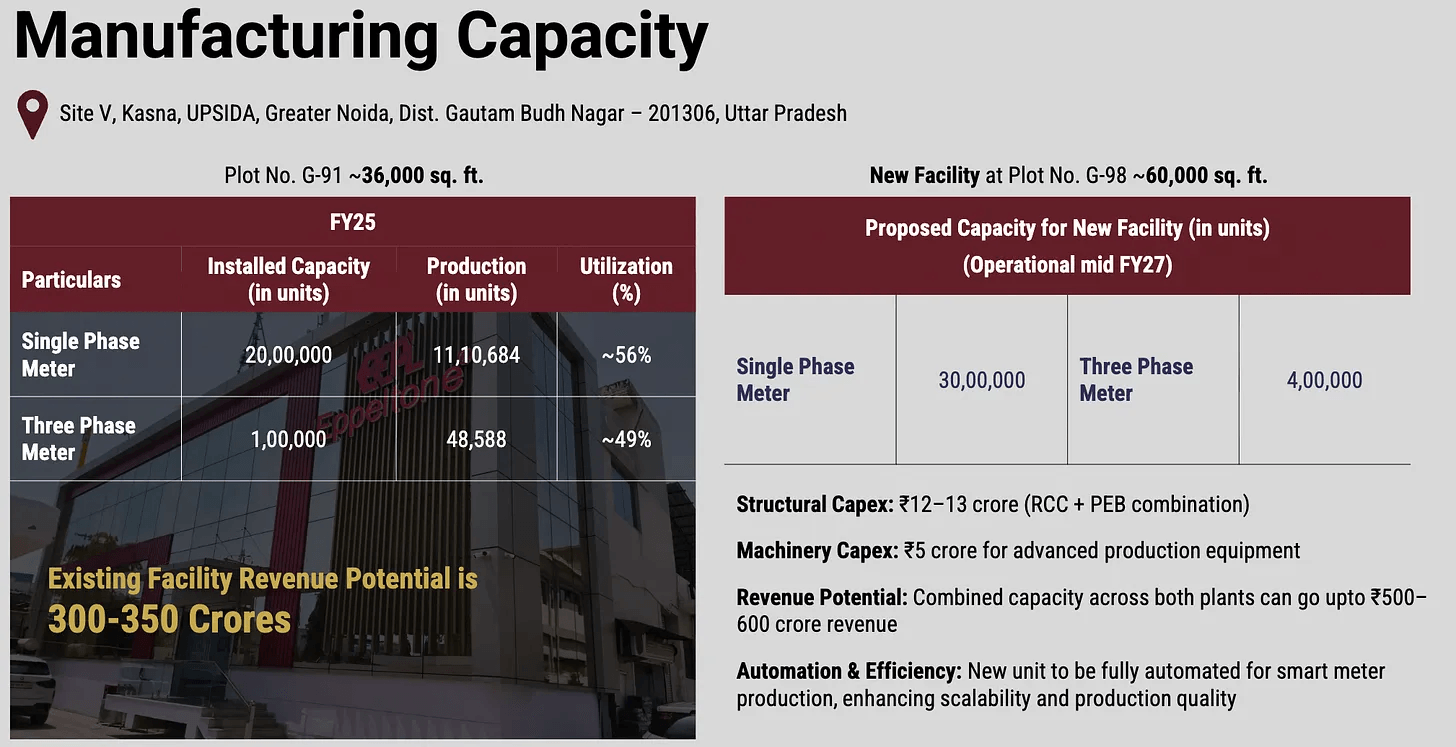
Eppeltone Engineers have a current facility whose revenue potential is around 300-350 crores, and at the moment, they are doing around 120 crores in revenue. At a utilisation rate of around 55% when taken pro-rated for different meter types. The 60,000 sq ft new facility has a revenue potential of ₹500-600 crores at full utilisation.
Ethica Invest
Serious about long-term investing?
Unlock our professionally managed portfolios.
Order Book
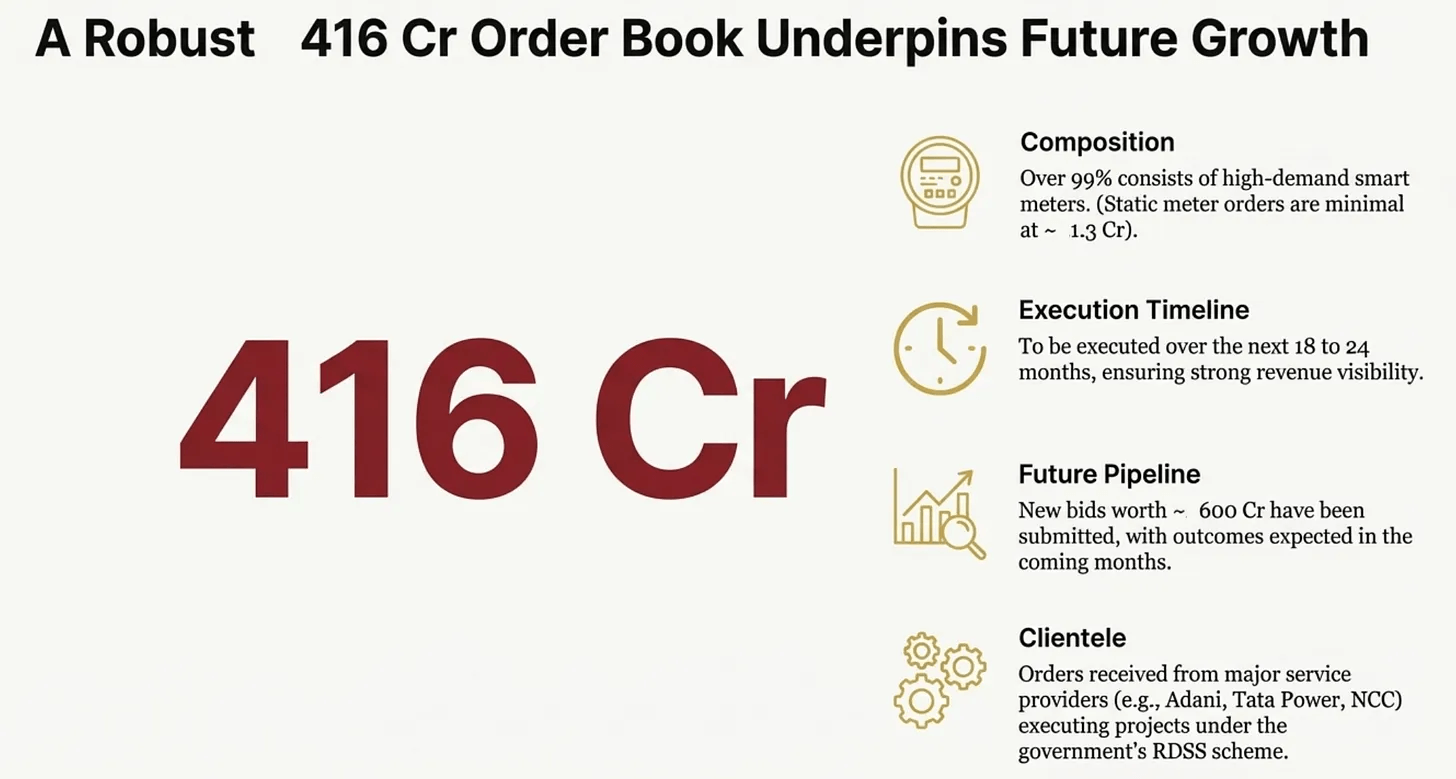
The company has an order book of Rs. 416 crore, which is expected to be executed over the next 18-24 months. This could translate to revenues of more than Rs. 200 crore annually. The clients include well-known business houses such as Adani and Tata.
The bids for 600 crores have been submitted, with the outcome expected in a few months. The management did not seem very confident because they declined to put any number to the success percentage for these bids.

The company is aiming for further geographic expansion and is also looking at how to export outside India.
Suppliers
The company has been in operation for a long period of time and has maintained a good relationship with the suppliers. Some of the major suppliers are more than 15 years old. Eppletone also has long-standing relationships, some more than two decades, with some of the DISCOMS. The company has been approved by Power Grid and NTPC.
Growth Pillars for Eppeltone
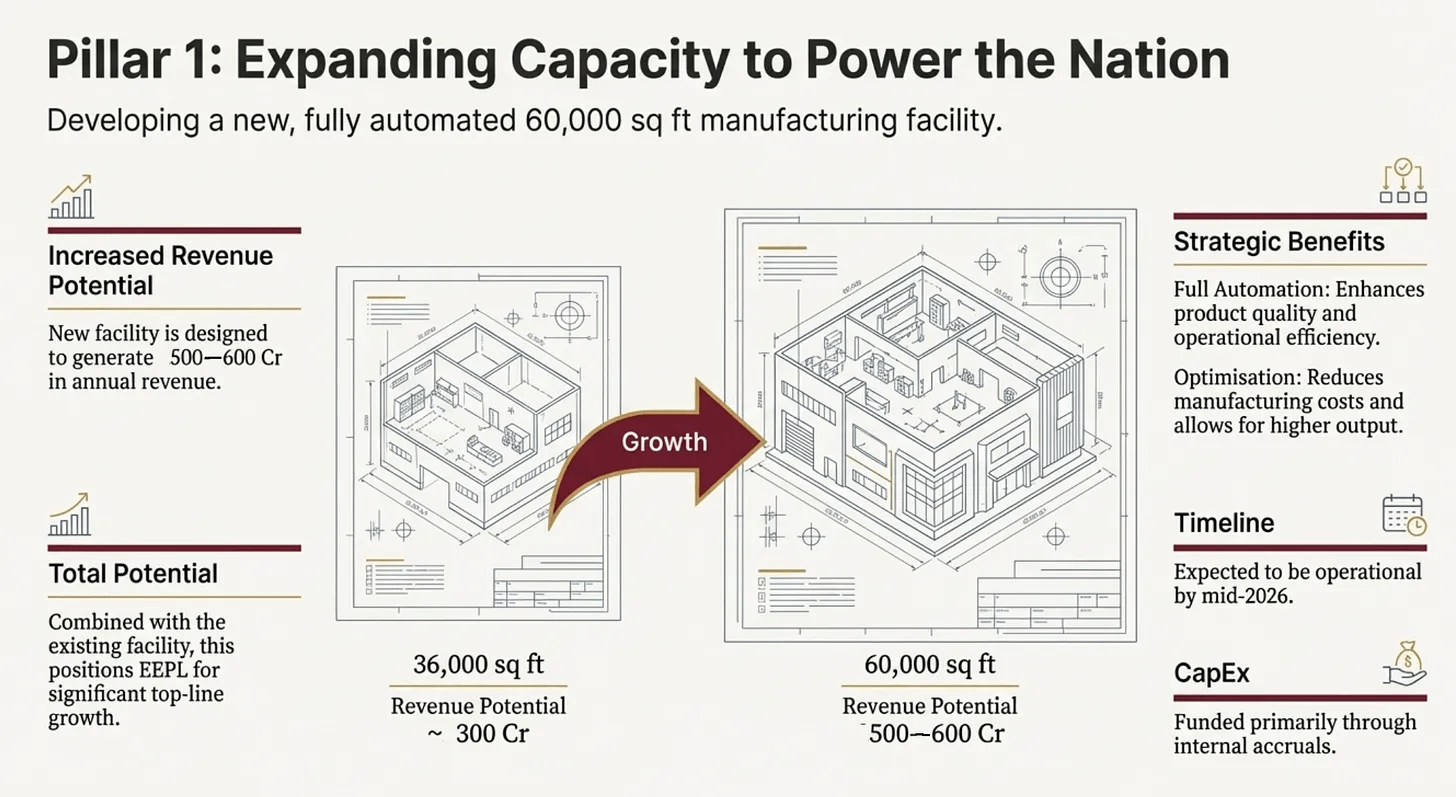
Expanding capacity with potential revenue of 500-600 Cr annually indicates a CAGR of 35% to 40%. However, since the current utilisation is only around 55%, it might be a stretch to reach that revenue level, and the stellar growth as per the forecast might be hard to achieve.
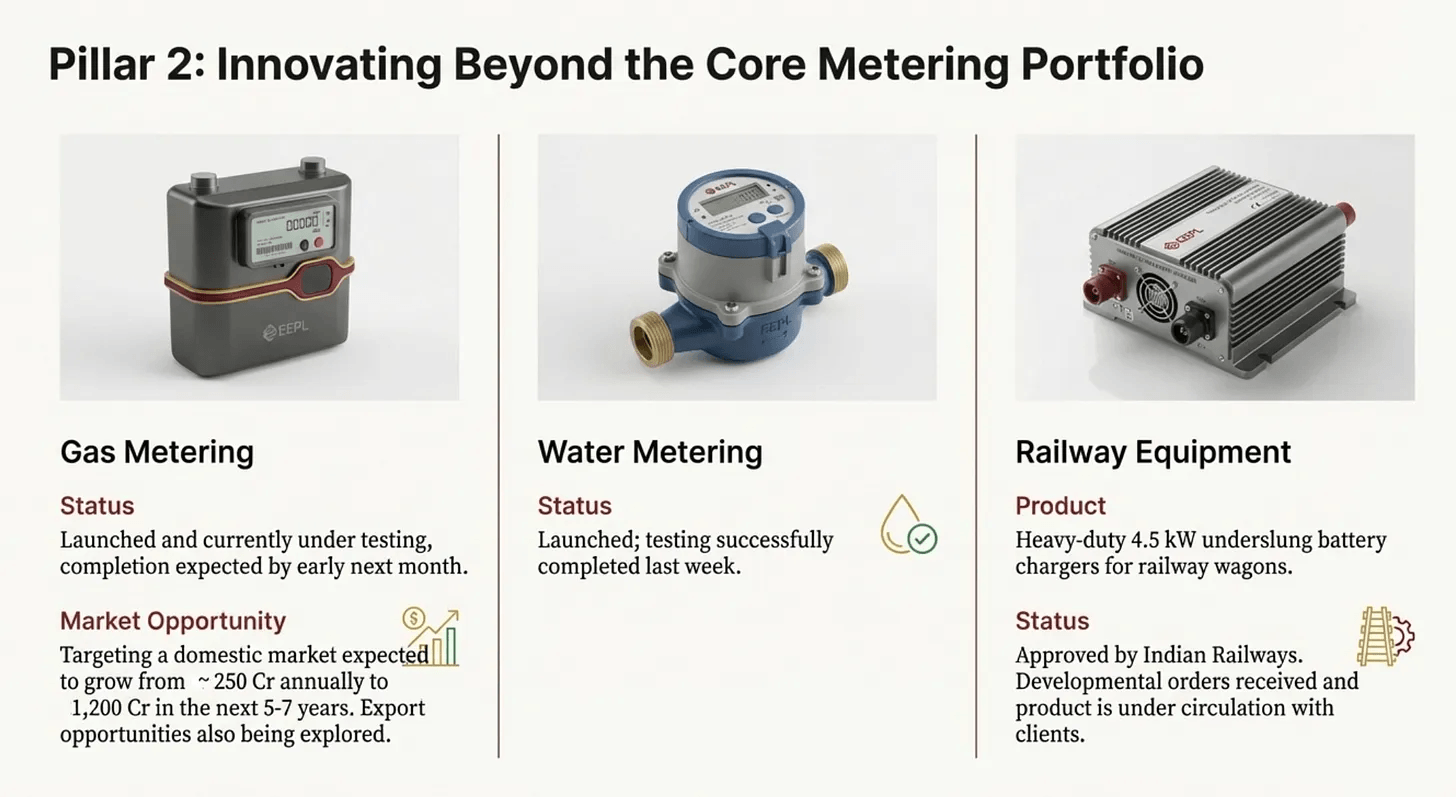
Eppeltone is also diversifying its product base from meters to gas meters, water meters, and battery chargers for the railways. With piped natural gases reaching even remote villages, as well as water missions launched by the central government, the requirements of both water and gas meters are expected to rise significantly.
The battery charger known as the under-slug charger is used to power train coaches, including ACs, lights, and fans. Railways can be a major customer for Eppeltone.
Diversifying into gas and water meters and underslug chargers can be a way forward. However, none of these products is in the manufacturing phase yet. We might need to wait and watch how things pan out in the next 1-2 quarters.
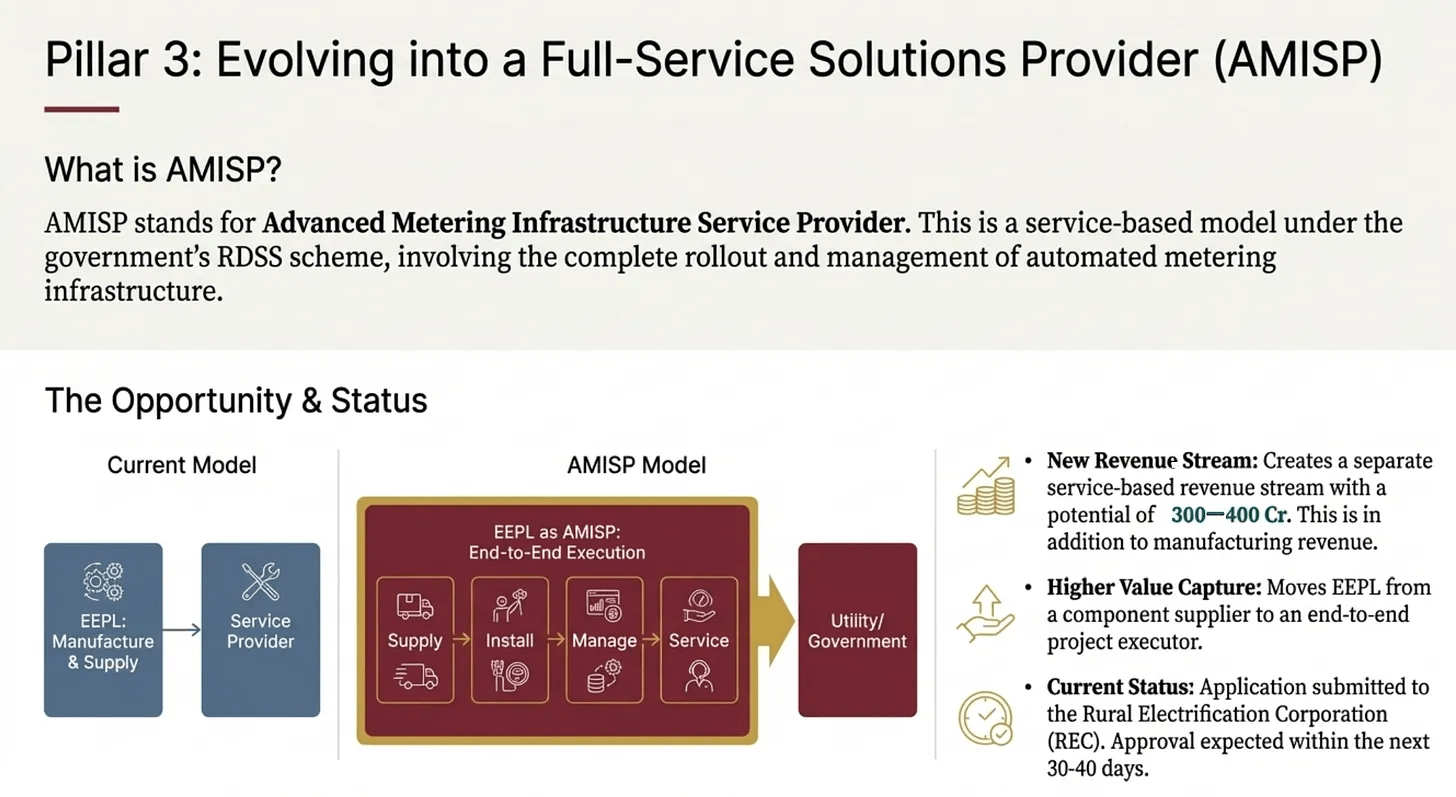
The company is expected to receive AMISP status, which will open up a new revenue source. This is something that has a high chance of being realised. An increase in revenue of 300-400 cr might be achieved.
Financials:
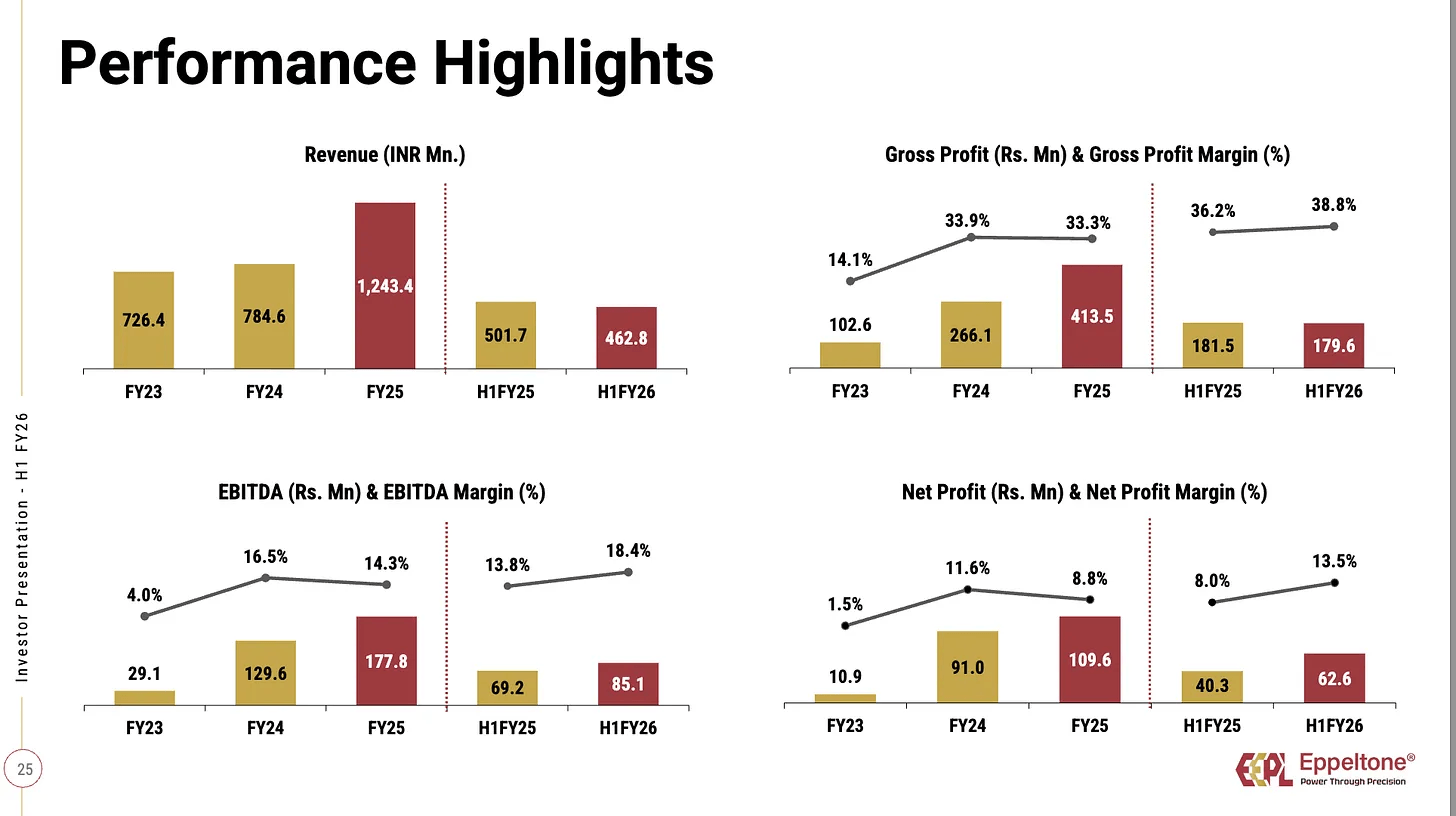
- The Company does not have a very broad financial history; however, the yearly revenue has seen a significant growth from 72.64 crores to 124.34 crores, which is a significant growth of 31% percent if we compare the half-yearly figures for this financial year with the previous financial years.
- There has been a small decrease in revenue; this can be attributed to a longer monsoon this time around. We expect to see a positive growth if we take in the full-year figures.
- The Gross Profit as well as the Gross Profit Margin have increased from 14.1% to 33% over the past two years.
- EBITDA Margin has increased, but has seen a slight dip from the previous year. Similarly, Net Profit Margin has also increased, but has seen a slight dip this year.
- All in the Financials provide a mixed bag, and without a long financial history, one cannot be too sure.
Peer Comparison
The Eppeltone Engineers Ltd. has a ROCE of 32% which is good. However, smaller companies tend to have a higher ROCE. We would like to compare the company with Genus Power Infrastructure, which is a company in a similar business and provides smart metering solutions.
The ROCE for Genus Power Infrastructure is around 19-20%. Now, if we see the P/E of Eppeltone, it is similar to the P/E of Genus Power Infrastructure, also in the range of 19-20. So, let’s bring in a graph for Genus on how its price and P/E ratio behaved over the past five years.
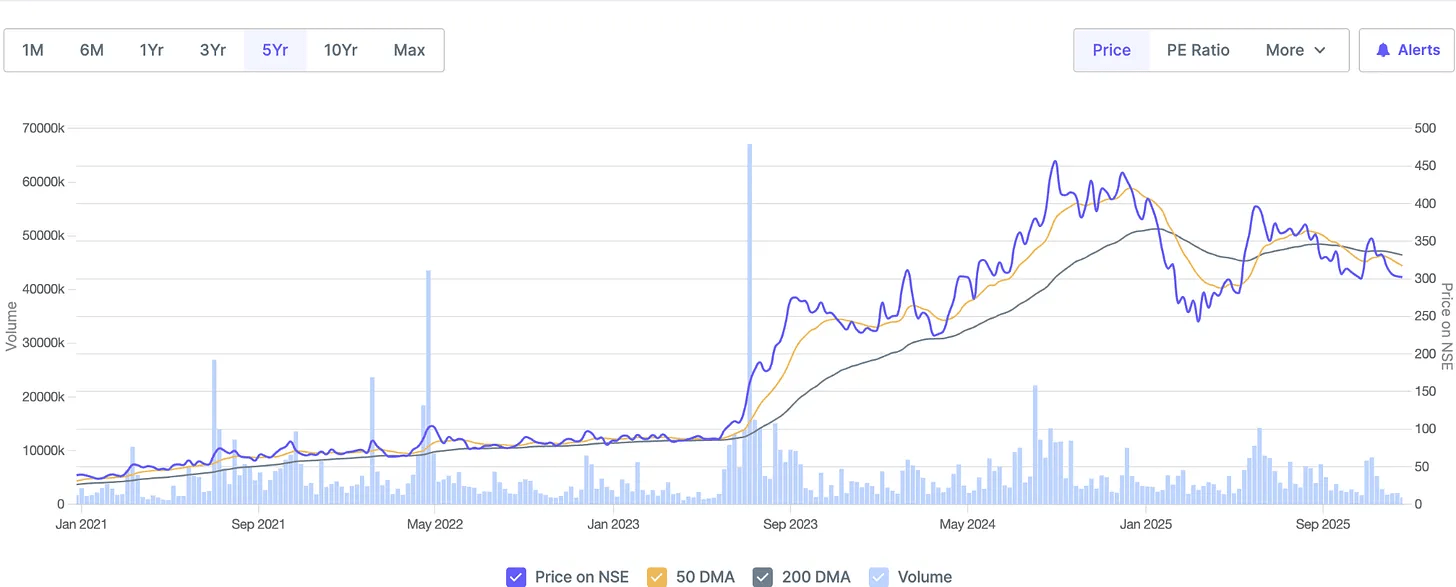
First, we need to consider that the smart meter program was announced around 2021. We see that Genus has seen some growth after that. Halfway into 2023, their stock started shooting up significantly. This can be attributed to the fact that, around that time, contracts for putting in a smart meter were provided to the companies. For about a year or so, their stock rose significantly from the levels of 100 to 400 and more. However, from the start of this year, 2025, this stock has remained in the price range of 400 and 300. The current stock price is around 300.
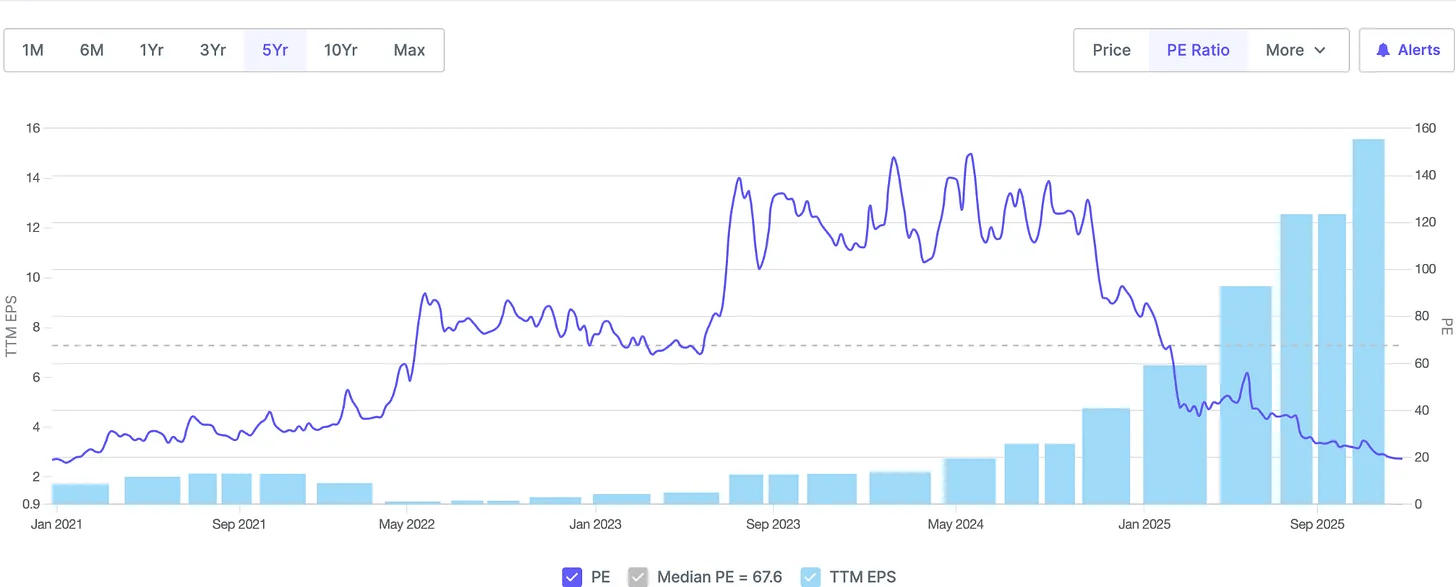
Now, coming to the P/E ratio for Genus, it started rising from around 20s and at around the time when the company started installing smart meters, it reached the levels of 140 to 150. But from the start of this year, it has started decreasing and has now come back to the levels of the 20s.
So here’s a theory: the contracts for putting in smart meters have been provided to the companies, and the future contracts have been reflected in the price levels, so without any extra high growth opportunities, the stock price as well as the PE have been muted. The stock price has seen a decrease, which is less severe than the decrease in the P/E ratio. It’s important to discuss Genus because Eppeltone Engineers has similar growth opportunities to Genus, and considering that the P/E ratio of Genus as well as Eppeltone are at the same levels, we may not expect an extraordinary rise in price for Eppeltone.
Employee Attrition:
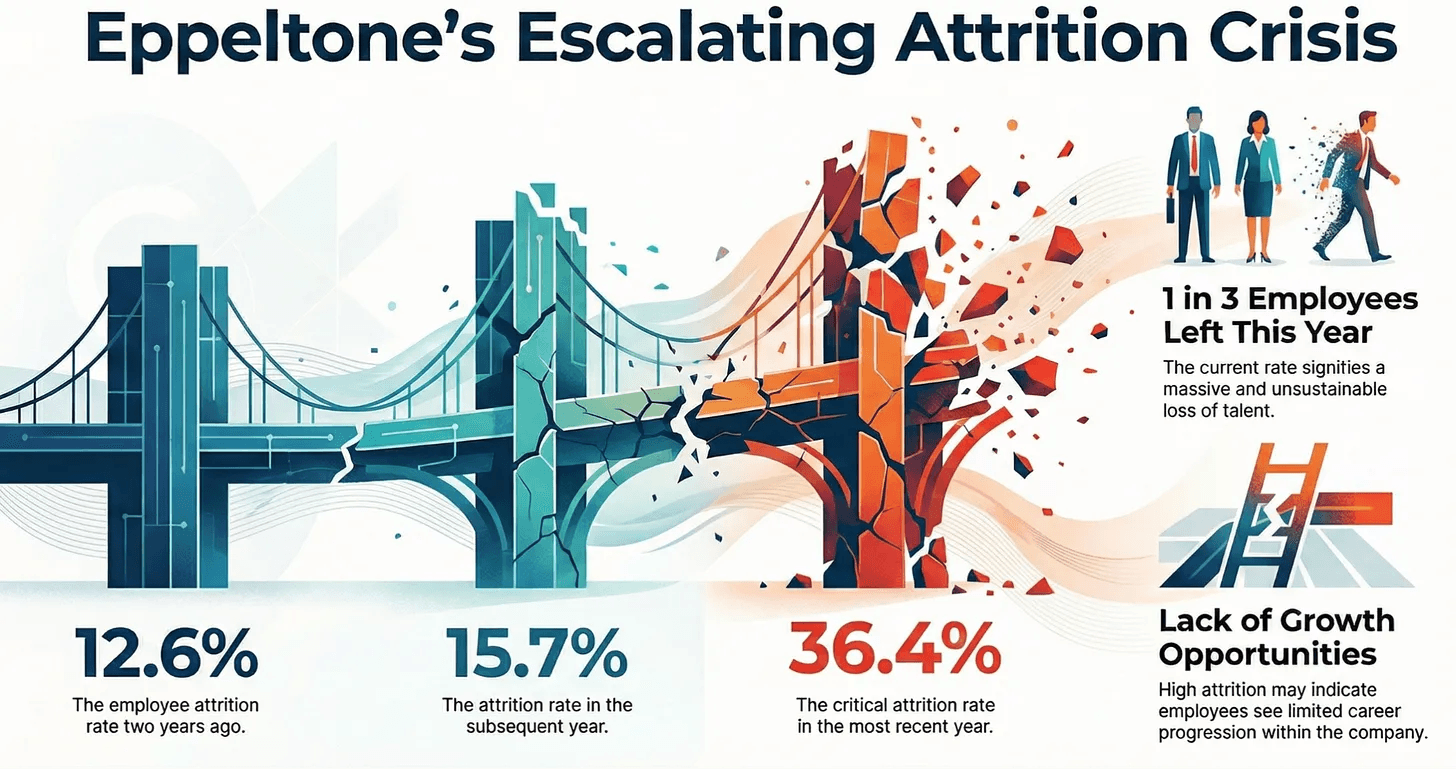
The company saw a significant attrition rate in its employees. About two years ago, the attrition was 12.6%, which increased to 15.7%. It was 36.4% in the most recent year- a significant attrition rate where one in three employees move on for other opportunities. This might be indicative that the employees do not see good growth opportunities for themselves, which in itself is reflective of the growth opportunities in the company.
Summing Up
Eppeltone looks good on paper and has growth opportunities for the next 2-3 years.
- Industry expected to grow by 20.4% which is significant.
- The smart metering program is still only 15-20% completed.
- Gas and water metering is picking up in India
However, beyond that, the realisation of growth opportunities seems tricky. Since the company does not have established market-tested water meters and gas meters, as well as the under-slug chargers, future contracts for these products can be hard to gauge. The extent of these growth opportunities that are actually realised is left to be seen.