GHCL Textiles - Ascending Textile Value Chain from Yarn to Fabrics
We have seen our mothers and grandmothers carry a sewing machine from one corner of the house to another. Yes, this one, the older model.

About two decades back, whenever my mother used to work on this, we would take turns to run it by hand, and that was the highlight of the day. However, to work, it needed the most important raw material, which was yarn. Fibres from cotton or other man-made fibres are rolled into a yarn.

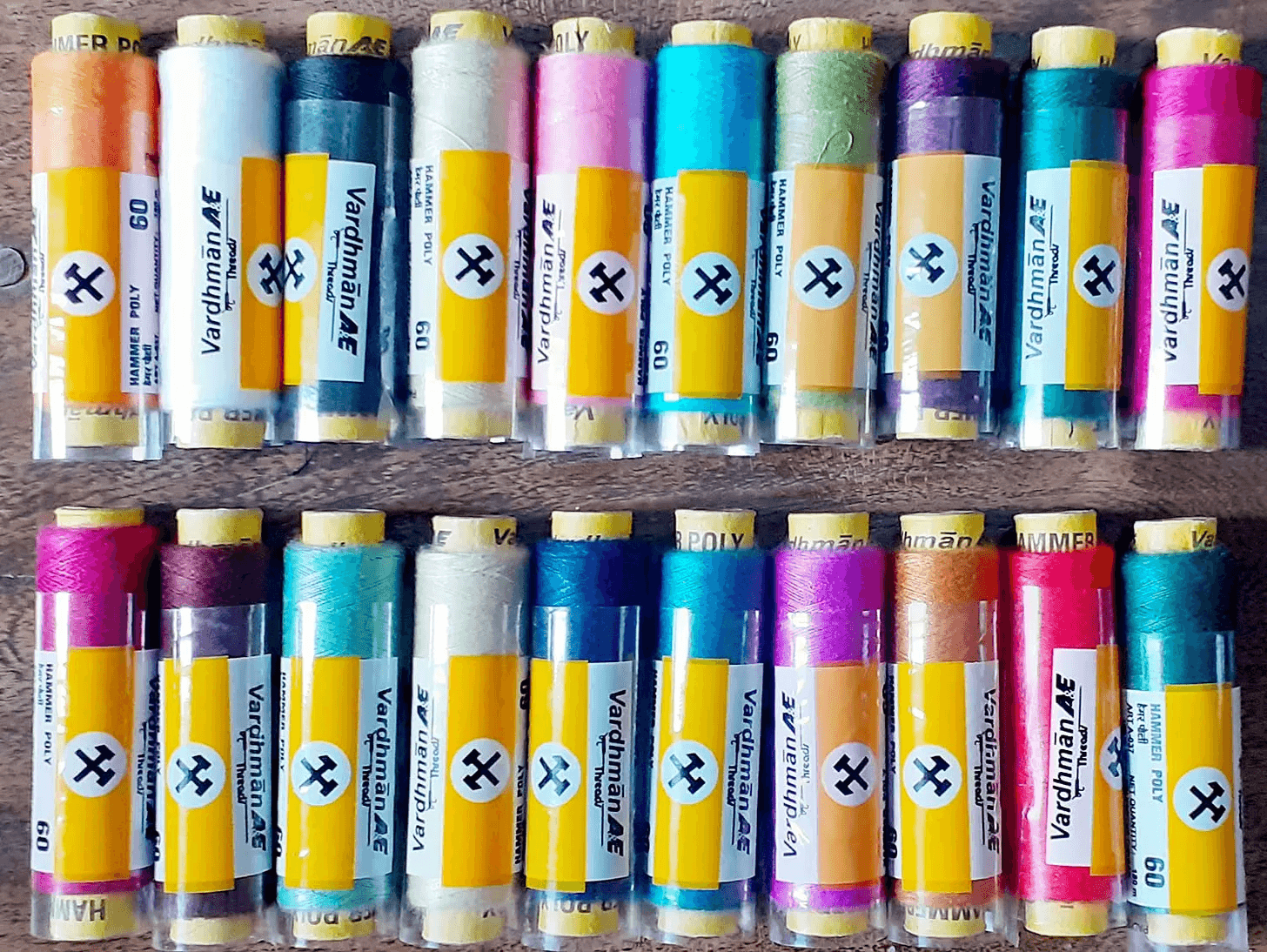
To make stitches, yarn is the most important raw material. There’s another yarn that goes into the bobbin, but let’s not go into too much detail.
However, before this, the cloth that goes into the sewing machine also comes from yarns, which, though much larger in size, are similar to these smaller ones. Large commercial yarns, sometimes even weighing quintals, are sent through weaving machines to make cloth. Something like the one below with a large spindle atop.
 Ethica Invest
Serious about long-term investing?
Unlock our professionally managed portfolios.

GHCL: The Yarn Maker
Let’s get our semantics right. When the fibres are spun onto the spindle, they become a yarn. The company we are discussing today, GHCL, is a yarn manufacturer. It buys cotton and then turns it and rolls it on the spindle to make yarn. Its customers use these yarns to weave cloth and sell it to other customers.
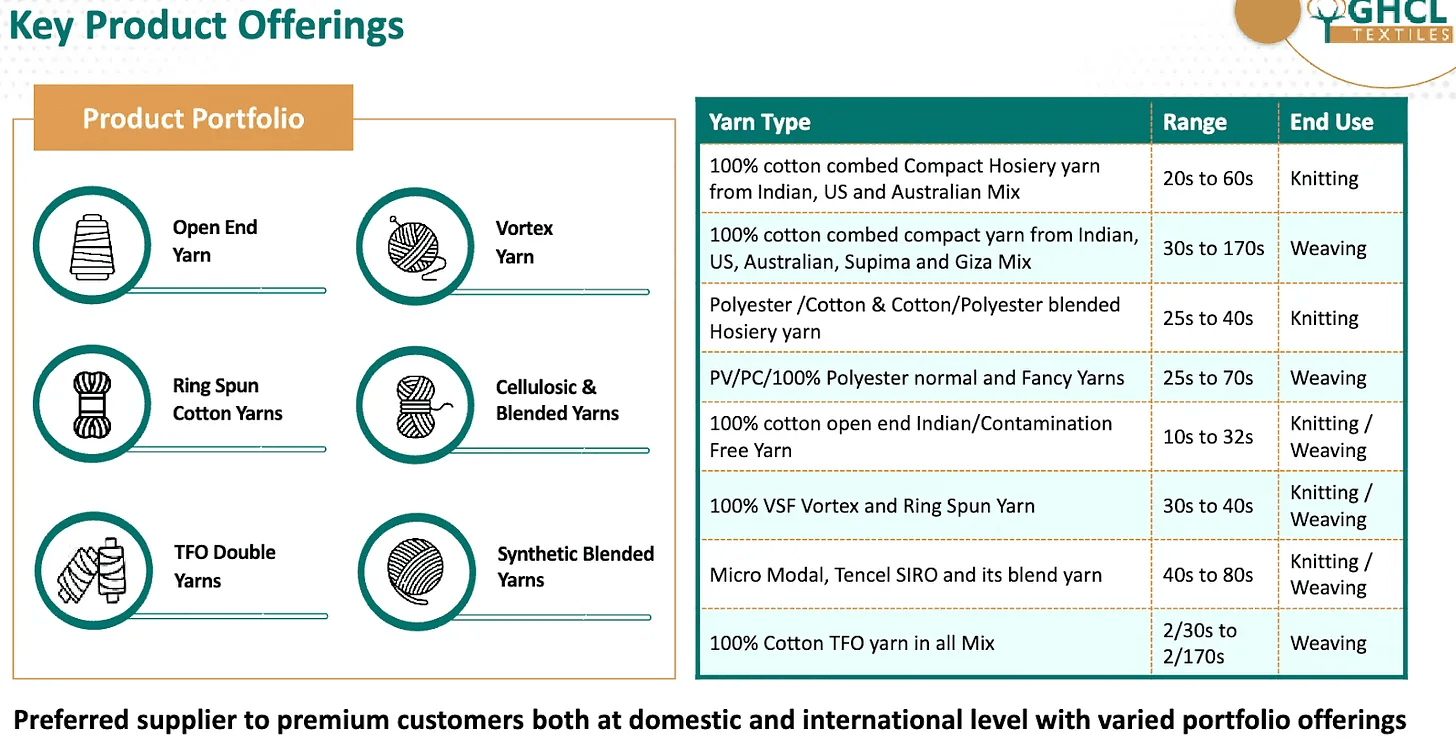
GHCLTL is in the business of yarn manufacturing and exporting. The company produces high-quality yarns, including GIZA, SUPIMA, Australian, and CmiA Yarn. Products include:
- Open-end Yarns: Cotton and CmiA
- Ring Spun Cotton Yarns: Indian, Giza & Giza blend and Australian Combed Compact
- TFO Yarns: Cotton yarns from Indian, Giza, Australian & Supima Cotton
- Vortex Yarns
- Synthetic & Synthetic Blend Ring Spun yarns
Clients - Large Indian Textile exporters, Raymond, Arvind, Welspun, PageInd, etc.

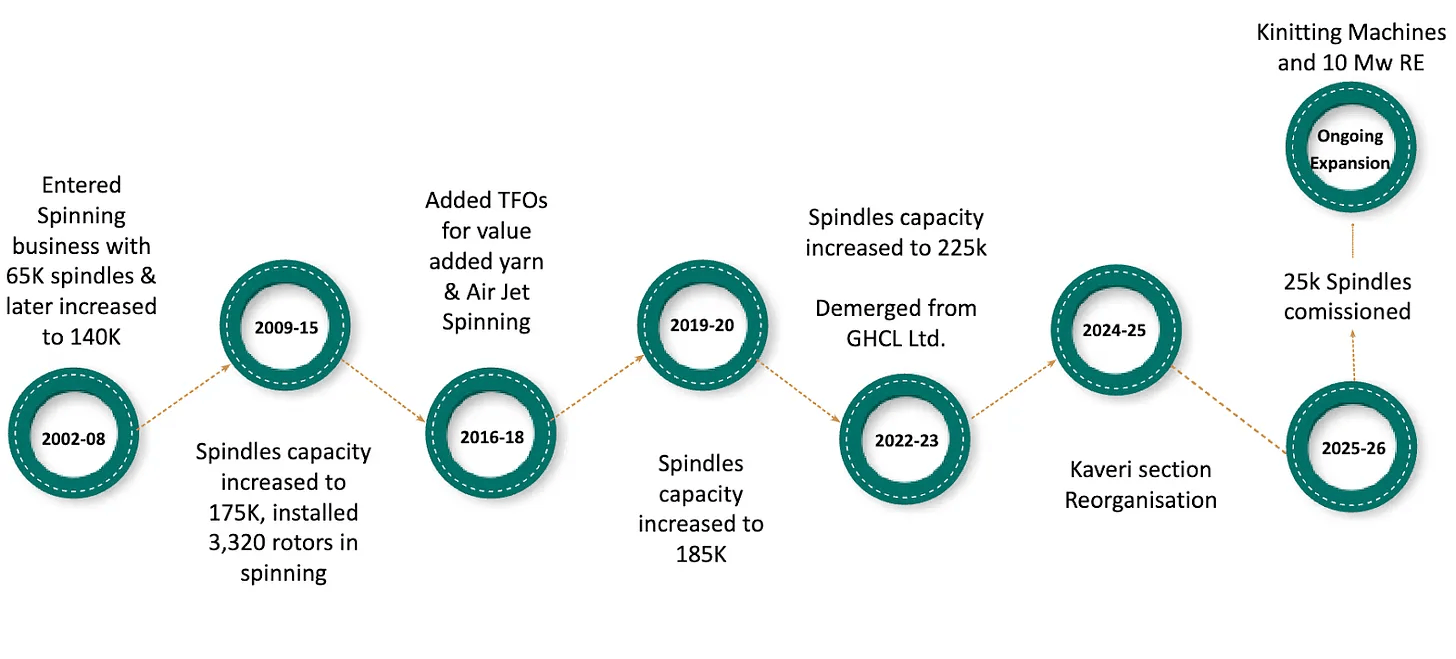
Company Timeline
- GHCL Limited started off as Sri Meenakshi Mills in 1927.
- Sri Meenakshi Mills was incorporated into Gujarat Heavy Chemicals Limited (which became GHCL Limited) in April 2001.
- GHCL Textiles was spun off (literally) from GHCL Limited in 2020 as a fully owned subsidiary of GHCL Limited.
- In 2023, GHCL Textiles was listed separately on the stock exchange.
Tacking through Industry Headwinds

As per the data from the Ministry of Textiles, Spun yarn production has seen a slight decrease over the last five years. However, in such a macro environment, GHCL has increased in production by nearly 67% (26k MTPA to 44k MTPA), and the revenue has nearly doubled (611 crore INR to 1168 crore INR), which is a CAGR of 17.58%. GHCL has sailed the headwinds with elan, outperforming its peers and enhancing capacity on the way.
Capacity Utilisation Driving Resilience
The company is operating at nearly full capacity, making best use of its assets and has been doing so for the past five years at least, with utilisation above 95% up to 99%. This is even when it has added new capacity.
Refining Revenue mix and Enhancing Margins by Forward Integration
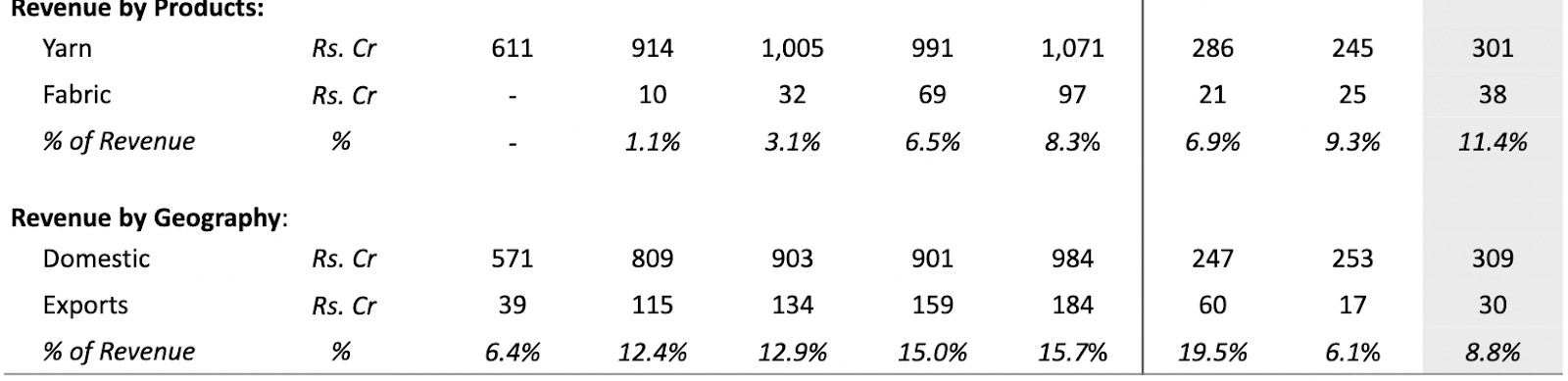
Exports have also been rising but have decreased recently due to subdued demand.
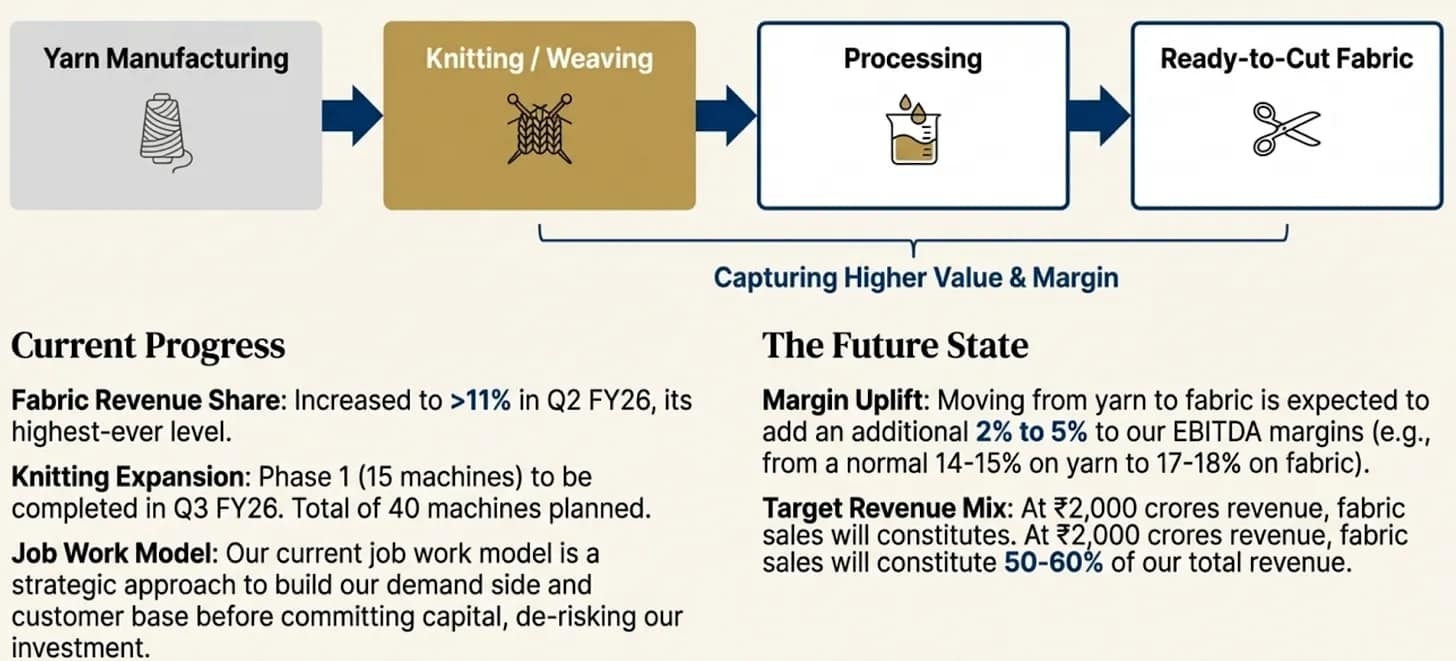
In addition, GHCL has been making efforts to vertically integrate to be ready to cut fabric. The share has been increasing and is now at 11.4%, Q2FY26.
At present, fabric manufacturing is carried out using the Job Work Model, where the yarn is provided, but actual fabric making is outsourced to other manufacturers. Since the demand has built up, and GHCL has put its foot in the market, it will expand knitting, for which the management has planned 40 machines. Out of these, Phase 1, which includes 15 machines, is expected to be completed by Q3FY26.
Now, all this is expected to change GHCL in two major ways:
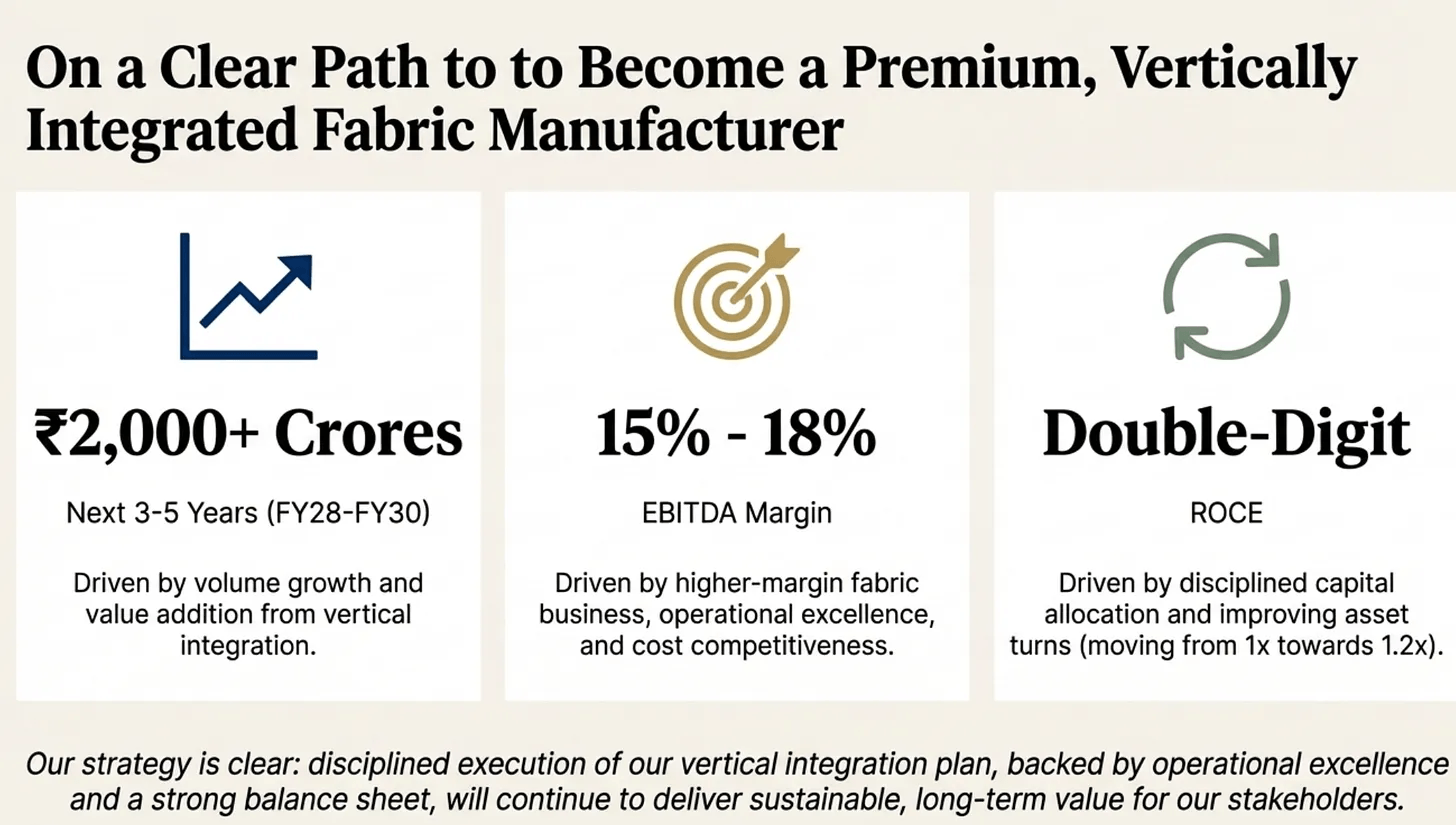
- Enhanced EBITDA margin by 2%-5% to 15%-18% depending on how the industry behaves.
- A revenue of 2,000 crores INR in the next 3-4 years, with fabric forming 50%-60% and yarn 40%-50%.
Sustainability Enhancing Profitability
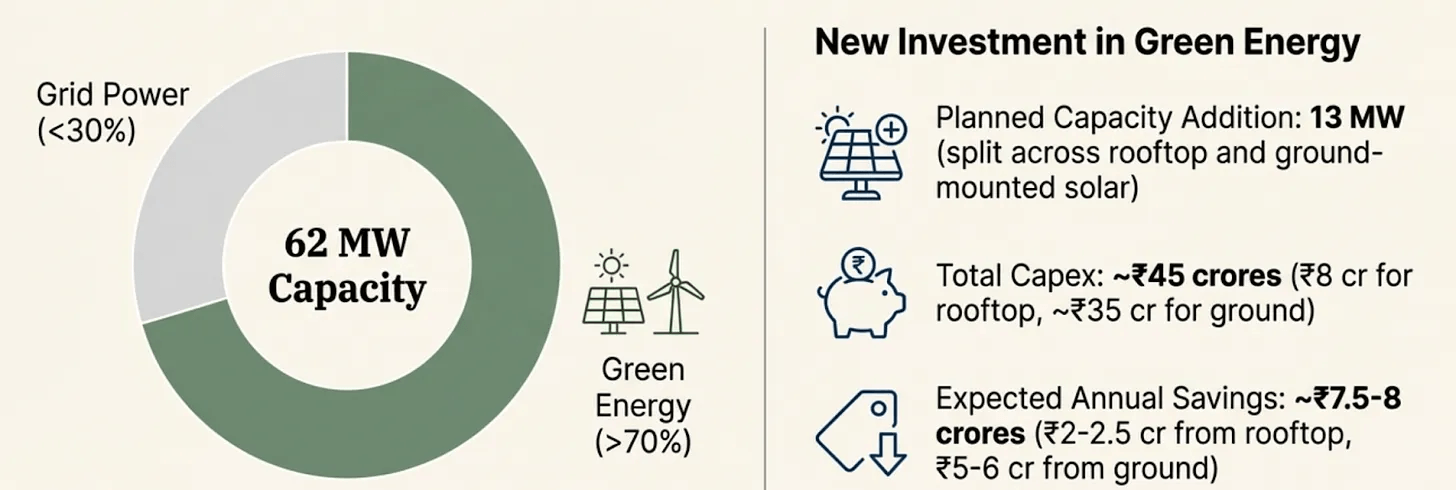
GHCL produces 70% of its electricity from renewable sources, mostly solar, while the rest comes from the grid. This decreases the operational costs as commercial tariffs are significantly higher. The company plans on expanding the capacity from 62 MW currently to 75 MW.
The outlay from capex is expected to be:
- Rooftop Solar: 8 cr INR
- Ground Solar: 35 cr INR
With savings of 2-2.5 cr INR from rooftop annually and 5-6cr INR from ground, this translates into approx 8 cr INR annual savings, which is a payback of 5-6 years.
Ethica Invest
Serious about long-term investing?
Unlock our professionally managed portfolios.
Investing in Future Growth
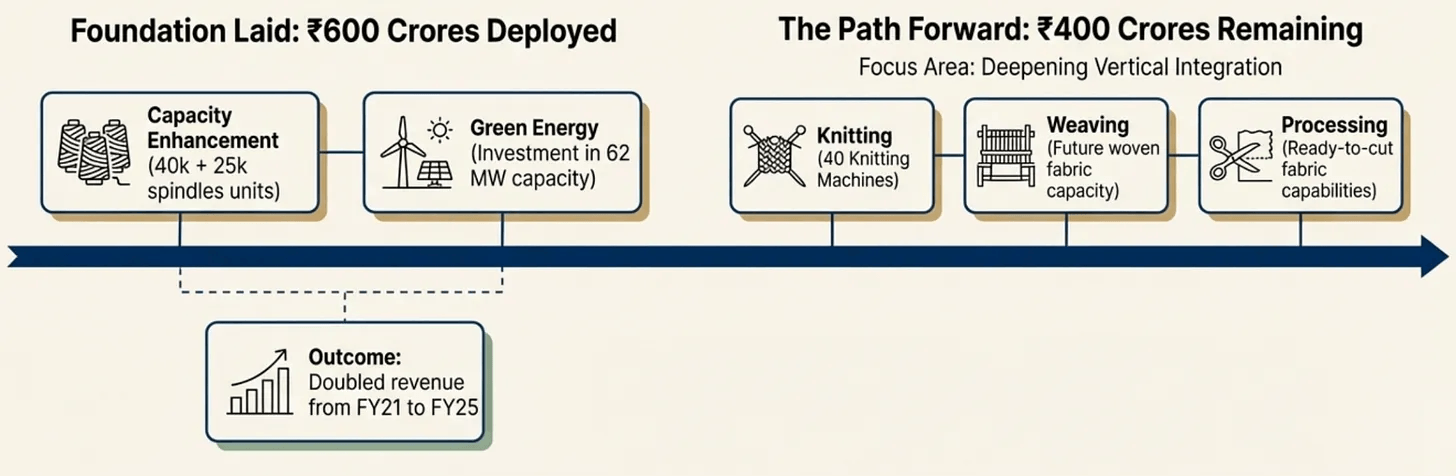
GHCL has a goal of investing 1,000 cr INR into capex to enhance value. It has deployed 600 cr INR till date, which includes increasing spindle/yarn making capacity. Two units of 40,000 spindles and another of 25,000 spindles have already begun production.
The 25,000 spindle unit will work with the knitting machines and when fully integrated, is likely to enhance revenues by 275-300 cr annually.
In addition, the capital already deployed includes investment in 62 MW capacity already installed.
The remaining 400 cr is planned for vertical integration, across knitted fabrics, woven fabrics and processing.
Government Support for Textile Industry and Small Enterprises
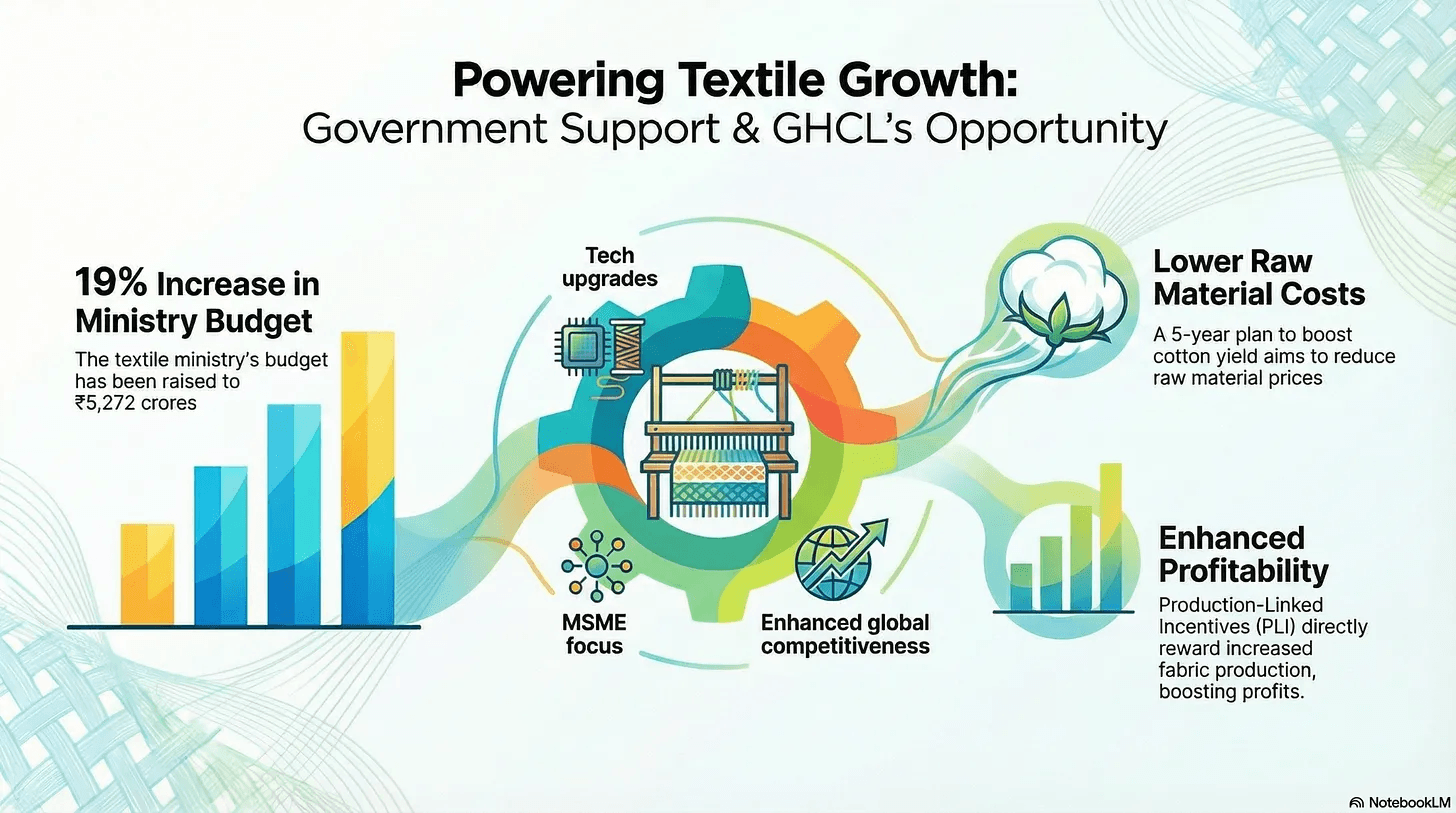
The recent budget saw the government increase the budget for the textile ministry by 19% to ₹5,272 crores. The Indian Government has made it a priority to enhance production, boost tech upgrades (ATUFS), introduce and focus on MSMEs and technical textiles to enhance global competitiveness and domestic production.
Another plan includes, 5-year plan to boost cotton yield, quality, farmer income, and textile industry supply using science, tech, and modern practices like High-Density Plantation (HDP). GHCL stands to benefit from reduced raw material prices.
Production-linked incentives (PLI), which provide financial incentives for enhanced production of fabrics, have also been put into place. With enhanced fabric production, as GHCL aims, this could enhance profits. GHCL is a good candidate because the PLI scheme offers refunds on capex. GHCL has invested and will be investing in capex in the near future.
Debt and Compliance
The company is nearly debt-free with debt to equity ratio of 0.03. However, the management is planning to take on debt for the 400cr capex deployment as planned. The debt ratio is expected to be low, and while the management has indicated a higher limit of 1, the actual ratio is expected to be much lower. We will be watching the company for Shariah compliance on this front.
Financials:
GHCL does not have a long financial history. The financials are available for only the last 10 quarters, and we will use that to analyse the same.
The revenue has remained similar for the time period. The second year has not been good due to rise in cotton prices and subdued demand resulting from it.
Quarterly Revenue (INR cr.)
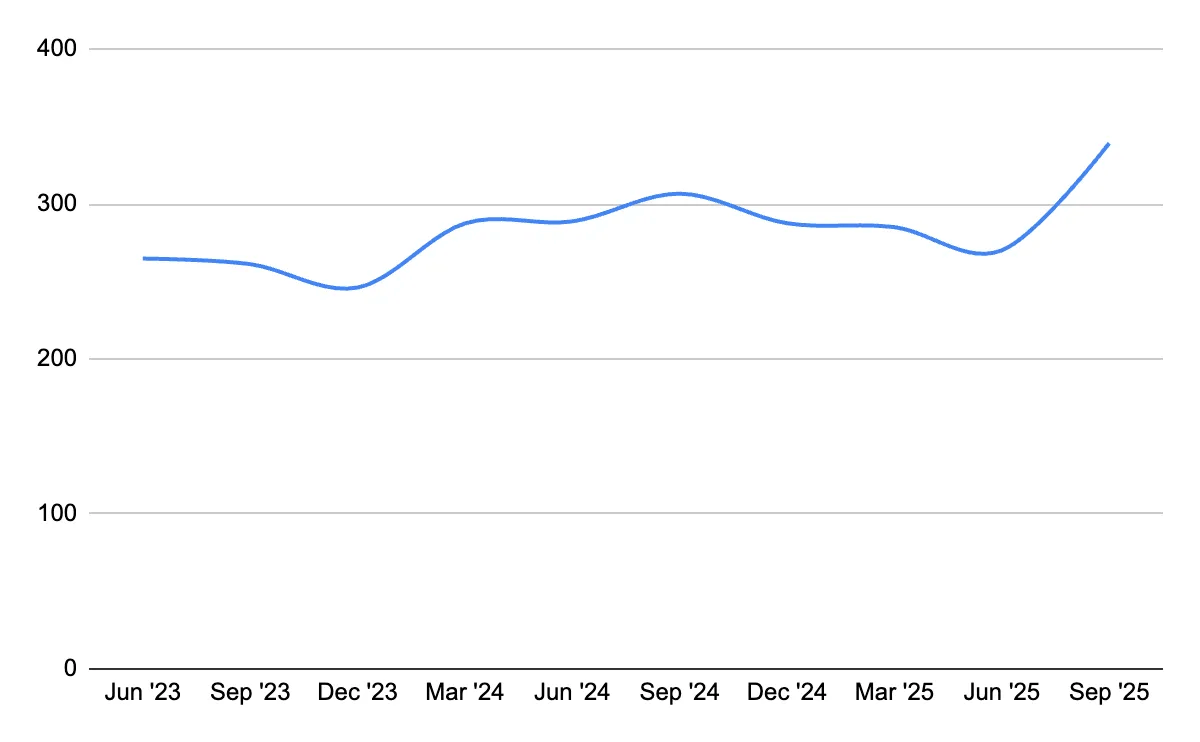
Revenues did increase recently due to enhanced capacity and cotton prices falling slightly.
The operating margin seems to have improved but is still volatile from quarter to quarter. It is still below 14-15% as targeted by the management or what the company did before demerging.
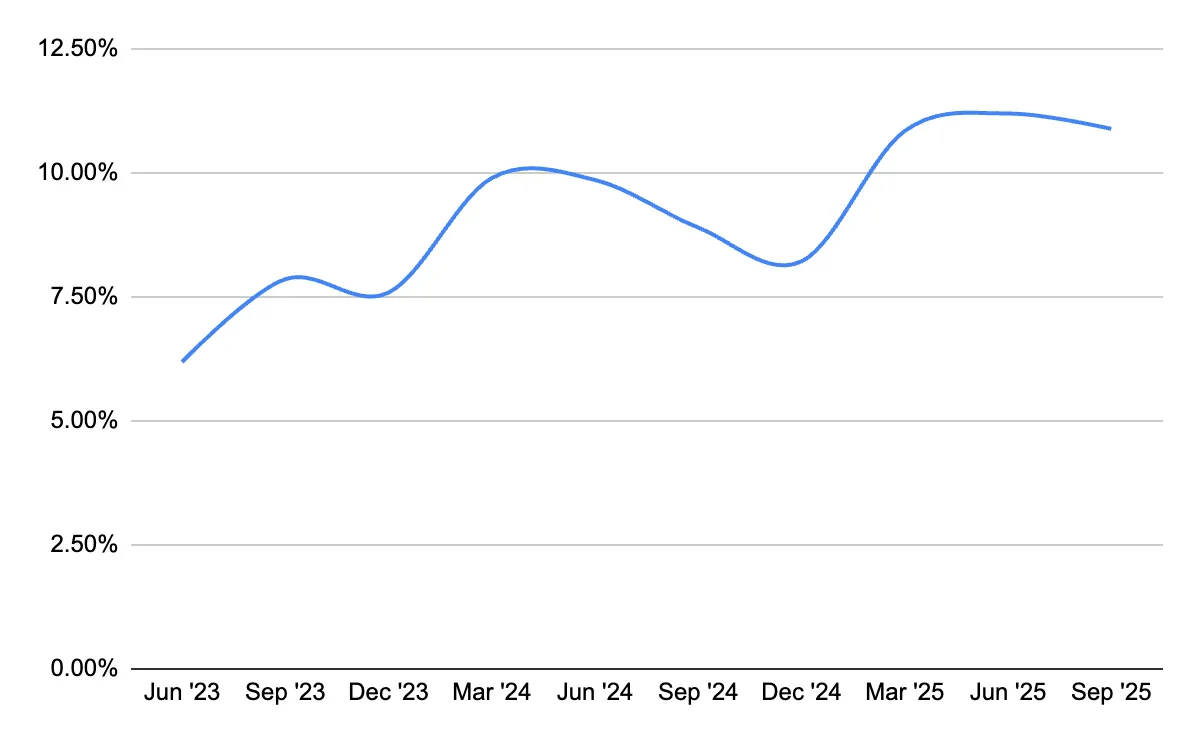
The net profit on a TTM basis also seems to have an uptrend, but we need to discount the first 3-4 quarters, and they do not have a full year of trailing profits. However, post that the TTM revenue still sees some uptrend. This signifies operational efficiency.
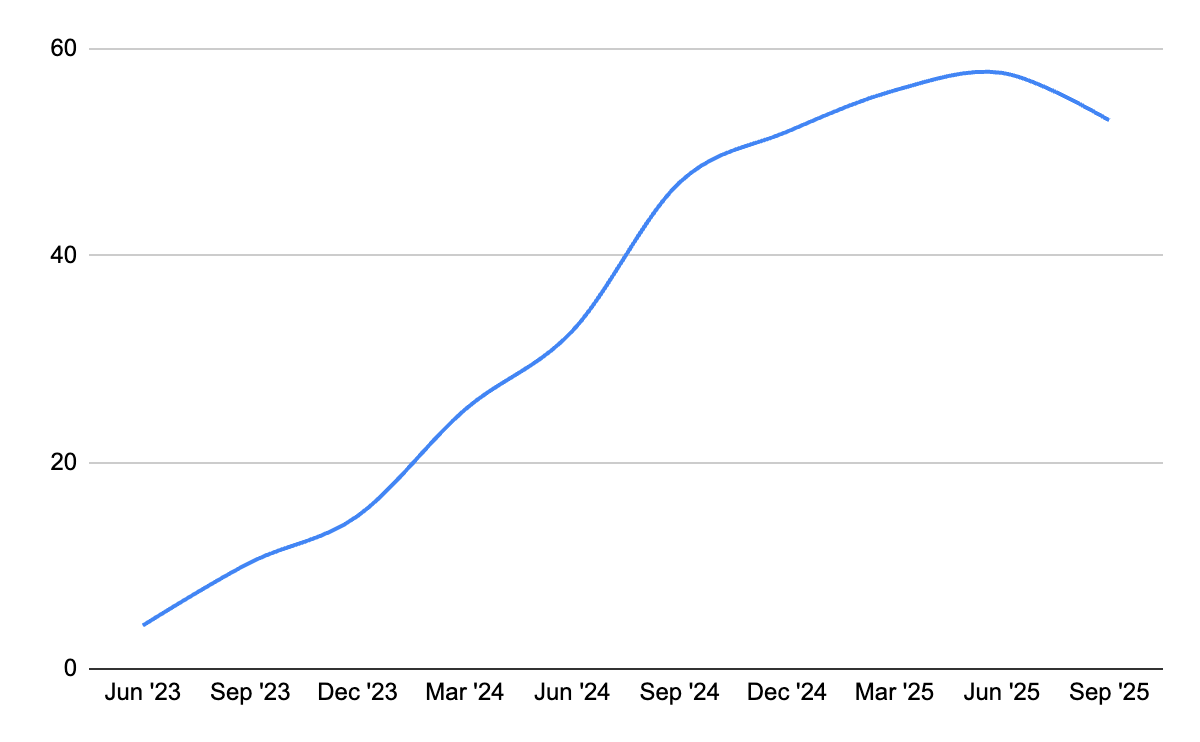
Highlights and Ratios:
- Cash conversion cycle has slightly improved from 202 to 155.
- ROCE is 6% which is much below the industry average of 10-20%. However, this is due to increased investment in CapEx. Decreased ROCE is a necessary evil for a growing company like GHCL.
- Operating cash flows are good, increasing from 58 crore to 162 crore this year.
- Financing and investing cash flows are negative, which is usual when large investments in capital are made.
- Assets have been increasing as a result of investments.
Valuation Multiples
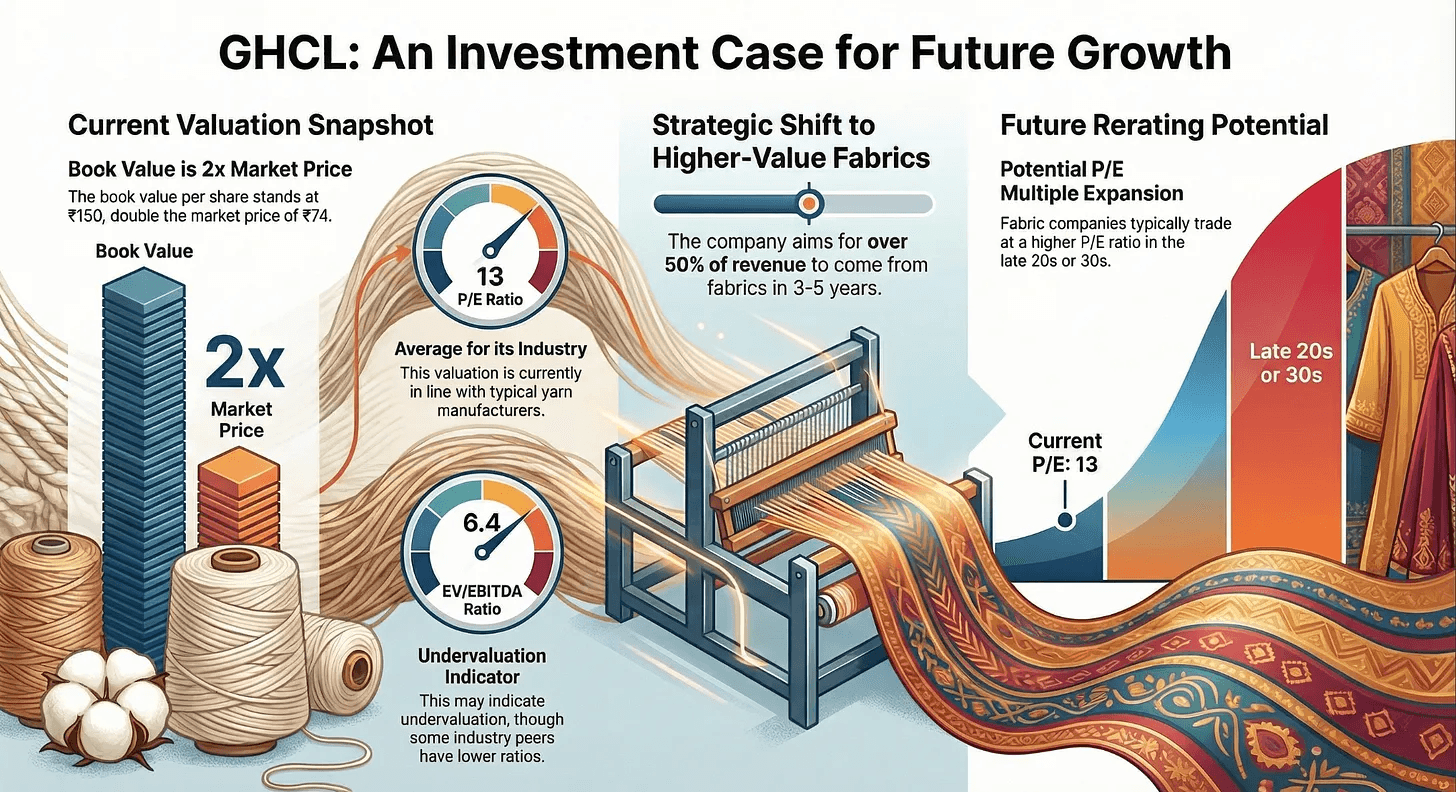
The book value per share is around 150 INR, which is double the market price of the stock (INR 74). With investment in capex, the book value is high. At the outset, the company seems to be a good bet because of growth opportunities, and this gives rise to potential stock increase.
The current P/E ratio is around 13, which is similar to the industry average for yarn manufacturers.
However, in 3-5 years, it has guided generate more than 50% of its revenue from fabrics. The fabric companies trade at a P/E of late 20s or 30, warranting a rerating for the company in the medium term.
The EV/EBITDA ratio for the company is 6.4, which may indicate undervaluation, but there are companies in the industry which have an even lower EV/EBITDA ratio, such as Reliance Cotton Spinning Mills with the ratio of 2.2.
Shareholding Pattern
Shareholding can provide insights into the value that the market and other institutions are attributing to the stock.
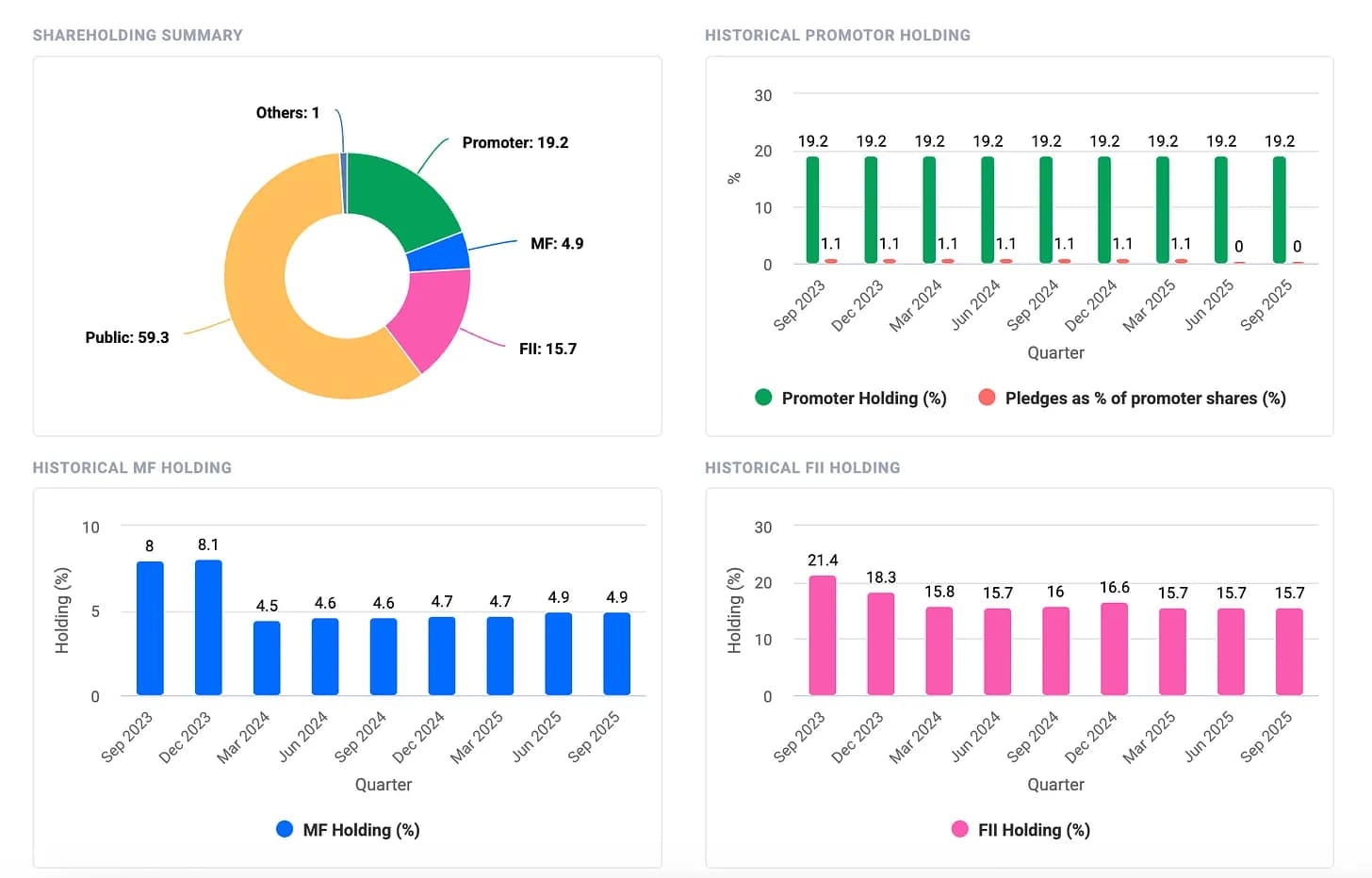
From GHCL’s shareholding pattern, we can make the following assessments:
- Promoter holding is only 19.2%. Low promoter holding goes against the skin in the game thesis.
- Promoters pledged shares are zero.
- FIIs and MFs have decreased their holdings earlier after the spin-off but have maintained them ever since. This provides mixed results but is slightly positive. More so because institutional holdings are similar to those of promoters.
Signing off - The Road Ahead
GHCL provides a value proposition for investors as a small-cap stock with high revenue growth potential. It stands out among its peers, increasing capacity when others are struggling to maintain capacity. With efficient near full capacity utilisation and spinning of the yarn division, the management seems to be doing well. Forward integration into fabric will enhance margins and provide another revenue source, potentially doubling revenue in the next 3-5 years.
Using sustainability to reduce costs makes it a double-edged sword. One thing that I noticed personally is that the company has not applied for the PLI scheme. With fabric production increasing substantially with the new knitting plan, it will become eligible for financial incentives from the government. This will enhance margins further.