KSH International: Preparing for the Transformer Supercycle?
Look up in almost any old Indian market or residential lane, and you will see the same thing.
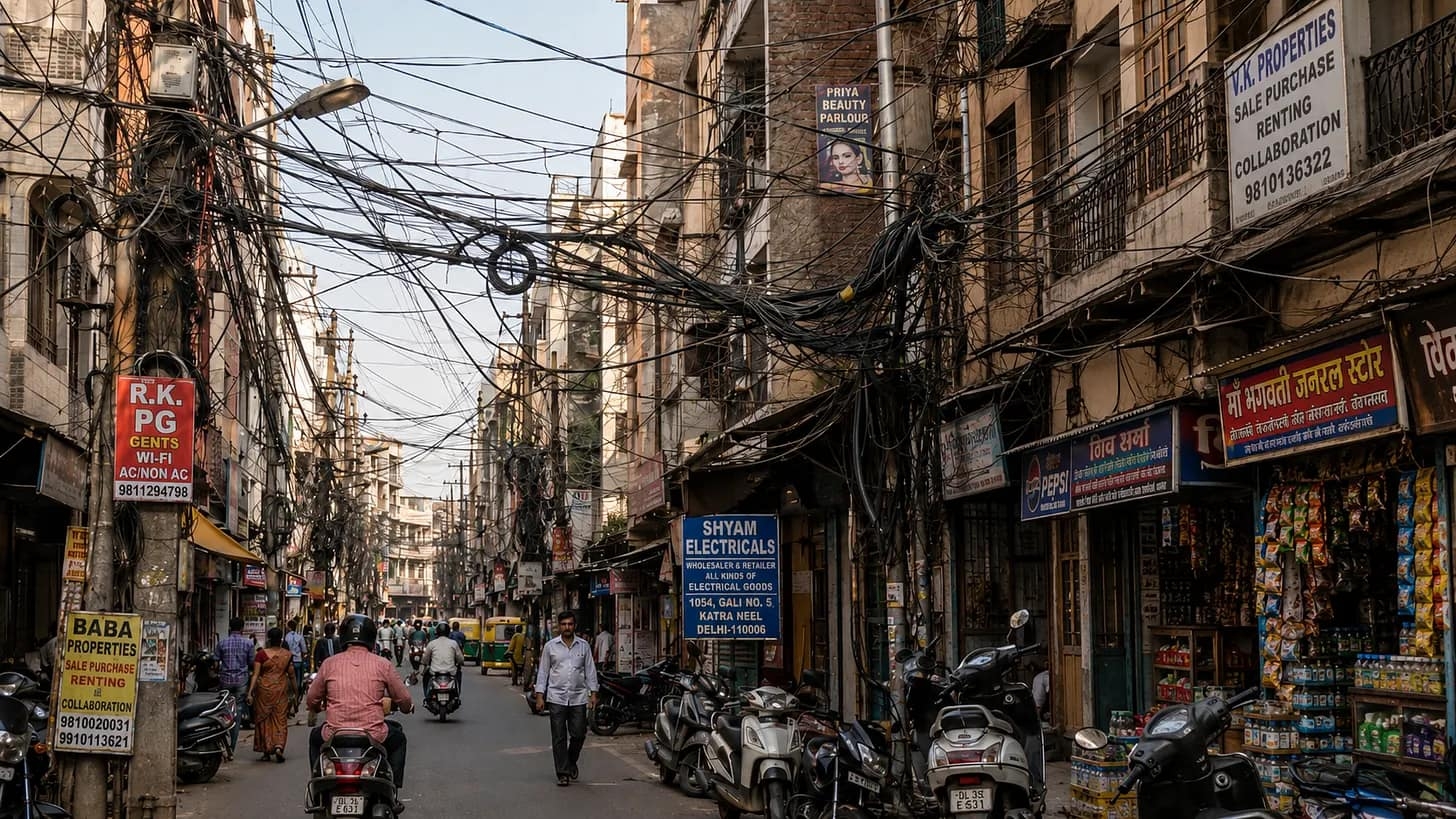
Wires running from one building to another. Some neatly tied. Most tangled. A few hanging so low that they almost become part of the street itself.
We usually look at them and think: “What a mess”.
But the truth is, that lane works because of those wires.
 Ethica Invest
Serious about long-term investing?
Unlock our professionally managed portfolios.
Take them away, and the ordinary rhythm of the street begins to fall apart. The lights go off. The fan stops. The shop cannot function properly. The Wi-Fi disappears. Small things begin to break all at once.
That is what makes wires so easy to ignore and so important at the same time.
And once you start thinking in that direction, one more thing becomes clear. The world of wires is much bigger than what we see hanging above our streets.
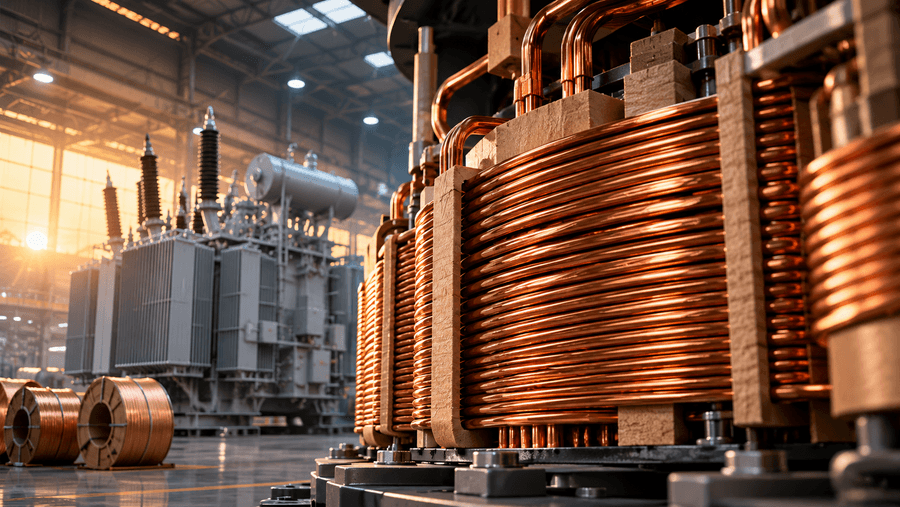
Some wires sit deep inside motors, compressors, generators and, most importantly for this story, ‘Transformers’.
They are expected to bend, carry current, tolerate heat and remain reliable for years inside equipment that may cost several crores.
And if you know that transformers are entering a larger growth cycle, you might look out for the companies making those specialised wires.
Right?
So, KSH International is one of them.
Copper Is Only the Starting Point
The wire outside your house carries electricity from one point to another. KSH makes the wire that helps electrical equipment actually work.
These are called magnet winding wires.
They are wound into coils inside transformers, motors, generators and compressors. When electricity passes through those coils, the equipment can change voltage, create motion or generate power.
The easiest way to understand KSH’s products is through a ladder.
Ethica Invest
Serious about long-term investing?
Unlock our professionally managed portfolios.
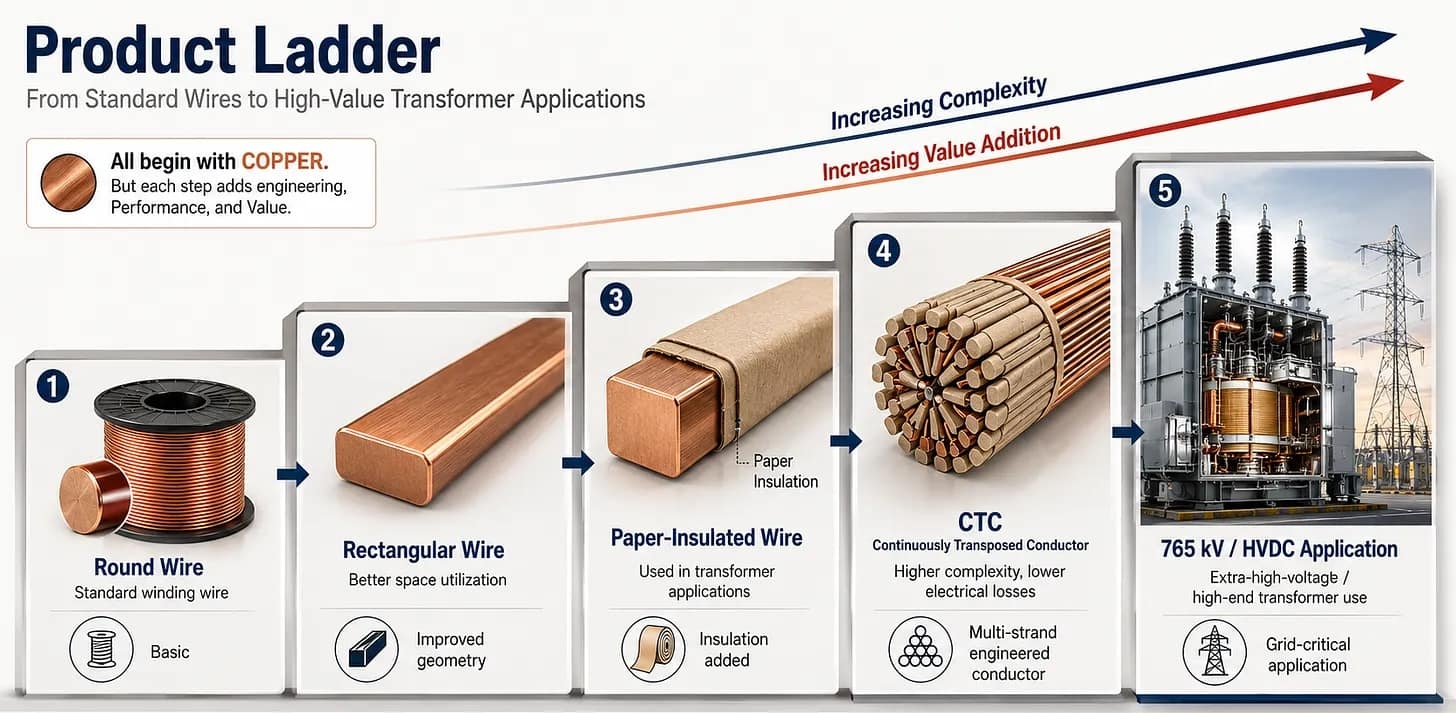
- At the bottom are round enamelled wires. These are copper or aluminium wires coated with insulation. They are used in fans, pumps, appliances, compressors and smaller motors.
- Move one step higher and the wire becomes rectangular. A rectangular shape packs more copper into the same space, which can make a large motor or transformer more compact and efficient.
- Then comes paper-insulated rectangular wire, commonly used inside oil-filled transformers.
- At the upper end is Continuously Transposed Conductor, or CTC. Instead of one thick conductor, several insulated copper strands are arranged and repeatedly shifted across positions. This helps current flow more evenly and reduces internal losses inside large transformers.
- The product becomes even more demanding when it enters a 765 kV or HVDC transformer. Here, a tiny defect is not a small inconvenience. It can affect a transformer that is expensive, customised and expected to operate for decades.
That is the key point. KSH does not earn more merely because it uses copper. It earns more when it converts copper into a product that is harder to make, harder to approve and more costly to fail.
Specialised wires formed ~75% of KSH’s FY26 product revenue. Transformers remain the centre of this mix, although the same manufacturing capability also serves EV motors, railways, industrial motors, generators, compressors and appliances.
Not Every Tonne of Wire Is Equal
A tonne is a tonne only on a weighing scale.
Economically, one tonne of round wire used in an appliance compressor is very different from one tonne of CTC used in a high-voltage transformer.
The first product is comparatively standardised. The second may require multiple copper strands, separate insulation, precise transposition, additional wrapping, tighter dimensions and much more testing.
Think of it this way: A basic wire is like a regular screw used in furniture. A specialised conductor is closer to a component used inside an aircraft engine. Both may begin with metal, but the value lies in the precision, reliability and consequence of failure.
The financial numbers show why this difference matters.
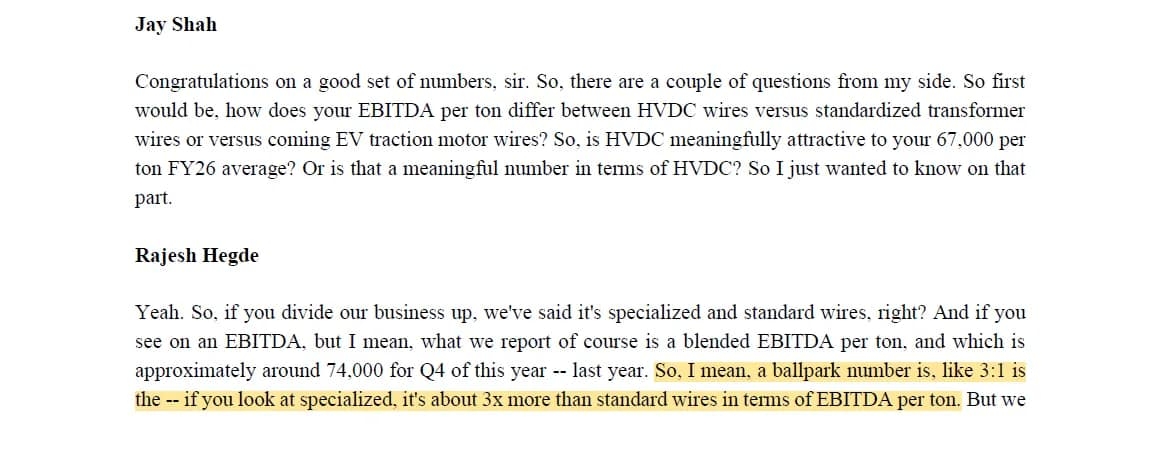
KSH’s blended EBITDA per tonne rose from Rs. 33,244 in FY24 to Rs. 67,625 in FY26. In Q4 FY26, it reached Rs. 74,018. Management has indicated that specialised wires earn roughly three times the EBITDA per tonne of standard wires, although the Company reports only a blended number.
This makes product mix as important as volume growth.
There is one more accounting detail investors must understand.
KSH sells through two models.
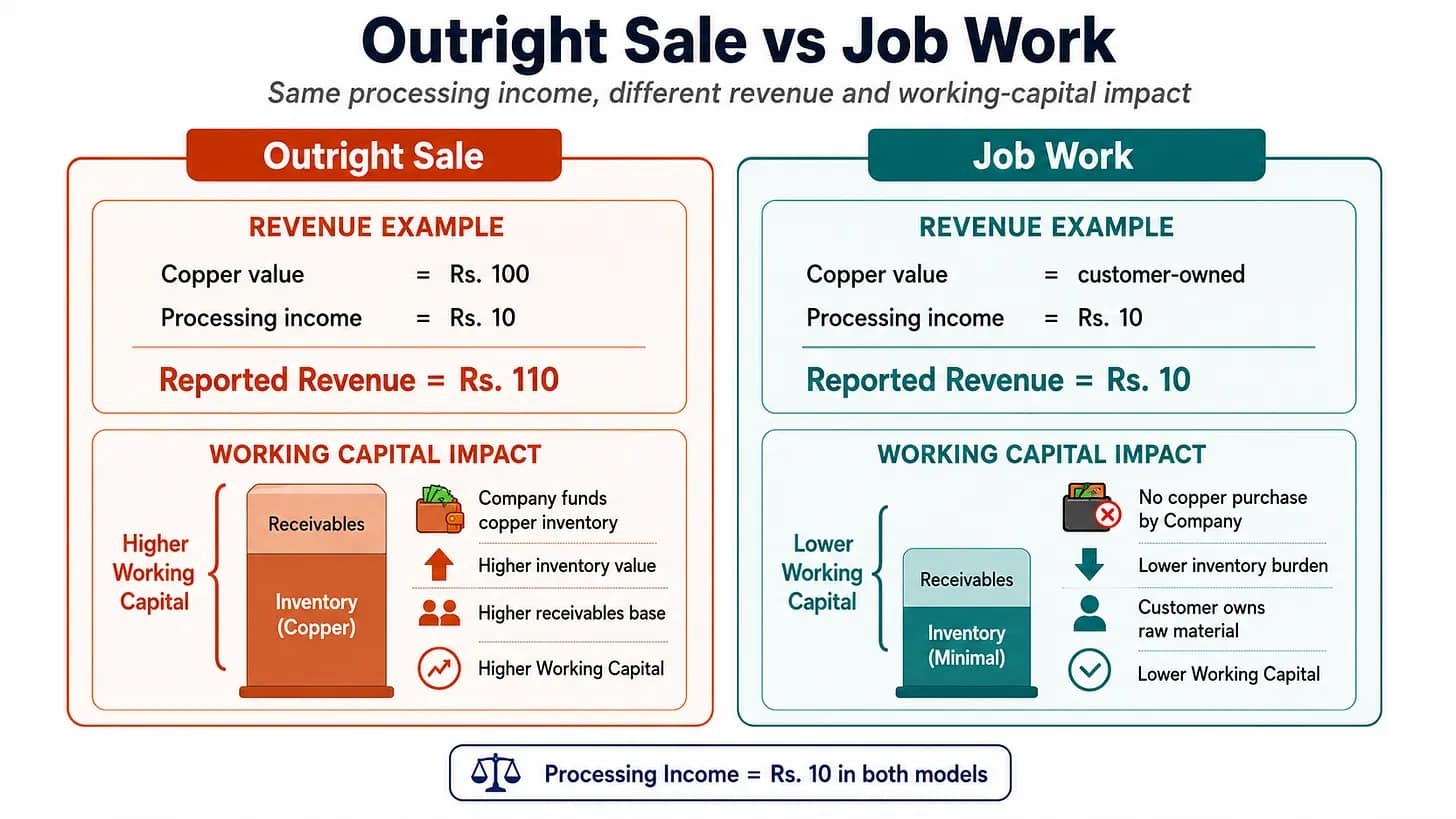
In an outright sale, the Company purchases copper and bills the customer for the copper plus its processing value. In job work, the customer supplies the copper and KSH charges only for converting it into winding wire.
The factory may perform similar work in both cases, but reported revenue looks very different. Outright sales show the full copper value and require more working capital. Job work shows lower revenue because copper never belongs to KSH.
Therefore, a rising copper price can inflate revenue and reduce the reported EBITDA margin percentage even when the actual earnings per tonne remain healthy.
For KSH, the more useful numbers are volume, specialised mix, EBITDA per tonne, working-capital movement and operating cash flow.
The Capability Came Before the Cycle
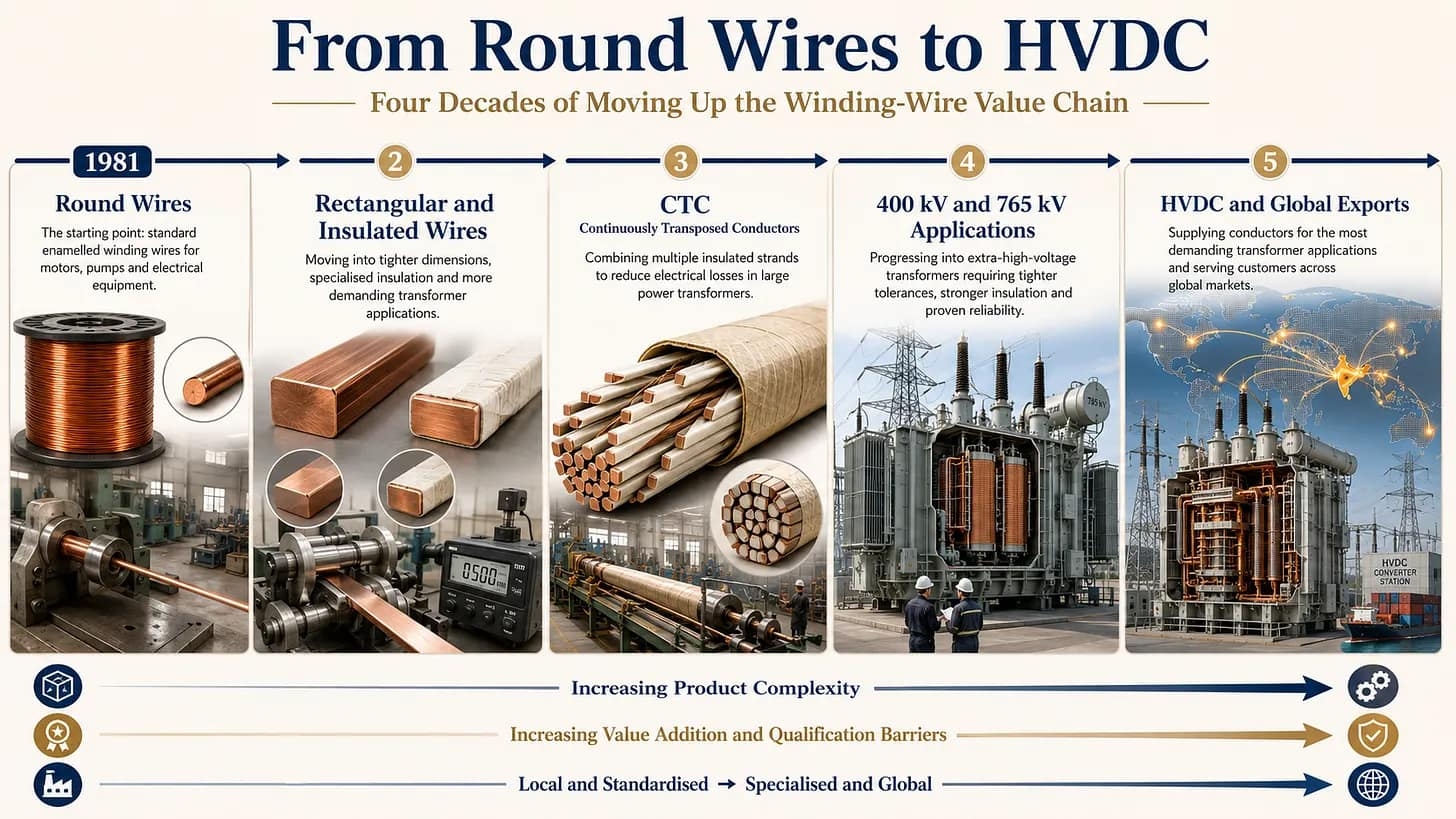
KSH did not begin with HVDC transformers.
In 1981, it started manufacturing winding wires at Taloja. The first stage was conventional round wire, the large-volume product used across motors and electrical equipment.
The next stage was shape and insulation. The Company moved into rectangular conductors, paper-insulated products and other customised wires. This required better control over width, thickness, surface finish and insulation quality.
Then came CTC. Multiple strands had to be individually insulated and transposed in a fixed sequence. The product could now enter larger and more demanding transformers.
Over time, KSH moved into conductors used in 400 kV, 765 kV and HVDC applications. It also earned approvals from major power-sector institutions and transformer manufacturers.
This sequence matters.
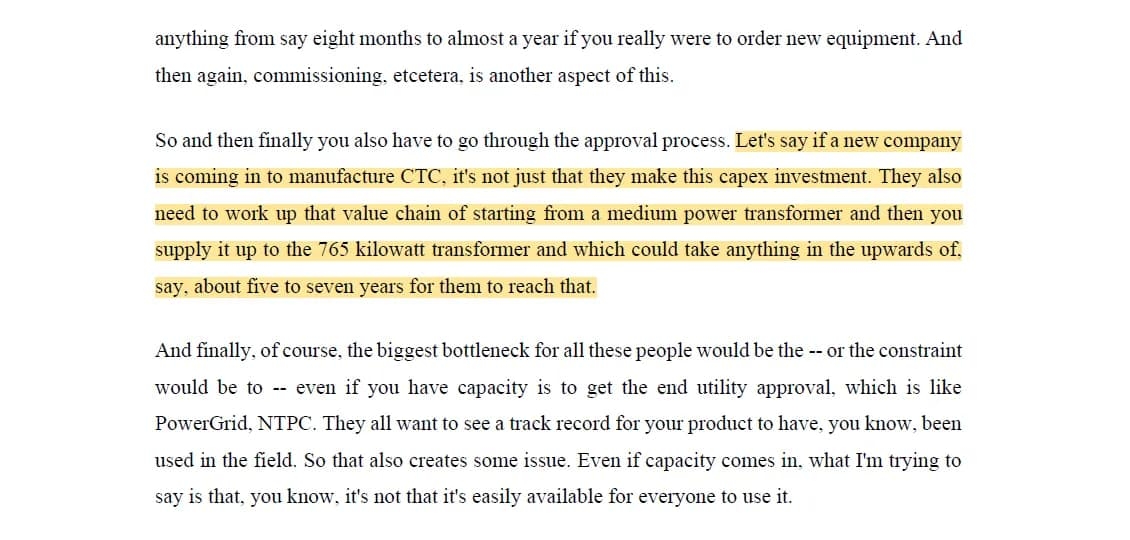
A new machine can be purchased in months. Customer confidence cannot.
A transformer manufacturer may approve not only the Company, but also the plant, machine, production process, insulation system and final application. A new entrant normally starts with lower-voltage products and gradually moves upward. Management estimates that reaching the highest end of the market can take five to seven years.
KSH enters the current cycle with 120+ domestic and global OEM customers, 97% repeat revenue in FY26 and exports across 24 countries. In FY26, export revenue increased 39.5% to Rs. 823.4 Cr., contributing roughly 28% of product revenue. All exports currently go to transformer manufacturers.
This is not a monopoly. Larger domestic winding-wire companies and established global specialists can manufacture overlapping products.
The advantage is accumulated rather than absolute. KSH has spent years learning difficult processes, receiving approvals and supplying applications where failure is expensive.
Is This Really a Supercycle?
The word ‘Supercycle’ is used too easily in capital goods. A few strong quarters and a full order book are often enough for the market to declare that an industry has changed forever.
The transformer industry, however, has stronger evidence than that.
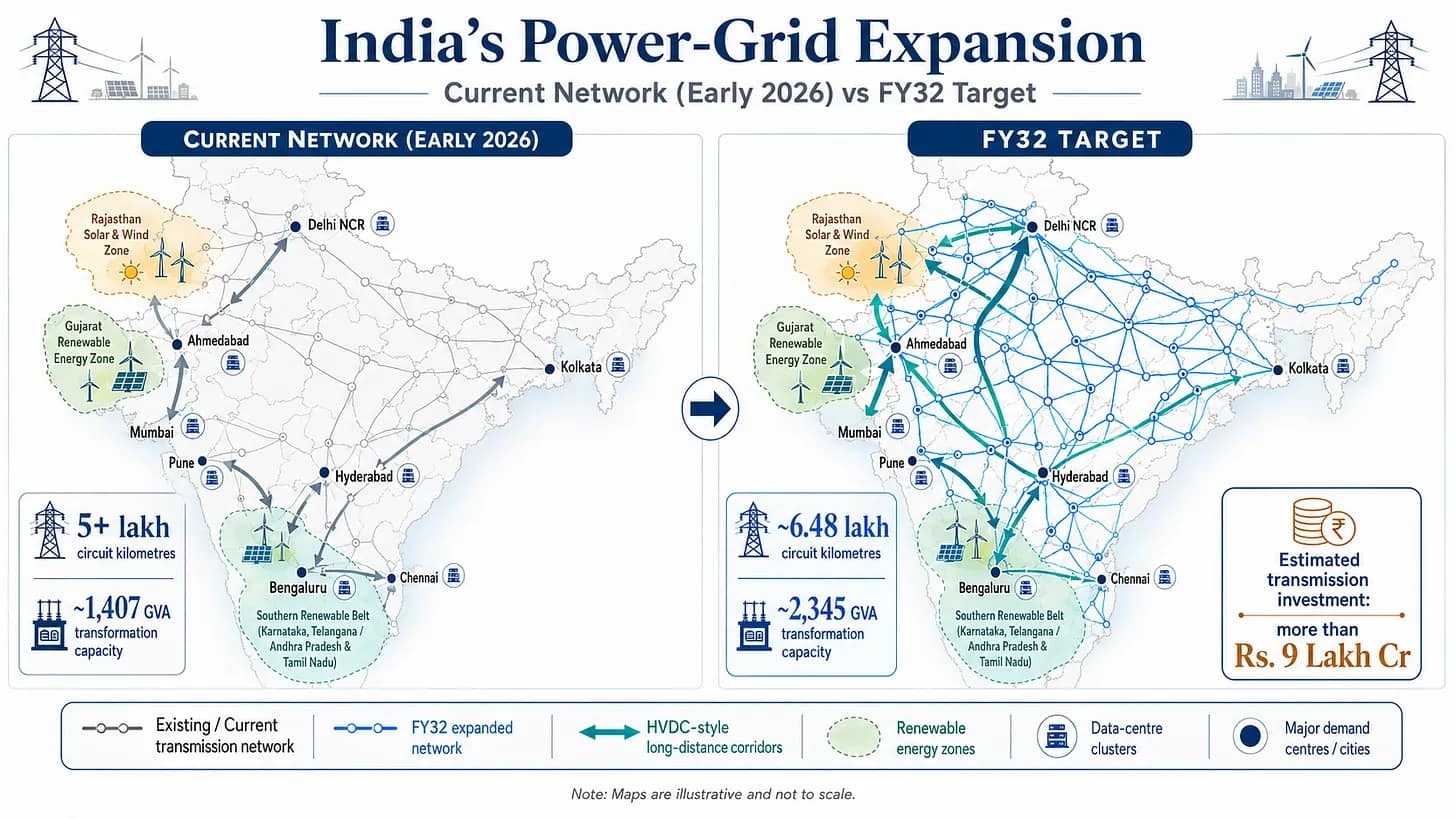
India’s transmission network crossed 5 lakh circuit kilometres in early 2026, while transformation capacity reached about 1,407 GVA. The national plan targets a network of roughly 6.48 lakh circuit kilometres and around 2,345 GVA by FY32, with estimated transmission investment of more than Rs. 9 Lakh Cr.
The reason is not simply that India needs more electricity.
Solar and wind projects are often built far from consumption centres. Electricity generated in Rajasthan, Gujarat or large hydro regions must travel to cities and industrial clusters hundreds or thousands of kilometres away. That requires new lines, substations and large transformers.
The grid is also serving new loads. Data centres need reliable power around the clock. Railways and metros need traction systems. Factories are electrifying more processes. EV charging and renewable-energy integration require local grid strengthening.
The same shortage is visible overseas. In the US, lead times for some transformer categories have stretched beyond three years, while global manufacturers are investing heavily in new factories. Ageing grids are being replaced at the same time that AI data centres and industrial reshoring are increasing electricity demand.
Why does supply respond so slowly?
A large-transformer plant needs heavy machinery, skilled winding teams, drying ovens, clean assembly areas and expensive testing bays. Designs are customer-specific. Critical materials such as electrical steel, bushings, insulation and specialised conductors can become bottlenecks. Even after a factory is built, qualification and testing take time.
This looks structurally stronger than a normal two-year cycle.
But “structural” does not mean “permanent shortage”. Transformer manufacturers and component suppliers are expanding capacity. The real question is whether demand continues to grow faster than supply.
Where KSH Has an Edge
KSH is not India’s largest winding-wire manufacturer, and it is not the only Company making CTC.
So the case cannot rest on exclusivity.
Its stronger position appears where three things come together: technical complexity, customer approval and the cost of failure.
In standard round wires, customers have more choices and price matters heavily. As applications become more demanding, changing a supplier becomes slower and riskier.
KSH is approved for insulated rectangular wires and CTC used in HVDC, 765 kV transformers, reactors, nuclear-power transformers and locomotive traction transformers. It works with most large domestic power-transformer OEMs and several global manufacturers.
The evidence of customer stickiness is visible in repeat business. FY26 repeat revenue was 97%. Even before listing, the top 10 customers contributed ~53% of FY25 revenue, and five of those relationships had lasted more than a decade.
That concentration is both a strength and a risk.
It shows that customers continue buying after qualification. But it also means large OEMs retain bargaining power and can negotiate aggressively.
The advantage is therefore uneven.
It is shallow in standard wire and stronger in specialised transformer conductors. KSH’s competitive advantage rises as the product becomes more complex and qualification-heavy.
The Growth Story Is More Than Transformers
Transformers are the biggest opportunity, but not the only one.
EV traction motors need winding wires that can tolerate higher temperatures, voltages and rotational speeds while fitting into compact designs. Rectangular wire can improve copper packing and motor efficiency. The opportunity is promising, but samples and approvals must convert into recurring commercial revenue before investors treat it as established earnings.
Railways and metros use winding wires in traction motors, alternators and traction transformers. Industrial automation and energy-efficient motors create another, quieter source of demand.
At the volume end, air-conditioners, refrigerators and appliances support standard round-wire demand. This can help fill capacity, but those tonnes will not earn the same economics as CTC or HVDC-related conductors.
Exports may become the second major engine. Q4 FY26 export revenue grew 92% year-on-year as new customers in the Americas and Europe began placing initial orders. Management wants exports to move towards 40% of revenue over the next few years, from roughly 28% of product revenue in FY26.
The important word is “initial”. Small trial orders are evidence of entry, not yet proof of scale. The real trigger is repeat business from those new customers.
From Industry Opportunity to Earnings
An attractive market creates demand. KSH can benefit only if it has enough approved capacity to supply it.
That is where Supa enters the story.
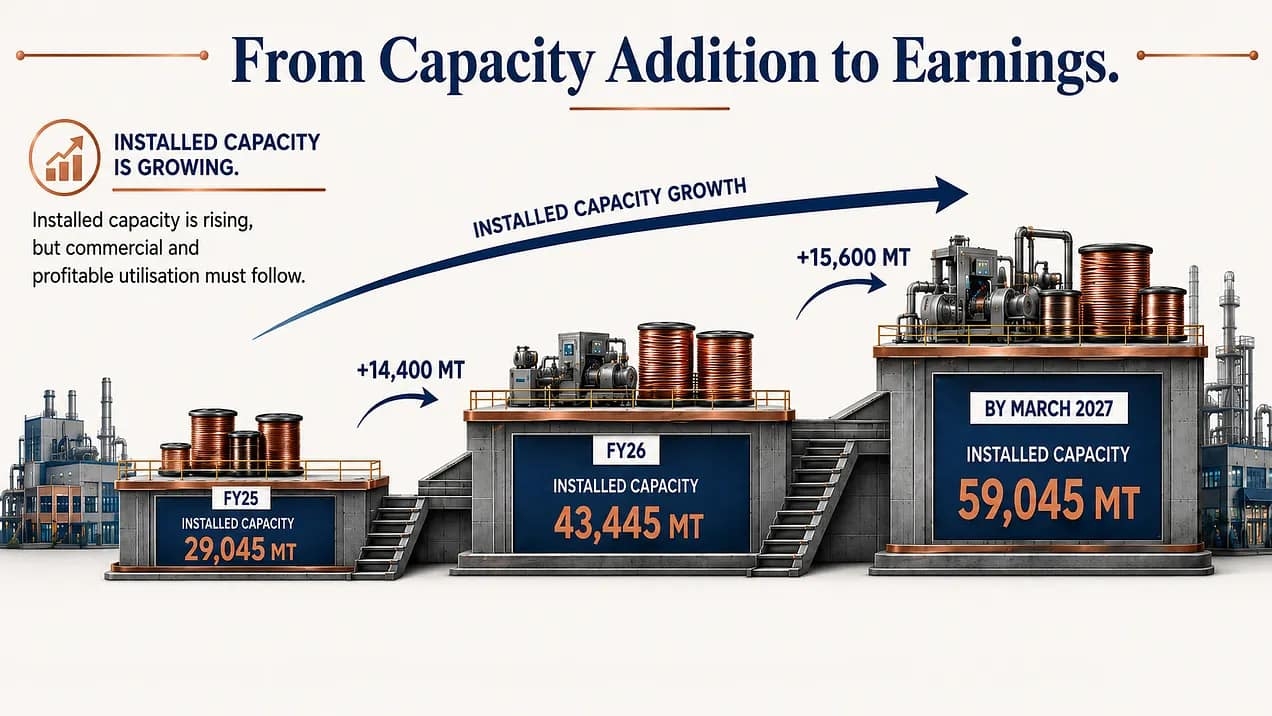
Within roughly two years, it is attempting to roughly double the capacity base it had before Supa.
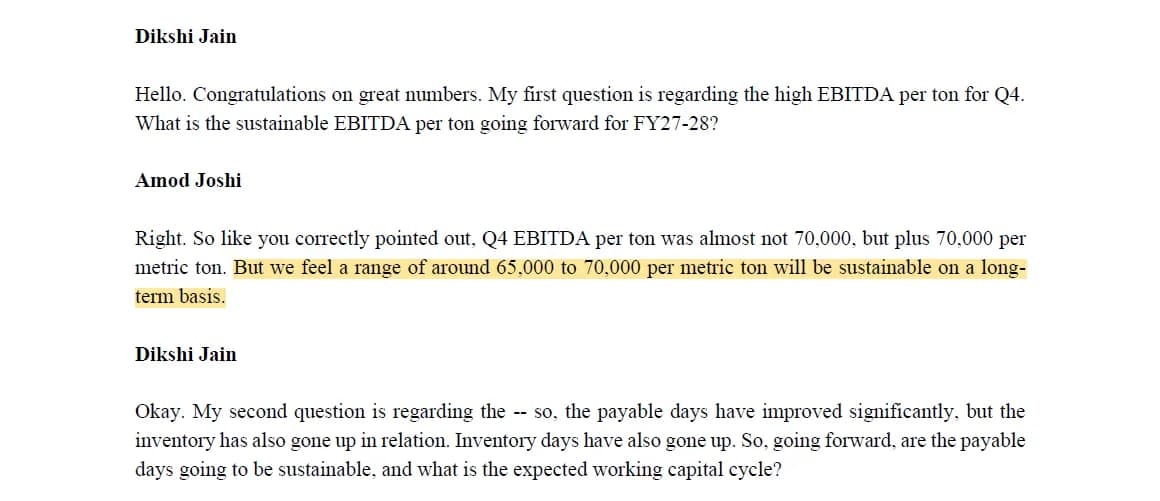
FY26 volume grew 20.8% to 28,168 MT. Revenue rose 61.1% to Rs. 3,107 Cr., EBITDA increased 55.5% to Rs. 192.1 Cr. and PAT increased 62% to Rs. 110.1 Cr. Management expects at least another 21% volume growth in FY27 and believes a long-term EBITDA-per-tonne range of Rs. 65,000-70,000 is sustainable, subject to product mix.
But capacity is not earnings.
The new lines must receive customer approvals. The additional production must remain specialised. Utilisation must rise without discounting. And the extra EBITDA must convert into cash.
That last point deserves attention.
Despite strong profit growth, FY26 operating cash flow was negative Rs. 65 Cr. Inventories doubled to about Rs. 425 Cr., while receivables increased to roughly Rs. 333 Cr. This partly reflects copper prices, expansion and higher volumes, but it also shows the capital required to fund growth.
Net working-capital days improved modestly from 68 to 65, helped by better supplier credit. Yet investors should not ignore the absolute cash absorbed by inventory and receivables.
The 3.2 MW rooftop solar plant can reduce power costs. The planned green-copper facility may improve raw-material availability and working capital. But these projects matter only if they improve cash returns, not because they carry an attractive sustainability label.
Supa is the bridge between industry opportunity and earnings. It is also where the story can go wrong.
What Could Go Wrong?
- The first risk is that supply catches up faster than expected. Transformer and winding-wire companies are both adding capacity. If scarcity reduces, volumes may remain healthy while fabrication charges and EBITDA per tonne come under pressure.
- The second risk is a weaker product mix. Standard wires are easier to ramp than specialised conductors. KSH could fill Supa quickly but earn a lower return if growth comes mainly from price-sensitive products.
- The third risk is working capital. Copper is passed through to customers, but KSH may need to fund the metal until collection. Revenue and profit can rise while cash flow remains weak.
- The fourth risk is customer power. Long relationships reduce replacement risk, but large OEMs still negotiate price, payment terms and allocation across multiple suppliers.
- Finally, EV products, new export customers and advanced insulation technologies may take longer to scale than expected.
One weak quarter will not change the story. A sustained decline in specialised mix, EBITDA per tonne, cash conversion or returns on new capital will.
Conclusion: Prepared, but Not Yet Proven
So, is KSH positioned for a transformer supercycle?
The industry certainly displays several supercycle-like characteristics. Grid investment is rising, transformer lead times remain extended, renewable evacuation needs are increasing and data centres are adding a new source of electricity demand.
KSH has also not arrived late.
It built CTC, insulated rectangular conductors, high-voltage experience, customer approvals and export relationships before the present shortage became obvious.
The Company now enters the cycle with relevant products and a much larger manufacturing base.
But preparation is not proof.
KSH must fill Supa with the right kind of business. It must protect EBITDA per tonne as volumes rise. It must prevent copper and inventory from absorbing the cash generated by growth. And it must earn an attractive return on the capital invested.
A favourable transformer cycle can create the opportunity. It cannot guarantee the outcome.
KSH appears prepared for the opportunity. The next two years will show whether it can monetise that preparation at scale.
About Ethica Invest
Ethica Invest is a principled, Shariah-compliant investment platform that helps investors like you in identifying companies using well-defined criteria for finances, operations, and governance. Though grounded in Shariah guidelines, Ethica’s approach goes beyond any single faith by prioritizing openness, strong balance sheets, and responsible business practices.
Ethica Invest works with SEBI-registered analysts and seasoned investment experts who deliver organized, compliant analysis on stocks and other opportunities. Those interested in seeking more on Shariah-aligned investing, can connect with our Ethica team.
The goal is straightforward: empower investors with decisions based on ethics, solid data, and performance; not just stories.
General Disclaimer and Release: Nothing contained herein constitutes tax, legal, insurance or investment advice, or the recommendation of or an offer to sell, or the solicitation of an offer to buy or invest in any investment product, vehicle, service or instrument.