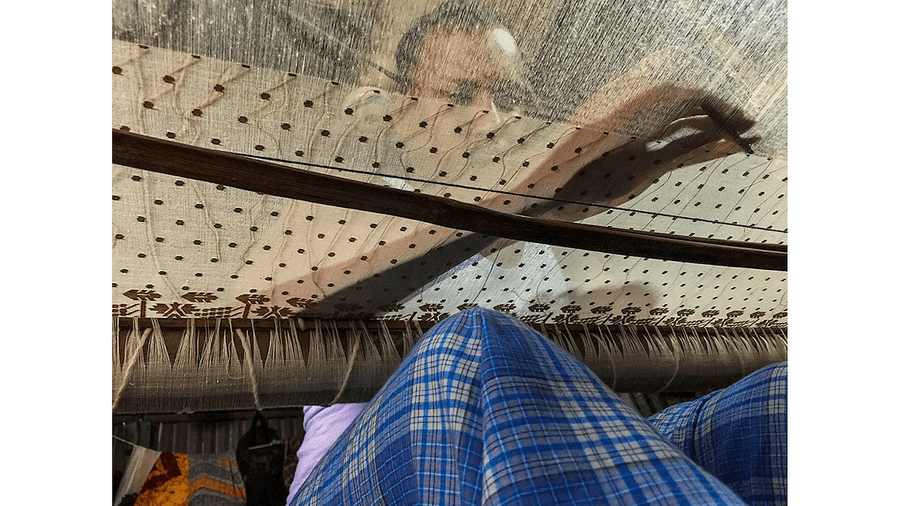
PDS Ltd.- Dhoti, Kapda Aur Textile
The Extinct Fabric:
You have seen animals going extinct, but so do fabrics. Muslin trade flourished in Bengal during the late Mughal era. While the skill to develop Muslin has been reported even during the 11th century, it caught the fancy of the Mughal court and Western world during the 16th and 17th centuries.
So the characteristics of the Muslin included the fact that it was a very light and very flexible cloth. Such was its quality that a full-length saree made up of Muslin could pass through a ring. This, coupled with its softness and airiness, resulted in a cloth that helped during the sweltering heat of Bengal and elsewhere in India.
Muslin was made up of a special kind of cotton. This cotton, colloquially termed as Phooti Kapas, loosely translates to popped/exploded cotton, which grew near Dhaka and its environs. This cotton then went through a 16-step process, which finally turned into actual Muslin for use. Skilled artisans, which included women too, would process the fabric around sunrise so that humidity and other environmental factors could be matched for best quality.
Muslin trade in conjunction with rich agrarian output led to Bengal becoming the richest province of Mughal India. When the British conquered Bengal, it swelled their coffers to the hilt, and consequently, it financed the Industrial Revolution to a large extent.
 Ethica Invest
Serious about long-term investing?
Unlock our professionally managed portfolios.
The Cotton from the Pyramids - Giza Cotton
One of the finest cottons that’s commonly used today is the Giza cotton. It came to Egypt in 1819 from Ethiopia and then from the Sea Islands, USA in 1827. The Nile River’s weather and atmosphere led to one of the finest varieties of cotton now known as Giza Cotton. Cultivation and processing of Giza cotton help the Egyptian economy significantly, with estimates contributing nearly 3% of the total GDP of Egypt.

While Giza cotton may account for only a minuscule amount of total world production, it still commands value because it is used in high-quality garments that are exported to the US and Europe.
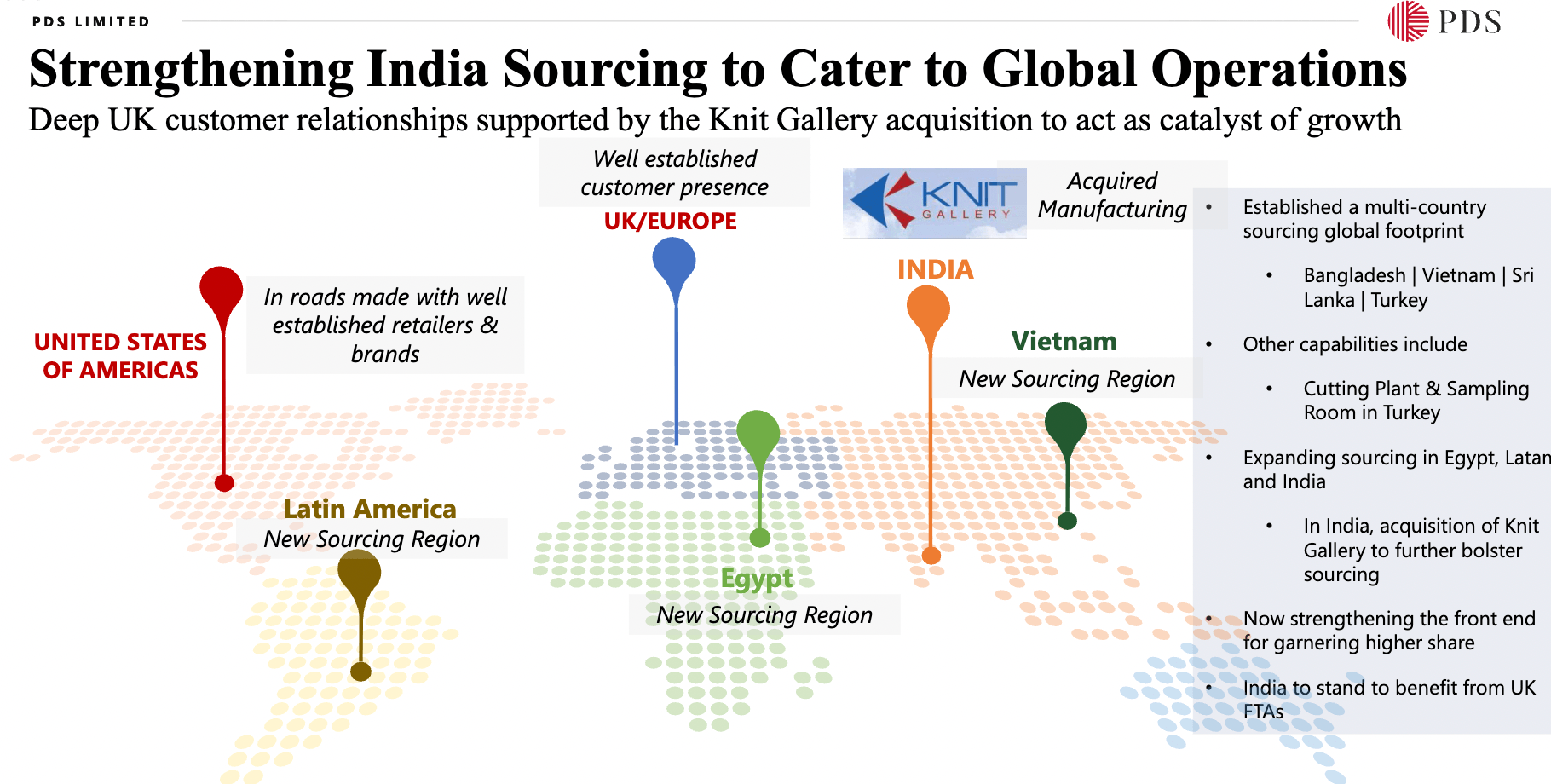
You may wonder why we are giving you a brief history lesson. The reason is that these two centers are still important in today’s garment business. And more importantly, they are relevant for the company we are discussing, i.e. PDS Ltd. PDS has recently established Egypt as a sourcing region while most of its manufacturing capacity is in Bangladesh and a significant portion in SriLanka.
How does PDS fit in?
Have you wondered how your Levi’s jeans come to you? Levi’s does not make jeans itself, but rather, in India, Arvind Mills manufactures it for them. This leaves Levi’s to focus on branding and sales. Since India and Bangladesh are good manufacturing hubs for garments, Arvind Mills would manufacture Levi’s for other countries, too.
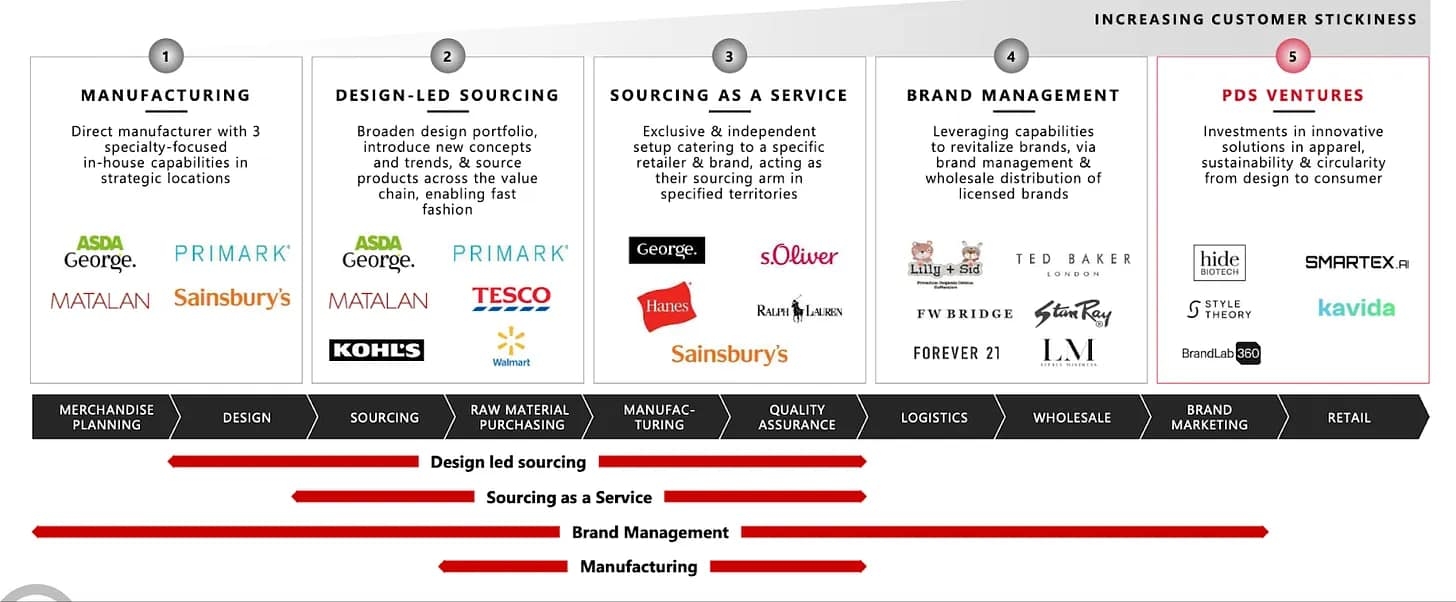
Similarly, PDS does the same for a large number of brands, including Primark, Matalan, Sainsbury’s, etc. It takes care of the entire value chain for fashion retailers so that they can focus on selling only.
Business Segments:
- Designing - It aims to expand design portfolio, introduce new trends, & source products across the value chain. Clients include Primark, Tesco, Walmart, Kohl’s, etc.
- Sourcing as a Service - Acquires raw materials for large brand retailers. It has partnered with 600+ factories globally.
- Manufacturing - Manufactures garments with 3 speciality-focused in-house capabilities in strategic locations. Clients include Primark, Matalan, Sainsbury’s, etc.
- Brand Management - Acquires and revitalises brands, buys trademarks and reintroduces them. Clients include Ted Baker, Forever 21, Lily & Sid, etc.
- DS Ventures - Investments in innovative tech in apparel, sustainability & circularity from design to consumer. Clients include Style Theory, Kavida, Smartex, etc.
PDS is present across the textile manufacturing value chain.
Manufacturing is only a small portion of PDS ventures, ~5% of the revenues. The company seems to do this in order to understand the needs of its customers. In addition, having a manufacturing facility helps customers have confidence that PDS knows its business.
PDS’s main arm is sourcing, which accounts for more than 90% of the revenue. This helps PDS remain asset-light and reduces risk. We will be discussing this mainly.
The Presence
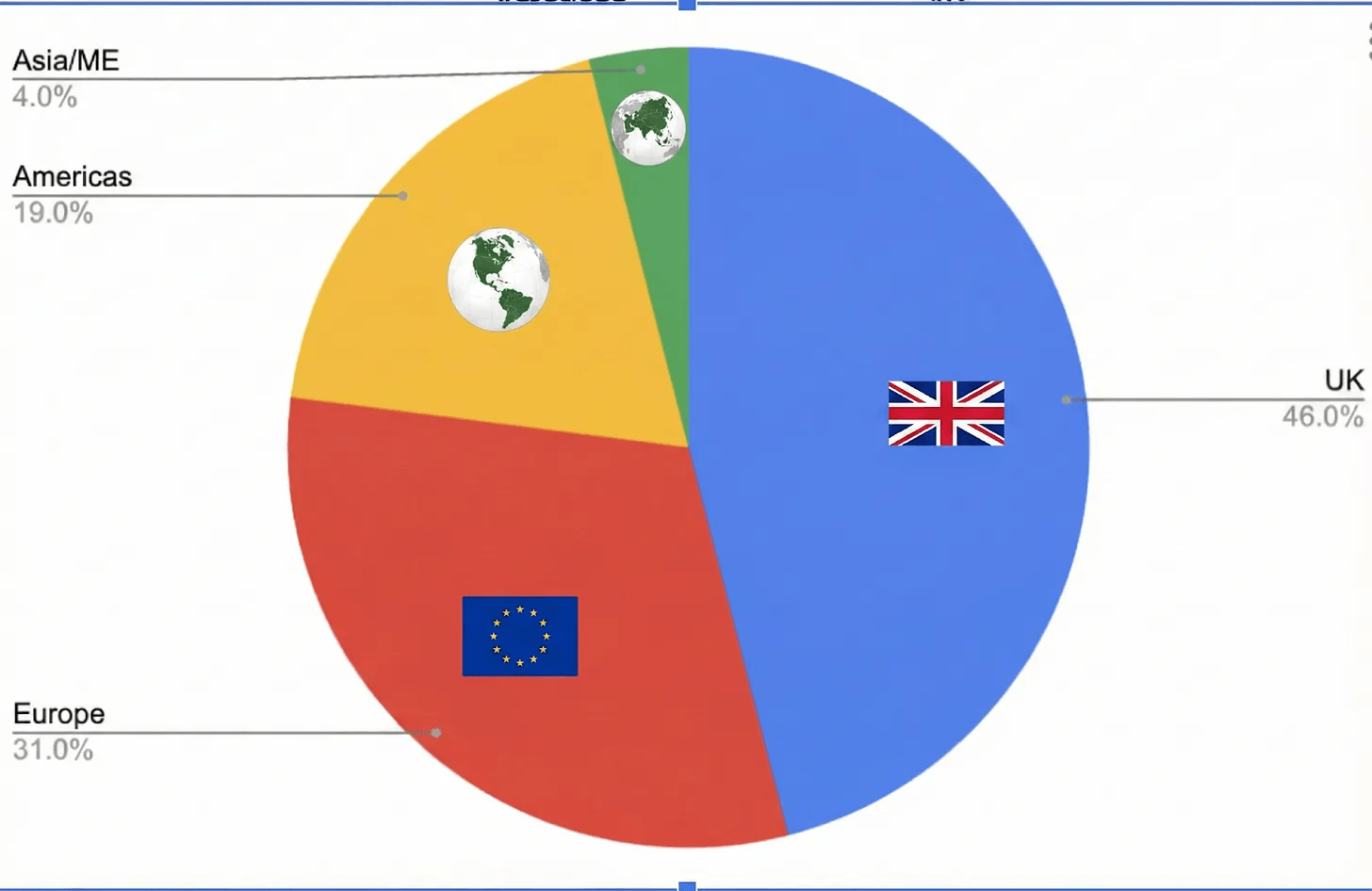
PDS is present in nearly all major markets, with Europe and the UK accounting for a major chunk of its revenues. However, America is its fastest-growing market.
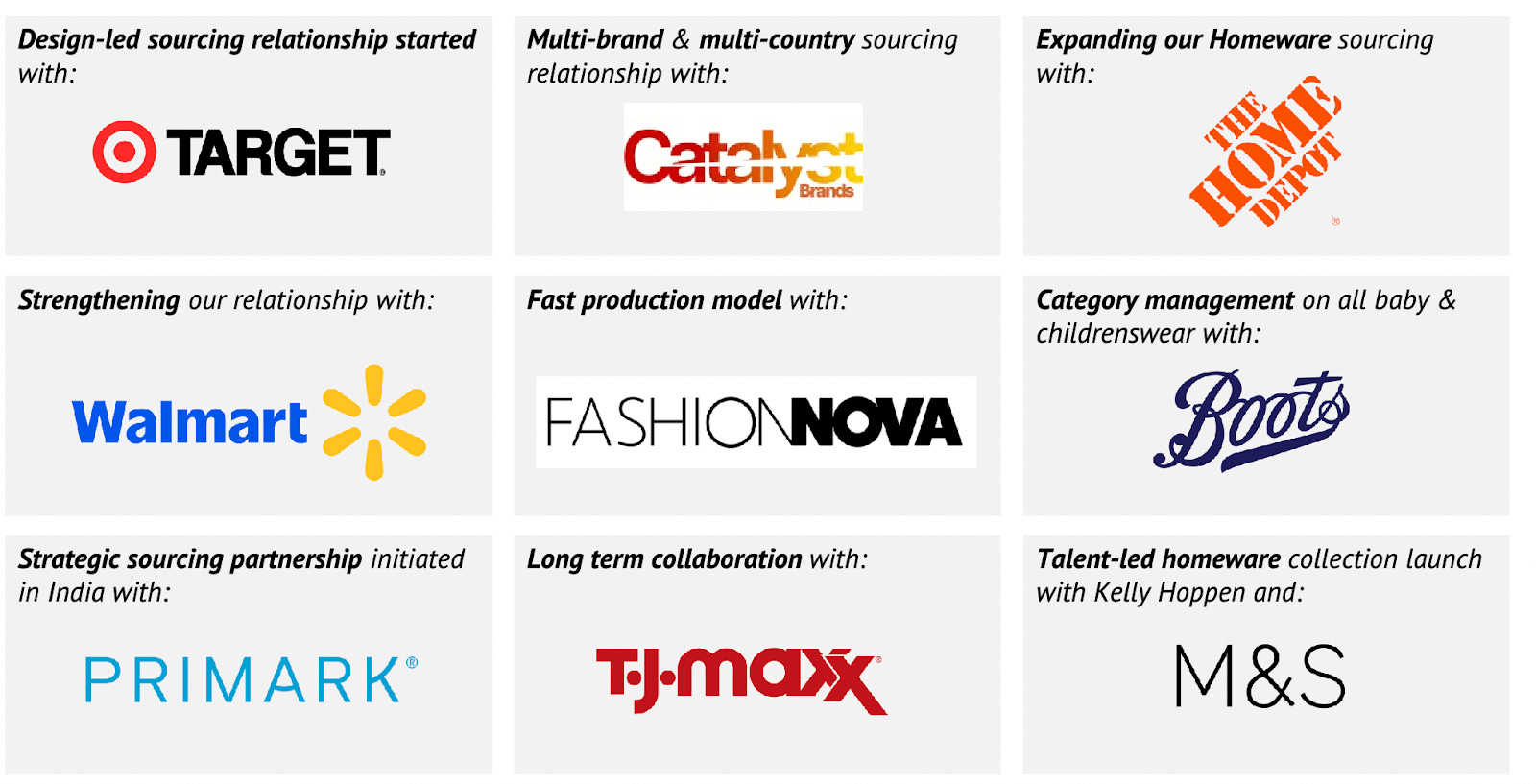
Marquee customers
Decentralised Structure:
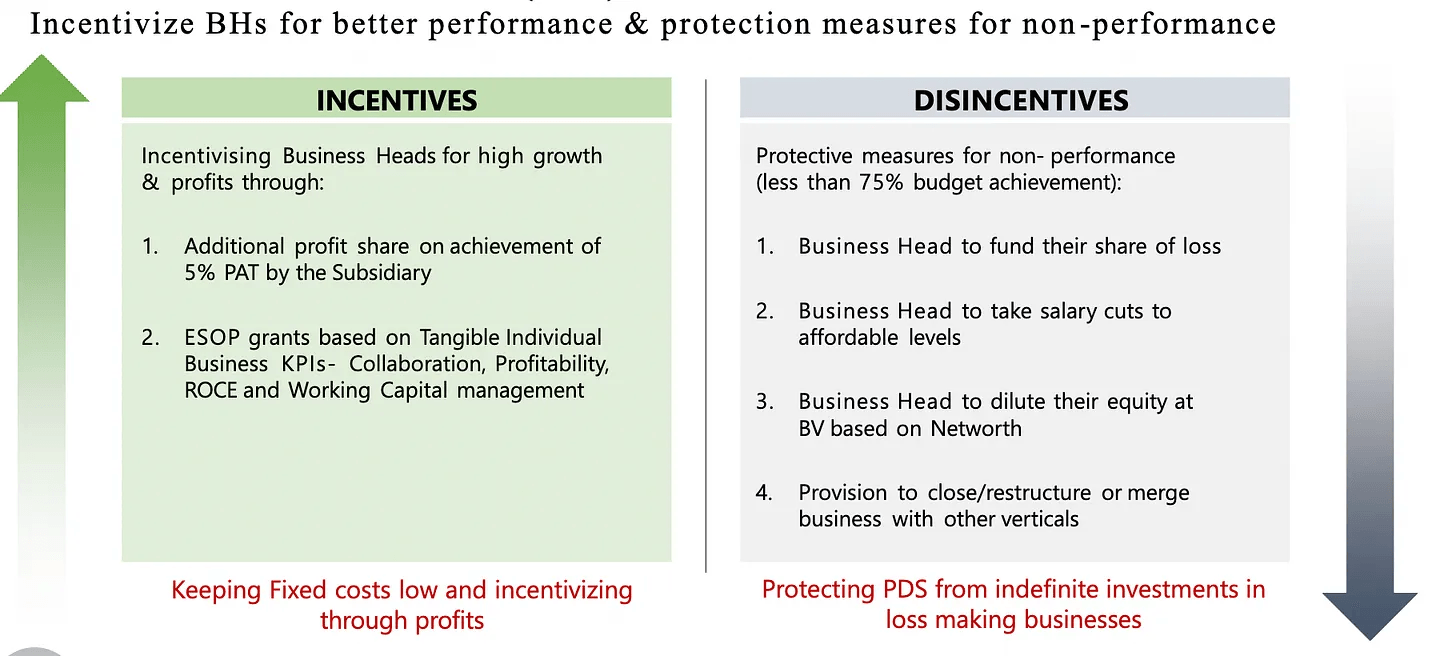
PDS behaves as a sum of the parts with synergies. The company grew by adding people as partners rather than employees. As a result, there are nearly 150 operating subsidiaries, each with its own head. To incentivise them, the company uses ESOP and quantifiable metrics for remuneration.
Financials:
We look at quarterly figures first.
Ethica Invest
Serious about long-term investing?
Unlock our professionally managed portfolios.
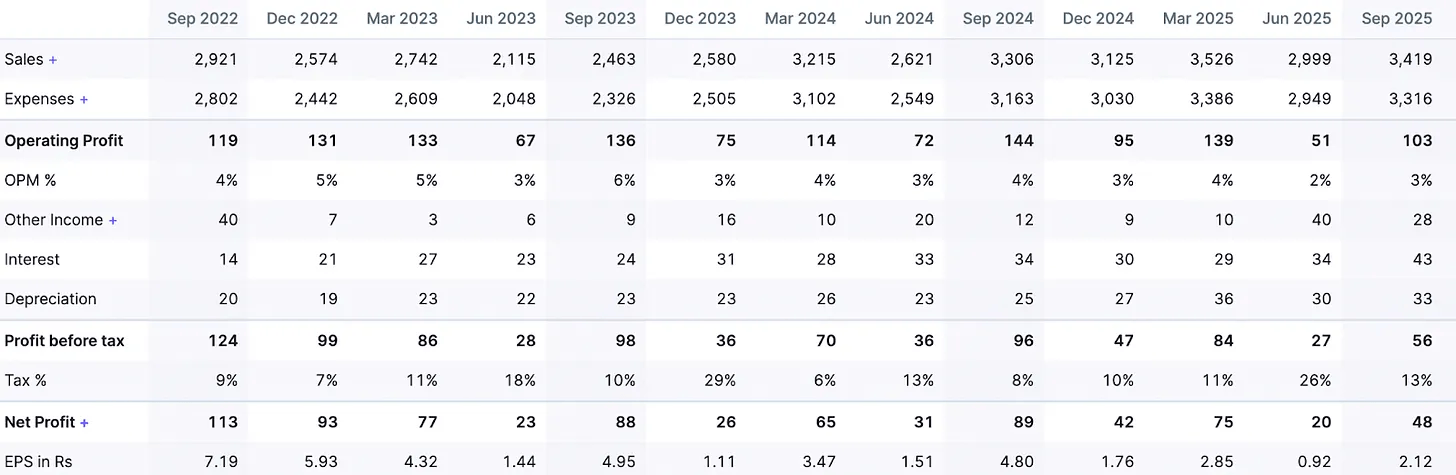
The company has seen a slight uptrend in sales based on quarterly reporting. Quarterly sales have been volatile, and since the business is cyclical, we need to look at the annual figures to get a clearer picture.
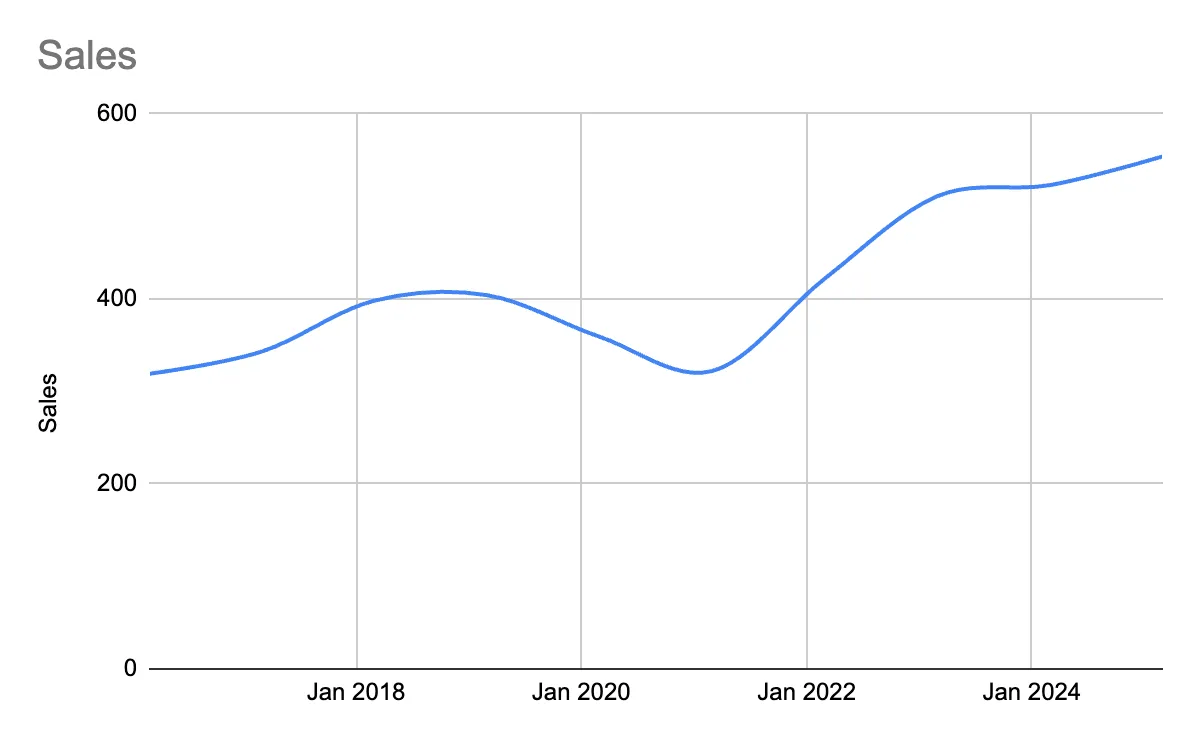
Annual sales have seen good growth, especially post-COVID, as they have grown at nearly 20% annual CAGR.
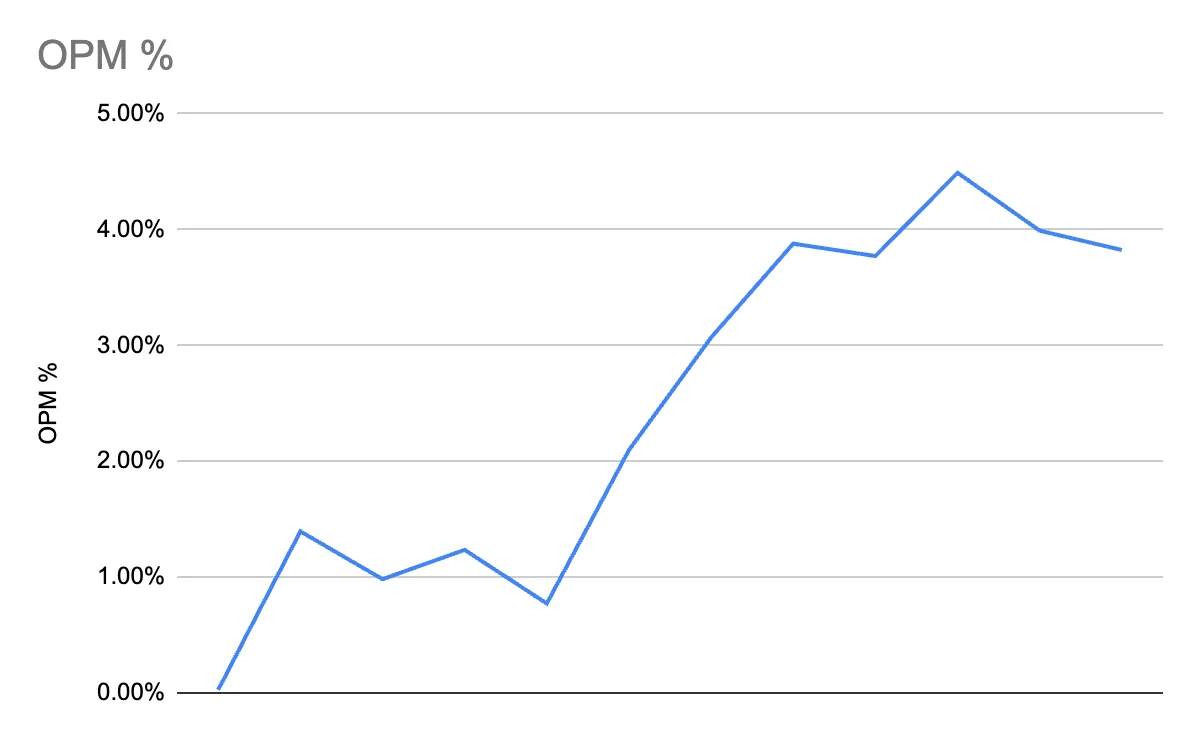
Margins
Operating margins in the garment industry are very thin. PDS seems to have improved its margins, which is good.
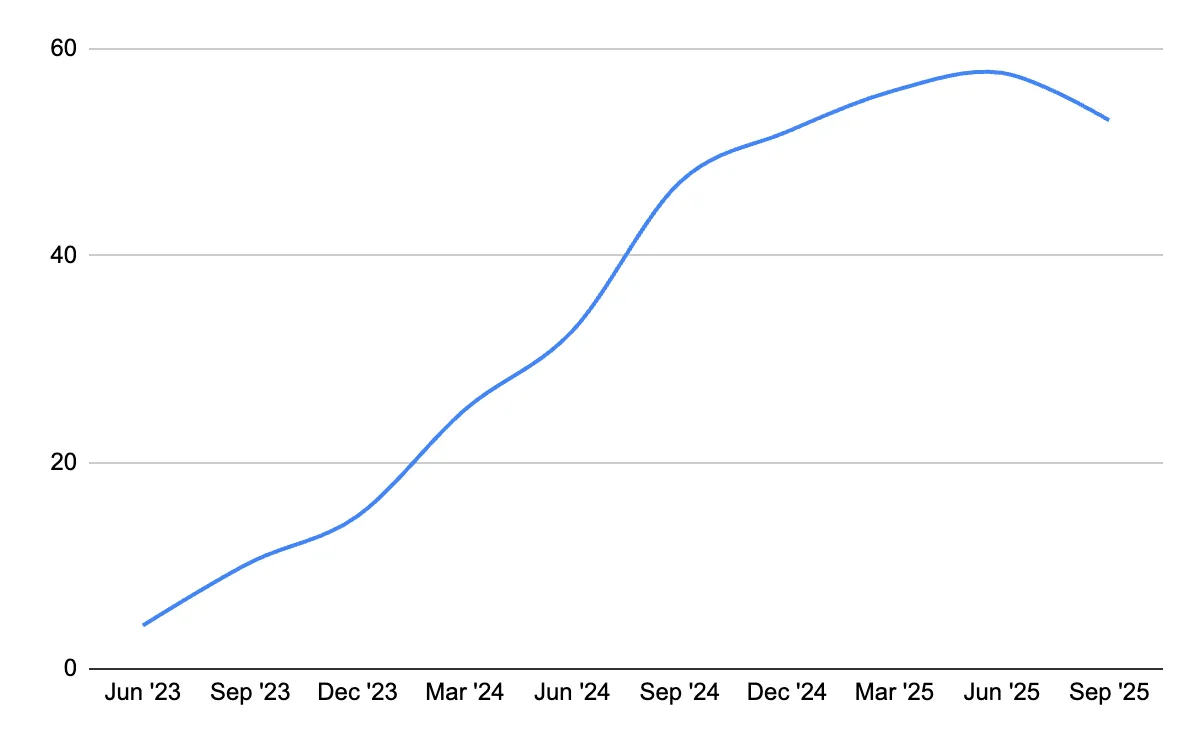
Net profit has also grown but has dipped lately. This is because the company has been investing in new ventures from the income statement rather than capitalising them on the balance sheet.
Net Profit margins are also razor sharp in the garments industry. We look at the same for the PDS.
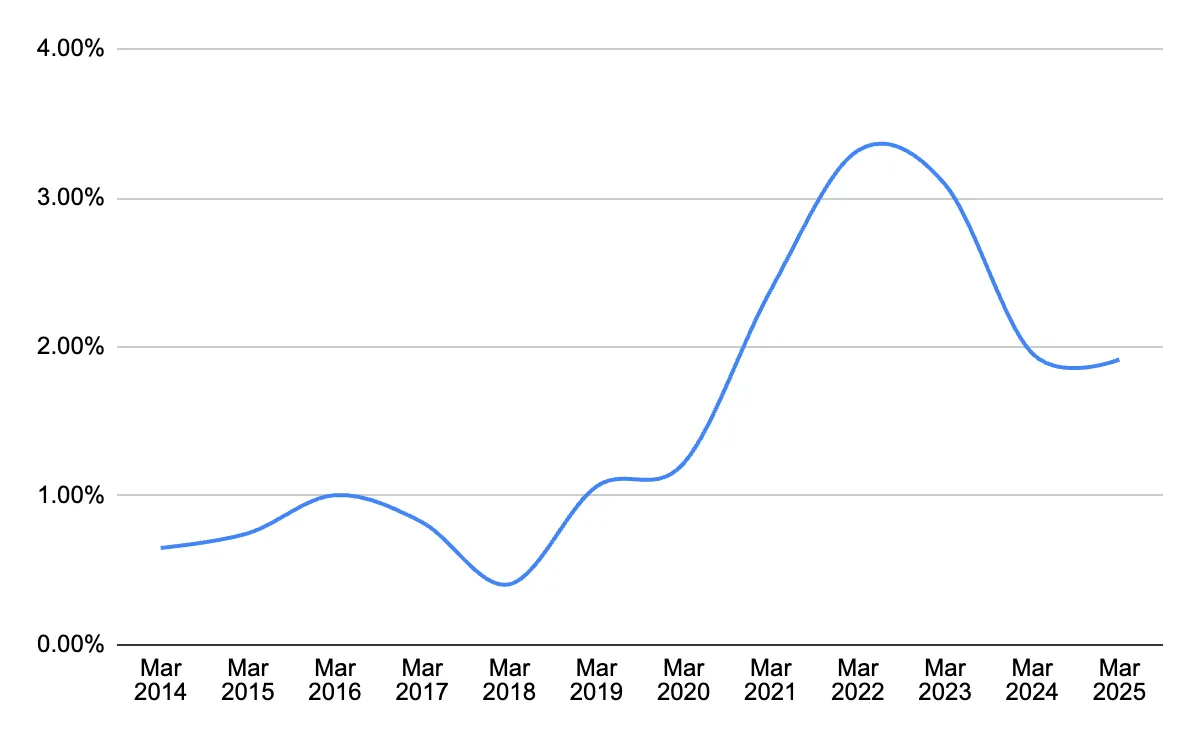
The margin has improved over the past decade, but has seen a downtrend in the last two years. This again is due to the fact that a lot of investment is done through the P&L and hence decreased margins.
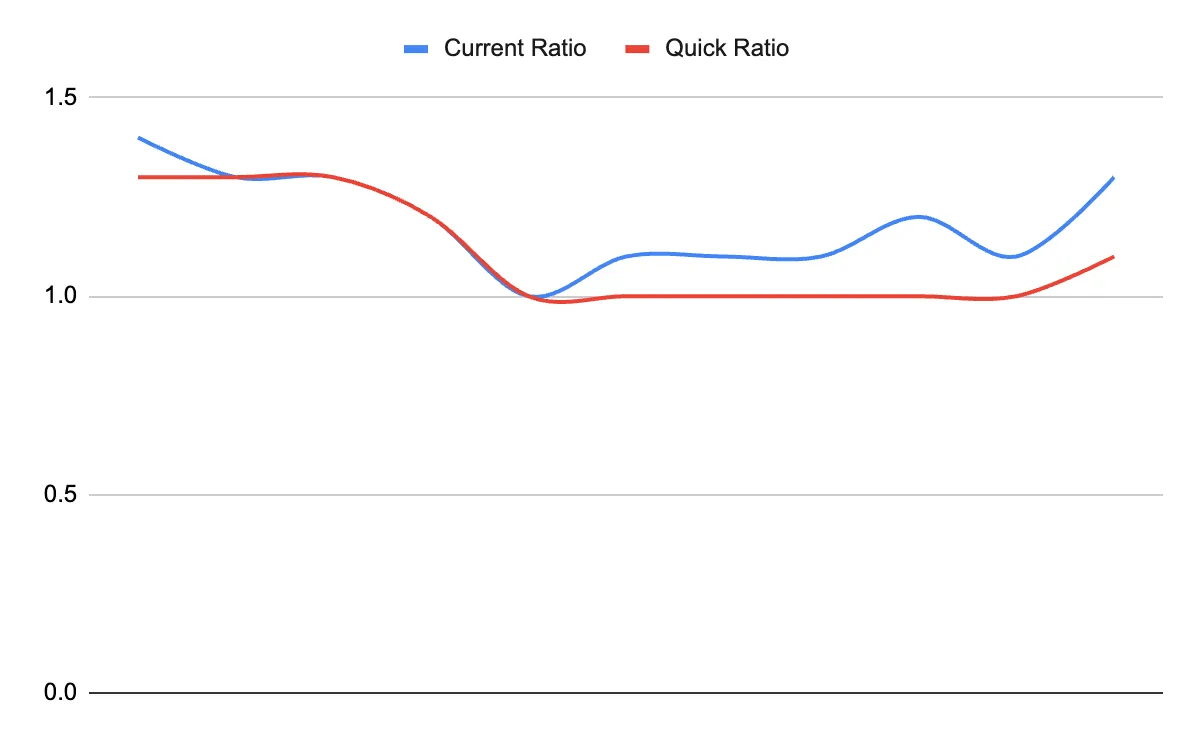
Solvency ratios:
Solvency ratios seem to be stable, even if they are not ideal. Surely, there is scope for improvement.
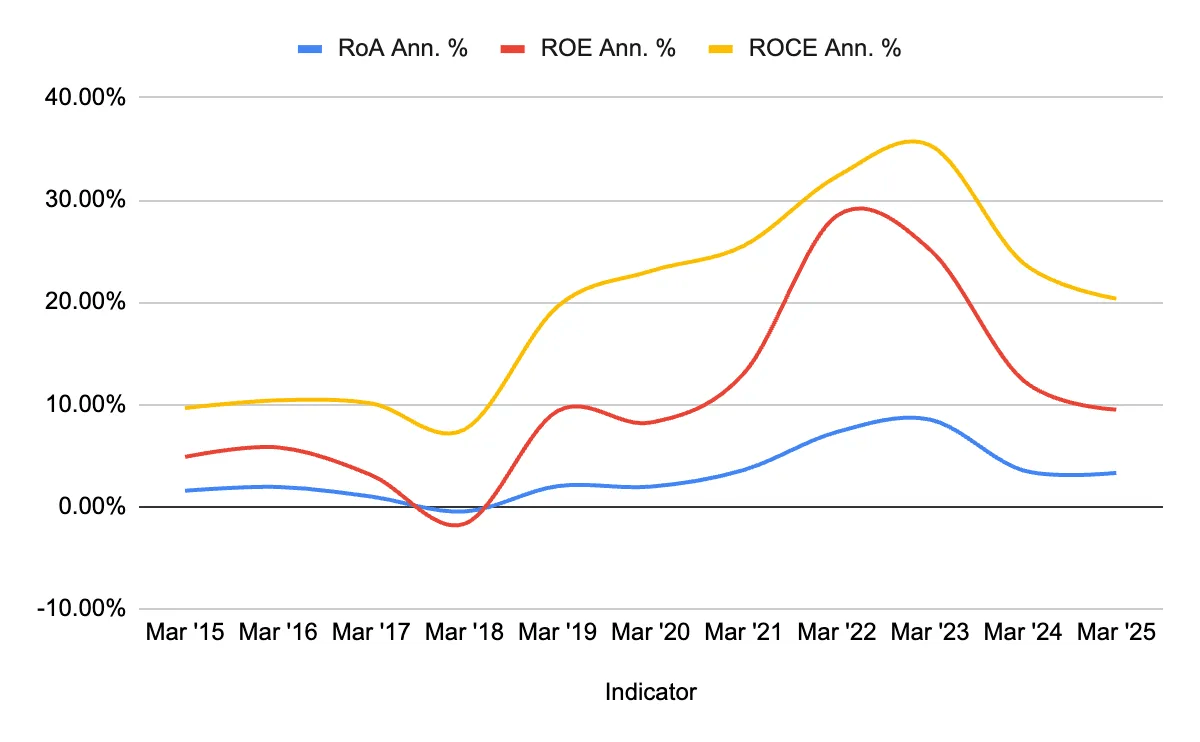
Return Indicators:
Return indicators also seem to be doing well, except for the last two years, where profits have been affected by investments through P&L. ROCE of more than 20% is above the industry average, even after subdued returns. Similarly, RoE and RoA have also been good.
Valuation Indicators:
Enterprise value is a good valuation indicator, especially when one is thinking of buying a company or investing in it. We use the EV/EBITDA metric here to judge how the stock has behaved in the past and check if its valuations are inflated. A higher ratio is indicative of overvaluation, but this always needs to be checked with industry and historical averages to get a clearer picture.
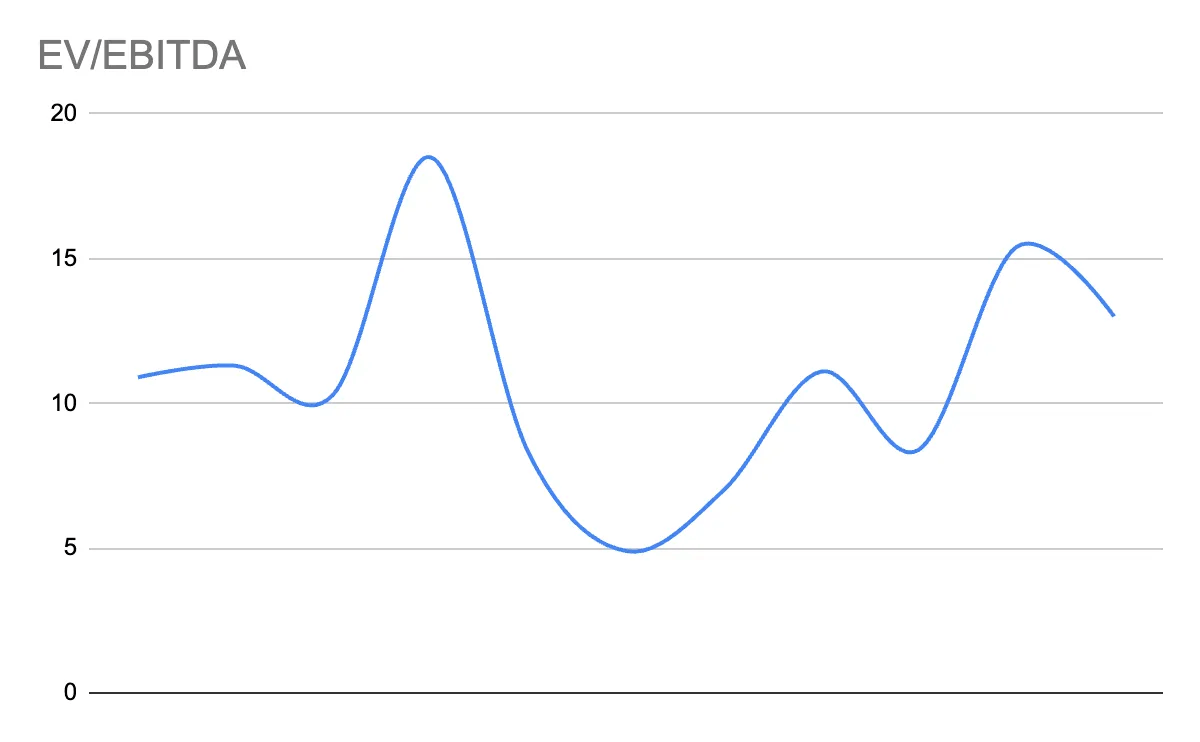
We see that the EV/EVITDA ratio has surely been volatile, but it seems to be mean-reverting to around a 10-15X range. While one cannot be 100% sure where the stock is headed, this can be an indication that the stock is near its intrinsic value.
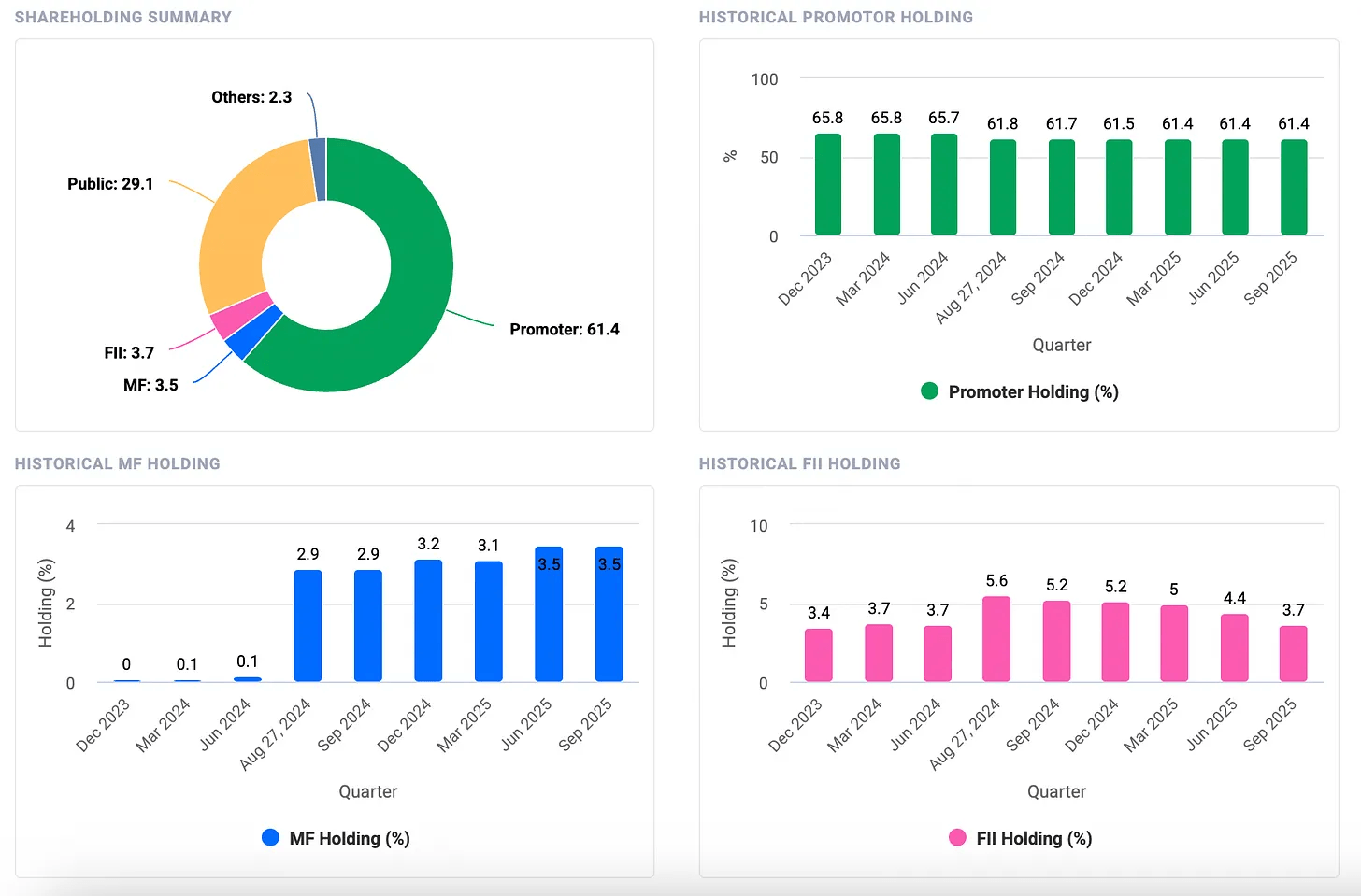
Shareholding Pattern:
Shareholding pattern does not provide a cause for concern:
- Promoter holdings are still more than 60%. It has decreased by 4.4% in the last two years.
- Total financial institutions (MF+FII) have increased holdings in the last two years (up 3.6%).
Promoters may pledge or sell their holdings to create funds for investment, which is what PDS has been doing in the last two years.
Industry Comparisons:
We have used some metrics to compare PDS with the top 50 companies in the industry and have used mean and median for each of these metrics to see how PDS stands against its peers. We also use median because averages can be skewed when some companies have a very distorted metric. The average market cap for the companies is similar to that of PDS, so comparisons can be relevant.

- The P/E ratio of the PDS is above the median, which might indicate overvaluation, but again, since the earnings have been subdued due to investments, this is still a good measure.
- ROCE is better than the industry average, which is good. This is even after subdued earnings due to investments.
- ROE is similar to the industry average.
- EV/EBITDA, as we discussed, is significantly better than the industry average, and if it mean reverts to even 15X, there can be significant upwards potential in the stock.
Strategic Landscape - Textile and Apparel Industry in India and Exports
The industry is expected to perform well based on the technical expertise that India offers and the availability of raw materials. As per IBEF,
“The market for Indian textiles and apparel is projected to grow at a 10% CAGR to reach US$350 billion by 2030, with exports expected to reach US$100 billion.”
A growth rate of 10% is good considering it is more than even India’s GDP growth rate. This will help companies in the industry to enhance their growth. Government policies that help with the growth of companies in the industry include:
- Availability of 100% FDI in the industry.
- A budget enhancement of 19% for the textile industry means the government is supporting it with enthusiasm.
- Enhancement of cotton production and programs to help with research.
- FTA with the UK helps companies like PDS, which have a large market in the UK.
- Collaboration with Japanese companies helps further with technology.
Sourcing Verticals for the company:
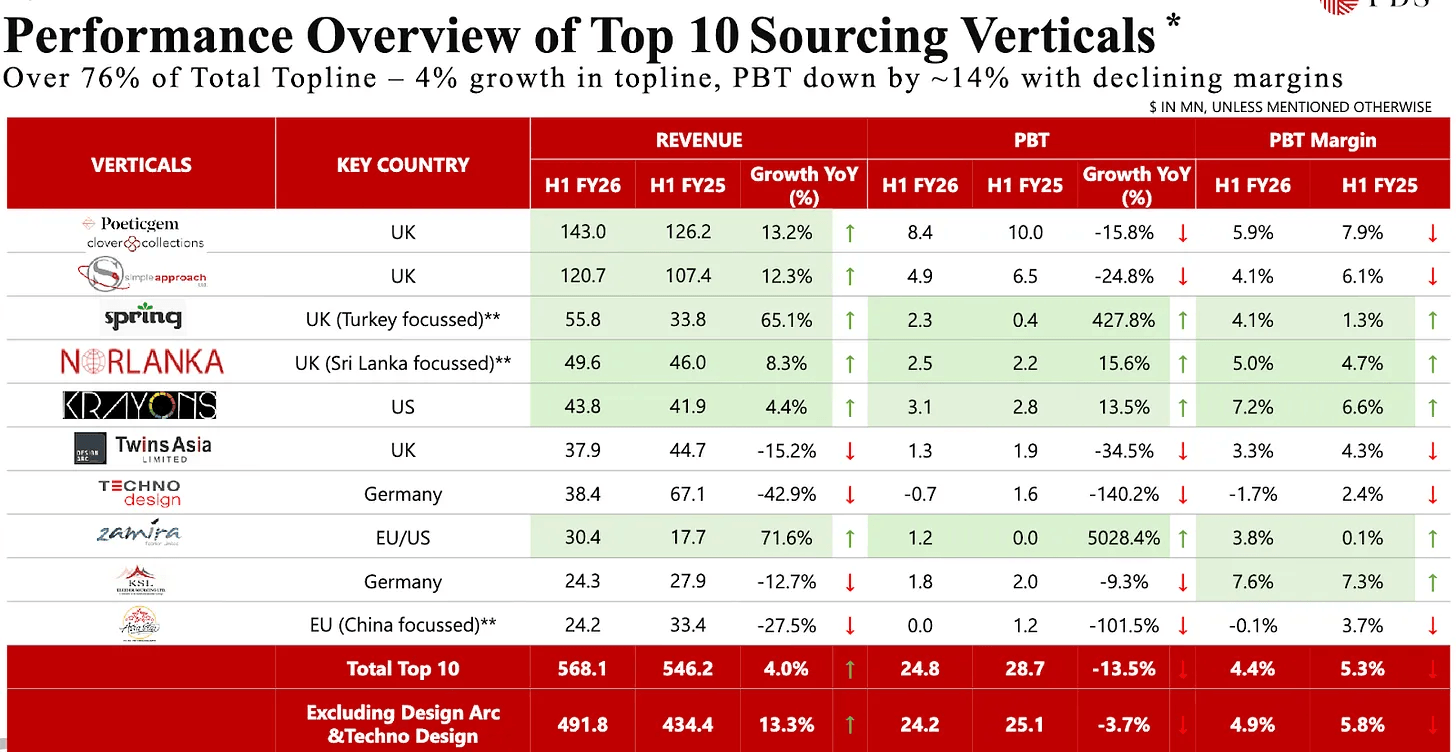
This is the latest quarterly position for companies within the PDS group. It is important to discuss this because, as we have seen earlier, revenues have been increasing, but profits have been hit over the last two years.
One of the reasons is Investments in New Verticals through P&L. PDS has been investing in new business lines and is not capitalising them, but rather moving them through P&L. This is one of the reasons why revenues are up YoY, but profits are down significantly. PDS has been investing nearly 40-50 Crores INR each quarter through P&L. The management is expected to reduce it as it expects consolidation after recent acquisitions and is expected to reduce it to 40-50 Crores INR annually, rather than quarterly.
However, the recent quarter has not been good as it has seen some extraordinary losses. Let’s look at some of the larger ones:
- Poetic Gem did not do well, and PBT is down 15.8% due to restructuring. However, it should provide better results moving forward. One more factor to keep in mind for the future is that the margins for summer and spring lines are lower than the winter line.
- UK Headcount and engaging BCG: The management has engaged BCG to help reduce costs and help in turning around the businesses, which may include decreasing UK headcount and other steps. These two businesses are also facing margin pressure due to challenging economic & industry factors.
BCG will help with price discovery and sustainability for purchases of fabrics and trims with the help of a transparent bidding process. It will also help in tracking of FOB cost & Margins through the pricing analysis. - Europe Business: One of PDS’s verticals, Techno’s largest customer, Gerry Weber, declared bankruptcy last year. Gary Weber brought in $70 million worth of business in the last financial year, which is zero now. However, PDS’s arm, Techno, has signed on new customers to replace at least some part of the revenue loss.
American Growth Opportunities
PDS has been growing significantly in the US as the economy tends to move away from luxury clothing to discounted items. The Americas have seen 25% growth in revenues YoY, which is significant. However, there are two factors to consider:
- US-India tariff: The US applies a 50% tariff on garments from India, with expected revenues of nearly 2,500 crores. However, PDS can bypass these tariffs by feeding into the US markets from Vietnam, China, Egypt, and Latin America.
Out of the total US business, only 40% is where PDS has to pay a tariff as per the shipping agreement. Even for that 40%, the customers have been able to pass on the tariff by increasing the prices. So again, tariffs have been mitigated to a significant extent.
- US demand: The US alone saw a 36% rise in revenues, which is more than the UK. With large retail chains (TK Maxx - US, Ross Stores, Target, Walmart) signing up with PDS, an even higher growth is not out of question. This demand will have a slight effect in the next half year, but FY 27 is expected to see a high surge in revenues from them.
The US is a large geography with good disposable income, and hence the management expects to drive 50% of revenues at 5% PAT margin.
Qualified Institutional Placement Funding
PDS has raised INR 411 crores from financial institutions such as banks, mutual funds, and insurance companies. This helps support operations and acquisitions and also strengthens the balance sheet.
Now, financial institutions lending to a company is a good sign, which indicates that they have confidence in the repayment ability of PDS. QIPS would be used as:
Growth Factors and Opportunities:
The industry is expected to perform well at nearly 10% per Annum for the foreseeable future. In addition, the company has seen good revenues. We look at some factors that are likely to boost the stock price in the near future.
- The company has been consulting with the BCG, and reducing investment through P&L will enhance profit, although it does not negatively affect the financial situation.
- Order book as of early October stands at ₹5,308cr, a 15% increase Y-o-Y, and it remains stable.
- Good cash flow in the first half of FY26 of INR 593 Crores with total cash of INR 1,007 crores.
- Enhancing efficiency using Coupa e-auction and implementing SAP HANA. This will help in sourcing raw material at a lower cost and revamping the costing and master data management tools.
- Using ESOPs and a profit-sharing structure to further incentivise top management and business heads based on Tangible metrics, including Profitability, ROCE and Working Capital management. It also includes provision for recouping part of the losses if performance is below par.
The 5-5-5 Goal
The 5-5-5 goal is to achieve $5 billion in GMV, with a 5% profit margin, within the next 5 years. While not easy, it can be achieved, especially since the company is betting big in the US.
PDS received nearly 70% of the GMV as revenues, which indicates a revenue of $3.5 billion by FY 29, which stands at 31,500 crores INR.
At 5% PAT, this should yield 1,575 crores INR in PAT, which is a 7-8 times increase from the current number.
If the company delivers ₹1,575 crore in profit and even with a subdued P/E of 20–25, considering growth opportunities have been included in the price, the future market cap could reach ₹32,000–40,000 crore. This translates into a price of somewhere in the range of 2000-2500 INR per share.
Risks for the company:
No company is without risks, and risks for investment in small caps are even higher, but they also come with greater returns. An analyst's goal is to see if returns outweigh the risks, i.e. if a stock provides higher risk-adjusted returns. We analyse some of the risks faced by PDS.
- Reputational Risk: The Garments business runs on quality and reputation. Companies work a lot on past relationships, but one bad batch can ruin this relationship. In addition, PDS has a lot of subsidiaries. A bad product from one can ruin the reputation of others, too.
- Business Structure: The decentralised structure, while offering benefits, comes with its own set of risks. It is not easy to manage each subsidiary, and communication can be faulty. In addition, legal risks for one can affect the whole company.
- Cash Flows: Cash flows from different subsidiaries are not easy to move around due to regulations. It also increases costs due to taxation and forex. Acting as a single entity becomes difficult, and it might cause a cash crunch in emergencies.
The Final Spindle
PDS has created a niche for itself in the textile and garments trade globally. Sourcing materials from a varied source allows it to bring variety, land customers with differing needs and reduce risks due to diversification. Sourcing connections also helps it to remain asset-light and with low debt. Being present across the garment value chain, from designing to manufacturing and brand management, helps it offer everything under one umbrella. Diversified customers and well as suppliers help it reduce risks.
General Disclaimer and Release Nothing contained herein constitutes tax, legal, insurance or investment advice, or the recommendation of or an offer to sell, or the solicitation of an offer to buy or invest in any investment product, vehicle, service or instrument.